

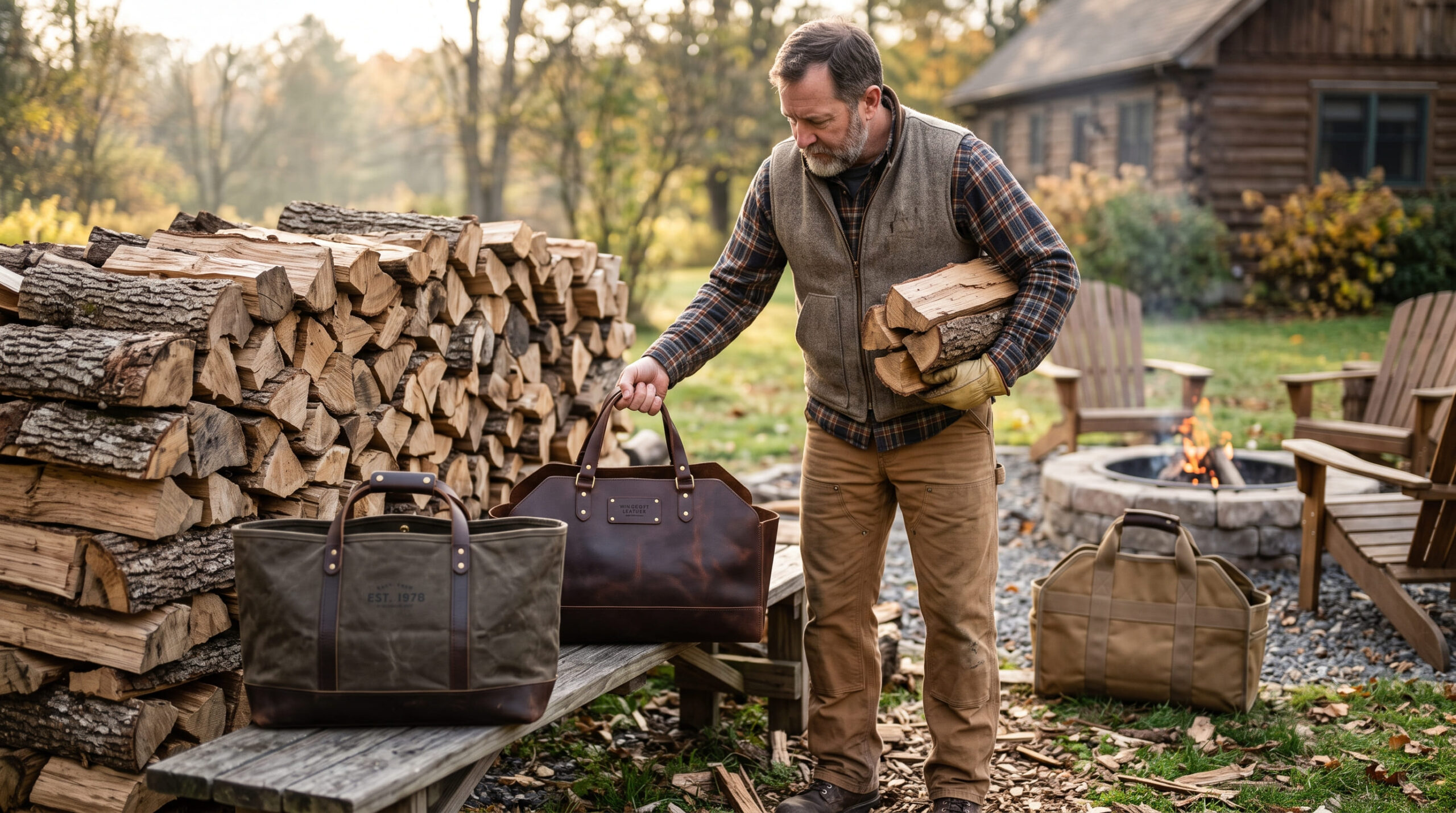

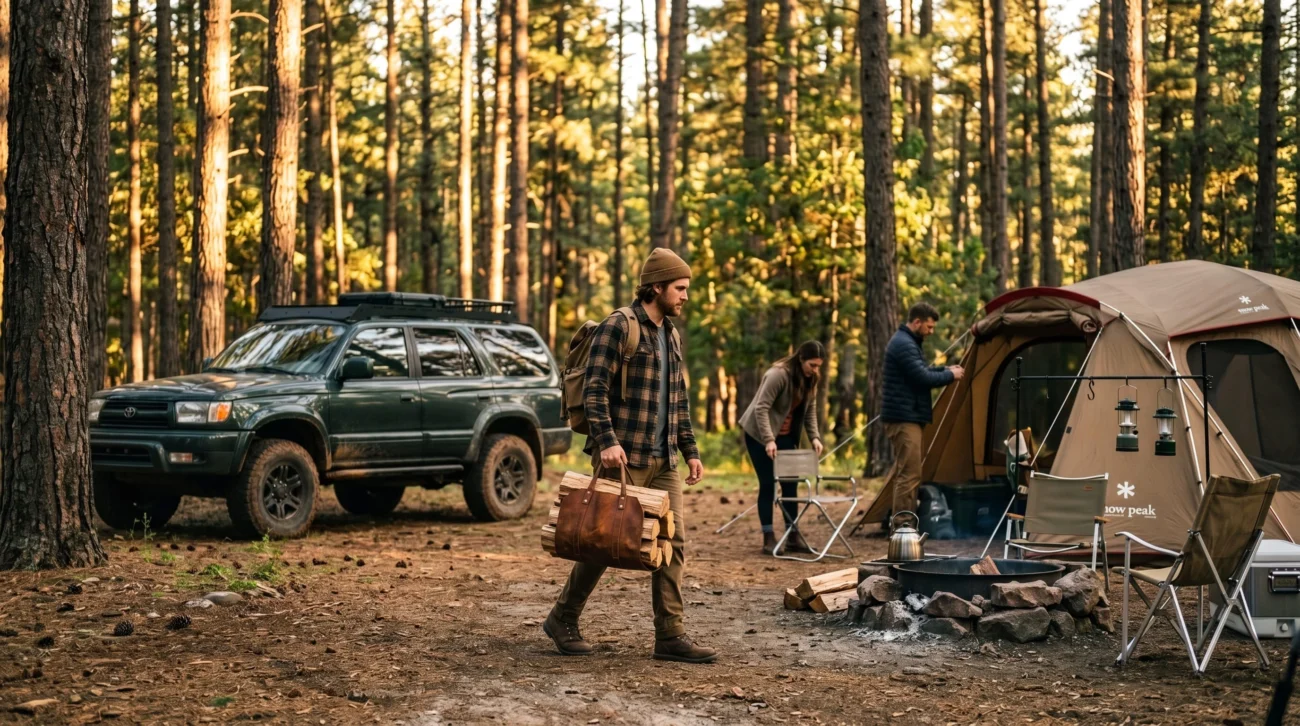
When you regularly move large bundles of firewood, a standard carrier may not provide the comfort, stability, or durability you need. Heavy hardwood logs can quickly test the strength of handles, stitching, and materials, especially when you’re carrying wood across a yard, driveway, campsite, or long path.
A heavy-duty firewood carrier is designed for people who need more than occasional log transport. Whether you stock wood for an entire winter, prepare large outdoor fires, or frequently move split logs around your property, the right carrier can reduce effort and make the process safer.
For 2026, the best options are not simply the largest carriers available. The strongest choices combine durable construction, comfortable handling, balanced weight distribution, and materials that perform well under repeated stress.
What Makes a Firewood Carrier Suitable for Heavy Loads?
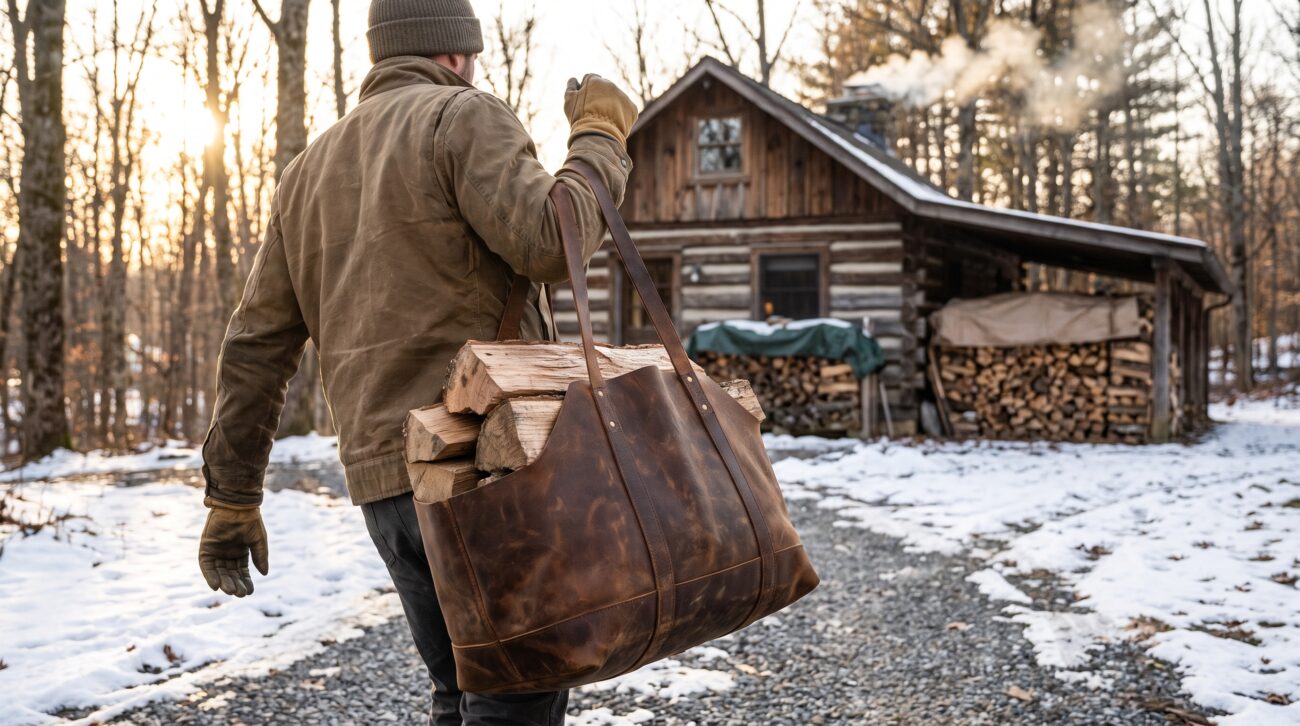
A carrier built for large loads needs to handle constant pressure without becoming difficult to use.
The weight of firewood affects every part of the design. Handles experience pulling force, seams take stress from stretching, and the base material must support the load without losing shape.
A quality carrier should make heavy firewood feel controlled rather than awkward.
Key Features That Matter Most
Before choosing a heavy-duty carrier, focus on these important details:
Reinforced Handle Construction
Handles carry the majority of the load, making them one of the most important areas to inspect.
Look for:
- Wide grips that reduce hand pressure
- Strong attachment points
- Reinforced stitching or hardware
- Comfortable handling with gloves
A carrier may have excellent material, but weak handle construction can shorten its useful life.
Strong Stitching and Stress Points
Large bundles create tension along the edges and corners of a carrier.
High-quality stitching helps prevent:
- Seams separating under pressure
- Material stretching around attachment areas
- Handle connections weakening over time
The strongest carriers usually reinforce the areas that experience the most movement and weight.
Balanced Weight Distribution
A heavy load becomes much easier to carry when the weight sits evenly.
Poorly designed carriers often allow logs to shift, forcing you to adjust your grip repeatedly. A balanced design keeps the bundle stable and reduces strain during longer walks.
1. Best Overall: Full-Grain Leather Carrier for Large Loads
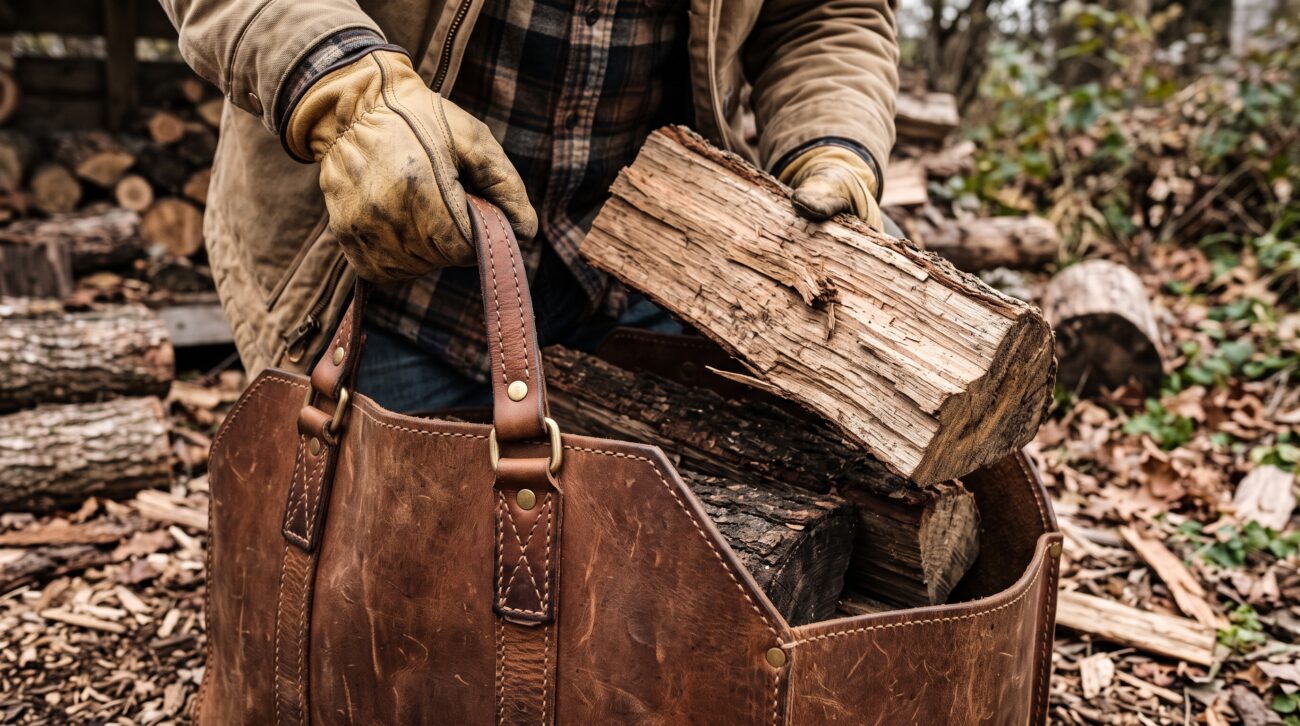
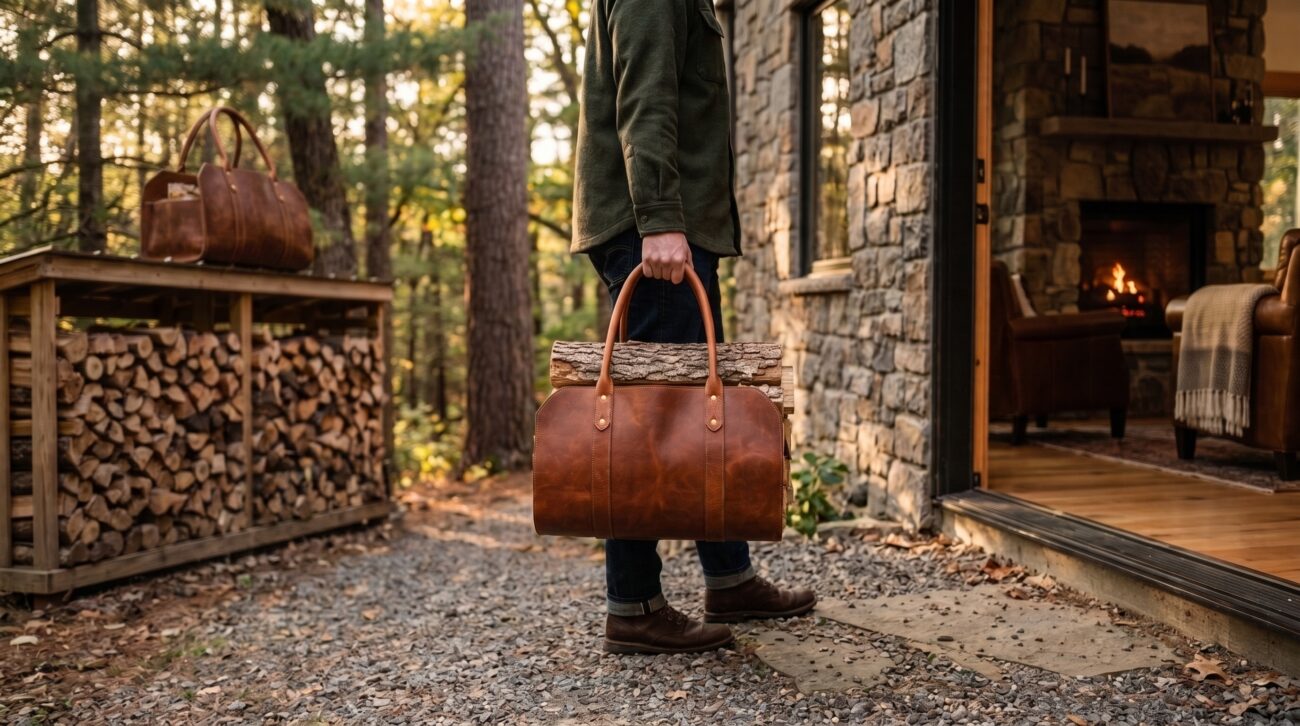
For homeowners who regularly transport heavy hardwood, full-grain leather remains the top choice because of its strength, structure, and long-term performance. For users who need a carrier built for regular firewood handling, premium full-grain leather options provide the durability and structure needed for demanding daily use.
A well-made leather firewood carrier handles demanding use while maintaining its shape over time. Unlike lighter materials that can sag under weight, quality leather provides a firm structure that supports larger bundles.
Pros
- Excellent strength for heavy loads
- Maintains shape during repeated use
- Comfortable for longer carrying distances
- Develops natural character with age
- Suitable for frequent seasonal use
Things to Consider
- Slightly heavier than fabric alternatives
- Requires occasional care to maintain flexibility
Leather performs especially well for users who move firewood frequently rather than occasionally. This performance comes from qualities often associated with well-crafted leather carriers, including durability, structure, and long-term usability.
Why Construction Quality Matters More Than Appearance
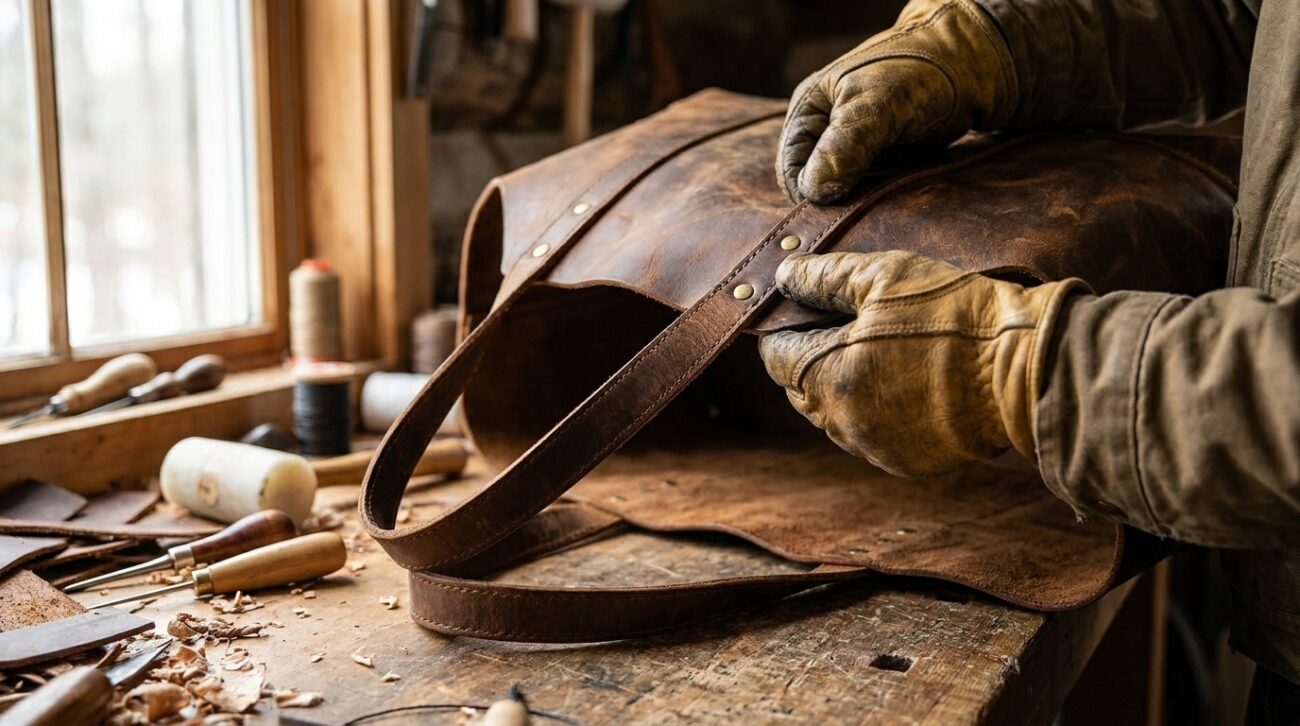
Two carriers can look similar but perform very differently when loaded with heavy logs.
The difference usually comes down to construction.
Important details include:
Handle Attachment
The connection between the handle and carrier body is one of the highest stress areas.
Strong attachment methods help the carrier remain reliable even when carrying dense hardwood.
Material Thickness
Thicker materials generally provide better support and resistance against stretching.
However, thickness alone does not determine quality. A well-designed carrier balances durability with comfortable handling.
Overall Structure
A heavy-duty carrier should hold its shape while loaded.
A carrier that collapses, twists, or becomes difficult to control may create more effort instead of reducing it.
Understanding the basic design differences between firewood carriers can help you identify why certain styles perform better for demanding tasks, especially when comparing different materials, shapes, and carrying styles.
2. Built for Daily Firewood Transport: Reinforced Leather Design
For properties where firewood is moved regularly, a reinforced leather design provides extra confidence.
This type of carrier focuses on durability upgrades such as stronger handles, reinforced seams, and improved load support.
Pros
- Designed for repeated use
- Handles heavier bundles comfortably
- Strong resistance to wear
- Reliable for seasonal firewood storage
Things to Consider
- Higher initial investment
- Requires more storage space than lightweight options
For homeowners who depend on firewood throughout colder months, durability often matters more than saving a small amount upfront.
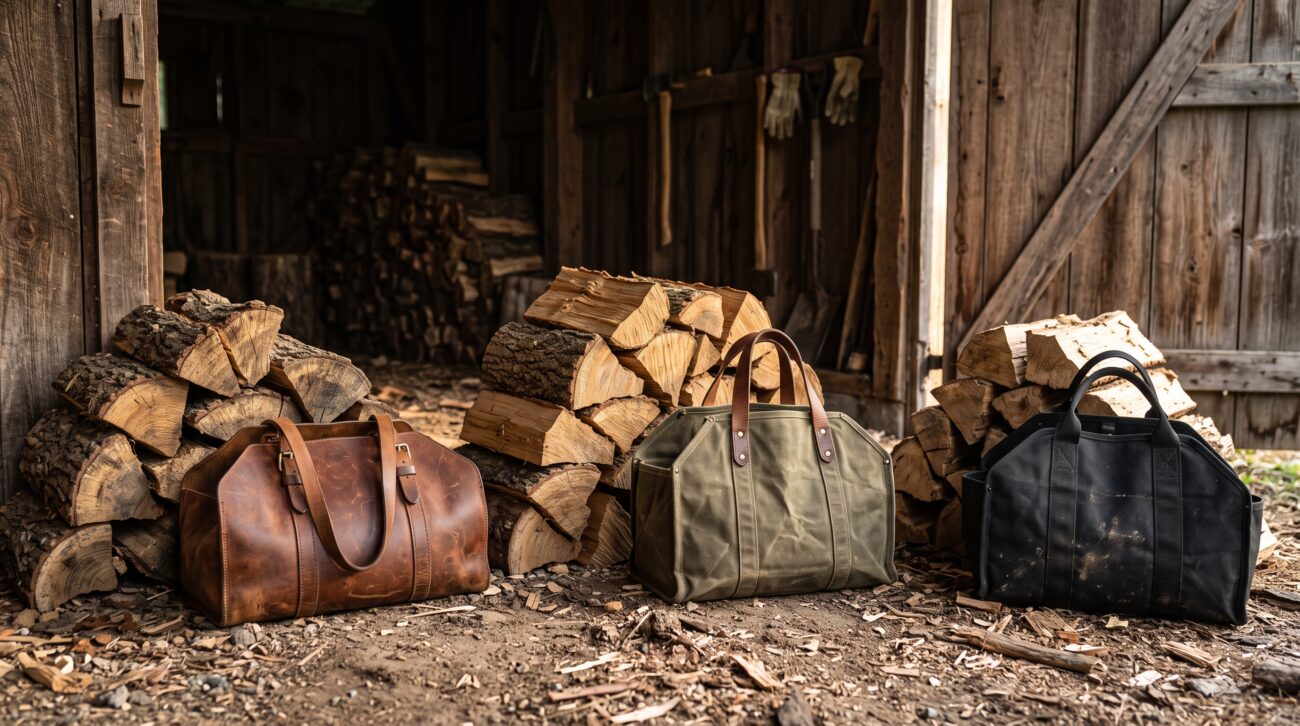
3. Strong Canvas Alternative: Heavy-Duty Waxed Canvas Carrier
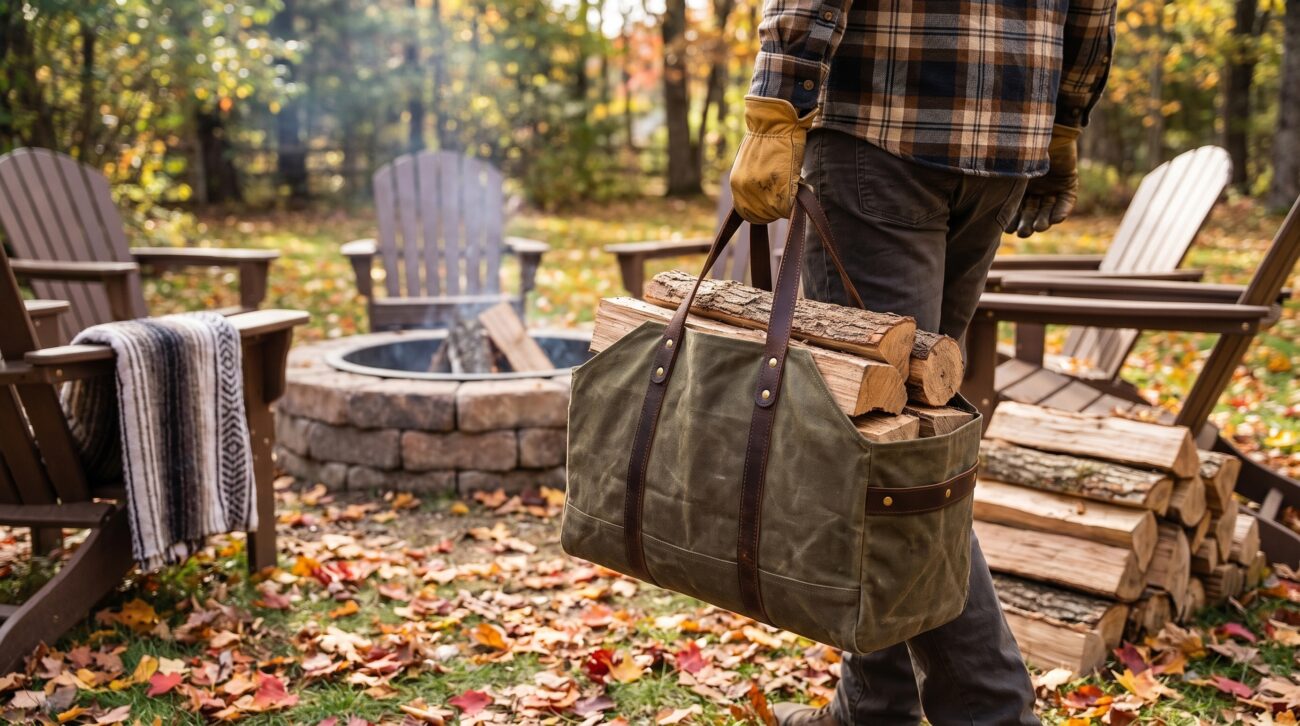
A waxed canvas carrier can be a practical choice for users who want easier storage and lighter handling while still maintaining dependable performance for everyday firewood tasks.
It offers good resistance to outdoor conditions and works well for moderate heavy loads, especially for occasional property maintenance or seasonal use.
Pros
- Lightweight compared with leather
- Easy to fold and store
- Handles outdoor conditions well
- Comfortable for shorter carrying distances
Things to Consider
- Can lose structure under very heavy loads
- Usually requires replacement sooner than premium leather
Quick Comparison Table
| Carrier Type | Best Use | Load Support | Durability | Maintenance |
| Full Grain Leather | Frequent heavy loads | Excellent | Excellent | Low to moderate |
| Reinforced Leather | Daily firewood transport | Excellent | Excellent | Low to moderate |
| Waxed Canvas | Moderate heavy use | Good | Good | Low |
Pro Tip: When comparing heavy-duty carriers, don’t judge them only when empty. The real test is how the carrier behaves after being filled with dense hardwood. Stability, handle comfort, and weight balance matter most when the load is at its heaviest.
4. Best Lightweight Heavy Duty Option: Reinforced Waxed Canvas Carrier
Not every user needs a full-size heavy-duty carrier. For people who move firewood regularly but still want easier storage and handling, reinforced waxed canvas offers a practical middle ground.
It provides more structure than basic fabric options while remaining lighter than leather. This makes it useful for homeowners who carry moderate loads around their property, cabin owners, or campers who need reliable performance without extra weight.
Pros
- Easier to carry over longer distances
- Folds more easily for storage
- Handles outdoor conditions well
- Comfortable for seasonal use
Things to Consider
- Not ideal for extremely heavy hardwood loads
- May require replacement sooner than premium leather options
- Can lose shape after years of frequent heavy use
A lightweight design can still perform well, but it should match your actual firewood routine rather than your maximum possible load.
5. Affordable Option for Occasional Use: Reinforced Fabric Carrier
For occasional fireplace use or homeowners who only move small amounts of firewood, a reinforced fabric carrier can be a practical choice.
These carriers focus on convenience and affordability rather than maximum load performance. They work well for lighter bundles and short carrying distances.
Pros
- Affordable option
- Lightweight construction
- Easy to store
- Suitable for occasional use
Things to Consider
- Limited performance with large hardwood bundles
- Less resistant to stretching
- Lower long-term durability compared with leather and canvas
A budget carrier can work well when your needs are occasional, but frequent heavy use usually requires stronger construction.
Which Material Handles Heavy Loads Best?
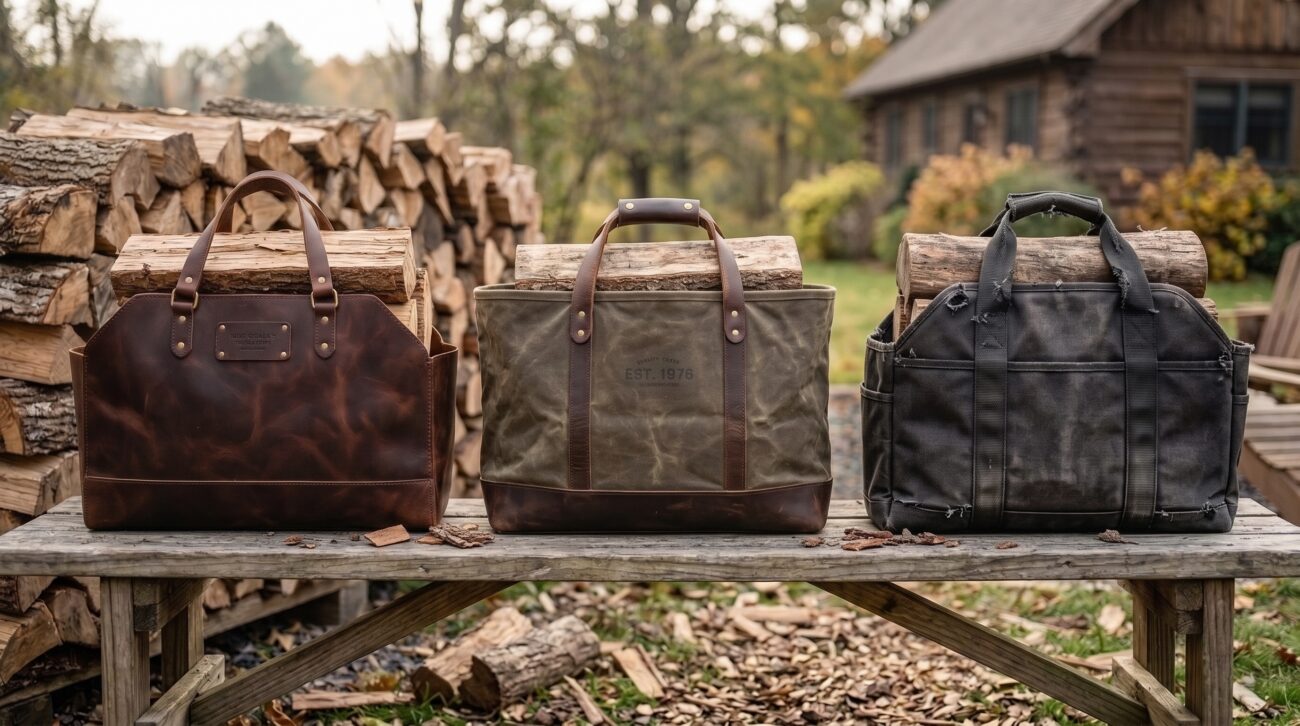
Material plays an important role, but the overall design determines how well a carrier performs.
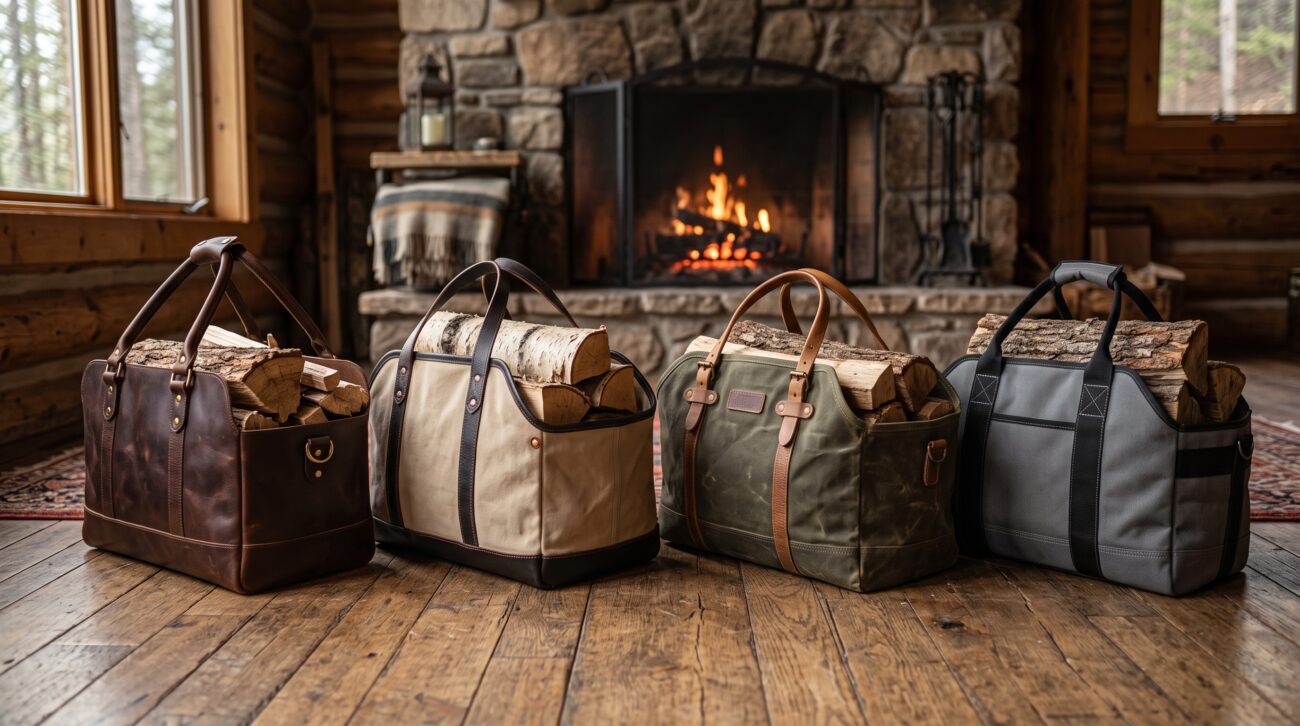
For large loads, leather generally provides the strongest combination of support, durability, and comfort. Canvas offers a lighter alternative for moderate use, while fabric works best when carrying demands are limited.
| Material | Heavy Load Performance | Best For | Main Advantage |
| Leather | Excellent | Frequent heavy lifting | Strength and long-term durability |
| Waxed Canvas | Good | Seasonal and moderate use | Lightweight handling |
| Fabric | Fair | Occasional transport | Affordable and easy storage |
If you are comparing different materials, understanding how leather, canvas, and fabric respond under regular use can help you choose based on your actual firewood routine.
Common Mistakes When Buying a Heavy Duty Firewood Carrier
Choosing a carrier for large loads requires looking beyond size and price. Many buyers make the mistake of focusing on capacity while ignoring the details that affect daily use. These carriers are designed to simplify moving, storing, and organizing firewood while reducing the strain of carrying logs by hand.
Choosing the Largest Carrier Available
A larger carrier may hold more logs, but an oversized load can become uncomfortable quickly.
Heavy hardwood becomes difficult to control when the carrier is too large for your normal routine.
The best carrier is one that allows you to carry a useful amount of wood comfortably.
Ignoring Handle Comfort
Handles are one of the first areas you should inspect.
Thin or poorly positioned handles can create pressure on your hands, especially during longer walks.
Look for:
- Comfortable grip width
- Reinforced attachment points
- Stable handling when fully loaded
Overlooking Stitching Quality
A carrier can use premium material and still fail if the construction is weak.
Pay attention to:
- Seam reinforcement
- Handle connections
- Edge finishing
- Overall craftsmanship
These details determine how the carrier performs after months of repeated use.
Heavy Duty Firewood Carrier Buying Checklist
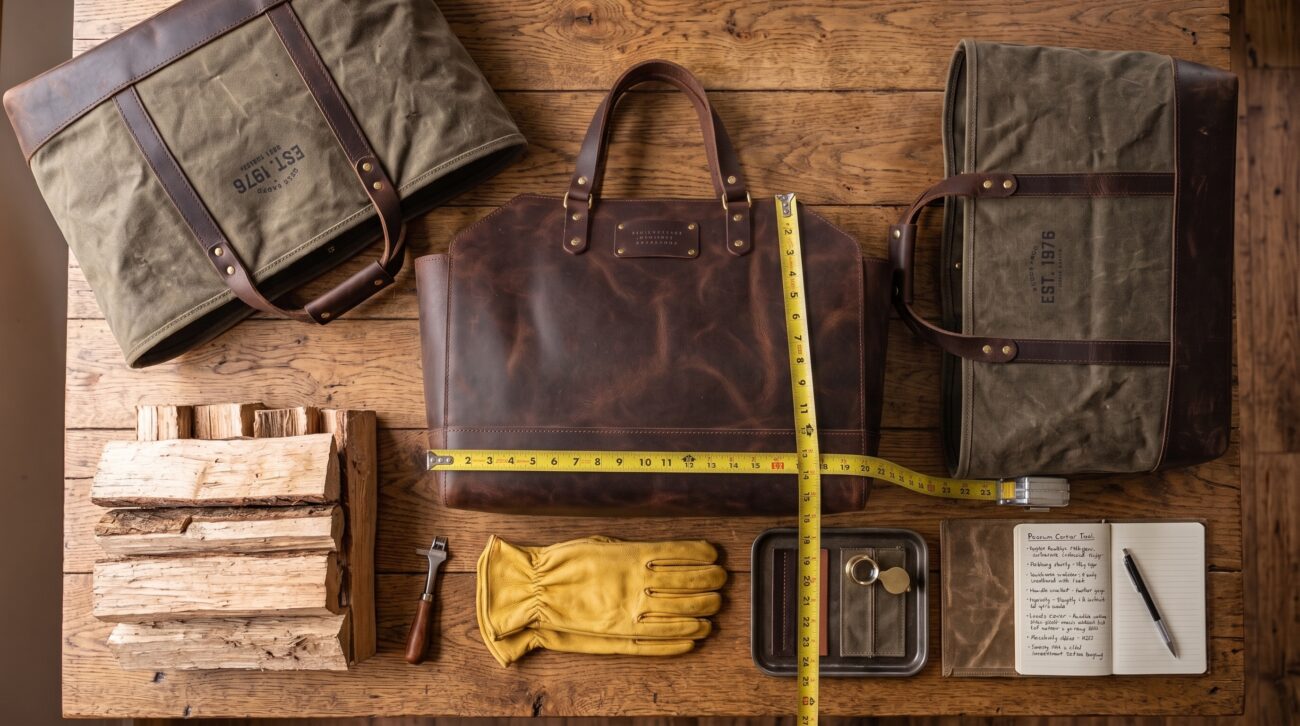
Before making a final decision, consider these points. Paying attention to construction details, carrying habits, and material quality can help you select a carrier that fits your needs:
- Does it support the amount of wood you normally carry?
- Are the handles comfortable under weight?
- Are stress points reinforced?
- Will the material handle your environment?
- Is it easy to store when not in use?
- Does the design keep logs stable while moving?
A carrier that matches your routine will provide better value than one chosen only for maximum capacity.
Pro Tip: If you regularly carry hardwood such as oak, maple, or hickory, prioritize structure and handle strength over lightweight design. Dense wood can quickly expose weak construction.
Conclusion
The best heavy-duty firewood carrier is the one that makes large loads easier to manage without sacrificing comfort or durability.
For frequent use, full-grain leather remains the strongest choice because it offers excellent load support, reliable construction, and long-term performance. Waxed canvas provides a lighter alternative for moderate needs, while reinforced fabric is better suited for occasional firewood transport.
Before buying, consider how much wood you usually carry, how far you transport it, and how often you will use the carrier. The right choice should feel dependable every time you move a load, whether you are preparing an indoor fireplace, outdoor fire pit, or seasonal wood supply.
FAQs
1. What is the best heavy-duty firewood carrier for large loads?
A full-grain leather carrier is one of the best choices for large loads because it offers excellent strength, stability, and long-term durability.
2. How much firewood can a heavy-duty carrier hold?
Capacity depends on the design and material, but heavy-duty carriers are built to transport larger bundles of split logs comfortably.
3. Is leather better than canvas for carrying heavy firewood?
Leather generally performs better for frequent heavy loads because it maintains its structure and resists stretching over time. Canvas is better for lighter and occasional use.
4. What features make a firewood carrier durable?
Strong materials, reinforced stitching, sturdy handles, and balanced construction are the main factors that determine durability.
5. Can a heavy-duty firewood carrier be used outdoors?
Yes. Many heavy-duty carriers are designed for outdoor conditions, including yards, cabins, campsites, and fire pits.
6. Should I buy a large carrier to reduce trips?
Only if you can comfortably handle the added weight. A balanced load is often more practical than carrying too much wood at once.
7. How do I maintain a leather firewood carrier?
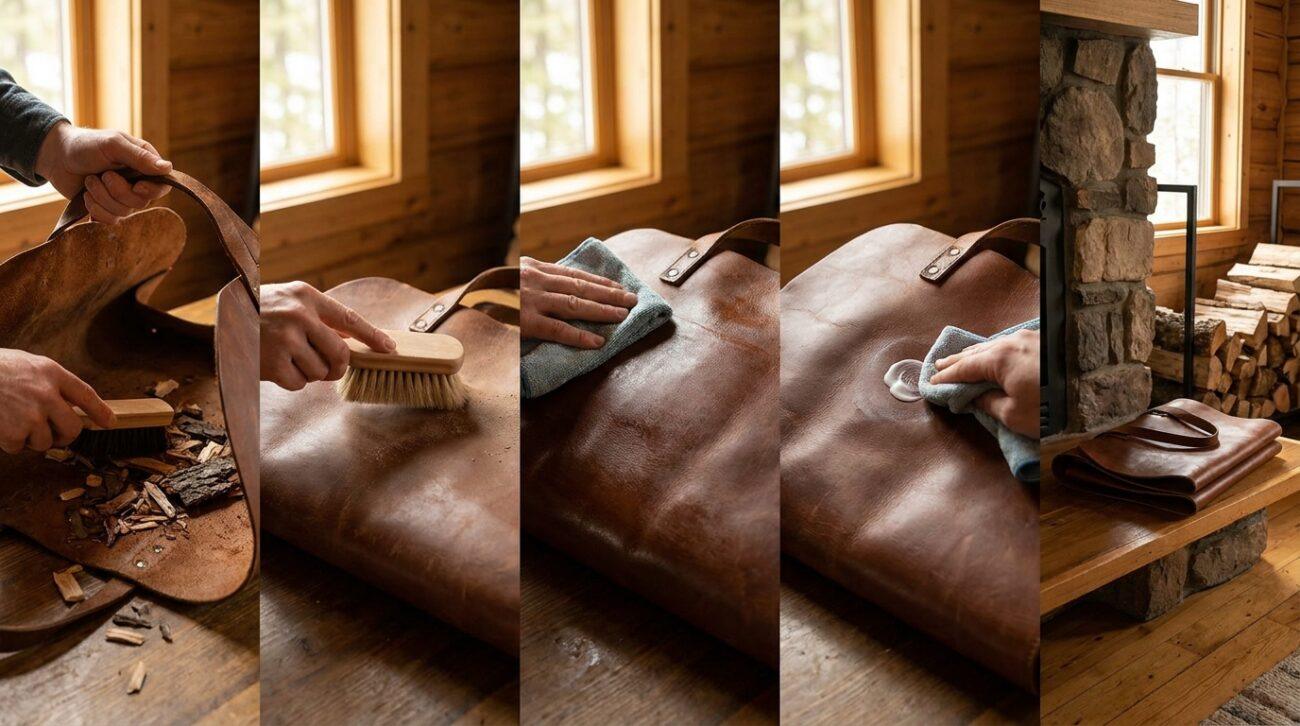
Remove dirt with a soft cloth, allow it to dry naturally after moisture exposure, and apply leather conditioner occasionally to maintain flexibility.
8. Are canvas carriers good for heavy use?
Waxed canvas can handle moderate use, but frequent heavy loads are better suited to stronger materials like full-grain leather.








One thought on “Best heavy-duty Firewood Carriers for Large Loads: 2026 Editor’s Picks”