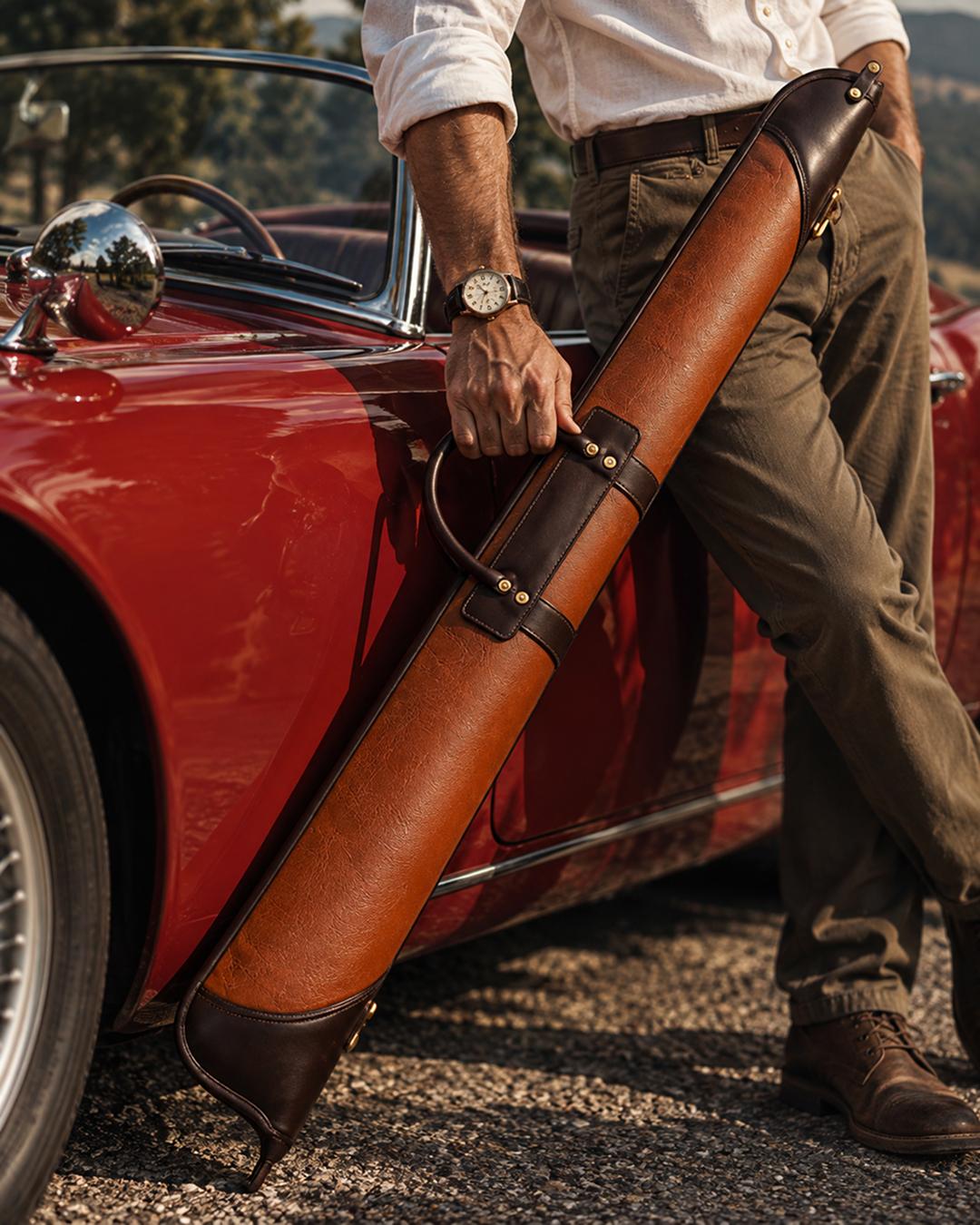



A leather firewood carrier makes transporting logs from a woodpile to a fireplace or wood stove easier and more convenient. However, not every carrier is designed to handle repeated use or heavy firewood loads. Differences in leather quality, thickness, stitching, handle construction, and overall design can significantly affect durability.
Choosing the right carrier means looking beyond its appearance. A well-constructed design should provide sufficient carrying capacity, reliable handles, and strong material that can withstand regular handling. This guide explains the important features to consider before buying a durable leather firewood carrier.
What Makes a Leather Firewood Carrier Durable?
A durable leather firewood carrier combines quality leather, appropriate material thickness, reinforced stitching, strong handles, and a well-constructed base. Its ability to handle repeated firewood loads depends on material strength, weight distribution, and manufacturing quality. Proper cleaning, conditioning, and storage also help maintain its condition over time.
7 Important Factors to Consider When Choosing a Leather Firewood Carrier
1. Leather Quality and Type
Leather quality is one of the most important factors affecting a firewood carrier’s durability. Different leather grades offer varying levels of strength, flexibility, and surface characteristics.
Common options include:
- Full-grain leather: Retains the natural grain surface and is valued for its strength and durability.
- Top-grain leather: Has a more uniform surface and offers a refined appearance.
- Other leather grades: May provide more affordable alternatives, depending on their processing and construction.
For a firewood carrier, look for leather with consistent quality and sufficient strength to handle regular use. The material should be suitable for carrying logs without becoming excessively stretched or damaged.
2. Leather Thickness and Material Weight

Leather thickness influences how a firewood carrier handles weight and repeated use. Thicker leather generally provides a more substantial structure, while thinner leather offers greater flexibility.
When evaluating thickness, consider:
- Material strength: The leather should be suitable for the intended carrying load.
- Flexibility: It should remain manageable when loading and carrying firewood.
- Structural support: The material should resist excessive stretching during regular use.
- Overall weight: Excessively heavy leather can make an already loaded carrier difficult to handle.
A good carrier balances material thickness with flexibility and practical carrying comfort.
3. Stitching and Reinforced Construction

Stitching plays a major role in keeping a leather firewood carrier intact under load. Weak seams or poorly reinforced attachment points can become damaged when carrying heavy logs.
Pay particular attention to:
- Seam stitching: Look for consistent stitching along the carrier’s main panels.
- Handle reinforcement: Handle attachment areas should have additional reinforcement.
- Edge construction: Properly finished edges help maintain the product’s overall appearance.
- Stress points: Areas exposed to repeated pulling and lifting should be securely constructed.
A carrier made from quality leather still needs strong stitching and proper assembly to perform reliably.
4. Handle Design and Carrying Comfort
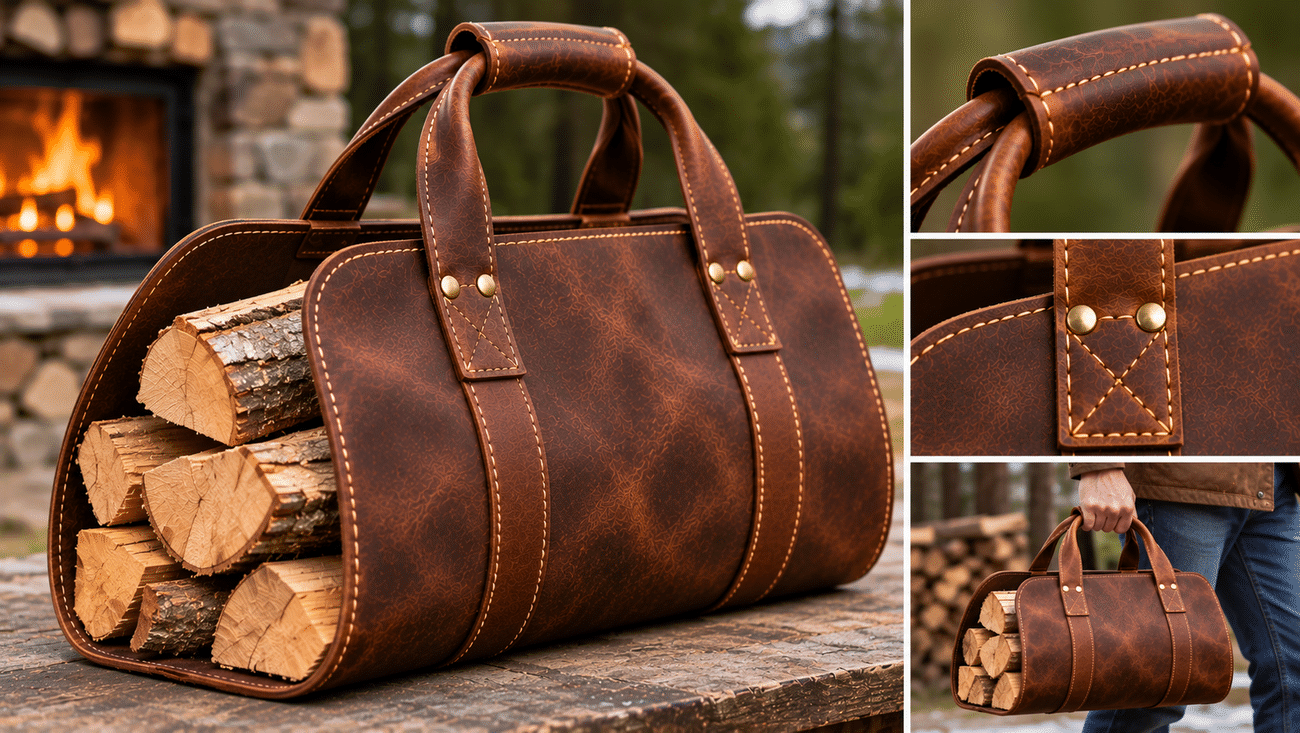
Handles determine how comfortably and securely you can transport firewood. Their construction and positioning are particularly important when carrying multiple logs.
Consider these features:
- Strong attachment: Handles should be securely connected to the main leather body.
- Comfortable grip: A suitable handle width and length make carrying easier.
- Proper positioning: Balanced handle placement helps distribute the load.
- Reinforced construction: Additional stitching or leather reinforcement can improve durability around attachment points.
Well-designed handles should make lifting and transporting firewood more manageable without placing unnecessary strain on the carrier.
5. Carrier Size and Carrying Capacity

The size of a firewood carrier determines how much wood it can accommodate and which log lengths it can handle.
Before buying, consider:
- Overall dimensions: Check the carrier’s length and width.
- Usable space: Make sure it provides enough room for your typical firewood pieces.
- Log compatibility: Consider the length and shape of the wood you regularly carry.
- Carrying capacity: Choose a design suitable for your expected load.
- Handling comfort: Avoid choosing an oversized carrier that becomes difficult to lift when filled.
A practical carrier should hold enough firewood for your needs while remaining comfortable to transport.
6. Base Design and Structural Support

The bottom section of a firewood carrier supports much of the weight when it is loaded with logs. Its construction can therefore influence the carrier’s overall stability.
Look for a design that offers:
- Strong bottom construction: The base should be made from suitable leather with adequate support.
- Secure seams: Bottom and side connections should be properly stitched.
- Balanced structure: The carrier should distribute the load without excessive sagging.
- Suitable dimensions: The base should accommodate the intended log sizes.
A properly constructed base helps maintain the carrier’s shape and makes loading and transporting firewood more convenient.
7. Finish and Ease of Maintenance
Leather finishing affects the carrier’s appearance and how easily it can be maintained. A suitable finish helps preserve the material’s surface during regular handling.
Before purchasing, consider:
- Surface consistency: Look for an even, properly finished leather surface.
- Protective treatment: Check whether the leather has an appropriate protective finish.
- Cleaning requirements: Choose a material that can be maintained using practical leather-care methods.
- Conditioning: Confirm the recommended leather conditioner for the material.
- Storage: Consider whether you have a dry place to store the carrier between uses.
Good finishing and regular maintenance help preserve the leather’s appearance and condition over time.
Leather Firewood Carrier vs. Canvas Firewood Carrier: Which Is Better?
Leather and canvas firewood carriers offer different advantages. The better option depends on material quality, construction, maintenance preferences, and intended use.
| Feature | Leather Firewood Carrier | Canvas Firewood Carrier |
| Material | Natural leather | Woven fabric |
| Appearance | Premium, traditional look | Simple, practical look |
| Structure | Depends on leather thickness and construction | Depends on fabric weight and reinforcement |
| Maintenance | Requires leather-specific care | Generally easier to clean |
| Durability | Depends on leather quality and stitching | Depends on fabric quality and seams |
| Flexibility | Varies by leather type | Generally flexible |
Leather carriers appeal to buyers who prefer a substantial material, traditional appearance, and distinctive natural texture. Canvas carriers are often preferred for their lightweight construction and straightforward maintenance.
However, material category alone does not determine durability. A well-made canvas carrier can outperform a poorly constructed leather one. Always evaluate material quality, stitching, handles, and overall construction before making a decision.
Common Mistakes to Avoid When Buying a Leather Firewood Carrier
Avoid these common purchasing mistakes:
- Choosing based only on appearance: Attractive leather does not automatically indicate strong construction.
- Ignoring leather thickness: Thin material may not be suitable for frequent heavy loads.
- Overlooking handle reinforcement: Weak attachment points can affect carrying performance.
- Buying an undersized carrier: Make sure the dimensions accommodate your regular firewood lengths.
- Ignoring base construction: The bottom panel needs sufficient support for the intended load.
- Assuming every carrier handles heavy loads: Always check the manufacturer’s recommended carrying capacity.
Paying attention to these details helps you choose a carrier that meets your practical requirements.
How to Maintain a Leather Firewood Carrier for Long-Term Use
Proper maintenance helps preserve leather quality and reduce premature wear.
Follow these simple care practices:
- Remove debris: Clear dust, wood chips, and dirt after each use.
- Dry naturally: If the carrier becomes damp, allow it to air-dry naturally away from direct heat.
- Avoid excessive moisture: Do not leave the carrier exposed to rain or prolonged damp conditions.
- Condition the leather: Apply a suitable leather conditioner when needed, following the manufacturer’s recommendations.
- Store properly: Keep the carrier in a dry, ventilated location.
- Respect carrying limits: Avoid exceeding the recommended load capacity.
For more detailed care instructions, read our guide on Maintain a Leather Firewood Carrier.
Frequently Asked Questions About Leather Firewood Carriers
What is the best leather for a firewood carrier?
Full-grain leather is a popular choice for firewood carriers because it retains the natural grain surface and is valued for its strength. However, the best option also depends on leather thickness, stitching, handle reinforcement, and overall construction. Material quality should always be evaluated alongside manufacturing standards.
Are leather firewood carriers durable?
Yes, well-constructed leather firewood carriers can offer good durability for regular use. Their performance depends on leather quality, material thickness, reinforced stitching, handle construction, and base design. Proper maintenance also helps preserve the leather and extend the carrier’s usable life.
How much firewood can a leather carrier hold?
The carrying capacity depends on the carrier’s dimensions, leather thickness, handle construction, and manufacturer’s specifications. Larger carriers can accommodate more logs, but the actual weight capacity should never be assumed from appearance alone. Always follow the manufacturer’s recommended load limit.
Is full-grain leather better for a firewood carrier?
Full-grain leather is often preferred because it retains the natural grain structure and offers good durability. However, full-grain leather alone does not guarantee a stronger carrier. Appropriate thickness, reinforced handles, quality stitching, and a properly constructed base are equally important.
How do you clean a leather firewood carrier?
Remove loose dirt, dust, and wood debris using a soft brush or dry cloth. For surface marks, follow the leather manufacturer’s cleaning instructions and use suitable leather-care products. If the carrier becomes damp, let it dry naturally and avoid direct sunlight or artificial heat.
Is a leather firewood carrier better than a canvas one?
A leather firewood carrier may be preferable for buyers who value a traditional appearance, substantial material, and natural leather texture. Canvas offers a lightweight alternative that is generally easier to clean. Neither material is automatically more durable; construction quality and reinforcement matter most.
Final Thoughts: Choosing a Firewood Carrier Built to Last
Choosing a durable leather firewood carrier requires more than selecting an attractive design. Leather quality, material thickness, reinforced stitching, handle construction, carrier dimensions, and base support all contribute to its overall performance.
Before purchasing, compare product specifications and examine how the carrier is constructed. A well-designed product should offer sufficient carrying capacity, comfortable handling, and materials suitable for regular use.
If you are exploring different options, check out our guide to Best Leather Firewood Carrier for additional buying considerations. You can also read our Guide to Leather Firewood Carriers to understand different styles, materials, and practical features.
Ultimately, a durable leather firewood carrier should balance strength, carrying comfort, and everyday convenience rather than relying on appearance alone.