
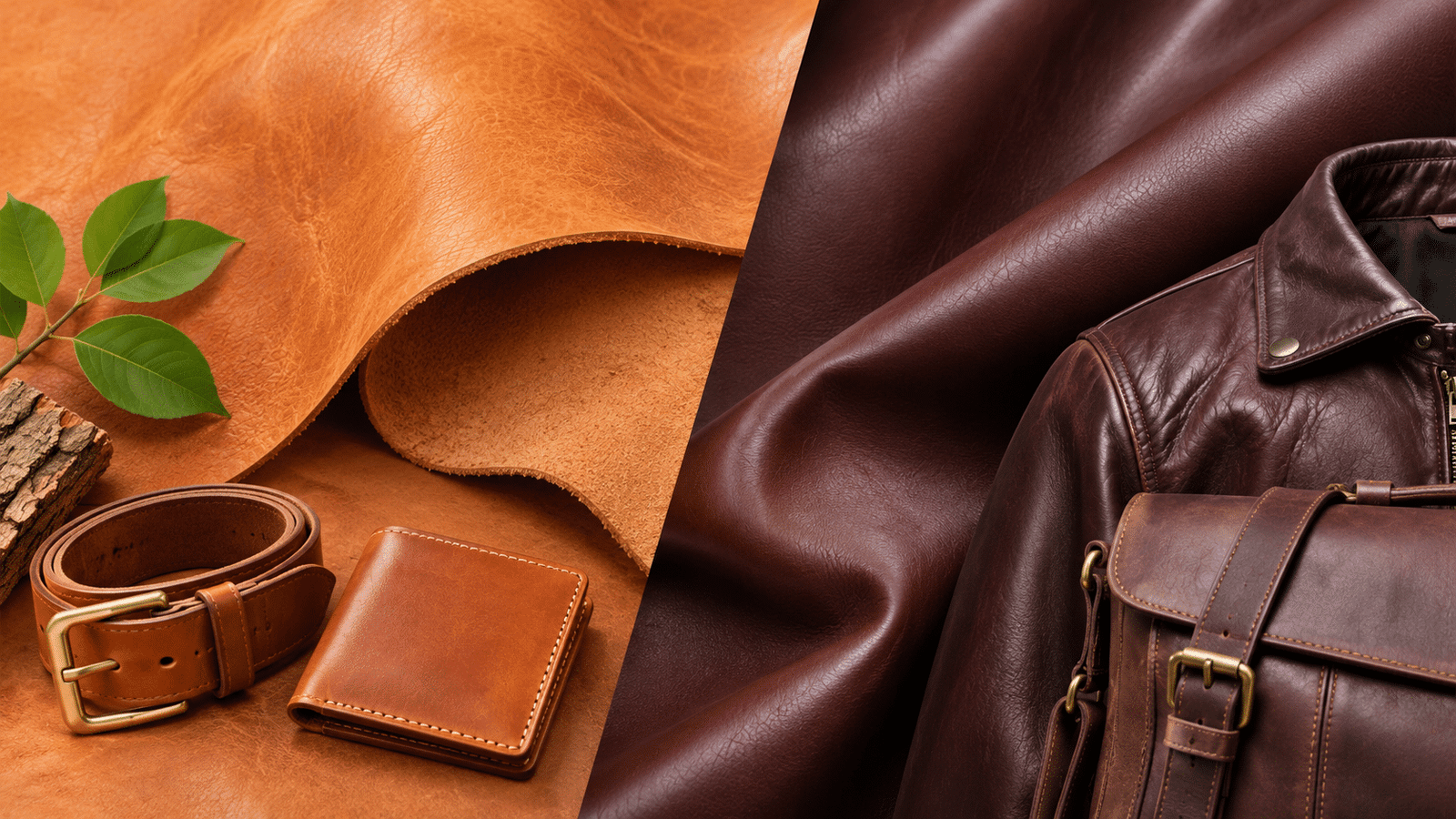

Leather tanning is an essential process that transforms raw animal hides into durable, usable leather. Two of the most common methods are vegetable tanning and chrome tanning. Although both produce quality leather, they differ in their tanning materials, production time, texture, appearance, and performance.
Vegetable-tanned leather is known for its firm structure and natural aging process, while chrome-tanned leather is valued for its softness, flexibility, and consistent finish. Understanding these differences can help you choose the right leather for jackets, bags, wallets, belts, and other leather products.
What Is Vegetable-Tanned Leather?
Vegetable-tanned leather is leather processed using natural tannins extracted from plant materials such as tree bark, leaves, roots, and other botanical sources. These tannins react with the animal hide’s proteins, making the material more stable, durable, and suitable for everyday use.
This traditional tanning method generally takes longer than chrome tanning, but it produces leather with distinctive characteristics.
Key characteristics of vegetable-tanned leather include:
- Firm Texture: Usually has a stiffer structure, making it suitable for products that need to maintain their shape.
- Natural Appearance: Often features earthy tones and visible natural grain variations.
- Patina Development: Gradually develops a richer appearance through exposure to sunlight, handling, and regular use.
- Long-Lasting Quality: High-quality vegetable-tanned leather can last for many years with proper care.
Vegetable-tanned leather is commonly used for belts, wallets, saddlery, and structured leather accessories.
What Is Chrome-Tanned Leather?
Chrome-tanned leather is produced using chromium-based tanning agents, commonly chromium(III) salts. This method stabilizes animal hides through a chemical tanning process and is widely used in modern leather manufacturing.
Compared with vegetable tanning, chrome tanning is generally faster and produces leather with a softer, more flexible feel. It also allows manufacturers to achieve consistent colors and a wider range of finishes.
Key characteristics of chrome-tanned leather include:
- Soft Texture: Usually feels softer and more supple than vegetable-tanned leather.
- Flexibility: Bends easily, making it suitable for products requiring regular movement.
- Color Consistency: Can be produced in a wide range of colors and finishes.
- Moisture Resistance: Generally offers better resistance to moisture than comparable untreated vegetable-tanned leather, although it is not waterproof.
Chrome-tanned leather is widely used in leather jackets, furniture upholstery, footwear, and flexible leather bags.
Vegetable-Tanned vs. Chrome-Tanned Leather: Key Differences
The main difference between vegetable-tanned and chrome-tanned leather is the tanning agent used during production. However, the choice of tanning method also influences the leather’s texture, flexibility, appearance, and typical applications.
| Comparison Factor | Vegetable-Tanned Leather | Chrome-Tanned Leather |
| Tanning Process | Uses plant-based tannins | Uses chromium-based agents |
| Texture | Generally firmer | Generally softer |
| Flexibility | Less flexible initially | More flexible |
| Appearance | Natural, earthy appearance | Wide range of colors and finishes |
| Patina | Develops a noticeable patina | Usually develops less patina |
| Water Resistance | Generally lower | Generally higher |
| Production Time | Usually longer | Usually faster |
| Common Uses | Belts, wallets, saddlery | Jackets, upholstery, bags |
These are general characteristics. Actual performance also depends on the hide quality, thickness, finishing, and manufacturing process.
Pros and Cons of Vegetable-Tanned and Chrome-Tanned Leather
Both tanning methods offer advantages, but each has certain limitations depending on the intended application.
Advantages and Disadvantages of Vegetable-Tanned Leather
Advantages:
- Uses naturally derived plant tannins.
- Develops a distinctive patina with age and use.
- Offers a firm structure for products requiring shape retention.
- Suitable for traditional leatherworking and structured accessories.
Disadvantages:
- Generally takes longer to produce.
- Can feel stiff when new.
- Requires care to prevent water stains and moisture damage.
- May be less suitable for products that require immediate softness and flexibility.
Advantages and Disadvantages of Chrome-Tanned Leather
Advantages:
- Soft and flexible texture.
- Available in numerous colors and finishes.
- Generally more resistant to moisture than untreated vegetable-tanned leather.
- Faster production process.
- Suitable for products requiring flexibility and comfort.
Disadvantages:
- Usually develops less noticeable patina.
- May not provide the firmness required for certain structured products.
- Chromium-based tanning requires proper chemical handling and wastewater treatment to reduce environmental risks.
Which Leather Is Better for Different Products?
The best tanning method depends on the product’s design, required flexibility, appearance, and intended use. Neither vegetable-tanned nor chrome-tanned leather is automatically better for every application.
- Leather Jackets: Chrome-tanned leather is commonly preferred because of its softness, flexibility, and comfortable feel.
- Leather Bags: Both methods work well. Vegetable-tanned leather suits structured bags, while chrome-tanned leather is useful for softer, flexible designs. For knife storage, choosing between a Knife Roll vs Knife Bag depends more on storage and portability requirements.
- Leather Wallets: Vegetable-tanned leather is popular because of its firm structure and ability to develop a natural patina.
- Leather Belts: Vegetable-tanned leather is commonly used because its firmness helps maintain the belt’s shape.
- Leather Furniture: Chrome-tanned leather is widely used because of its softness, flexibility, and availability in different finishes.
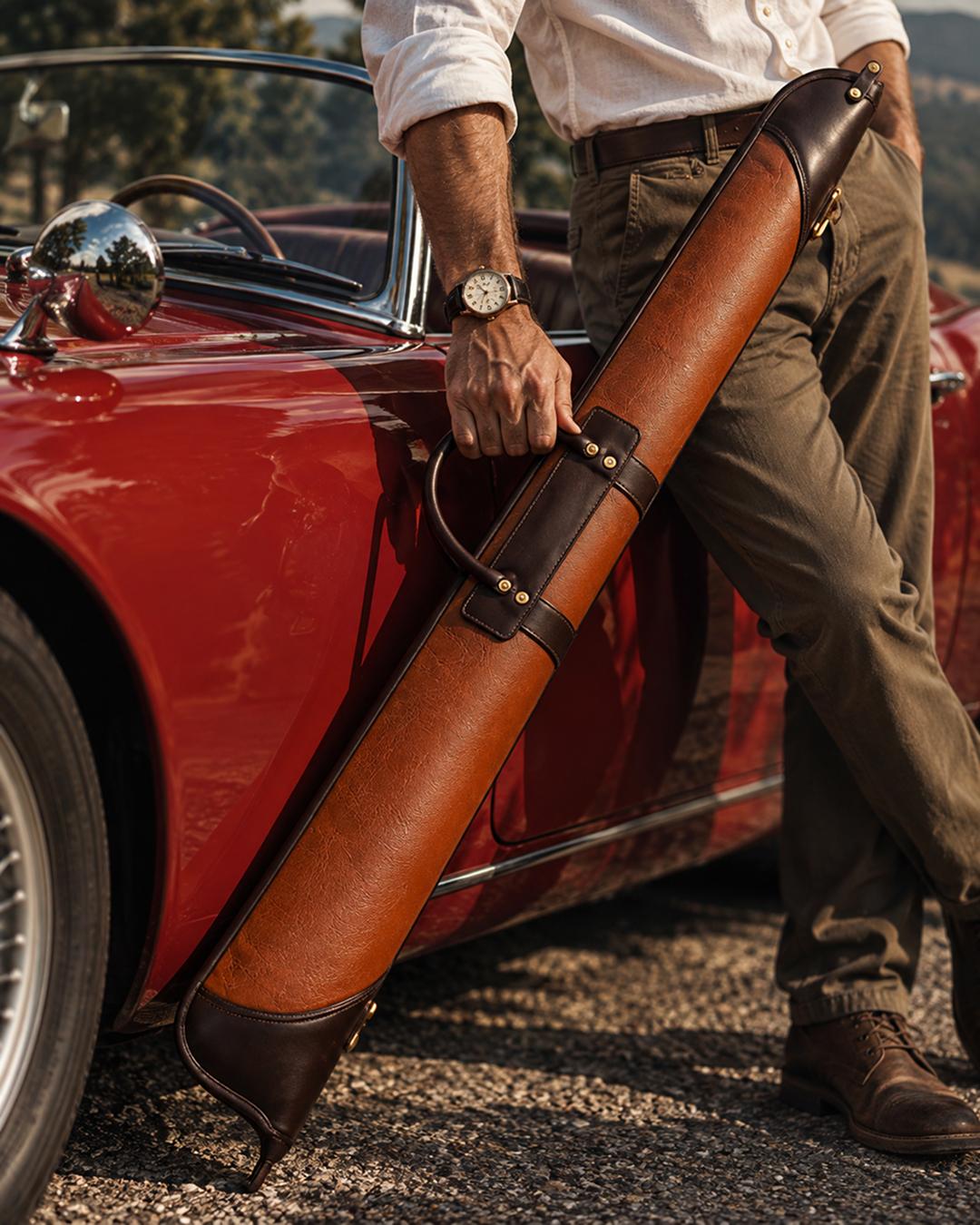
For protective firearm storage, leather quality and construction are also important considerations. Understanding the difference between a Leather Rifle Case vs Hard Rifle Case can help buyers evaluate the appropriate type of protection.
How to Choose Between Vegetable-Tanned and Chrome-Tanned Leather
Before purchasing a leather product, consider these five factors:
- Intended Application: Choose vegetable-tanned leather for structured products and chrome-tanned leather for applications requiring greater flexibility.
- Desired Texture: Consider whether you prefer firm leather or a softer, more supple feel.
- Appearance and Aging: Vegetable-tanned leather develops a distinctive patina, while chrome-tanned leather generally maintains a more consistent finish.
- Maintenance Requirements: Consider the care needed to protect the leather from moisture, stains, and everyday wear.
- Budget and Production Requirements: Vegetable tanning generally requires more production time, while chrome tanning is typically faster. However, actual product prices depend on leather quality, finishing, and craftsmanship.
Also consider leather grades when comparing products. For example, understanding Full-Grain vs Top-Grain leather helps you evaluate the quality of the hide independently of its tanning method.
Frequently Asked Questions
Is vegetable-tanned leather better than chrome-tanned leather?
Neither is universally better. Vegetable-tanned leather is preferred for its firmness and natural patina, while chrome-tanned leather is valued for its softness, flexibility, and color consistency.
Which type of leather is more durable?
Both can be highly durable. Longevity depends on hide quality, leather thickness, tanning standards, finishing, construction, and maintenance rather than the tanning method alone.
Does vegetable-tanned leather develop a patina?
Yes. Vegetable-tanned leather naturally develops a patina through exposure to sunlight, handling, oils, and everyday use, gradually changing its color and appearance.
Is chrome-tanned leather waterproof?
No. Chrome-tanned leather generally offers better moisture resistance than untreated vegetable-tanned leather, but it is not completely waterproof. Water resistance also depends on its finishing and treatment.
Which leather is better for jackets?
Chrome-tanned leather is commonly preferred for jackets because it offers softness, flexibility, and comfort. However, the best choice depends on the jacket’s design and desired feel.
Is vegetable-tanned leather more environmentally friendly?
Vegetable tanning uses plant-derived tannins, but that does not automatically make the entire process environmentally friendly. Its environmental impact depends on water consumption, chemical use, energy requirements, and wastewater management. Chrome tanning can also be managed responsibly with proper chromium recovery and wastewater treatment.
Can you identify vegetable-tanned and chrome-tanned leather?
It can be difficult to identify the tanning method through appearance alone. Vegetable-tanned leather often feels firmer and develops a noticeable patina, while chrome-tanned leather is generally softer and more flexible. However, confirmation from the manufacturer or supplier is more reliable.
Conclusion
Vegetable-tanned and chrome-tanned leather offer different characteristics that make them suitable for different products. Vegetable tanning produces firm leather with a natural appearance and distinctive patina, while chrome tanning creates softer, more flexible leather with consistent colors and finishes.
The right choice depends on the product’s intended use, desired texture, appearance, and maintenance requirements. Rather than choosing one tanning method over the other, consider the overall leather quality, manufacturing standards, and craftsmanship to find the most suitable option.