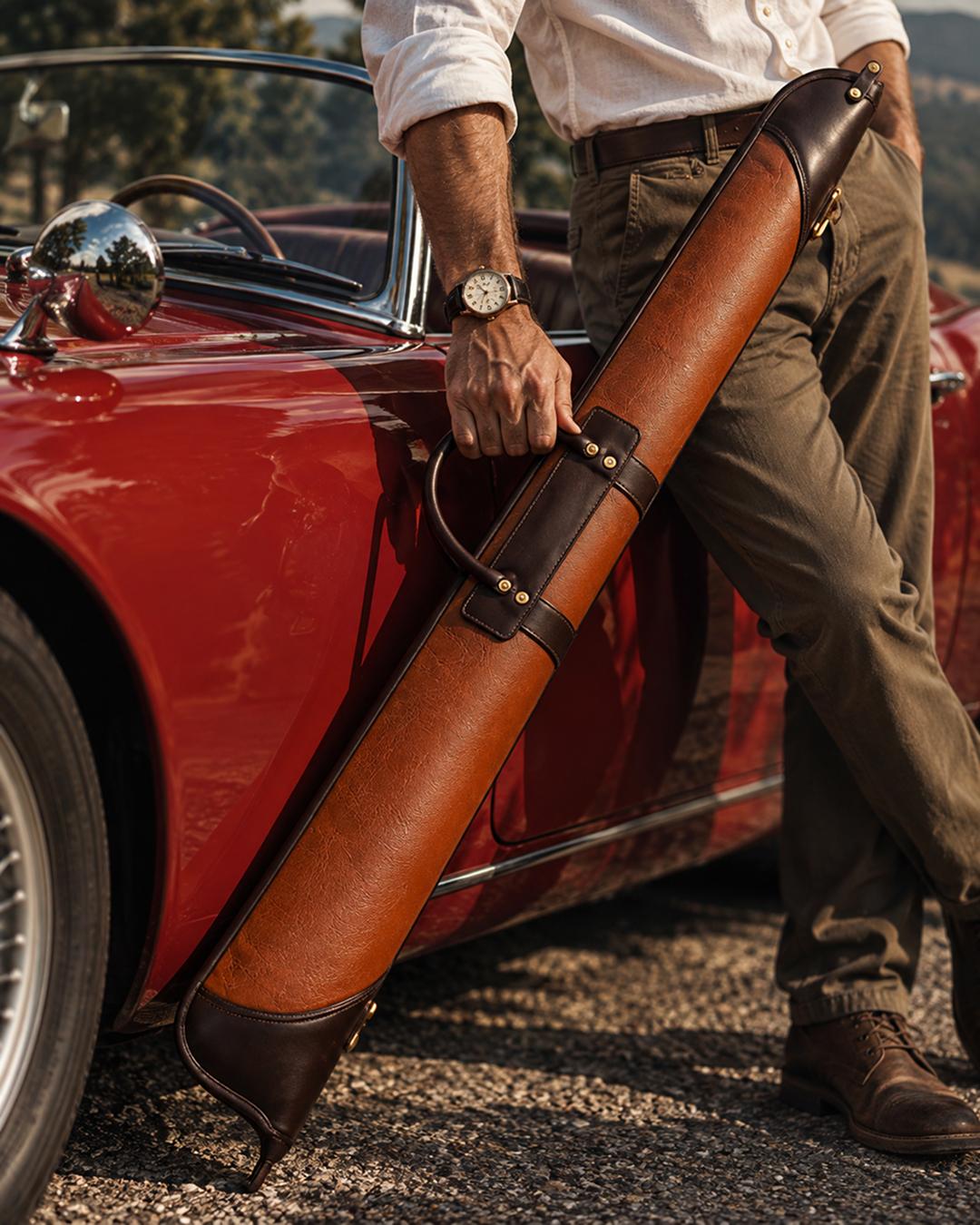



A leather knife roll is a practical storage and carrying solution for organizing knives and other essential tools. Whether used in an outdoor setting, workshop, or professional environment, it helps keep tools organized and makes transportation more convenient.
However, choosing the right knife roll requires more than considering its appearance. Leather quality, storage capacity, pocket dimensions, stitching, closure system, and portability all influence its functionality. Understanding these factors will help you select a leather knife roll that matches your tools and working environment.
What Should You Look for in a Leather Knife Roll?
A suitable leather knife roll should have durable leather, properly sized storage compartments, secure closures, reliable stitching, and a practical carrying design. Buyers should choose its size and layout according to their tools, storage requirements, and whether they plan to use it outdoors or in a workshop.
7 Important Factors to Consider When Choosing a Leather Knife Roll
Before purchasing a leather knife roll, evaluate its material, construction, and storage features. The following seven factors can help you make a practical buying decision.
1. Leather Quality and Type
Leather quality directly influences a knife roll’s durability, appearance, and flexibility. Different leather grades offer different characteristics.
- Full-grain leather: Retains the natural grain surface and is valued for its durability and natural appearance.
- Top-grain leather: Has a refined surface that generally offers a smoother and more uniform appearance.
- Other leather options: Their performance depends on the hide layer, tanning, thickness, and finishing process.
Also consider leather weight and flexibility. The material should be substantial enough to provide a durable structure without making the knife roll unnecessarily difficult to carry.
2. Number of Pockets and Storage Capacity
Storage capacity determines how many knives and accessories a knife roll can accommodate. Before choosing a design, consider the number of tools you regularly carry.
Look for:
- Enough individual knife slots for your collection.
- Additional compartments for smaller tools and accessories.
- Adequate spacing between stored items.
- A layout that prevents overcrowding.
Avoid choosing a roll simply because it has more pockets. Its actual storage dimensions and arrangement are more important than the total pocket count.
3. Pocket Size and Knife Compatibility
Pocket dimensions are essential when selecting a leather knife roll. Different knives have different blade lengths, handle widths, and overall dimensions, so not every compartment will accommodate every tool.
Check the following:
- Pocket width and depth.
- Compatibility with longer and wider knife handles.
- Space between individual compartments.
- Suitable coverage for stored blades.
- Room for other tools you intend to carry.
Choose a layout that accommodates your actual tools rather than assuming all knife rolls have universal pocket sizes.
4. Stitching and Overall Construction
Strong construction helps a leather knife roll withstand repeated use, opening, closing, and transportation. Pay particular attention to stitching around pockets, edges, and other areas that experience regular stress.
Look for consistent stitching, reinforced stress points, securely attached pockets, and properly finished edges. Loose threads, uneven seams, or weak pocket attachments can affect the product’s long-term performance.
A well-constructed knife roll should maintain its shape and storage functionality through regular use.
5. Closure and Securing System
The closure system keeps a knife roll secured during storage and transportation. Common options include leather straps, buckles, snaps, and zippers.
Consider these features when comparing designs:
- Leather straps: Provide a traditional appearance and adjustable fastening.
- Buckles: Offer a secure fastening option when properly constructed.
- Snap closures: Allow relatively quick opening and closing.
- Zippers: Provide an enclosed closure when designed with suitable dimensions and construction.
Whatever system you choose, it should hold the roll securely and help prevent stored tools from shifting or falling out during transportation.
6. Portability and Carrying Comfort
A knife roll should be practical to transport, particularly when used outdoors or between different workspaces.
Consider its overall weight, dimensions when rolled, handle design, and fastening system. A compact design is useful for carrying essential tools outdoors, while a larger roll may be more appropriate for transporting an extensive workshop collection.
If you frequently move between locations, prioritize a comfortable carrying handle or strap and a design that remains securely rolled during transportation.
7. Maintenance and Ease of Cleaning
Leather requires appropriate care to maintain its appearance and condition. A knife roll used outdoors or in a workshop may collect dust, dirt, and other debris.
Choose a design that allows easy access to its compartments for routine cleaning. Also consider whether the leather can be maintained using suitable leather-care products.
Avoid prolonged moisture exposure, and make sure the roll is completely dry before storing it.
Leather Knife Roll for Outdoor Use vs. Workshop Use
Outdoor and workshop environments have different storage and transportation requirements. Understanding these differences helps you choose a knife roll with a suitable layout and construction.
| Feature | Outdoor Use | Workshop Use |
| Design | Compact and portable | Practical and organized |
| Storage | Essential tools and selected accessories | Larger tool collections |
| Construction | Durable stitching and secure closures | Reinforced pockets and seams |
| Portability | Lightweight and easy to carry | Comfortable for repeated transportation |
| Maintenance | Easy to clean after outdoor exposure | Suitable for regular workshop use |
For outdoor activities, prioritize compact dimensions, secure closures, and convenient transportation. For workshop use, consider additional storage capacity, accessible compartments, and reinforced construction.
A versatile leather knife roll can serve both environments if its dimensions, pocket layout, and construction match your requirements.
Common Mistakes to Avoid When Buying a Leather Knife Roll
Choosing a knife roll based only on appearance can lead to storage and usability problems. Avoid these common purchasing mistakes:
- Choosing based only on appearance: Attractive designs do not necessarily offer practical storage.
- Ignoring pocket dimensions: Compartments may not accommodate your knife sizes.
- Buying insufficient capacity: Limited storage can make organizing your tools difficult.
- Overlooking construction: Weak stitching and pocket attachments may reduce durability.
- Choosing unreliable closures: Poor fastening can allow the roll to open during transportation.
- Ignoring portability: Excessive weight or bulky dimensions can make carrying inconvenient.
- Assuming leather is waterproof: Leather can absorb moisture and requires appropriate care.
Evaluating these details before purchasing can help you avoid unnecessary replacements and choose a more functional product.
How to Maintain a Leather Knife Roll for Long-Term Use
Proper maintenance helps preserve leather quality and extend the useful life of your knife roll. Follow these basic care practices:
- Remove dirt and debris after each use.
- Make sure knives and other tools are clean and completely dry before storage.
- Avoid placing damp tools inside the compartments.
- Clean the leather using suitable leather-care products.
- Apply leather conditioner when necessary and according to the manufacturer’s recommendations.
- Store the roll in a dry, ventilated location.
- Keep it away from excessive heat and prolonged moisture exposure.
For more detailed care instructions, read our guide on Clean and Maintain a Leather Knife Roll.
Frequently Asked Questions About Leather Knife Rolls
What is the best leather for a knife roll?
Full-grain leather is generally a strong option because it retains the natural grain surface and offers good durability. However, top-grain leather can also be suitable, depending on its construction and intended use. The ideal choice depends on leather thickness, flexibility, finishing, and overall product quality.
How many knives should a leather knife roll hold?
The number of knives depends on the roll’s pocket count, compartment dimensions, and the size of your tools. Some designs accommodate a small collection, while larger rolls provide space for more knives and accessories. Choose capacity based on your actual storage requirements rather than the maximum pocket count alone.
Are leather knife rolls suitable for outdoor use?
Yes, leather knife rolls can be suitable for outdoor use when they have durable construction, secure closures, and practical carrying features. However, leather is not automatically waterproof. Avoid prolonged exposure to rain and moisture, and clean and dry the roll properly after outdoor use.
What should I look for in knife roll pockets?
Look for individual compartments with sufficient width and depth for your knives. Pocket dimensions should accommodate different blade lengths and handle sizes while keeping tools organized. Secure pocket construction and adequate coverage are also important for convenient and responsible storage.
Is a leather knife roll better than a canvas knife roll?
Neither material is universally better. Leather offers a distinctive appearance, substantial construction, and different durability characteristics depending on its quality. Canvas is often lighter and may be easier to clean. The better choice depends on your budget, carrying requirements, maintenance preferences, and intended working environment.
How do you clean and maintain a leather knife roll?
Remove loose dirt with a soft cloth or brush, and clean the leather using a suitable leather cleaner when necessary. Always remove tools before cleaning and ensure they are dry before storage. Condition the leather when needed and keep the roll in a dry location away from excessive heat.
Final Thoughts: Choosing the Right Leather Knife Roll
Choosing the right leather knife roll requires evaluating more than its appearance. Leather quality, pocket dimensions, storage capacity, stitching, closure design, and portability all contribute to its functionality.
For outdoor use, prioritize compact construction, secure fastening, and convenient transportation. For workshop use, focus on organized compartments, sufficient capacity, and reinforced construction.
Ultimately, the best leather knife roll is one that securely holds your tools, suits your working environment, and offers convenient storage and transport. Consider your actual requirements before purchasing to find a design that offers the right balance of durability, functionality, and practicality.
For professional culinary users, our guides on Best Knife Roll for Culinary Students and Chefs Prefer Leather Knife Rolls offer additional insights into selecting the right knife storage solution.