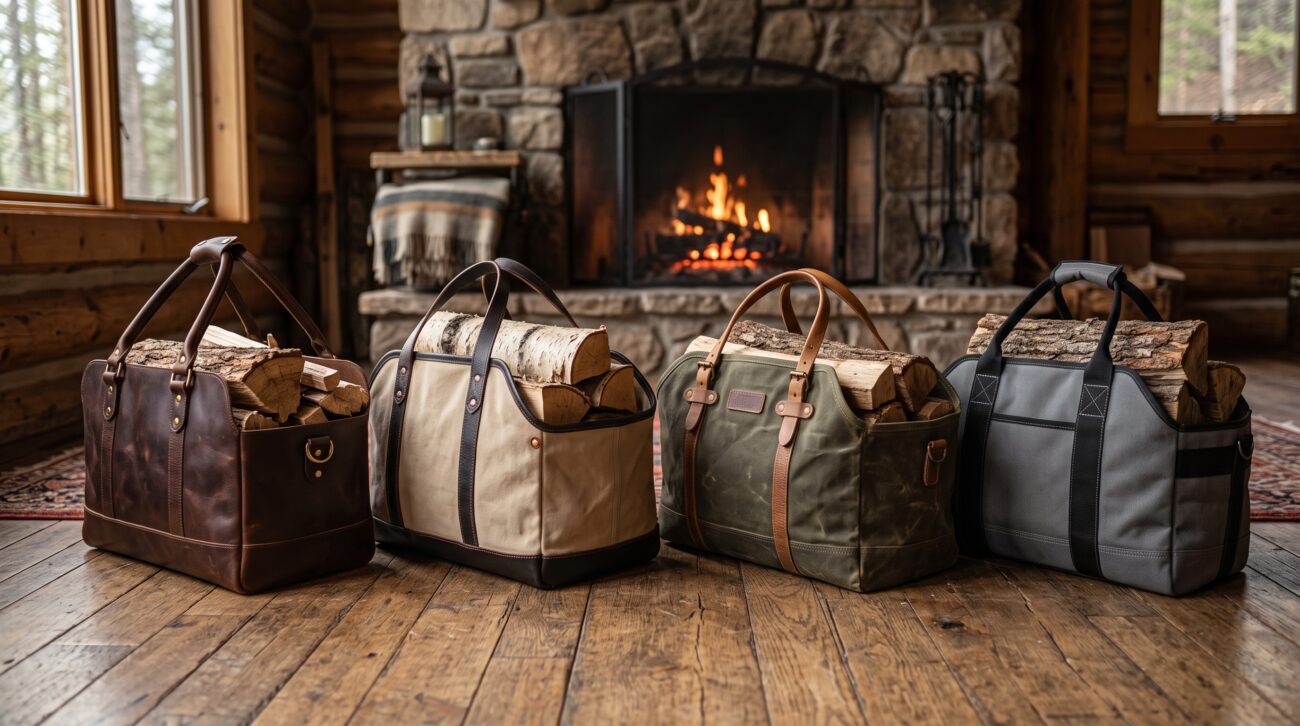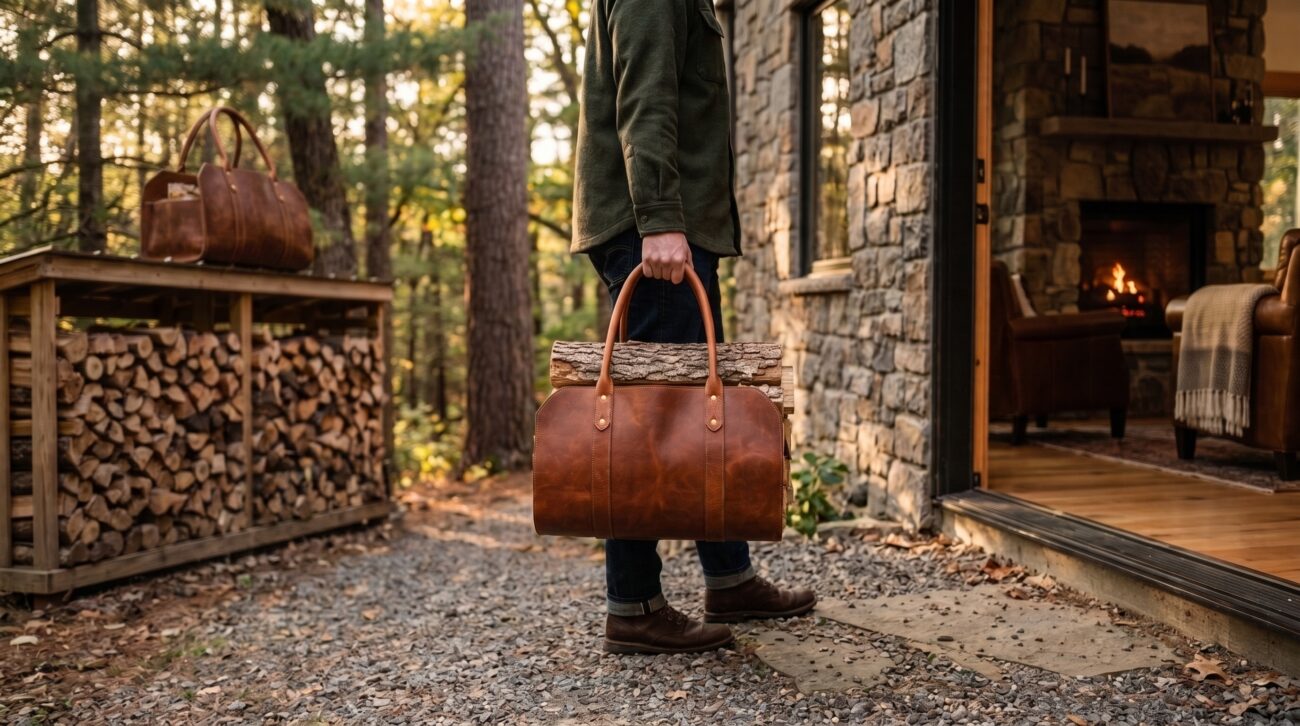

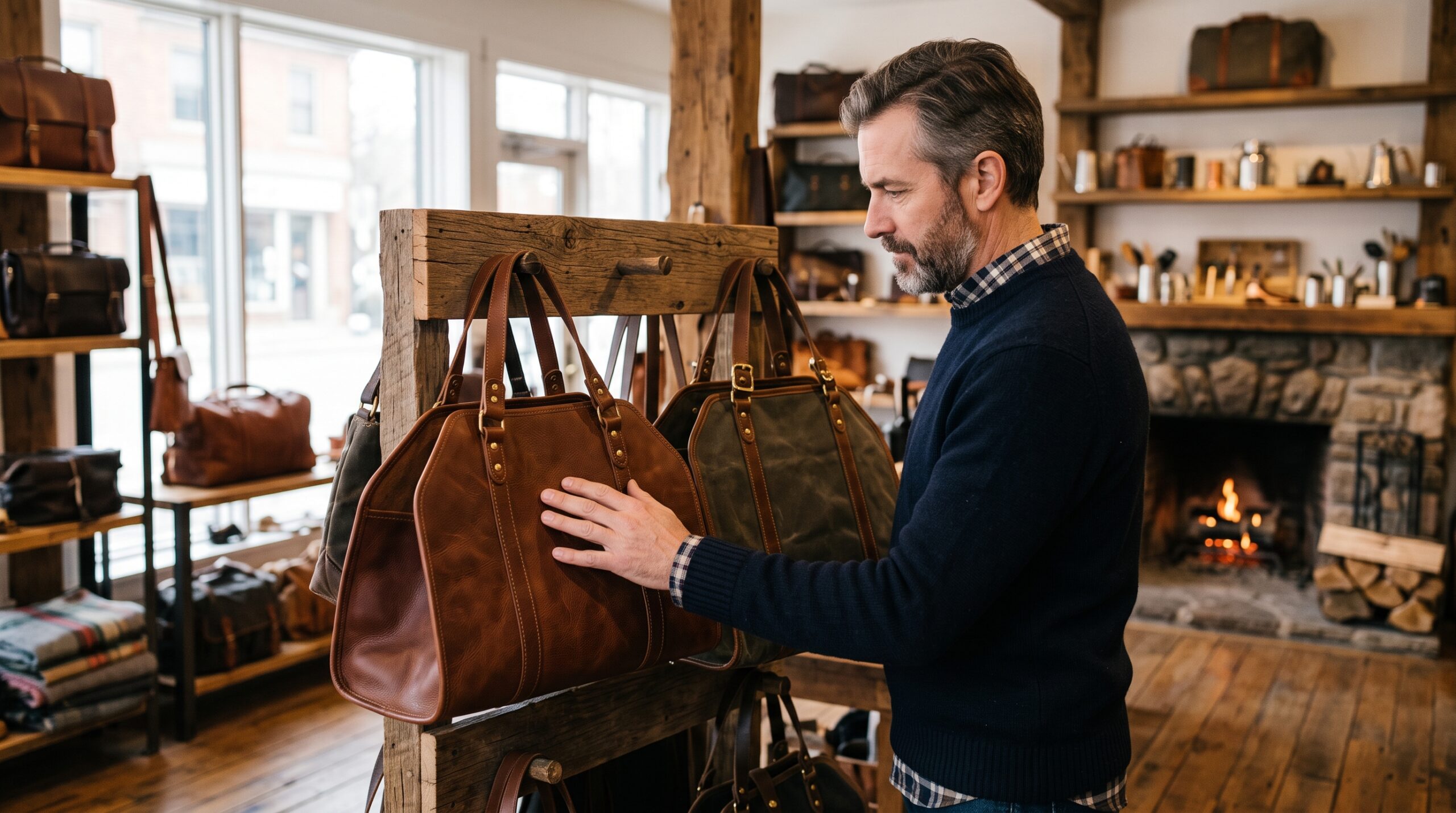

Carrying firewood is one of those tasks that seems simple until you’ve done it a few times. Loose logs can be awkward to grip, bark ends up scattered across the floor, and heavy loads quickly become tiring. A well-made leather firewood carrier solves these everyday problems, but only if you choose one that suits the way you actually use it.
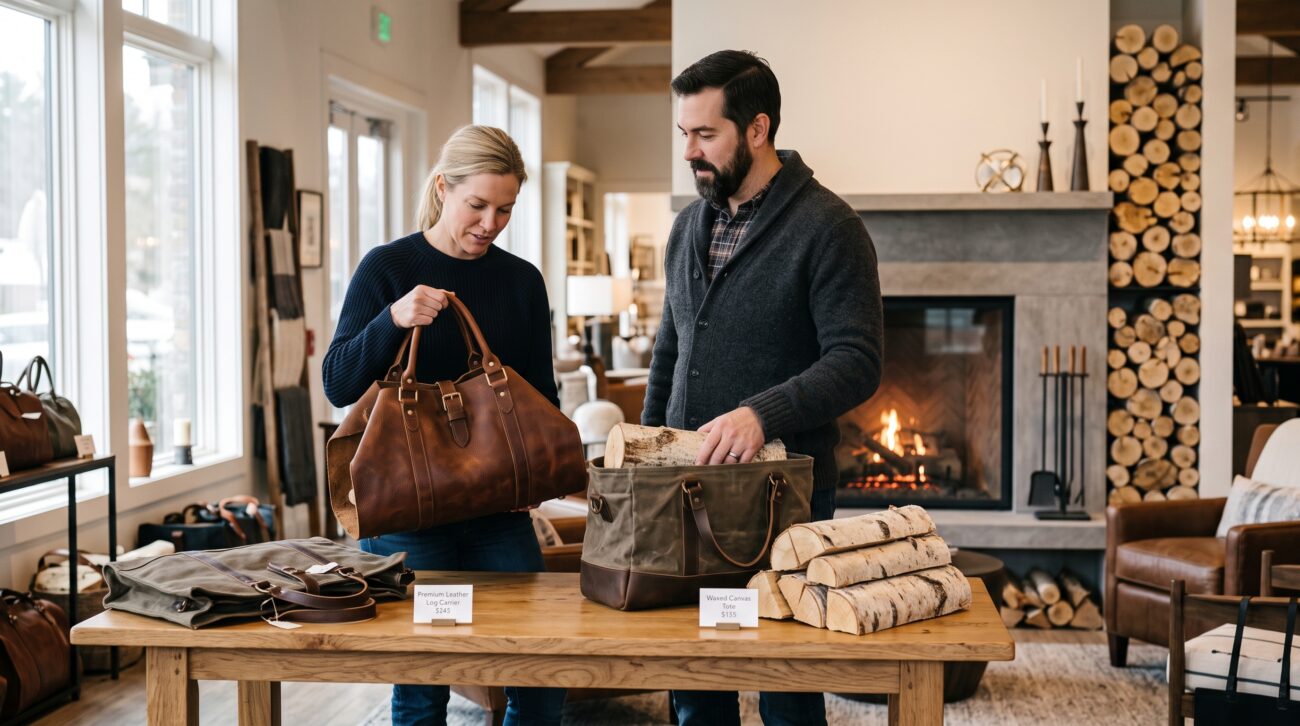
Many buyers focus on appearance first. While a premium finish is certainly appealing, it’s the details behind the design that determine how well a carrier performs season after season. The size, leather quality, stitching, and handle construction all play a role in comfort and durability.
If you’ve already learned what a firewood carrier is and understand why people rely on one instead of carrying logs by hand, you’re ready for the next step: finding a carrier that fits your needs rather than simply picking the first one you see.
Start With How You Carry Firewood
Before comparing materials or designs, think about your routine. The best carrier for one household may not be the right choice for another.
For example, someone using a fireplace on winter evenings has different needs than a homeowner who heats their house with a wood-burning stove every day. Buying based on your routine usually leads to a better long-term decision than buying based on looks alone.
Ask Yourself These Questions
A few simple questions can help narrow your options:
- How often do you bring in firewood?
- How far do you carry it each trip?
- Are your logs generally short or long?
- Will you mostly use the carrier indoors, outdoors, or both?
- Would you rather make one heavy trip or several lighter ones?
Your answers will help determine which features deserve the most attention.
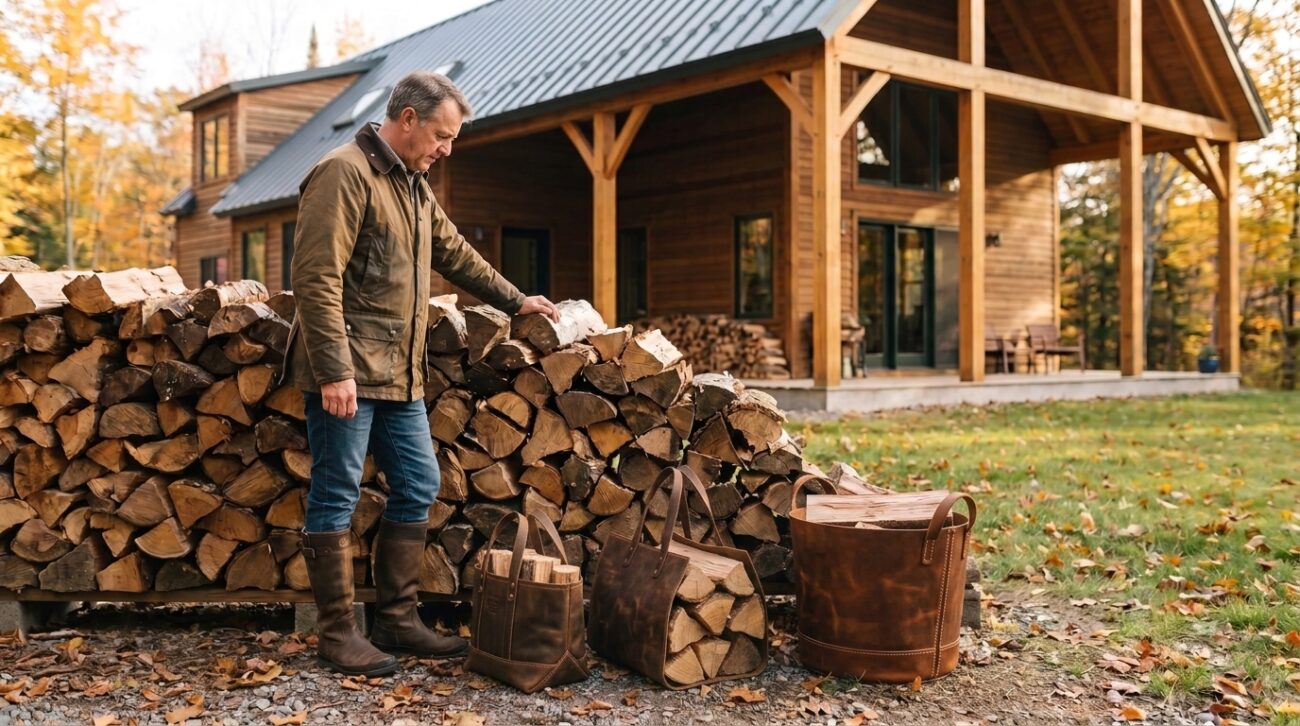
Size Matters More Than You Might Think
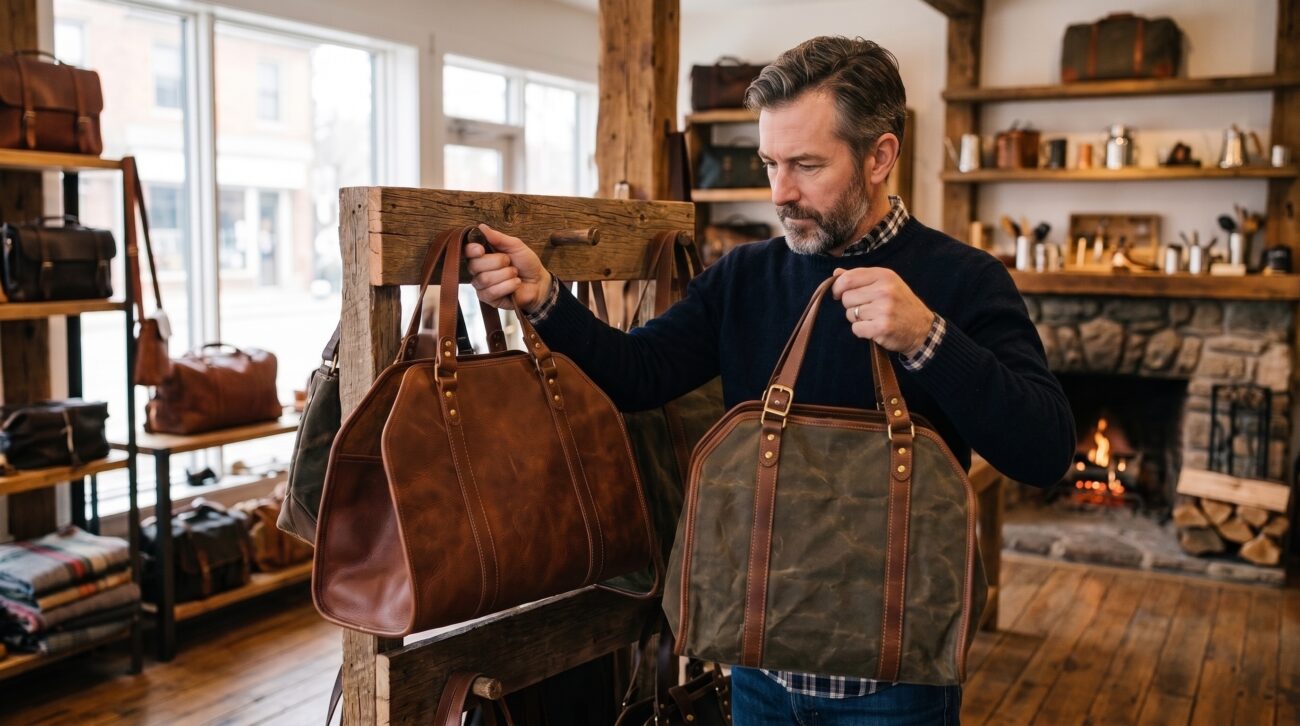
It’s easy to assume that a larger carrier is always the better option because it holds more wood. In reality, that isn’t always the case.
Once a large carrier is filled with hardwood logs, the weight increases quickly. If it’s uncomfortable to lift, you’ll probably end up carrying fewer logs anyway.
A Smaller Carrier Makes Sense If You:
- Only need enough wood for an evening fire
- Walk a longer distance from the woodpile
- Prefer lighter, easier-to-manage loads
- Want better control while carrying
A Larger Carrier Works Better If You:
- Burn firewood every day during the colder months
- Want to reduce the number of trips outside
- Regularly carry longer pieces of wood
- Have enough strength to manage heavier loads comfortably
The goal isn’t to carry the biggest load possible. It’s to carry a load that feels balanced from start to finish.
Pay Attention to the Leather Quality
Not all leather ages the same way. Two carriers may look similar when they’re new, but after a few seasons of use, the difference becomes obvious.
A quality leather firewood carrier should resist stretching, support heavy bundles, and continue performing well without losing its shape.
Why Full Grain Leather Stands Out
Full-grain leather is widely regarded as the strongest option because the hide’s surface remains intact.
It offers several practical advantages:
- Handles repeated lifting without weakening
- Develops a rich patina over time
- Resists everyday wear more effectively
- Maintains its strength for years with proper care
Rather than looking worn out, quality leather often gains more character as it ages.
Don’t Ignore the Construction
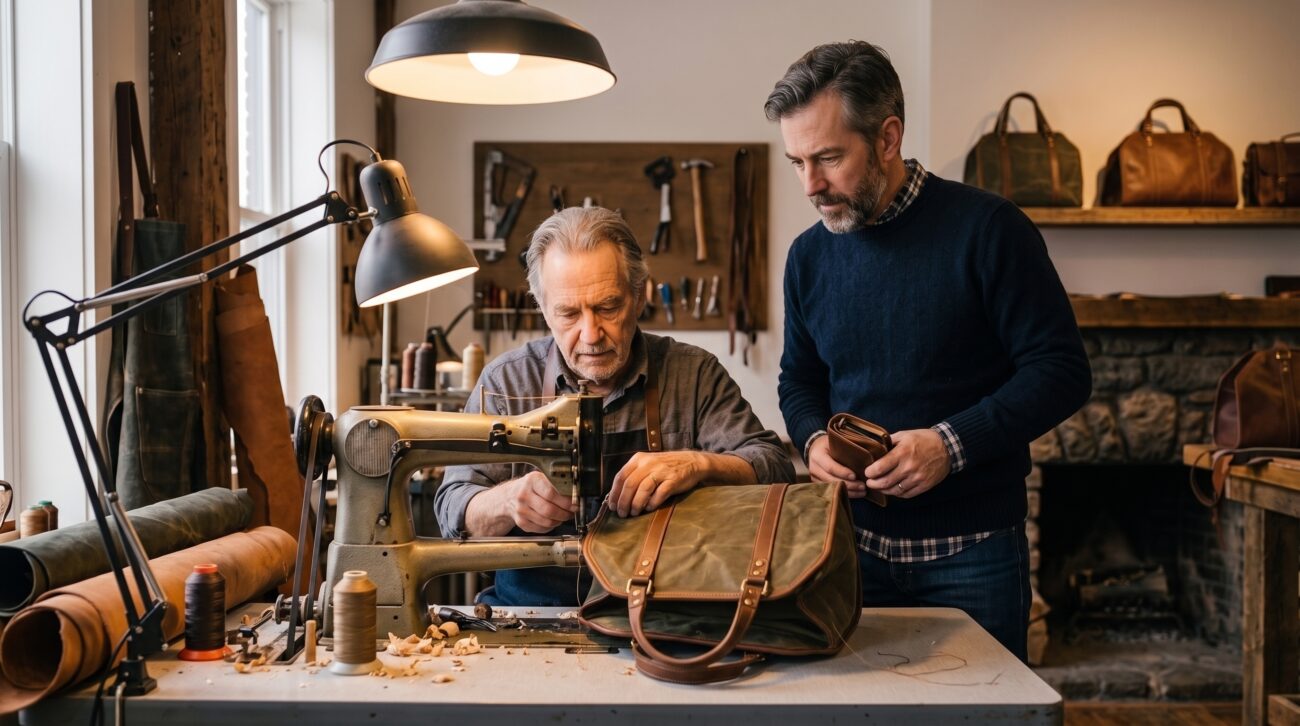
The leather may catch your attention first, but the construction determines whether the carrier remains reliable over years of use.
Strong Stitching Is Essential
Every trip places stress on the seams, especially around the handles. If the stitching isn’t built for heavy loads, it becomes the first area to fail.
Look closely for:
- Even tight stitching
- Reinforced seams in high-stress areas
- Heavy-duty thread designed for weight-bearing products
Good craftsmanship is often visible before you even lift the carrier.
Comfortable Handles Make a Difference
Handles affect every trip you make, yet they’re often overlooked.
A good handle should feel secure in your hands without digging into your grip when the carrier is full.
Features worth looking for include:
- Thick leather handles
- Reinforced attachment points
- Comfortable spacing between handles
- A grip that feels natural while walking
These details may seem minor, but they make carrying heavy firewood noticeably easier.
Pick a Design That Matches Your Routine
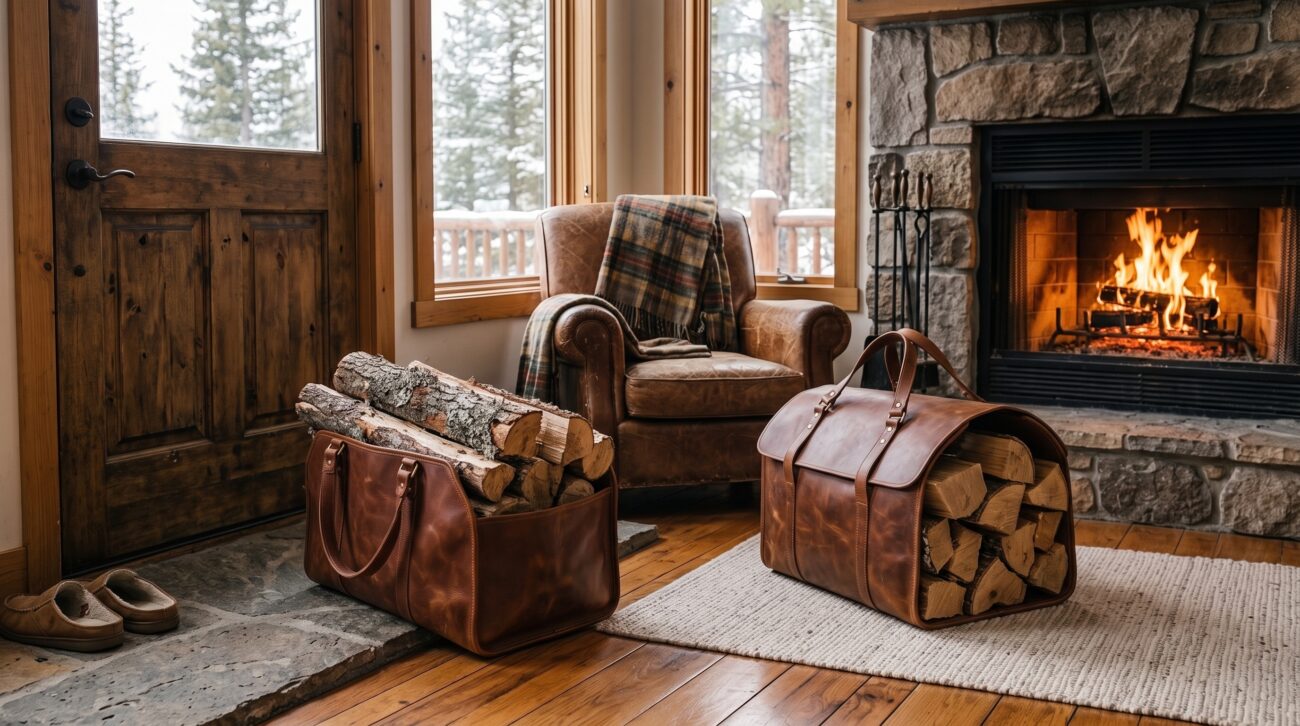
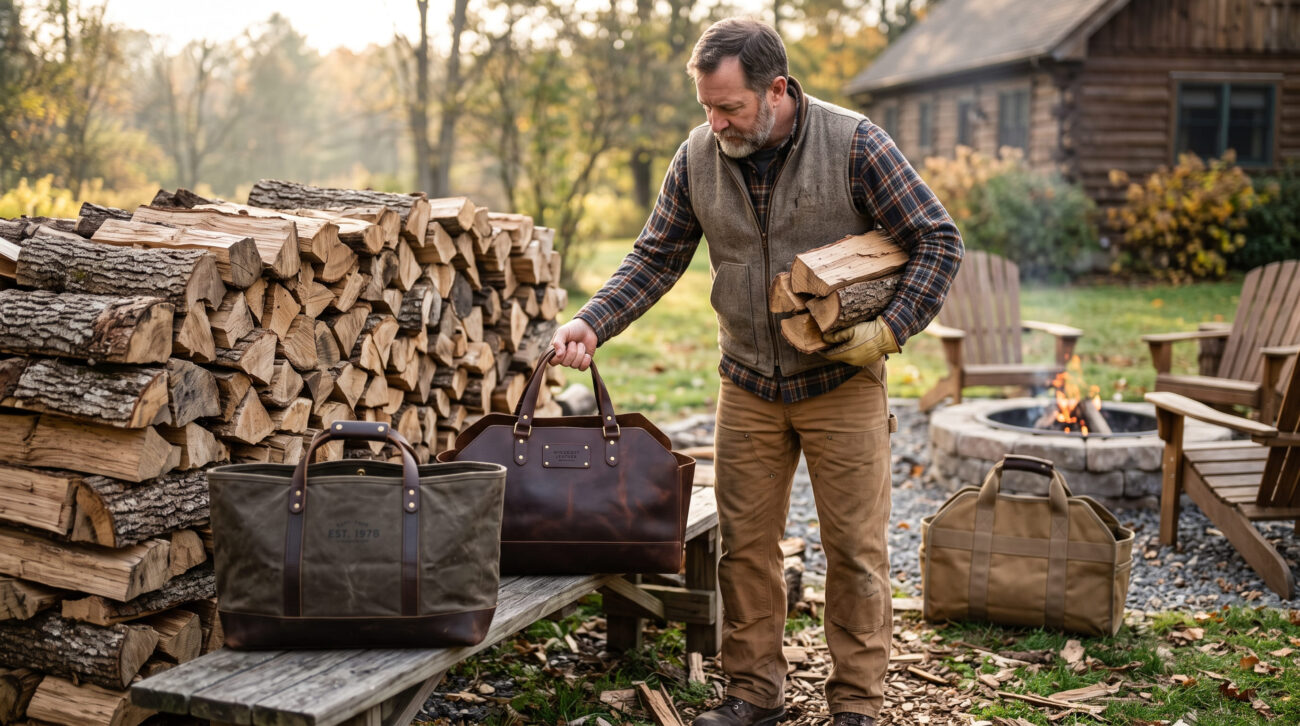
Leather carriers come in different styles, and each has its own advantages. If you’ve looked at the different types of firewood carriers, you’ve probably noticed that no single design suits every situation.
Open-End Design
Open-end carriers leave both ends exposed, allowing longer logs to extend beyond the sides.
This design works well because it:
- Accommodates different log lengths
- Makes loading and unloading quicker
- Handles irregular pieces of firewood with ease
Fully Enclosed Design
Enclosed carriers wrap around the entire bundle, helping contain loose bark and wood chips.
They’re often preferred when transporting firewood through finished indoor spaces where keeping floors clean is a priority.
Pro Tip: Think about how much firewood you carry on a normal day, not your busiest one. A carrier that’s comfortable every week is usually a better investment than one that’s only useful when you need to move the largest possible load.
Think About Where You’ll Use It Most
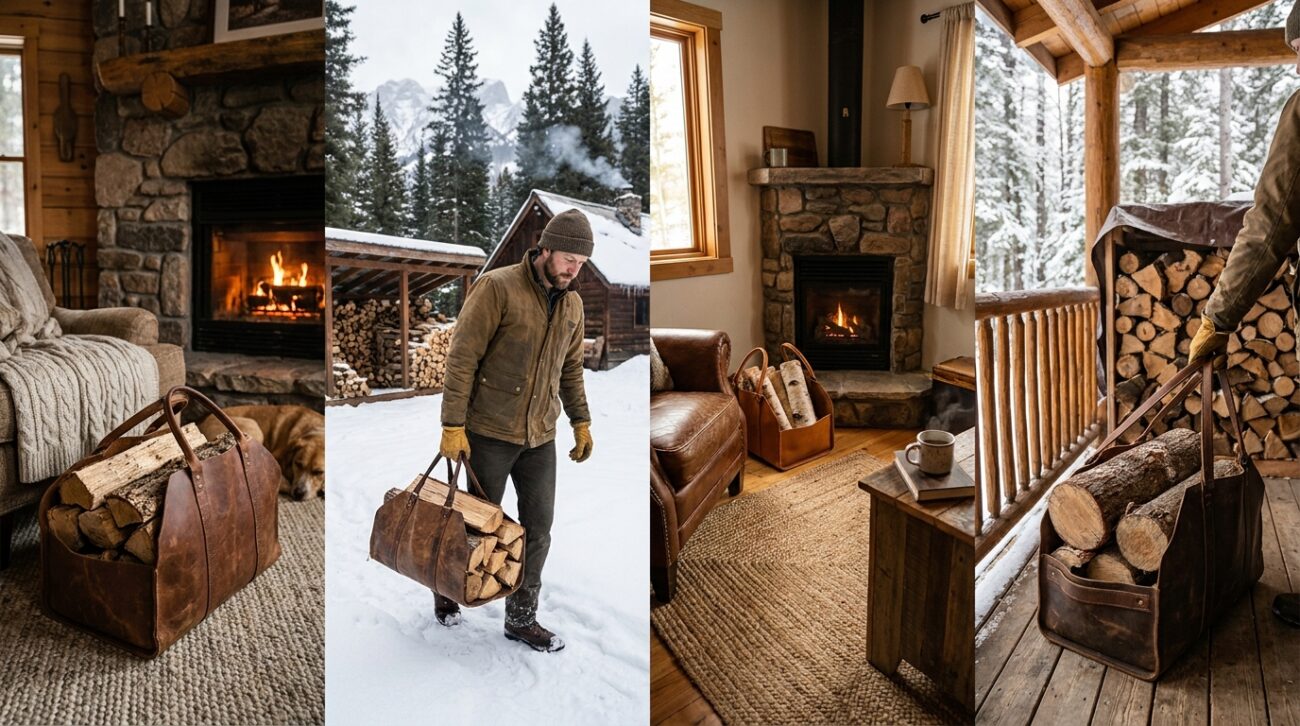
A firewood carrier should fit your daily routine, not just your fireplace.
If most of your trips begin at an outdoor woodpile and end inside your home, choose a carrier that can handle changing conditions without becoming difficult to use. The right design should feel just as dependable on a cold winter morning as it does during occasional weekend fires.
For Outdoor Use
Outdoor use places more stress on a carrier because of uneven ground, moisture, and heavier loads.
Features that make a noticeable difference include:
- Thick leather that keeps its shape under weight
- Reinforced handles for repeated lifting
- Strong stitching around high-stress areas
- A design that stays balanced while walking
For Indoor Use
When bringing logs into the house, convenience becomes just as important as durability.
A well-designed carrier helps keep bark, dust, and small wood chips contained, making it easier to unload logs beside the fireplace without creating extra cleanup afterward.
Balance Is Just as Important as Capacity
Many buyers compare carriers by the number of logs they can hold. In reality, balance often matters more than capacity.
A carrier that keeps the weight centered is easier to lift, easier to carry, and places less strain on your hands and back. Even if it holds slightly fewer logs, you’ll usually find it more comfortable during everyday use.
When comparing different models, pay attention to how the handles are positioned and whether the carrier naturally supports the load without twisting.
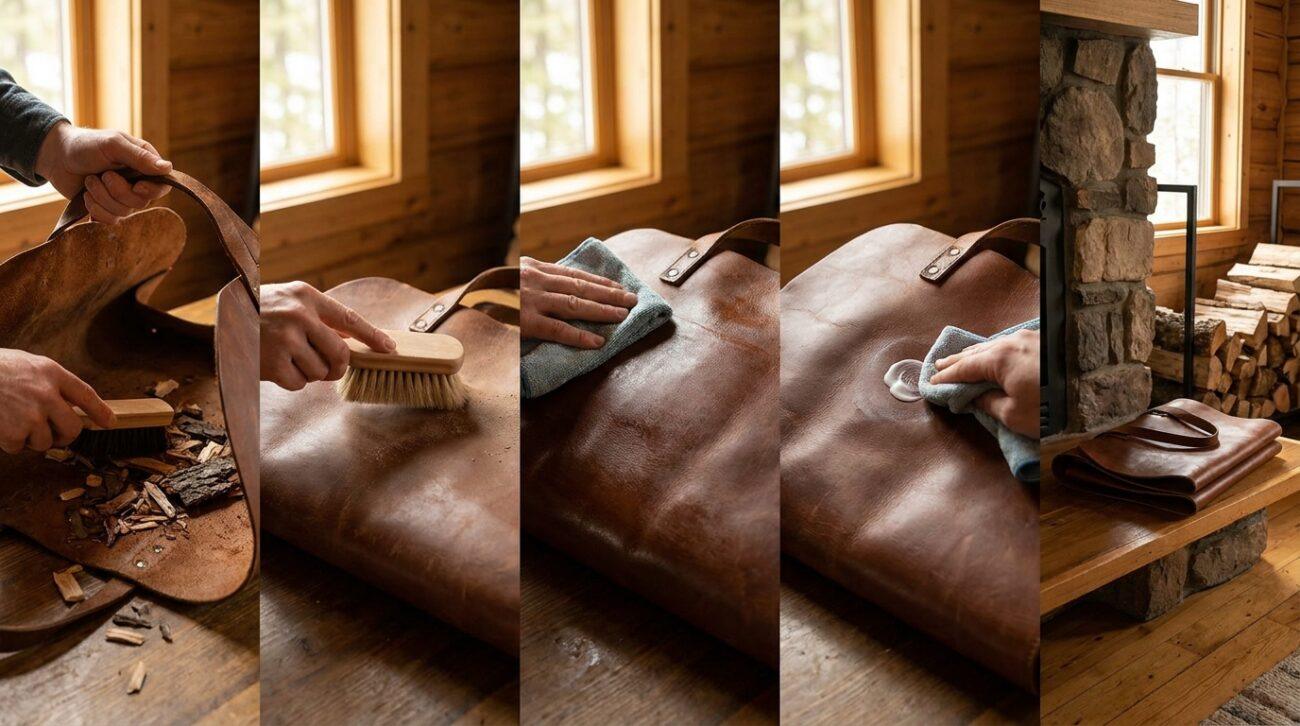
Think About Maintenance Before Buying
Leather is known for its durability, but like any natural material, it benefits from basic care.
Fortunately, maintenance is simple and only takes a few minutes throughout the year.
A few good habits include:
- Wipe away dust, bark, and dirt after use.
- Let the leather dry naturally if it gets wet.
- Apply a leather conditioner a few times each year.
- Store the carrier in a dry place when it’s not being used.
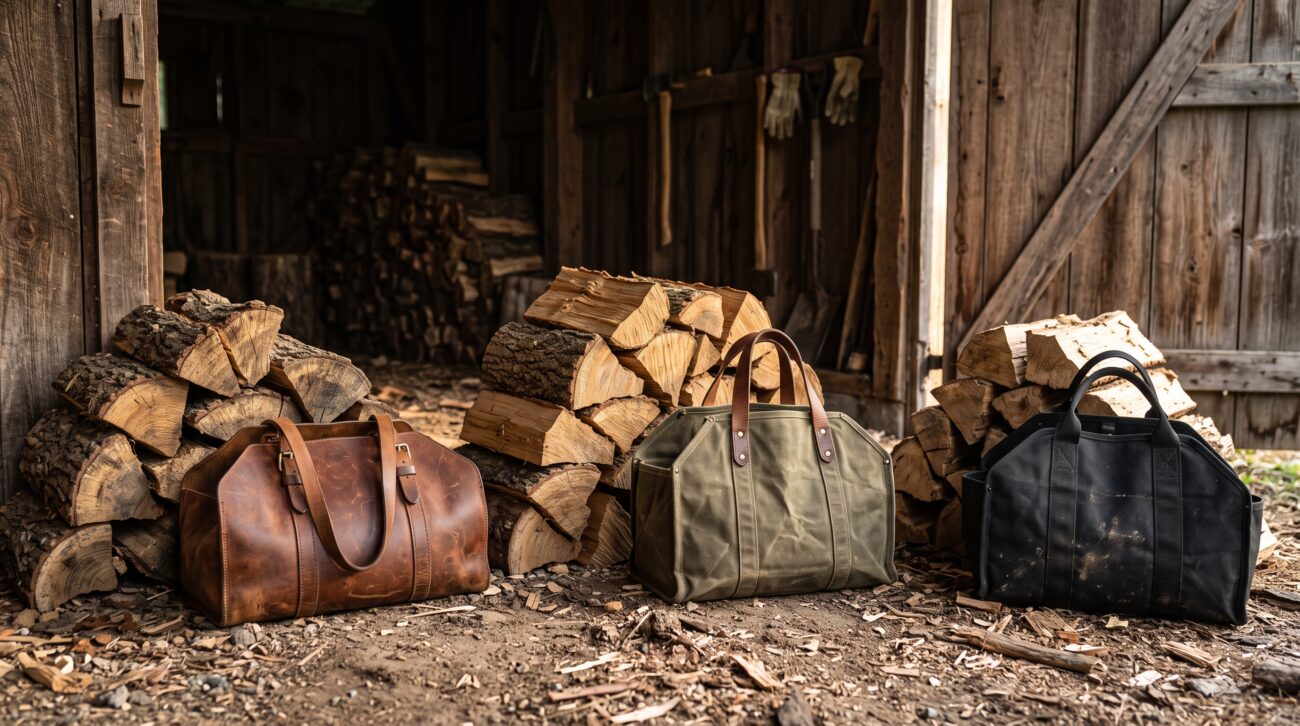
If you’re still deciding between materials, comparing leather, canvas, and fabric firewood carriers can help you understand how each option performs over the years of regular use.
Common Buying Mistakes
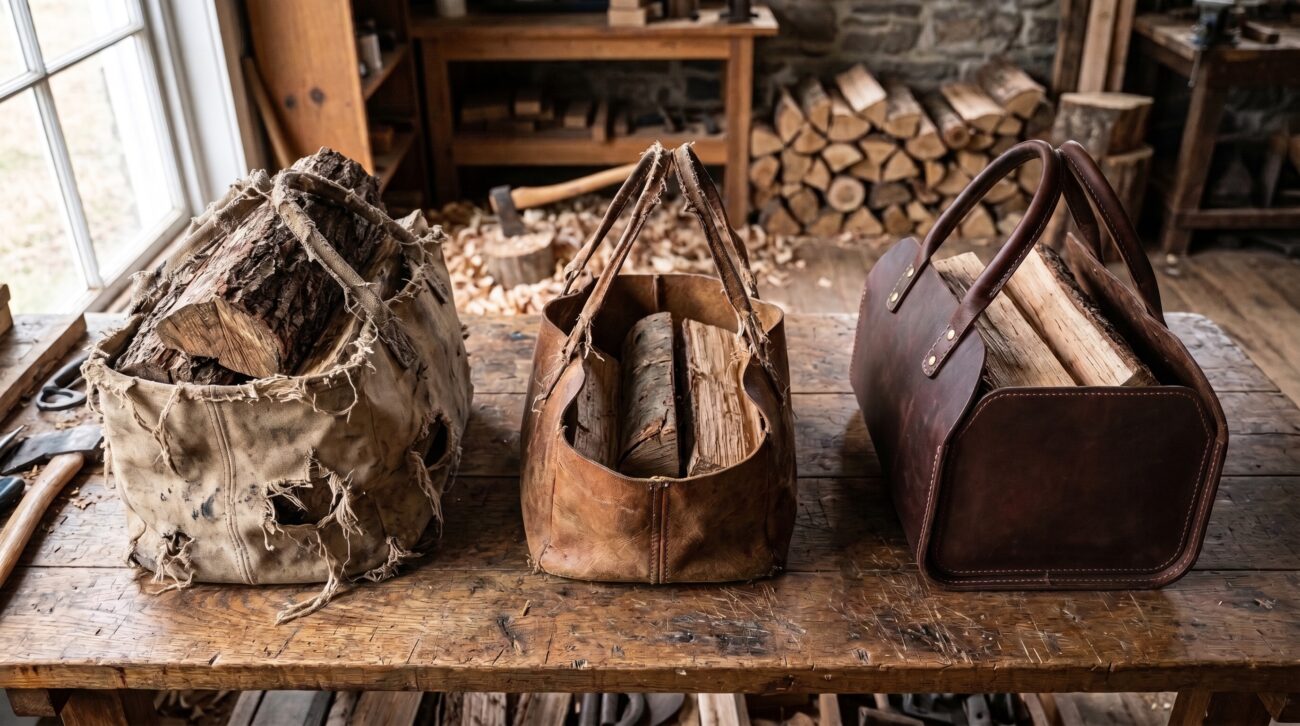
A good-looking carrier isn’t always a good long-term investment. Many buyers overlook practical details that become obvious after the first few weeks of use.
Choosing the Biggest Carrier Available
A larger carrier may seem more efficient, but once it’s packed with hardwood logs, it can become uncomfortable to lift and carry.
It’s usually better to choose a size that matches the amount of firewood you carry most often.
Focusing Only on the Leather
High-quality leather is important, but it isn’t the whole story.
Weak stitching, poorly attached handles, or unbalanced construction can reduce the lifespan of an otherwise excellent carrier.
Buying Based Only on Price
A lower price may save money initially, but replacing a carrier after a short period often costs more than investing in better craftsmanship from the beginning.
A Quick Checklist Before You Buy
Before making your decision, take a few minutes to check these details:
| Feature | Why It Matters |
| Full-grain leather | Better strength and longer lifespan |
| Reinforced stitching | Handles repeated heavy lifting |
| Comfortable handles | Reduces hand fatigue |
| Balanced design | Makes carrying easier |
| Quality hardware | Improves durability |
| Suitable size | Matches your typical firewood load |
A few extra minutes spent comparing these features can prevent disappointment later.
Pro Tip: A firewood carrier should feel comfortable when it’s full, not when it’s empty. If you can imagine carrying it across your yard on a cold winter evening without struggling, you’ve probably found the right size.
Conclusion
The best leather firewood carrier is the one that fits your routine, not simply the one with the highest price tag or the largest capacity. A carrier built with quality leather, reinforced stitching, and comfortable handles will make every trip from the woodpile to the fireplace easier and more enjoyable.
By focusing on practical features instead of appearance alone, you’ll end up with a carrier that performs reliably year after year. Taking the time to compare size, construction, and overall design before buying is a decision you’ll appreciate every time you bring in another load of firewood.
Frequently Asked Questions
1. What size leather firewood carrier is best?
The best size depends on how much firewood you normally carry. Choose a carrier that holds a comfortable load rather than the maximum possible amount.
2. Is full-grain leather better than genuine leather?
Yes. Full-grain leather is stronger, more durable, and develops a natural patina while maintaining its structure over time.
3. How much weight can a leather firewood carrier hold?
The weight varies by design, but a well-made carrier with reinforced handles and stitching is built to transport heavy bundles of firewood safely.
4. Are open-end carriers better than enclosed carriers?
Neither is better in every situation. Open-end designs work well for longer logs, while enclosed carriers help keep bark and debris contained indoors.
5. How do I care for a leather firewood carrier?
Clean it with a dry or slightly damp cloth, allow it to dry naturally if it gets wet, and condition the leather a few times each year.
6. Is leather better than canvas for carrying firewood?
Leather is generally the better choice for frequent use because it offers greater durability and develops character with age. A canvas log carrier can be a practical option for lighter or occasional use.
7. How long should a quality leather firewood carrier last?
With proper care and regular maintenance, a well-made leather carrier can remain reliable for many years.
8. Which feature should I prioritize when buying?
Start with leather quality, then check the stitching, handle construction, balance, and overall craftsmanship before making your final decision.