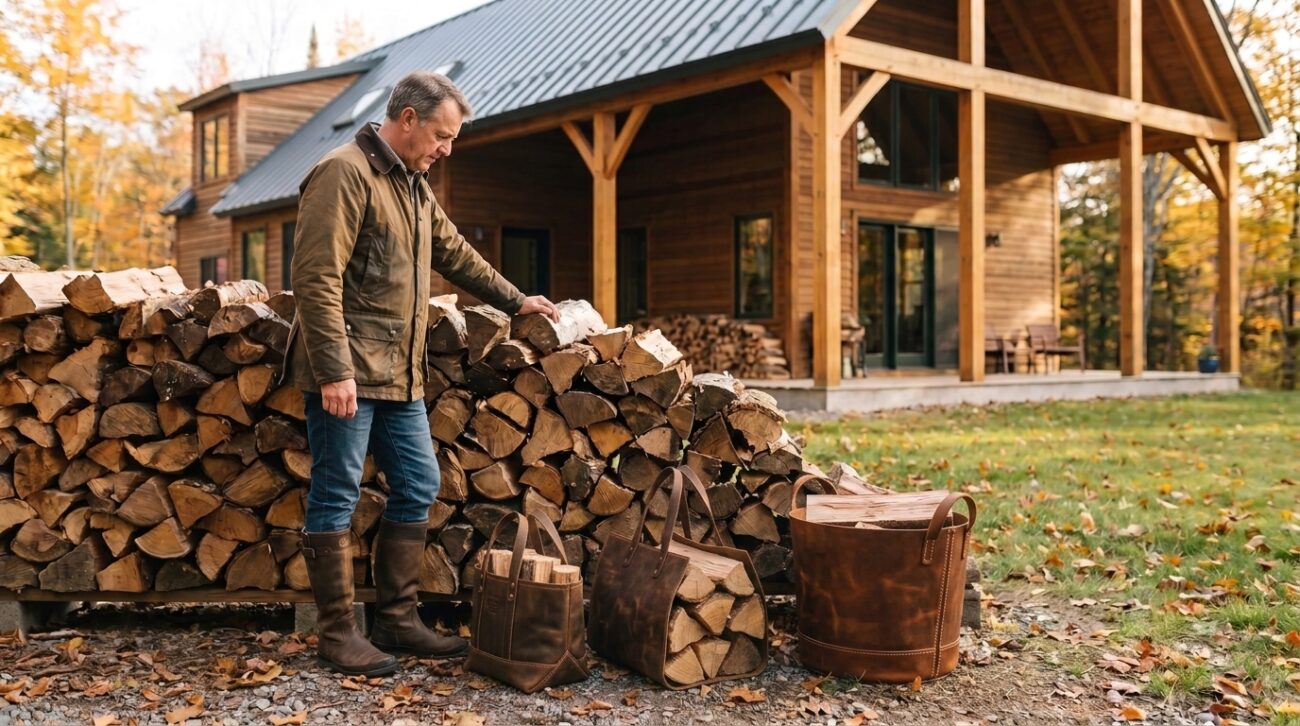


Carrying firewood becomes much easier with the right carrier, but not every firewood carrier is built the same way. Some are designed for everyday fireplace use, while others are better suited for cabins, outdoor fire pits, camping trips, or moving larger loads around the property.
The material, design, and construction all influence how comfortable the carrier feels, how much wood it can hold, and how well it withstands repeated use. Understanding these differences makes it easier to choose a carrier that fits your routine instead of simply picking the first one that looks appealing.
If you’re new to firewood carriers, it helps to first understand what a firewood carrier is and how it works before comparing different designs. Once you know the basics, the differences between leather, canvas, and other materials become much easier to understand.
Why Different Firewood Carriers Exist
A firewood carrier has one main purpose: moving logs from storage to the fireplace, stove, or fire pit. However, the way people use firewood varies from one home to another.
If you’ve ever wondered why many homeowners prefer using a carrier instead of carrying logs by hand, the answer usually comes down to comfort, cleaner floors, and better control over uneven loads.
Because these situations are different, manufacturers build carriers using different materials and designs rather than a single universal style.
What Makes One Firewood Carrier Different From Another?
Although most firewood carriers follow the same basic design, several features influence how they perform.
Material
The material determines how the carrier feels, how it handles weight, and how much maintenance it requires. Leather, canvas, waxed canvas, and heavy-duty fabric all perform differently under regular use.
Construction
Strong stitching, reinforced handles, and well-designed stress points help the carrier support heavy logs more comfortably. Even a thick material may not last if the handles or seams are poorly constructed.
Size
Some carriers are designed for a few indoor fireplace logs, while others accommodate larger loads for wood stoves or outdoor fireplaces.
Intended Use
A carrier that works perfectly beside an indoor hearth may not be the best option for muddy campsites or damp outdoor storage areas.
The Most Common Types of Firewood Carriers
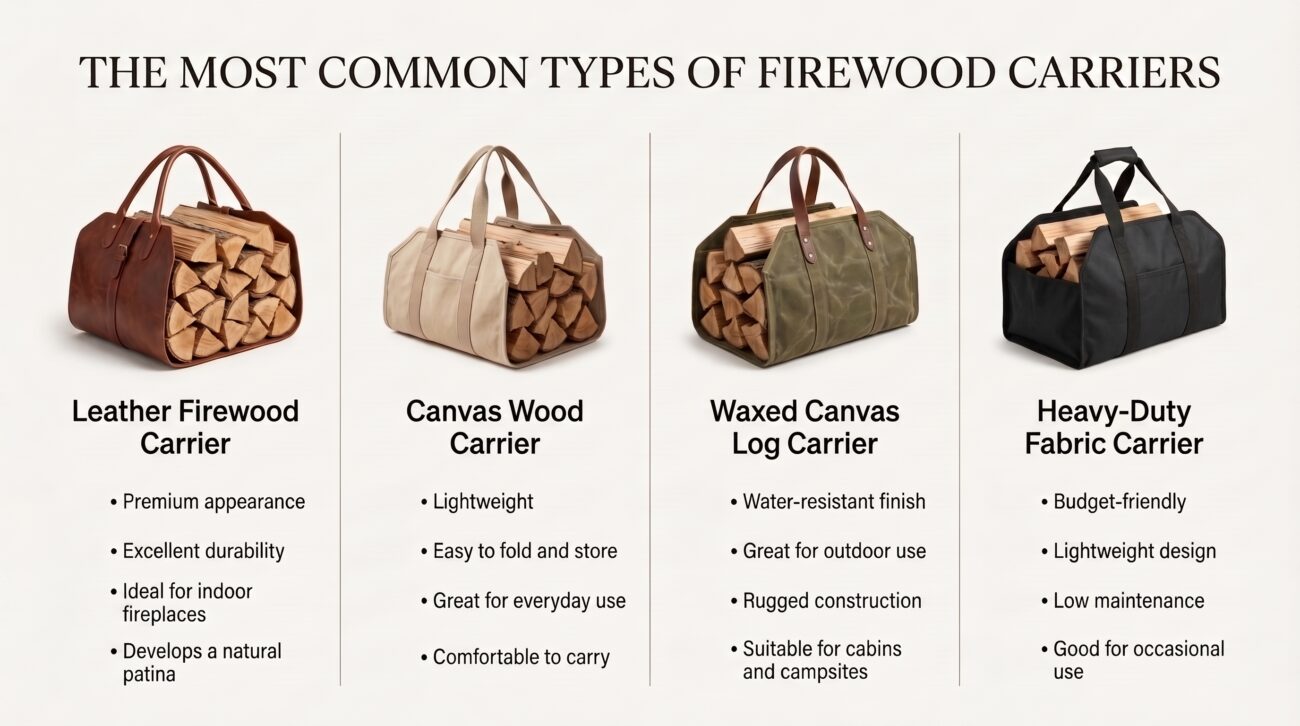
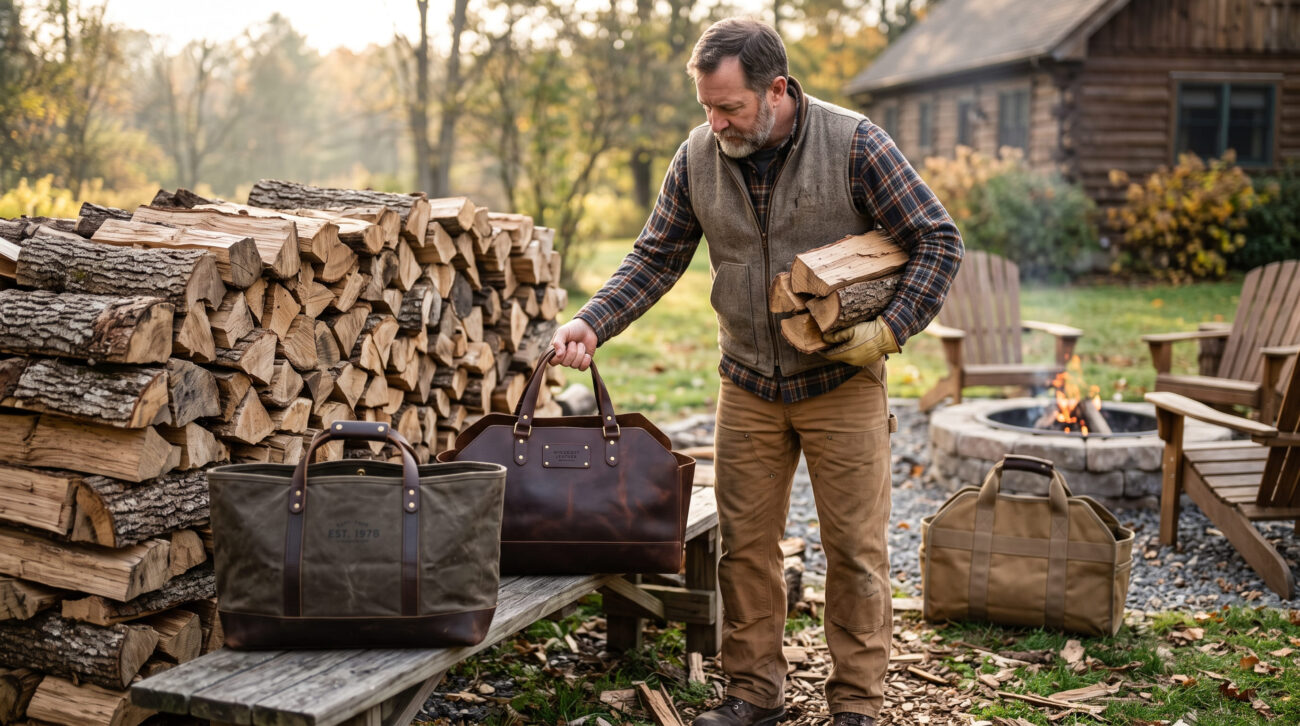
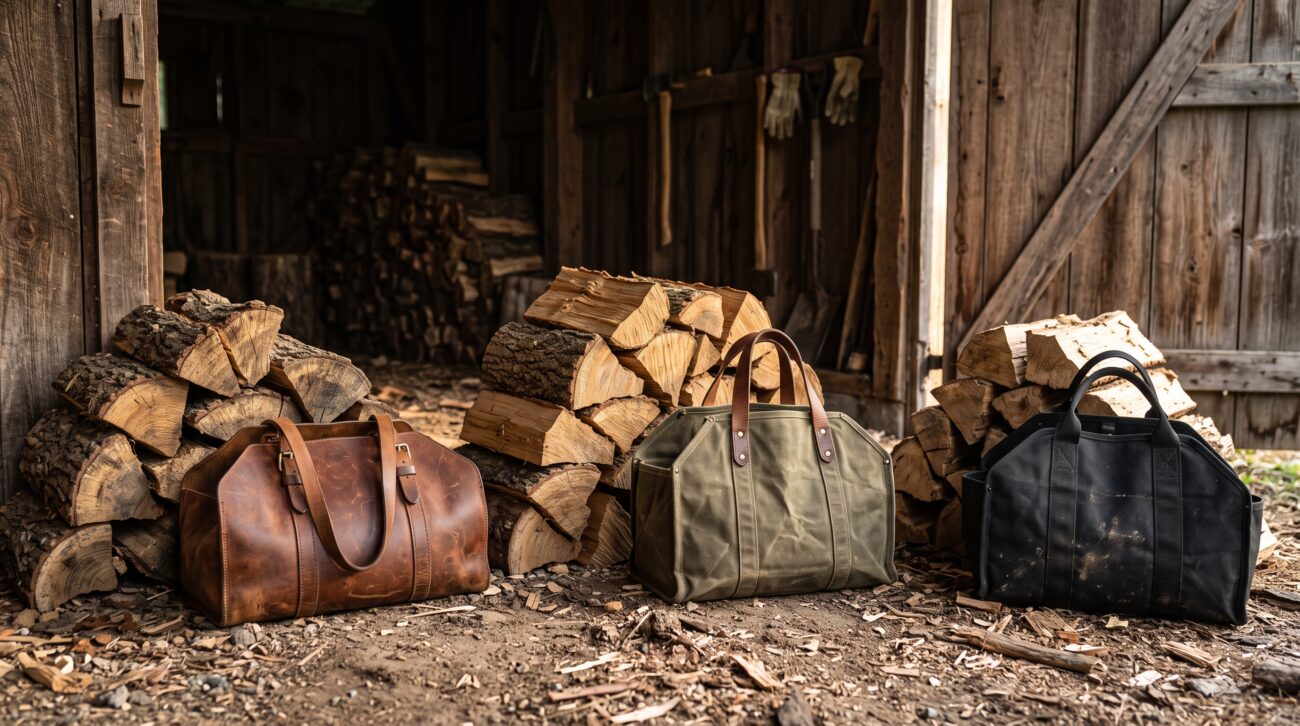
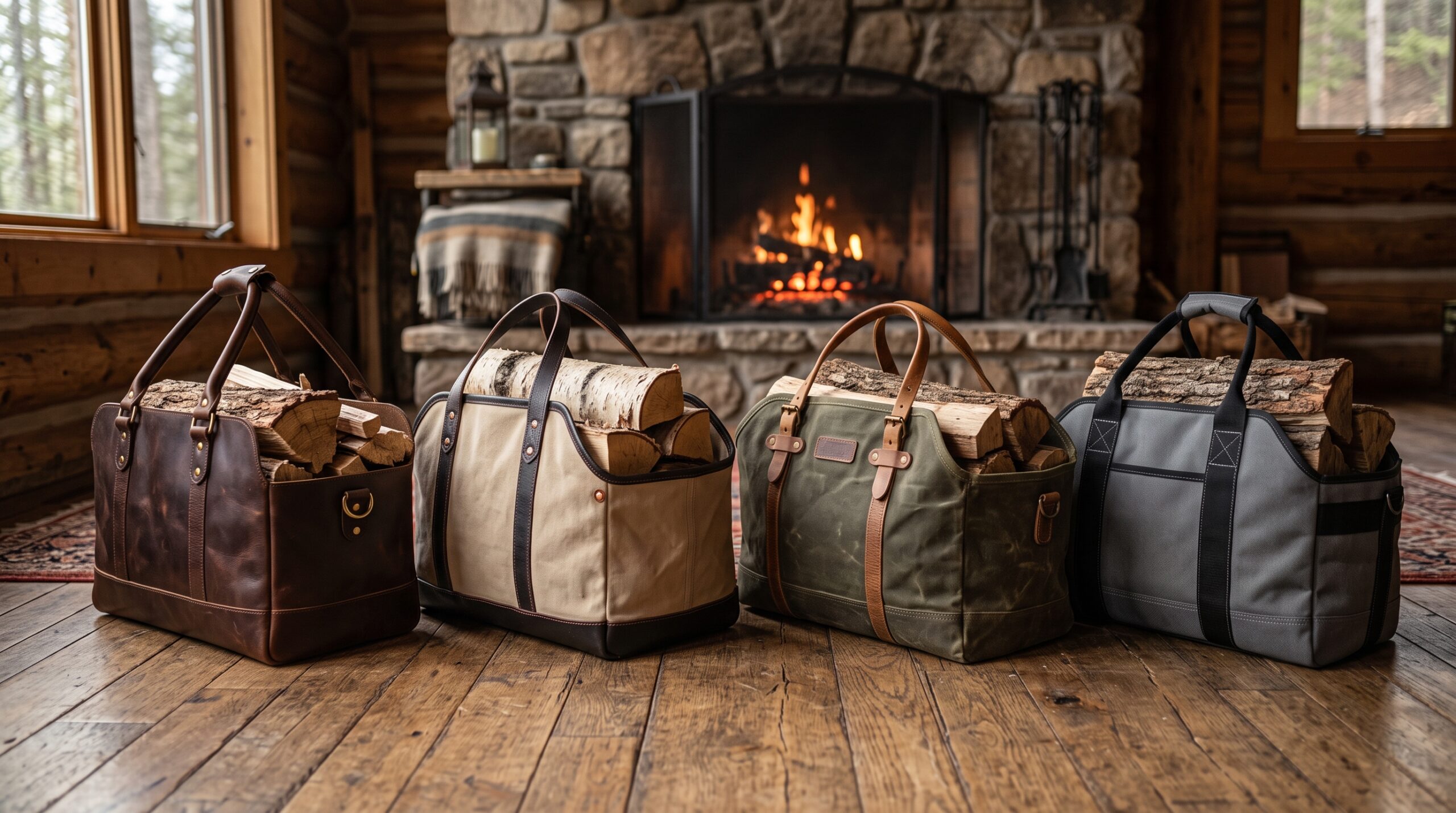
Today’s firewood carriers are generally available in four main material categories.
Leather Firewood Carriers
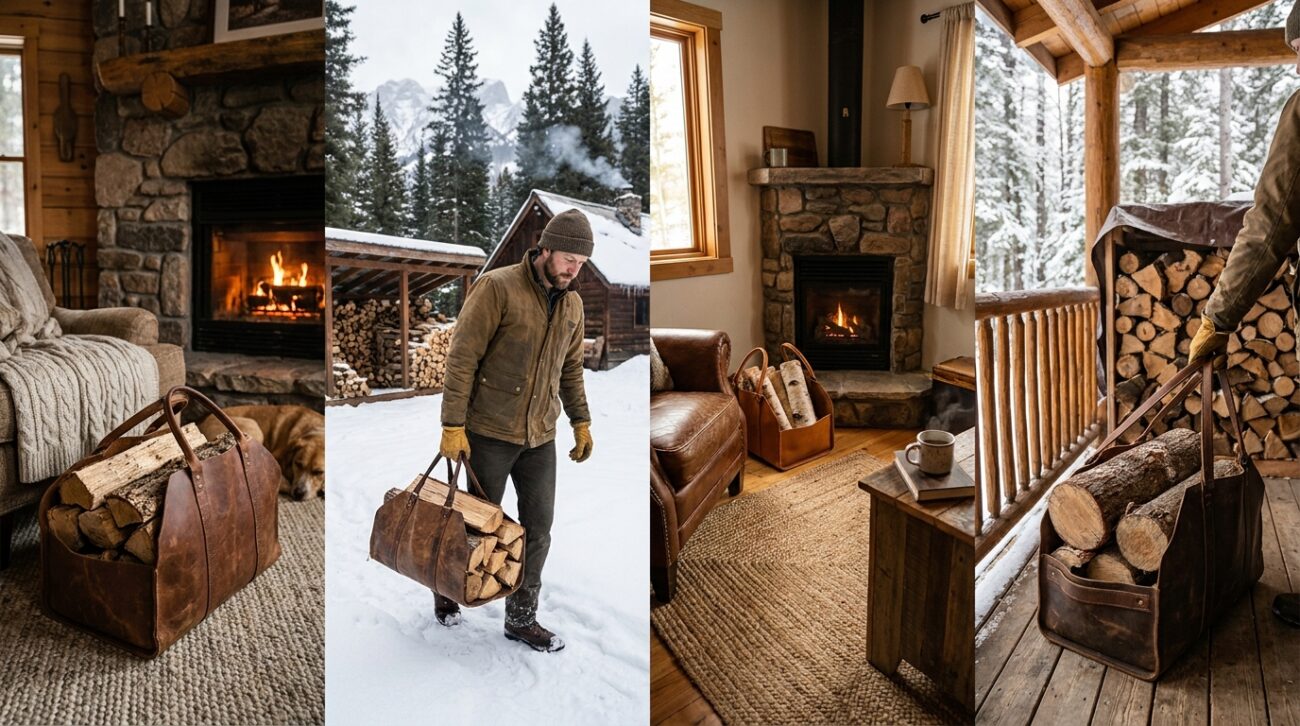
A leather firewood carrier remains one of the most popular choices for homeowners who use fireplaces regularly. Leather combines flexibility with strength, allowing the carrier to wrap around uneven logs while maintaining enough structure to support the load.
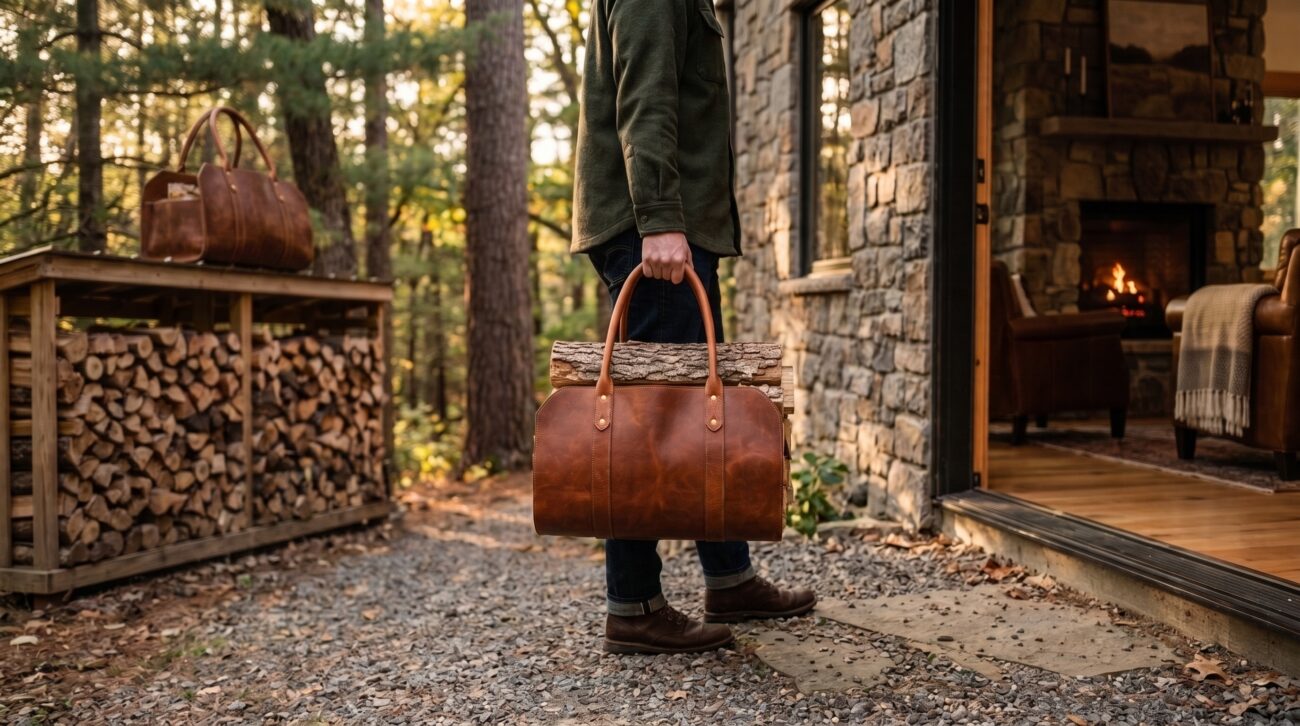
Unlike lighter materials that may sag under heavier wood, leather tends to keep its shape while remaining comfortable to carry. This makes it particularly suitable for transporting firewood from an outdoor rack to an indoor fireplace.
Leather also fits naturally into traditional fireplace settings. Whether placed beside a stone hearth, wood-burning stove, or cabin fireplace, it often looks like part of the room rather than a storage accessory.
Over time, many leather carriers develop a natural patina that reflects regular use instead of appearing worn out.
Canvas Wood Carriers
A canvas wood carrier offers a practical alternative for people who prioritize flexibility and lighter weight.
Canvas carriers are generally easier to fold, store, and transport than leather versions. This makes them useful around garages, sheds, campsites, and outdoor fire pits where appearance is usually less important than convenience.
Canvas also accommodates different log lengths because the material wraps naturally around uneven loads.
Although canvas performs well for everyday carrying, untreated canvas can absorb moisture more easily than leather or waxed canvas if left exposed to wet conditions.
Waxed Canvas Log Carriers
Waxed canvas combines many of the benefits of traditional canvas with additional protection against light moisture.
By applying wax to the fabric, manufacturers create a material that handles damp outdoor conditions better while still remaining flexible enough for everyday use.
A canvas log carrier made from waxed canvas is often preferred for cabins, campsites, backyard fire pits, and covered wood storage where occasional exposure to moisture is difficult to avoid.
Like leather, waxed canvas develops character through regular use, making scratches and folds part of its appearance rather than obvious signs of damage.
Heavy-Duty Fabric Firewood Carriers
Heavy-duty fabric carriers are usually designed with practicality in mind.
Many use reinforced synthetic materials that remain lightweight while supporting moderate firewood loads. These carriers are often chosen for occasional fireplace use or situations where portability matters more than appearance.
Quality can vary considerably depending on stitching, handle construction, and fabric thickness, making overall construction just as important as the material itself.
Comparing Leather, Canvas, Waxed Canvas, and Fabric
Each material offers different advantages depending on how the carrier will be used.
| Feature | Leather Firewood Carrier | Canvas Wood Carrier | Waxed Canvas Log Carrier | Heavy-Duty Fabric |
| Durability | Excellent | Good | Very Good | Good |
| Indoor Appearance | Excellent | Good | Very Good | Fair |
| Outdoor Practicality | Good | Good | Excellent | Good |
| Water Resistance | Moderate | Moderate | Very Good | Varies |
| Weight | Heavier | Lightweight | Moderate | Lightweight |
| Maintenance | Occasional conditioning | Minimal | Minimal | Minimal |
None of these materials is universally better than the others. The right choice depends on where the carrier will be used, how often it will carry firewood, and whether appearance, portability, or long-term durability matters most.
Pro Tip: Choose a firewood carrier based on how often you carry firewood, not just how it looks beside the fireplace. Every day use places very different demands on a carrier than occasional weekend fires.
Open-End vs Closed-End Firewood Carriers
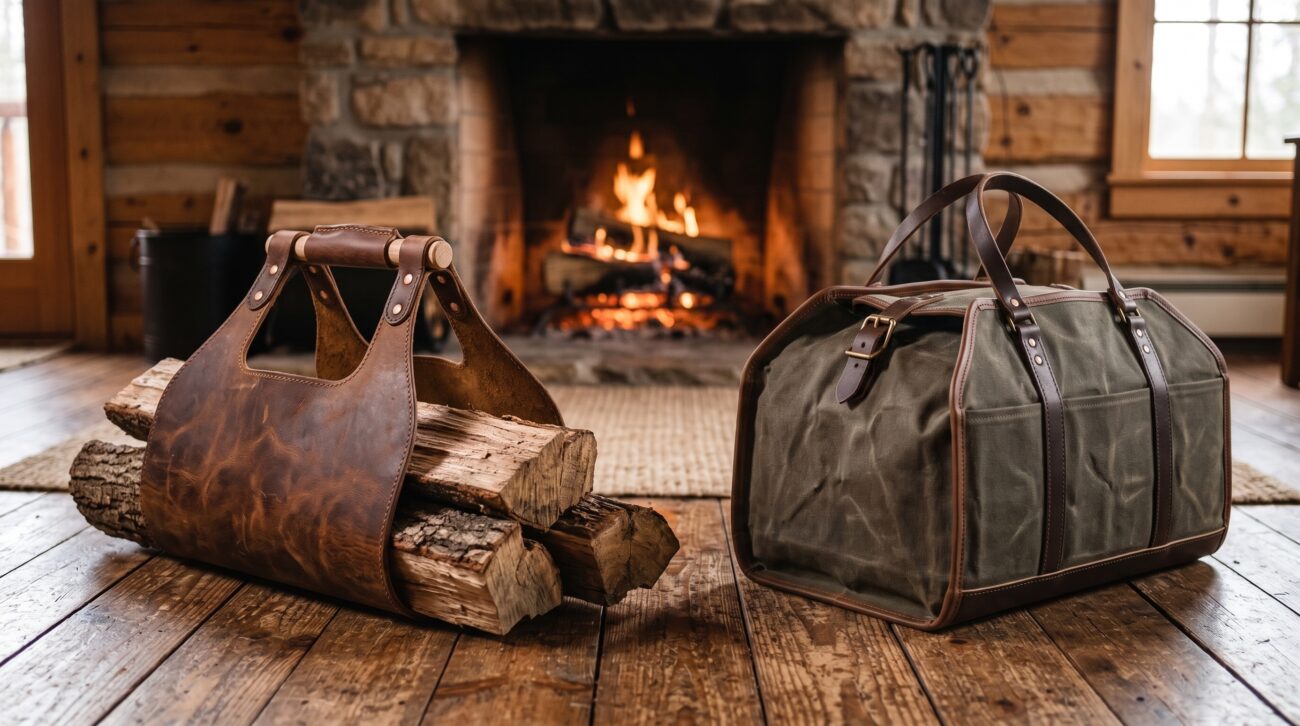
Material isn’t the only difference. Firewood carriers also vary in how they hold the logs.
Open-End Carriers
Open-end designs leave both sides exposed, allowing longer logs to extend beyond the carrier. This makes loading quicker and gives more flexibility when firewood lengths vary.
They’re commonly used around fireplaces, wood stoves, and outdoor wood racks because they accommodate different log sizes without difficulty.
Closed-End Carriers
Closed-end designs include side panels that help contain smaller logs, bark, and kindling.
They can reduce debris while walking indoors and provide slightly more support for shorter pieces of firewood. However, they may feel more restricted when carrying oversized logs.
Which Firewood Carrier Is Right for You?
Rather than asking which material is the best, it’s more useful to consider how you normally use firewood.
- Regular indoor fireplace use often pairs well with a leather log carrier because of its durability and timeless appearance.
- Outdoor fire pits and cabins frequently benefit from waxed canvas thanks to its added resistance to light moisture.
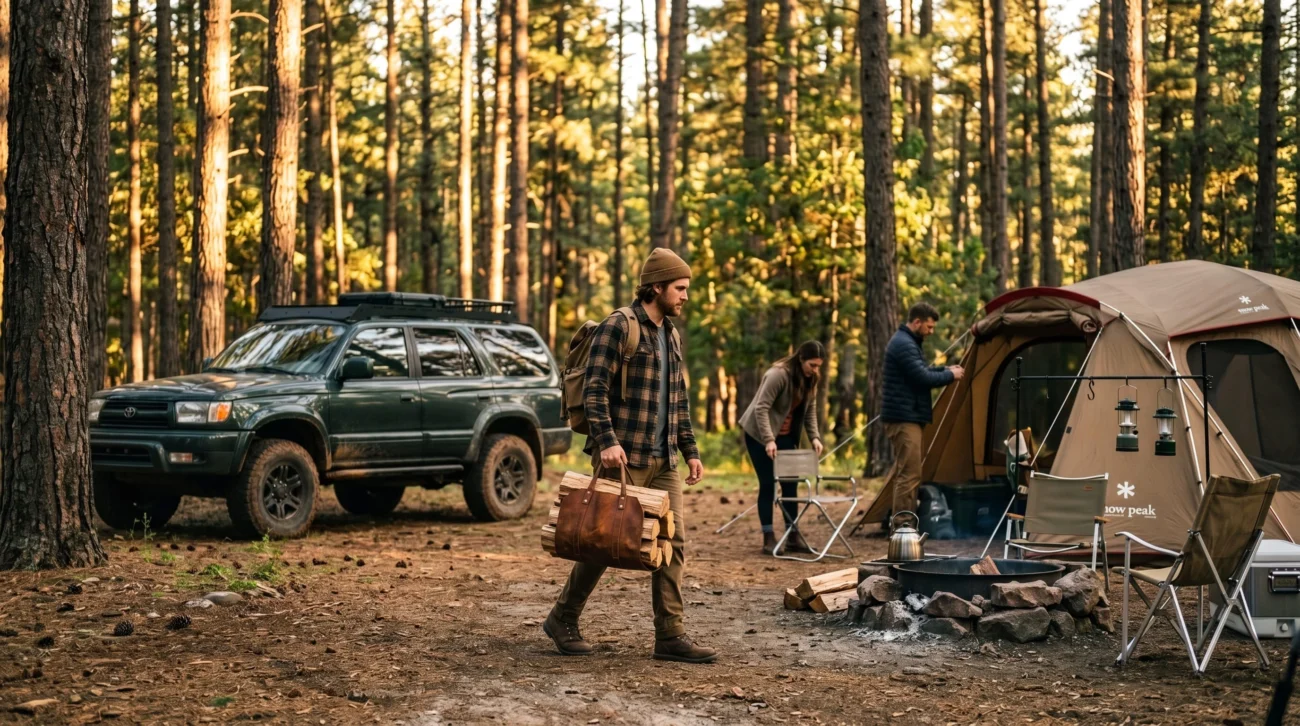
- Camping trips usually favor lightweight canvas designs that fold easily into vehicles or storage bins.
- Occasional fireplace users may find a heavy-duty fabric carrier offers all the functionality they need without unnecessary weight.
Choosing a carrier that matches your routine usually provides better long-term satisfaction than focusing on a single feature alone.
How to Choose the Right Firewood Carrier
After narrowing down the material, the next step is choosing a carrier that matches the way you use firewood. A well-designed carrier should make each trip easier without becoming difficult to lift or maintain.
Consider the Size of Your Firewood
Firewood isn’t cut to one universal length. Indoor fireplace logs are often shorter than those used for outdoor fire pits or larger wood stoves.
If your logs vary in size, an open-end carrier usually offers more flexibility because longer pieces can extend slightly beyond the sides. For smaller, evenly cut logs, either open or closed-end designs can work well.
Choosing a carrier that’s too small often leads to unstable loads, while an oversized carrier may encourage carrying more weight than feels comfortable.
Pay Attention to Handle Construction
Handles carry nearly all of the weight, making them one of the most important parts of any firewood carrier.
Look for:
- Reinforced stitching
- Strong attachment points
- Comfortable grip width
- Durable materials that won’t stretch easily
A quality carrier often lasts because its handles are built as carefully as the body itself.
Check the Stitching and Reinforcement
Firewood creates constant stress on seams and corners.
Strong stitching around the handles and reinforced stress points help distribute weight more evenly, reducing strain during repeated use.
Even thick leather or canvas cannot compensate for weak construction.
Think About Where You’ll Use It
Different environments place different demands on a carrier.
| Location | Recommended Material |
| Indoor fireplace | Leather firewood carrier |
| Cabin | Leather or waxed canvas |
| Outdoor fire pit | Waxed canvas |
| Camping | Canvas log carrier |
| Garage or shed | Canvas or heavy-duty fabric |
Matching the carrier to your environment often matters more than choosing the most expensive material.
Common Mistakes When Choosing a Firewood Carrier
Many buyers focus only on appearance and overlook practical details that become important after regular use.
Buying the Largest Carrier Available
A larger carrier may hold more logs, but it also becomes heavier to lift.
A balanced load is usually more comfortable than carrying the maximum amount of firewood in one trip.
Ignoring Construction Quality
The strongest leather or canvas won’t perform well if the handles, rivets, or stitching aren’t properly reinforced.
Construction quality should always be evaluated alongside the material itself.
Choosing Based Only on Appearance
A beautiful leather carrier may not be the right fit for someone who mainly carries wood around damp campsites.
Likewise, an outdoor utility carrier may not complement an indoor fireplace where it remains visible throughout winter.
Forgetting About Storage
Some carriers fold flat after use, while thicker leather models naturally hold their shape.
Consider where the carrier will be stored during warmer months before making a decision.
Caring for Different Types of Firewood Carriers
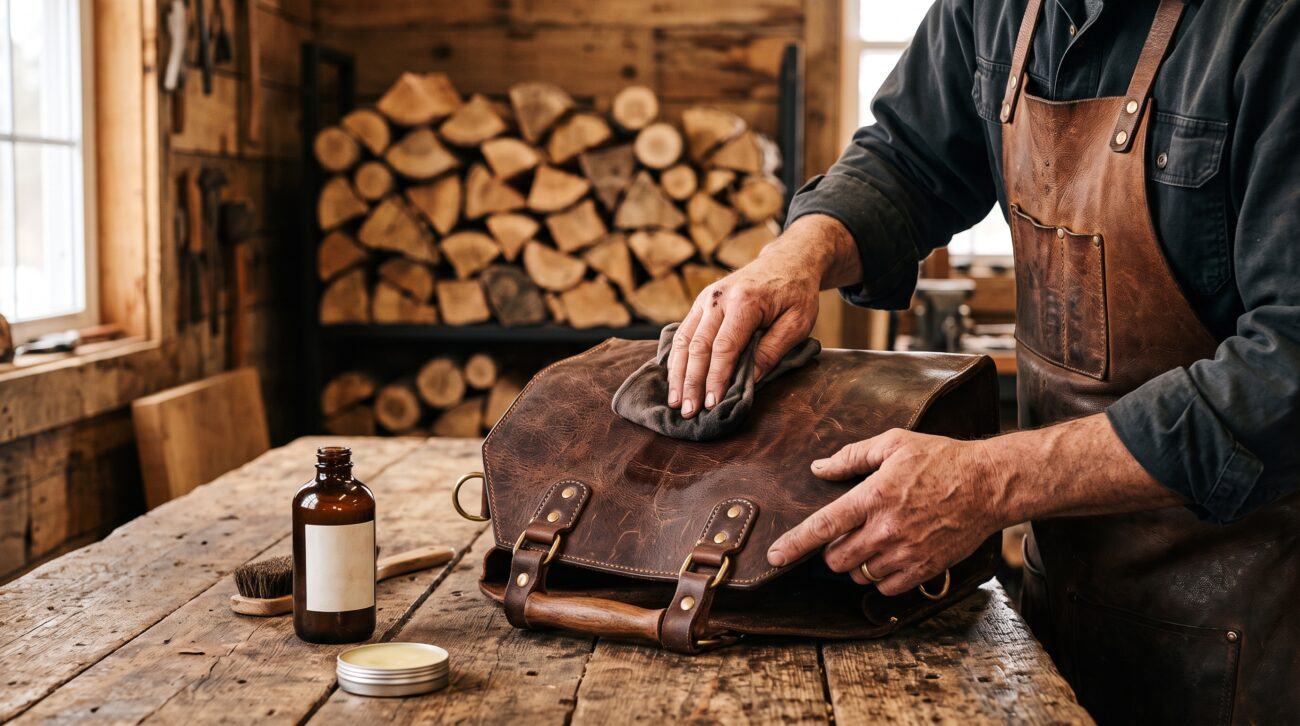
Each material benefits from slightly different care, but regular maintenance helps every carrier last longer.
Leather Firewood Carriers
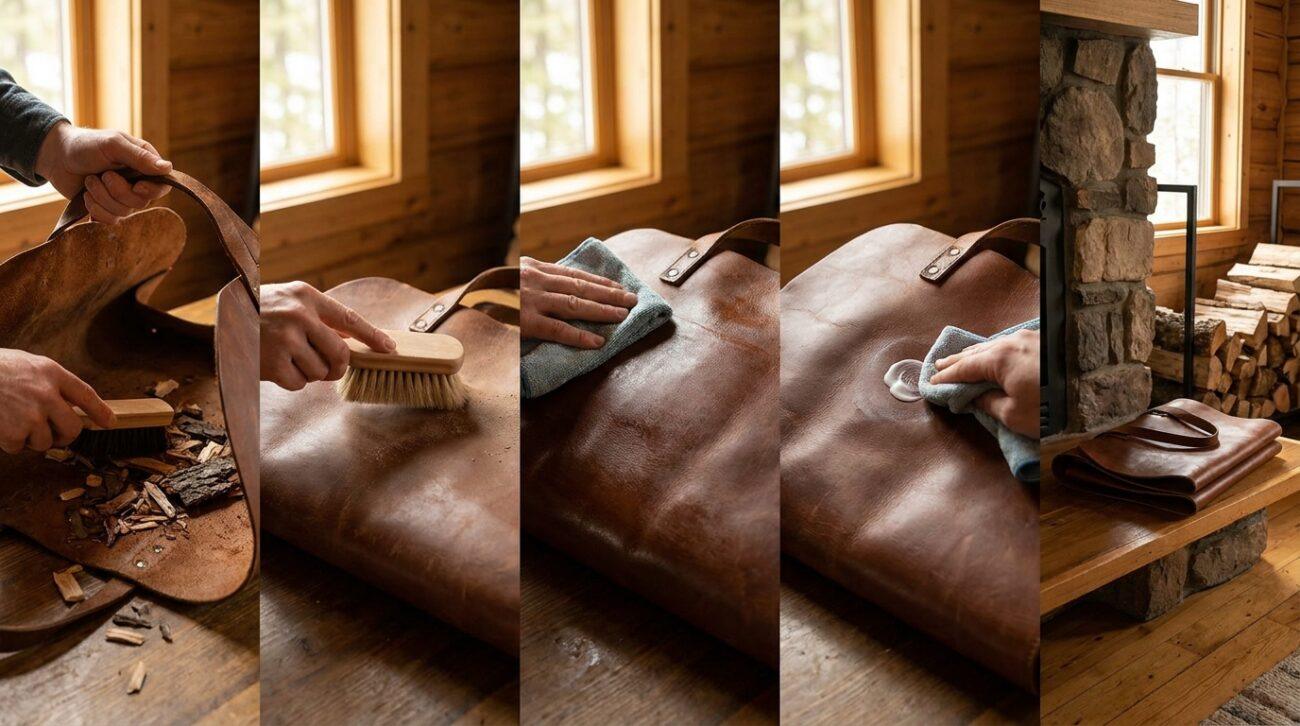
Shake out bark and dust after use.
Wipe the leather with a soft cloth when needed and allow it to dry naturally if exposed to moisture.
Occasional conditioning helps maintain flexibility and reduces the chance of drying or cracking.
Canvas and Waxed Canvas Carriers
Brush away loose debris after carrying firewood.
Clean according to the manufacturer’s recommendations and avoid storing the carrier while damp.
Waxed canvas may occasionally need rewaxing to maintain its water-resistant finish.
Heavy-Duty Fabric Carriers
Most fabric carriers require very little maintenance beyond removing loose bark and allowing them to dry completely before storage.
Proper care often extends the life of the stitching just as much as the material itself.
Care Note: Cleaning a firewood carrier after each season usually takes only a few minutes, but can help preserve its appearance and construction for years.
Which Firewood Carrier Offers the Best Long-Term Value?
There isn’t a single answer because every homeowner uses firewood differently.
A leather firewood log carrier is often the preferred option for people who use fireplaces regularly and appreciate materials that develop character over time.
A canvas wood carrier offers lightweight practicality for everyday outdoor use, while waxed canvas adds extra protection in damp environments.
Heavy-duty fabric carriers can also serve occasional users well without requiring significant maintenance.
Instead of asking which carrier is objectively better, consider which one fits your routine, storage space, and fireplace setup most naturally.
Final Thoughts
Firewood carriers all serve the same basic purpose, but the right choice depends on how and where they’ll be used.
Leather offers durability, structure, and a timeless appearance that suits fireplaces, cabins, and wood stoves. Canvas provides lightweight flexibility for everyday use, while waxed canvas performs well in outdoor environments where occasional moisture is expected. Heavy-duty fabric carriers remain a practical option for homeowners who only move firewood from time to time.
Understanding these differences makes it easier to choose a carrier that feels comfortable to use season after season. Whether you’re carrying a few logs to a living room fireplace or stocking an outdoor fire pit for an evening gathering, selecting the right design can make the task cleaner, more organized, and easier to manage.
FAQs
What is the best type of firewood carrier?
The best firewood carrier depends on how you use firewood. Leather works well for indoor fireplaces and long-term durability, while canvas and waxed canvas are often preferred for outdoor use and camping.
Is a leather firewood carrier better than a canvas log carrier?
Leather generally offers more structure, durability, and a classic appearance. Canvas is lighter, folds more easily, and is often better suited to outdoor environments. The better option depends on your priorities.
What is a waxed canvas log carrier?
A waxed canvas log carrier is made from canvas treated with wax to improve resistance to light moisture. It’s commonly used around cabins, campsites, and backyard fire pits.
Which firewood carrier lasts the longest?
A well-made leather firewood carrier can last for many years when properly maintained. High-quality waxed canvas and heavy-duty canvas carriers also provide excellent service with regular care.
Should I choose an open-end or closed-end firewood carrier?
Open-end carriers accommodate different log lengths more easily, while closed-end carriers help contain smaller pieces, bark, and kindling. The right choice depends on the size of the firewood you normally carry.
Are leather firewood carriers difficult to maintain?
No. Most only require occasional cleaning and conditioning. Keeping the leather dry and storing it properly between seasons helps preserve its flexibility and appearance.
Can I use the same firewood carrier indoors and outdoors?
Yes. Many homeowners use a single carrier for both indoor and outdoor firewood transport. If it’s exposed to moisture outdoors, allow it to dry completely before storing it indoors.
How do I know if a firewood carrier is good quality?
Look for durable materials, reinforced handles, strong stitching, and solid construction around the stress points. These features usually have a greater impact on longevity than appearance alone.