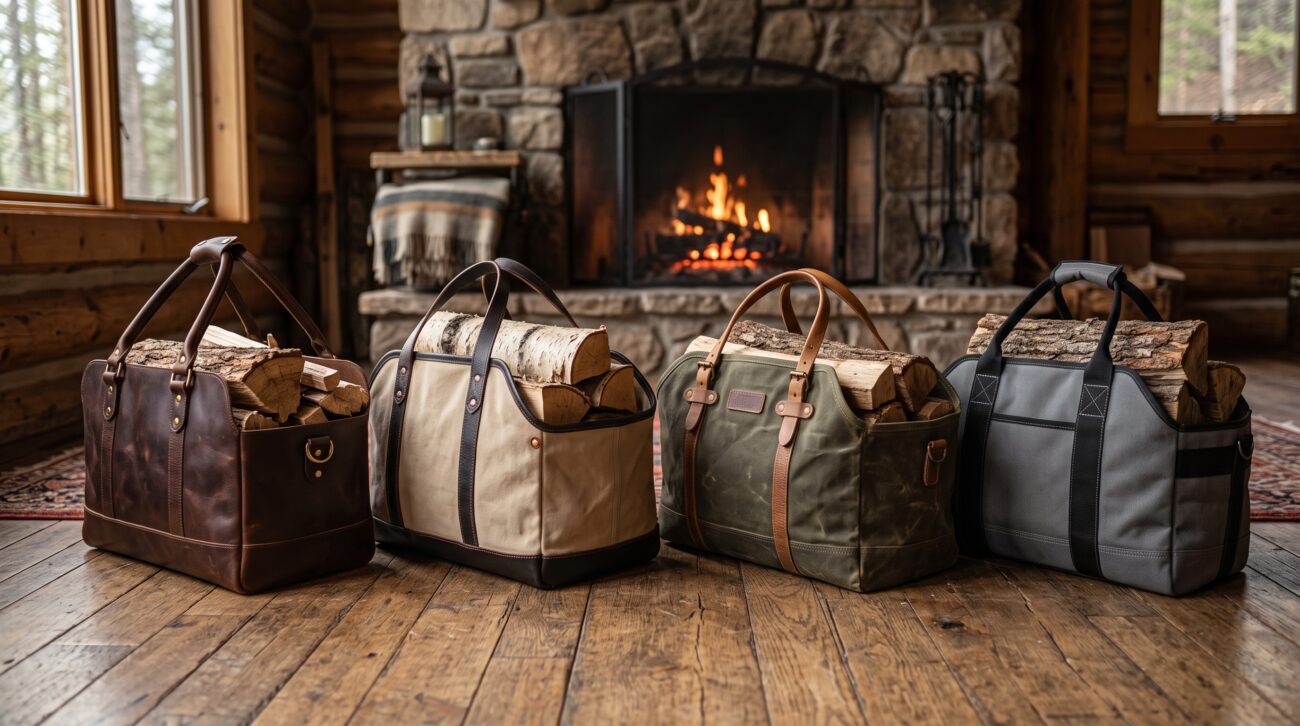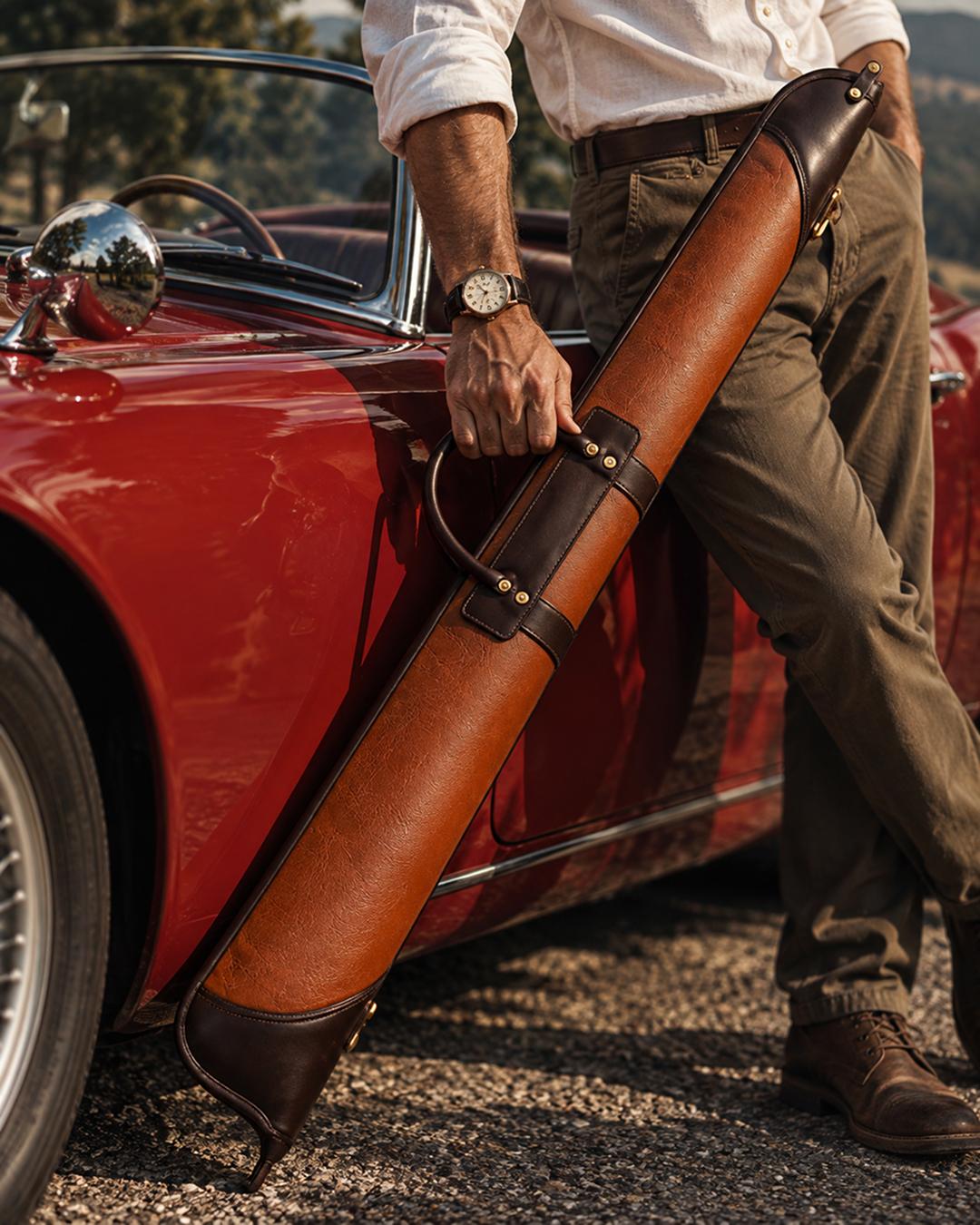

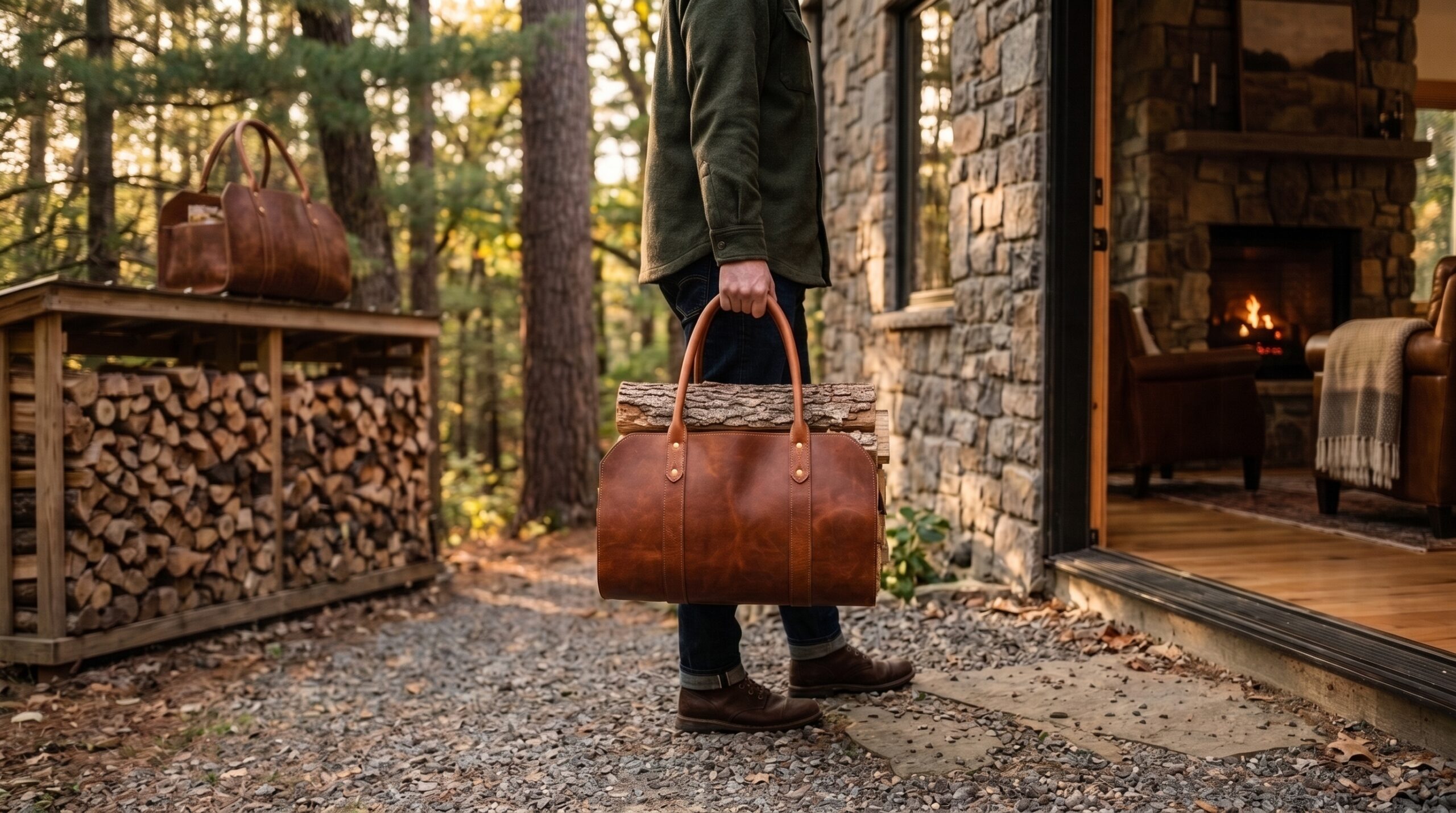

Carrying firewood looks like a simple task until you do it often. A few logs may not seem like much, but they can be rough, dusty, awkward to hold, and messy enough to leave bark and wood chips across the floor. Anyone who uses a fireplace, wood stove, outdoor fire pit, or cabin stove understands how quickly those small trips from the wood pile become part of the routine.
A firewood carrier is designed to make that routine easier. While modern carriers come in different materials and styles, the basic purpose has remained remarkably consistent throughout the history and evolution of firewood carriers.
What Is a Firewood Carrier?
A firewood carrier is a tool used to carry logs from a wood pile, storage rack, shed, garage, porch, or outdoor area to a fireplace, stove, or fire pit. It usually has a strong body made from leather, canvas, waxed canvas, or heavy-duty fabric, with handles on both sides for lifting.
The basic idea is simple. You place the carrier flat, stack the logs in the middle, lift the handles, and the material wraps around the wood. This keeps the logs gathered together and makes them easier to move in one controlled load.
A firewood carrier is not the same as a firewood rack or basket. A rack is mainly for storage, while a carrier is made for transport. Some people keep the carrier near the fireplace after bringing logs inside, but its main job is to help move firewood safely and neatly.
How Does a Firewood Carrier Work?
A firewood carrier works like a sling for logs. The center section holds the firewood, while the handles allow you to lift the load with both hands. As the carrier rises, the sides naturally curve around the logs and help keep them in place.
Most carriers are open enough to handle different log sizes. Longer logs can extend slightly past the sides, while smaller pieces can sit together in the middle. Some designs have enclosed ends or deeper sides, which can help keep bark, kindling, and smaller wood pieces from falling out.
The carrier does not make firewood weightless, but it makes the load easier to manage. Instead of gripping several rough logs separately, you carry one bundled load with a more stable shape.
Why Do People Use Firewood Carriers?
People use firewood carriers because carrying logs by hand can be uncomfortable and messy. The difference becomes obvious after a few trips between the woodpile and the fireplace, especially when comparing the experience with carrying logs by hand. Logs are rarely smooth. They may have loose bark, sharp edges, dirt, sawdust, insects, or moisture on the surface. Carrying them directly can dirty your clothes, scratch your arms, and leave debris along the way.
A carrier helps reduce that problem by holding the logs together and catching some of the loose material. This is especially useful when moving wood into a living room, cabin, or finished indoor space where bark and dirt are harder to ignore.
Firewood carriers are also useful for saving trips. Instead of carrying one or two logs at a time, a carrier lets you bring in several pieces at once. For people who use a fireplace regularly during winter, that small improvement can make the whole process feel more organized.
Where Is a Firewood Carrier Commonly Used?
Firewood carriers are commonly used around indoor fireplaces, wood stoves, outdoor fire pits, cabins, lodges, campsites, and backyard gathering areas. Anywhere firewood needs to be moved by hand, a carrier can help.
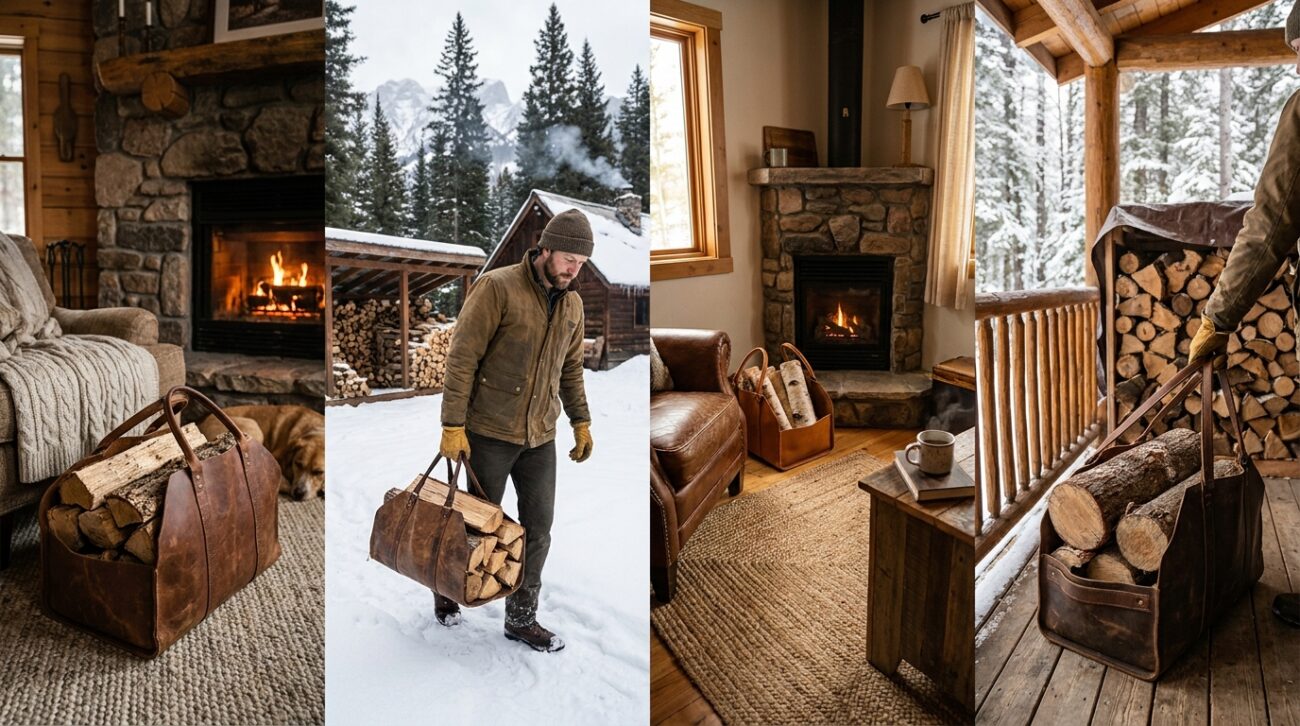
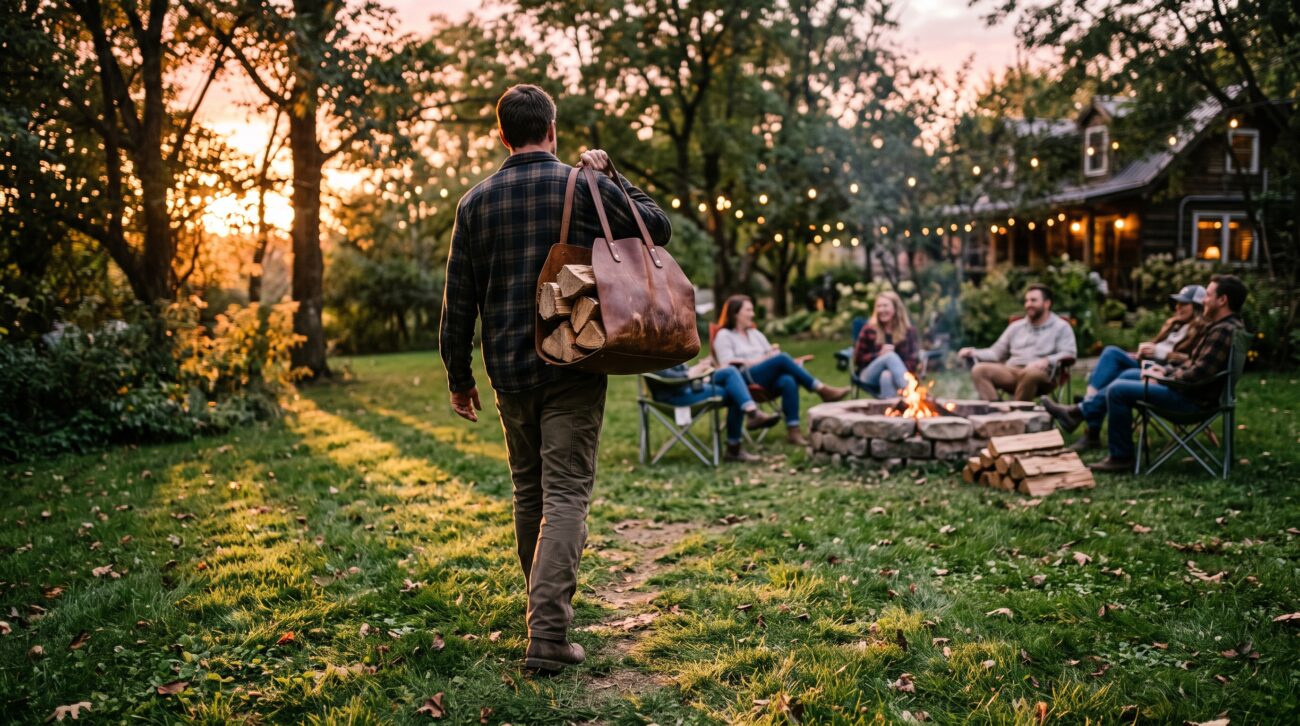
In homes, a carrier is often used to bring logs from a porch, garage, shed, or outdoor rack to the fireplace. In cabins, it may be used more frequently because firewood is often part of everyday heating. Around outdoor fire pits, a carrier makes it easier to move wood from storage to the seating area without making several small trips.
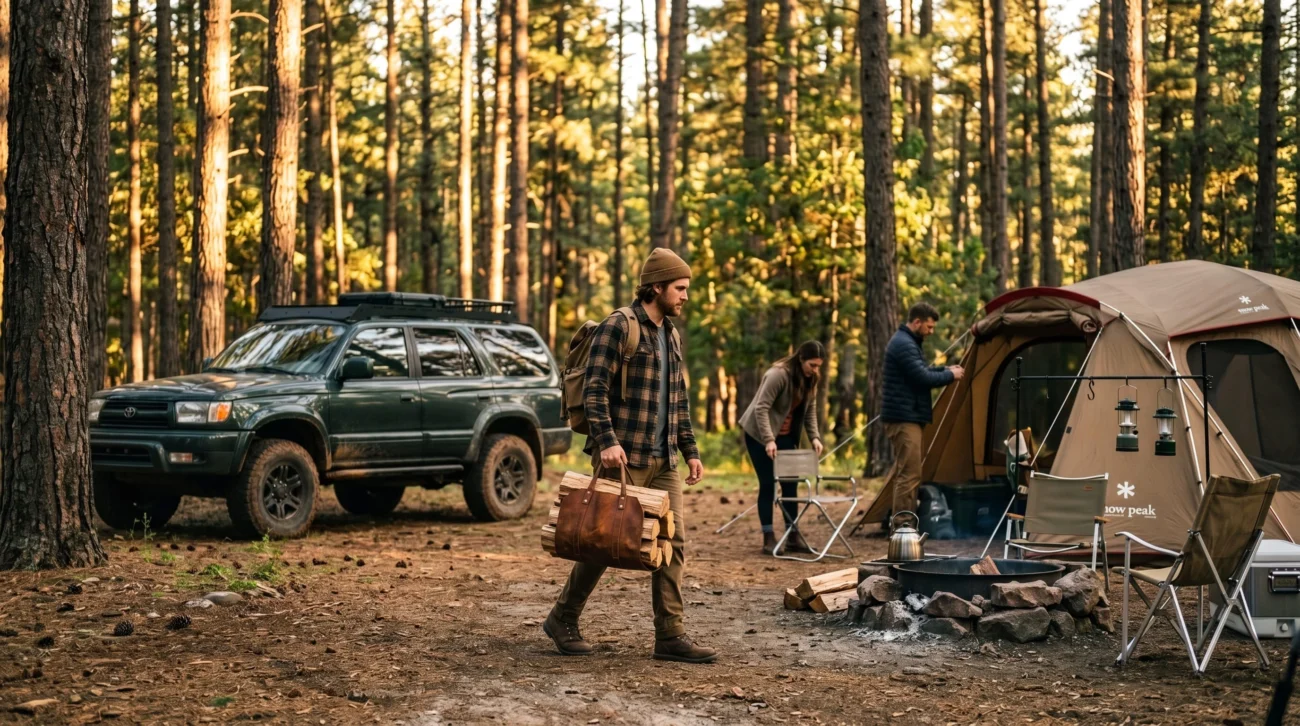
Campers may also use a canvas log carrier or a foldable fabric carrier because those options are usually lighter and easier to pack. For indoor fireplace use, many people prefer a leather firewood carrier because it looks more finished when kept near the hearth.
Common Materials Used for Firewood Carriers
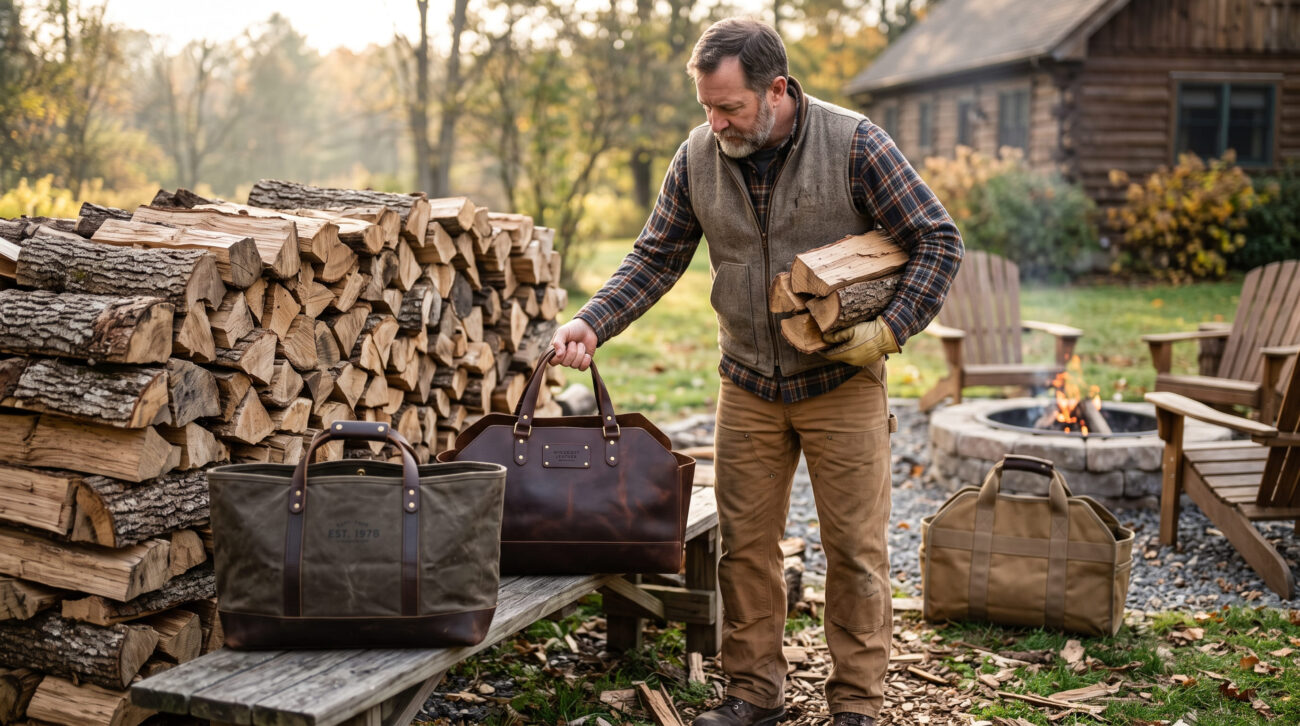
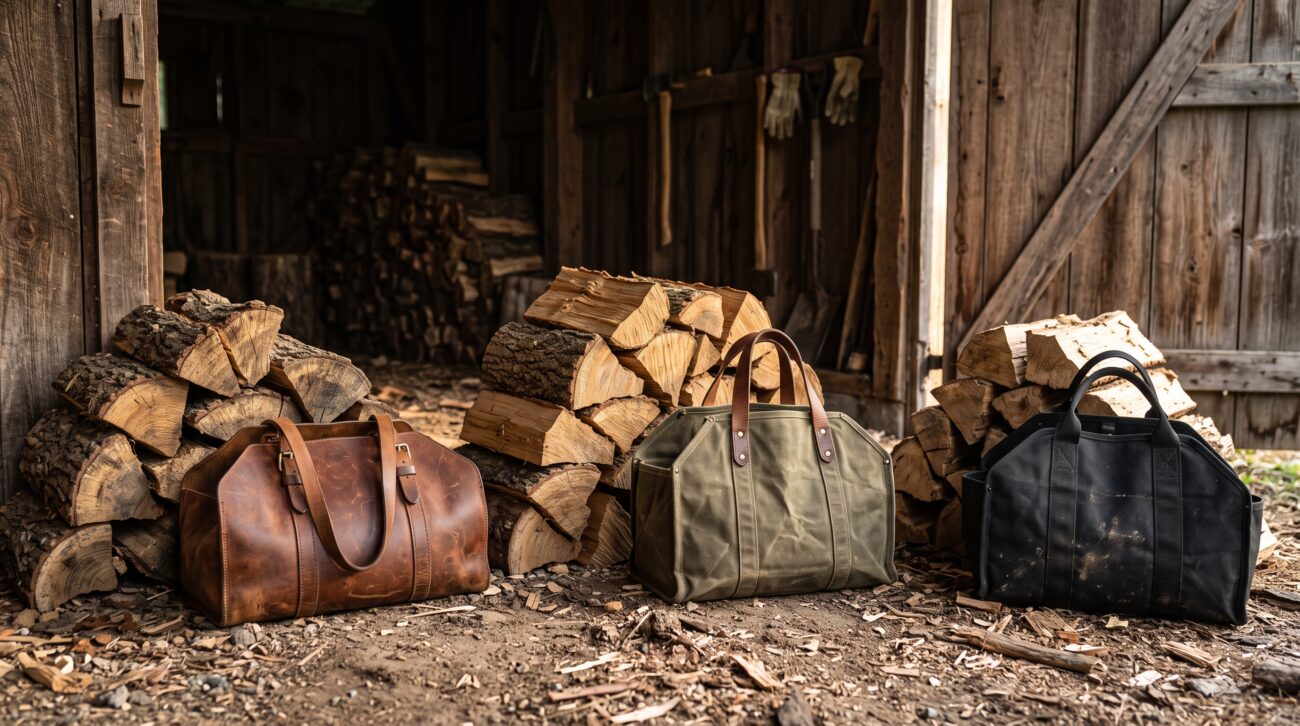
Firewood carriers are usually made from strong, flexible materials that can handle rough wood. The most common options are leather, canvas, waxed canvas, and heavy-duty fabric. Each material has its own feel, strength, and best use.
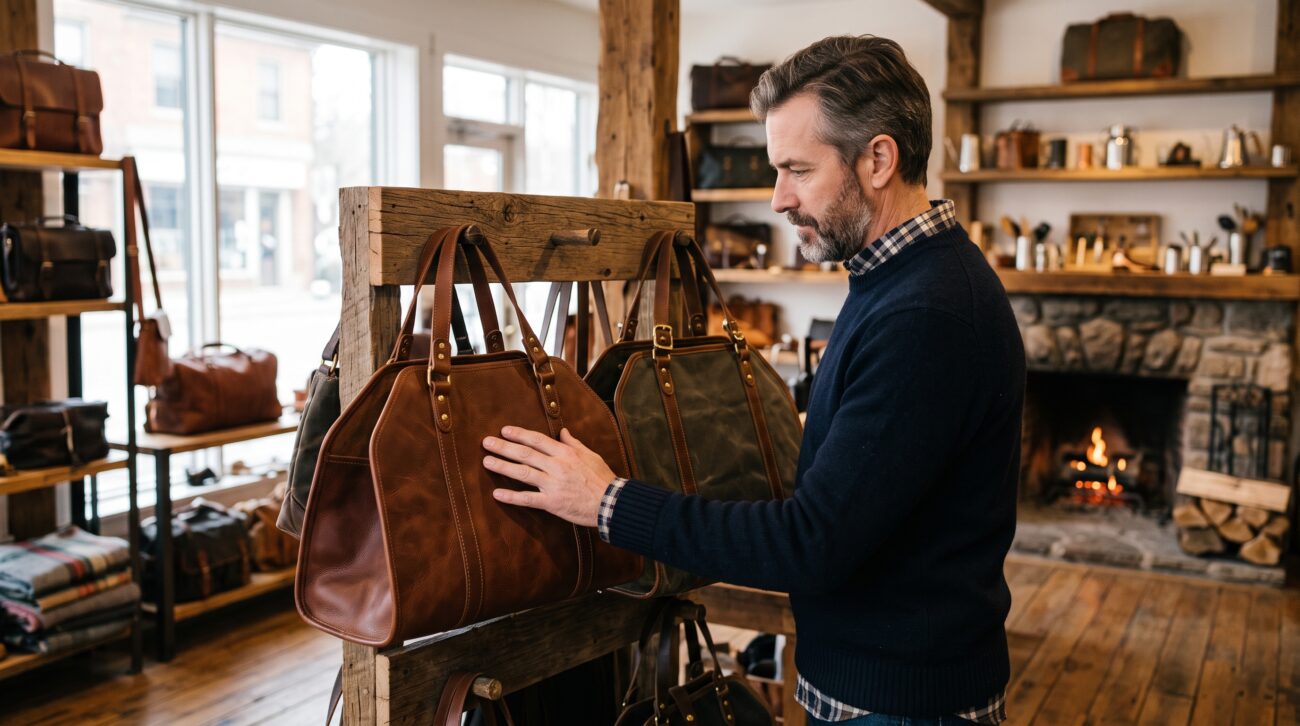
A leather firewood carrier is often chosen for durability and appearance. Leather has a natural structure that works well for carrying logs, and it also fits nicely with rustic, traditional, and cabin-style interiors. A leather log carrier may cost more than basic fabric options, but it usually feels stronger and more long-lasting when properly made.
A canvas wood carrier is usually lighter and more casual. Canvas can work well for regular use, especially when the carrier needs to be folded or stored easily. A canvas log carrier may be a practical choice for outdoor use, camping, or quick trips from the wood pile.
Waxed canvas adds a layer of water resistance to the fabric. This makes it useful for damp outdoor conditions, though it still needs care and should not be stored wet for long periods. Heavy-duty fabric carriers are often the simplest and most affordable option, but their quality depends heavily on stitching, handle strength, and material thickness.
Material is only one part of choosing the right carrier. Design, handle construction, stitching, and intended use also play an important role when comparing different types of firewood carriers.
Is a Firewood Carrier Only for Indoor Fireplaces?
A firewood carrier is not only for indoor fireplaces. It can be used anywhere logs need to be moved by hand. Indoor fireplaces are one of the most common uses, but firewood carriers are also helpful for wood-burning stoves, outdoor fire pits, backyard fireplaces, campsites, and cabins.
For indoor use, cleanliness and appearance usually matter more. A carrier helps keep bark and chips from spreading through the home, and a leather wood carrier can look natural beside a hearth or fireplace tools.
For outdoor use, strength and weather handling become more important. If the carrier will be used around damp ground, snow, or rough surfaces, the material should be durable and easy to clean. Leather can still be used outdoors, but it should be dried and stored properly after exposure to moisture.
What Makes a Good Firewood Carrier?
A good firewood carrier should be strong enough to hold a practical load of logs without feeling unstable. The material should not stretch too much, the handles should feel secure, and the stitching or hardware should be reinforced where the weight is carried.
Size also matters. A carrier that is too small may not hold enough wood, while one that is too large may become too heavy when full. The right size depends on the kind of logs you normally use and how far you need to carry them.
The best firewood carrier is not always the biggest or most expensive one. It is the one that fits your routine. A person carrying a few logs from a porch to a fireplace may need something different from someone moving larger logs to an outdoor fire pit every evening.
Pro Tip: Choose a firewood carrier based on the logs you actually use, not the logs you imagine carrying. Comfort matters more than maximum capacity.
Firewood Carrier vs Basket vs Rack
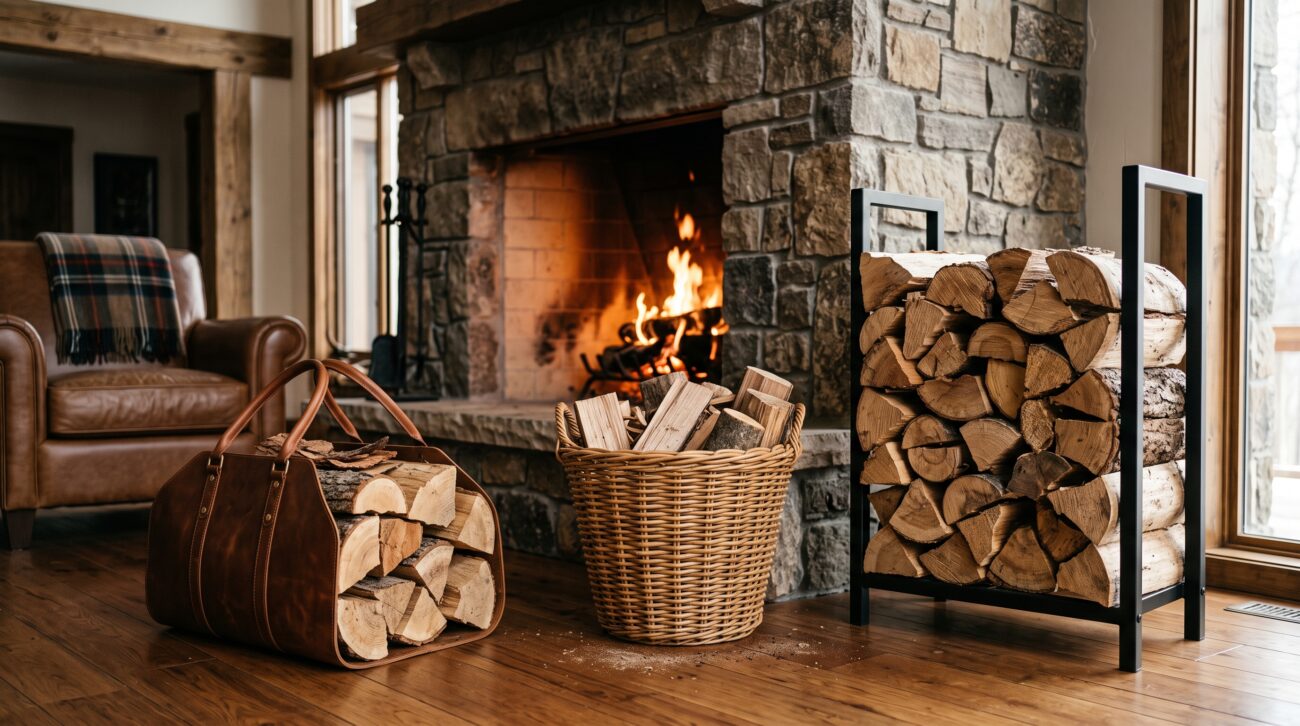
A firewood carrier, a basket, and a rack are all used around firewood, but they do different jobs. A carrier is mainly for moving logs. It is flexible, portable, and designed to be lifted by hand.
A firewood basket is usually used for keeping a small amount of wood near the fireplace. It may be decorative, but it is not always comfortable for carrying heavy loads over a distance. Some baskets have handles, but they can be awkward if the logs are long or uneven.
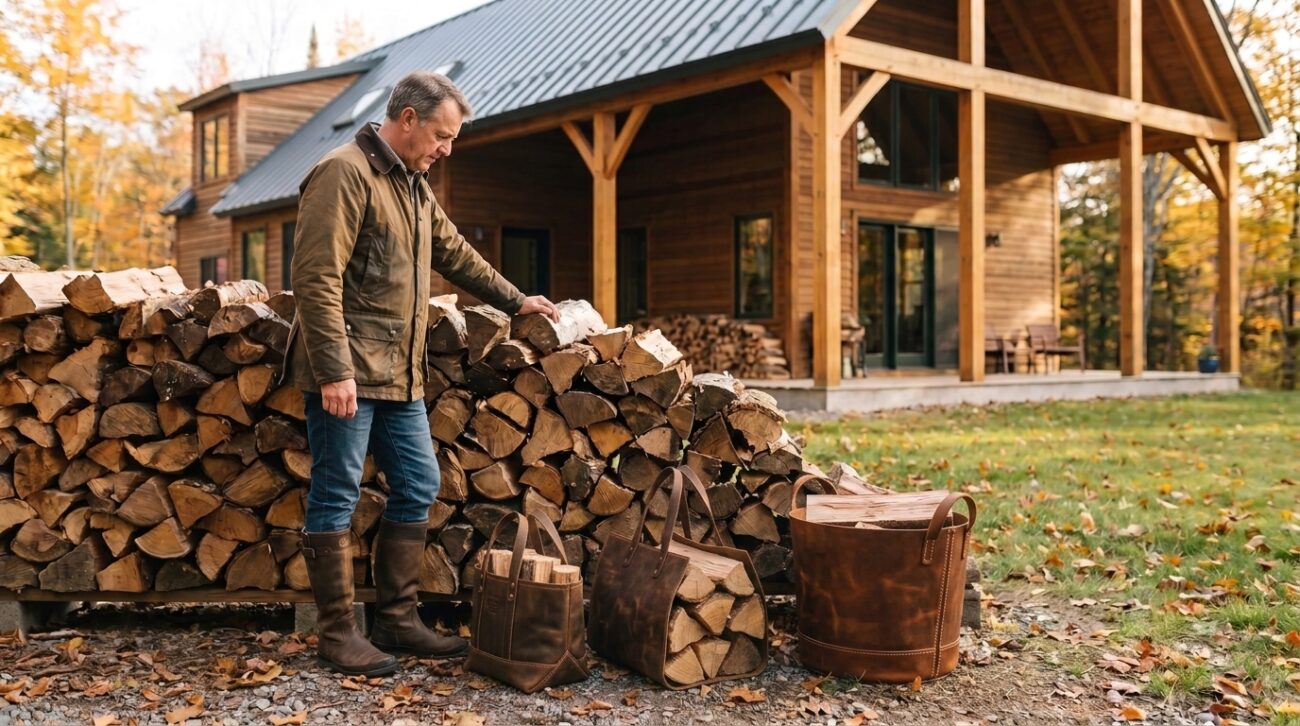
A firewood rack is for storage. It keeps wood stacked, raised, and organized. Outdoor racks help keep firewood off the ground, while indoor racks keep logs neat near the fireplace. Many homes use both a rack and a carrier: the rack stores the wood, and the carrier moves it.
How Much Firewood Can a Carrier Hold?
The amount of firewood a carrier can hold depends on the size of the carrier, the size of the logs, and the strength of the material and handles. A typical carrier can hold several logs at a time, but it should not be packed so full that it becomes hard to lift or control.
Wood weight can vary more than people expect. Dense hardwoods are heavier than softwoods, and damp logs are heavier than dry logs. A load that looks manageable may feel very different once you lift it.
It is better to carry a balanced load than to overfill the carrier. If the handles feel strained, the logs are shifting too much, or you have to lean awkwardly to carry them, the load is too heavy.
How to Use a Firewood Carrier Properly
To use a firewood carrier, lay it open near your wood pile or storage area. Place the logs across the center, keeping the heaviest pieces near the bottom. Try to stack the logs evenly so the weight is balanced on both sides.
Once the logs are in place, bring the handles together and lift slowly. The carrier should wrap around the wood naturally. Before walking, check that the logs are not sliding out and that the load feels comfortable.
When you reach the fireplace or storage area, lower the carrier carefully instead of dropping it. Remove the logs by hand or gently tilt the carrier if the design allows it. Shaking out loose bark outside after use can help keep the carrier cleaner.
Does a Firewood Carrier Help Keep Floors Clean?
A firewood carrier can help keep floors cleaner, but it will not remove every bit of mess. Firewood naturally sheds bark, dust, and chips, especially if it is dry or roughly split. The carrier catches much of that loose material while you move the logs.
For indoor fireplaces, this can make a noticeable difference. Instead of bark falling along the walkway, much of it stays inside the carrier until you empty it. This is one reason homeowners often keep a carrier near the main wood storage area during fireplace season.
To reduce mess even further, shake off loose debris before bringing wood inside. Using dry, properly stored firewood also helps because damp or dirty wood tends to carry more debris.
Do You Need a Firewood Carrier?
You may not need a firewood carrier if you only use your fireplace once or twice a year. For very occasional fires, carrying a few logs by hand may be enough. But if you use firewood regularly, a carrier can make the job easier and cleaner.
A carrier is especially useful if the wood pile is outside, the fireplace is indoors, or you need to walk through finished spaces. It is also helpful for people who do not want bark and chips on their clothes or floors.
For cabins, wood stoves, and homes with frequent winter fires, a firewood carrier is more than just an accessory. It becomes part of the normal fireplace setup, much like a poker, ash bucket, or log rack.
Beginner Mistakes to Avoid
One common mistake is overloading the carrier. Beginners often try to carry as much wood as possible in one trip, but that can strain the handles and make the load uncomfortable. A slightly smaller, balanced load is usually easier and safer.
Another mistake is dragging the carrier across rough ground. Leather, canvas, and fabric can all wear down faster if dragged over concrete, gravel, or sharp outdoor surfaces. Lifting the carrier properly helps protect the material.
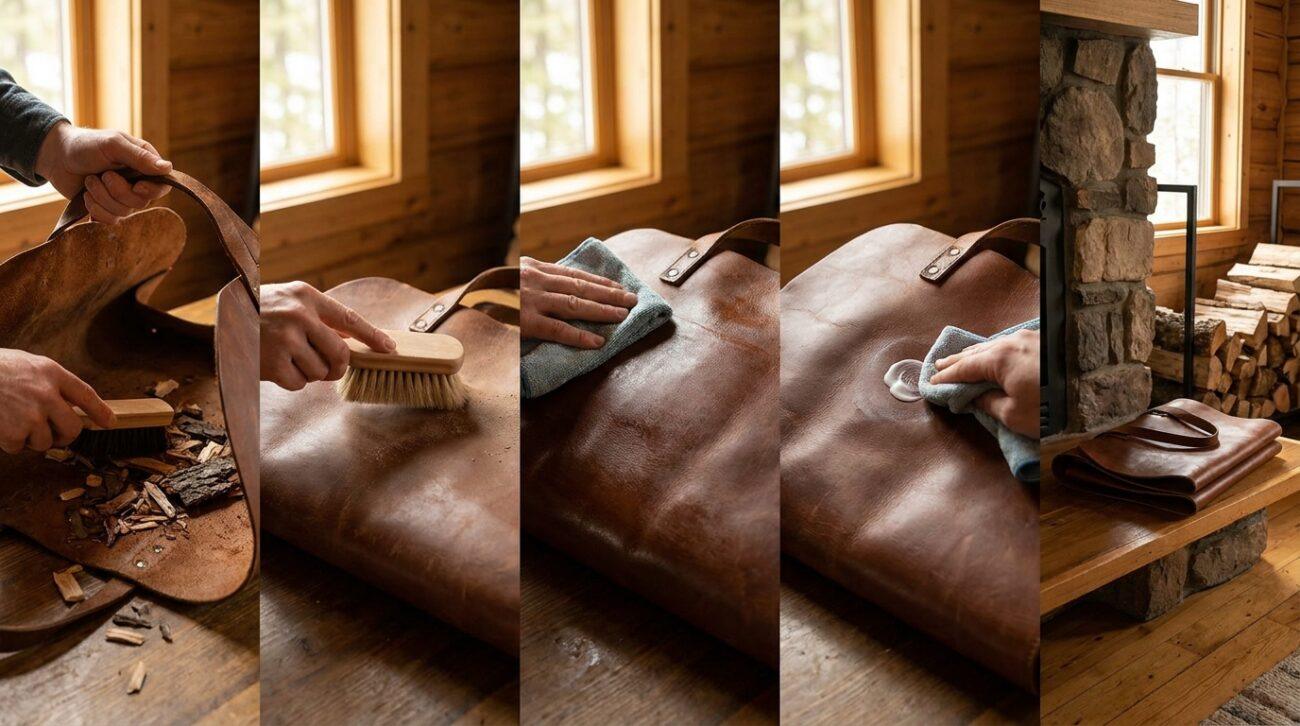
Storing the carrier while damp is also a problem, especially for leather. Moisture can affect the shape, feel, and lifespan of the material. After outdoor use, it is better to clean off loose debris and let the carrier dry before putting it away.
Care Note: A firewood carrier lasts longer when it is treated like a tool, not a disposable bag. Shake it out, keep it dry, and avoid overloading it.
Final Thoughts
A firewood carrier is a simple tool, but it solves a real problem. It helps move logs more comfortably, keeps the load together, and reduces the mess that usually comes with carrying firewood by hand. For anyone who uses a fireplace, wood stove, cabin stove, or outdoor fire pit regularly, it can make the routine feel much cleaner and more manageable.
The right carrier depends on how and where it will be used. Leather works well for durability and a classic fireplace look, while canvas and fabric options may be better for lightweight or casual use. What matters most is choosing a carrier that fits your firewood size, carrying distance, and everyday routine.
Frequently Asked Questions
What is a firewood carrier?
A firewood carrier is a tool used to carry logs from a wood pile, shed, rack, porch, or garage to a fireplace, stove, or fire pit. It usually has a strong body and handles that help hold the logs together while carrying them.
What is the purpose of a firewood carrier?
The main purpose of a firewood carrier is to make logs easier and cleaner to move. It helps reduce direct contact with rough wood and catches some of the bark, dirt, and chips that would otherwise fall on the floor.
Is a leather firewood carrier better than a canvas wood carrier?
A leather firewood carrier is usually stronger, more structured, and more decorative, while a canvas wood carrier is often lighter and easier to fold. The better choice depends on whether you care more about long-term durability, appearance, weight, or outdoor convenience.
Can you use a firewood carrier for outdoor fire pits?
Yes, a firewood carrier can be used for outdoor fire pits. It helps move logs from storage to the fire area in fewer trips, but the carrier should not be left outside in rain, snow, or damp conditions after use.
How many logs can a firewood carrier hold?
A firewood carrier can usually hold several logs, but the exact number depends on log size, wood type, and carrier design. It is better to carry a comfortable, balanced load than to overload the carrier just to reduce trips.
What material is best for a firewood carrier?
Leather, canvas, and waxed canvas are all common choices. Leather is often preferred for strength and appearance, canvas is lighter and practical, and waxed canvas offers better moisture resistance for outdoor use.
Can a firewood carrier help keep my floor clean?
A firewood carrier can help reduce mess by catching loose bark, dirt, and wood chips while logs are being moved. It will not stop every bit of debris, but it can make indoor firewood carrying much cleaner.
Do I need a firewood carrier if I already have a log rack?
A log rack is used for storage, while a firewood carrier is used for moving logs. Many people use both because the rack keeps wood organized near the fireplace and the carrier helps bring logs in from another location.