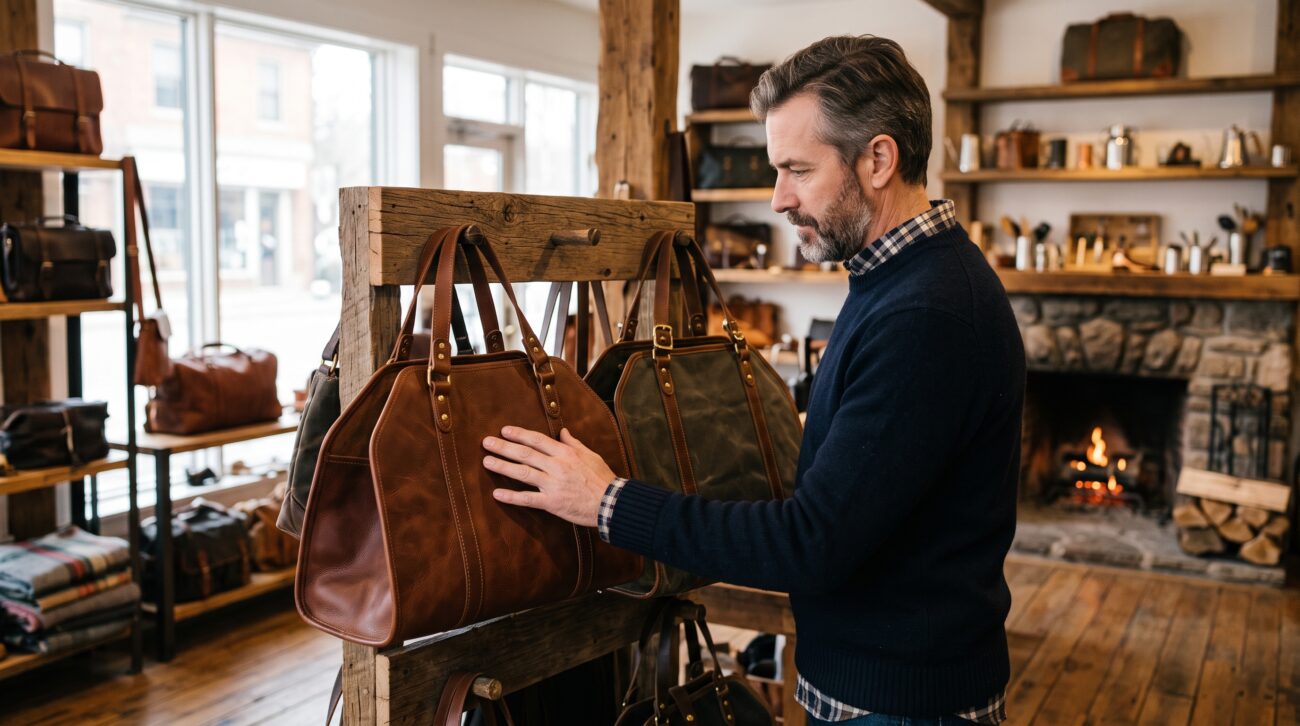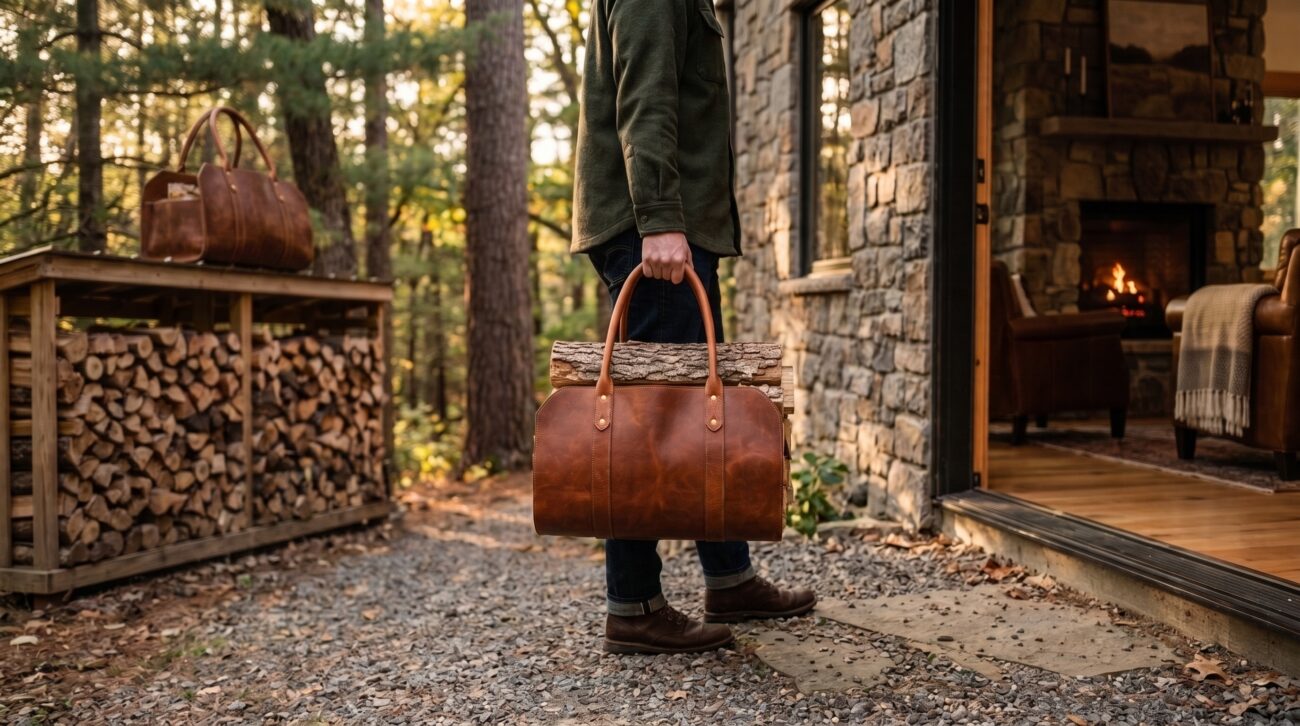

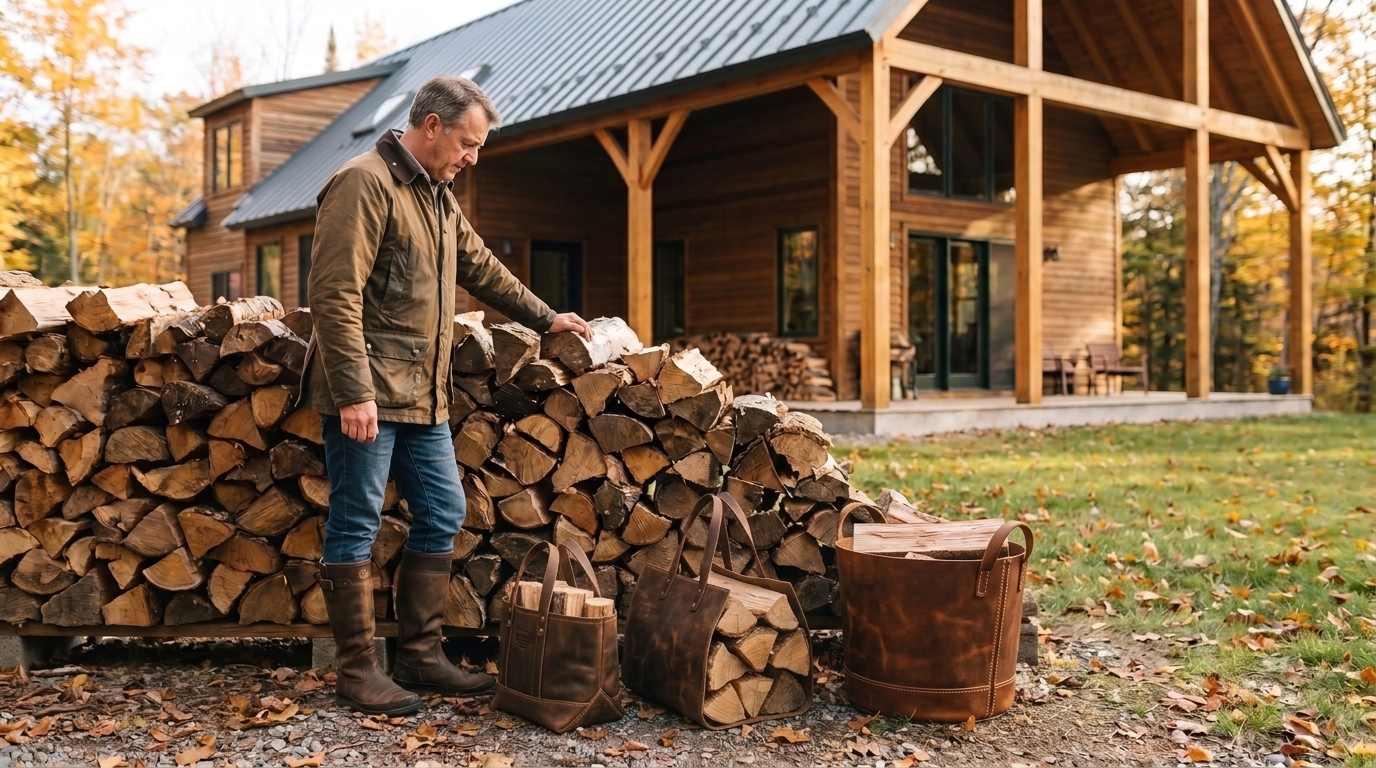

When shopping for a firewood carrier, most people focus on the material, handles, or appearance. Size is often treated as an afterthought, yet it has one of the biggest impacts on how comfortable and practical a carrier feels during everyday use.
A carrier that’s too small may leave you making repeated trips to the woodpile. One that’s too large can become awkward to lift, especially when it’s packed with dense hardwood logs. The right choice depends on how much wood you usually move, how far you’re carrying it, and where you’ll be using it.
This guide explains the common firewood carrier sizes, where each one works best, and how to match capacity to your routine.
Why Size Matters More Than You Might Think
The goal isn’t to carry the largest load possible. It’s to carry an amount of firewood that’s comfortable, balanced, and easy to control.
A properly sized carrier can help you:
- Reduce unnecessary trips without overloading yourself.
- Keep logs balanced while walking.
- Move through doorways and narrow paths more easily.
- Store the carrier neatly when it’s not in use.
- Minimize strain on your hands, shoulders, and back.
If you’re still deciding which style suits your needs, understanding the different types of firewood carriers can make it easier to see why some designs naturally hold more wood than others.
Common Types of Firewood Carriers and Their Capacity
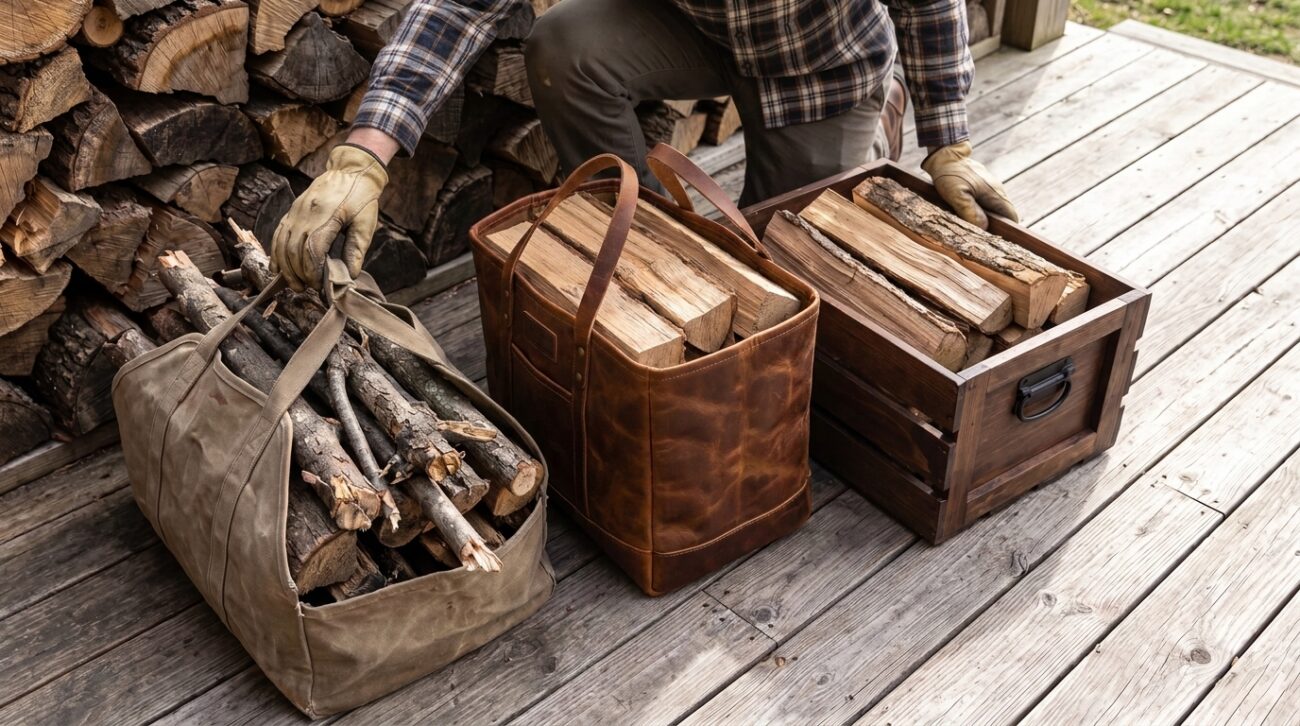
The overall design of a carrier often determines how much firewood it can hold just as much as its dimensions.
Open Sling Carriers
Open sling designs wrap around the logs without enclosing the ends. Because the sides remain open, they can accommodate pieces of different lengths and irregular shapes.
They’re a popular choice for homeowners who don’t always split firewood into identical sizes.
Typical capacity:
- Medium to large loads
- Flexible for mixed log sizes
- Easy loading and unloading
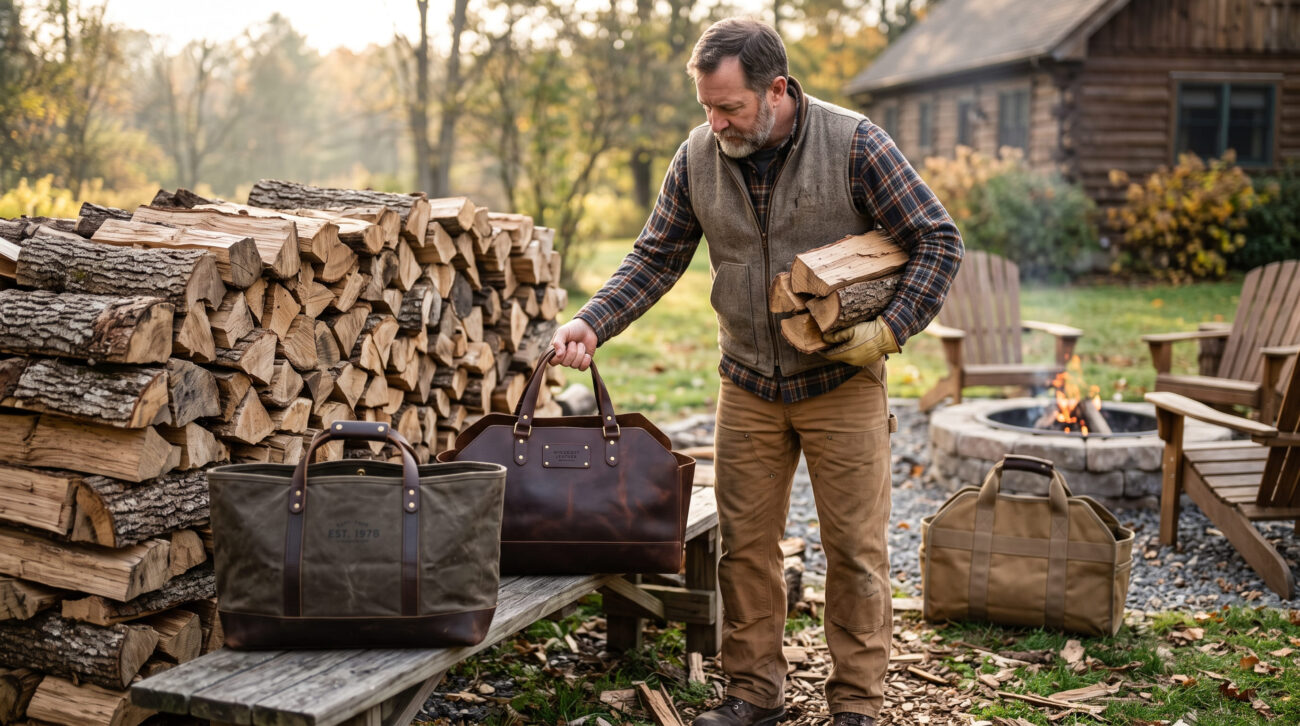
Tote Style Carriers
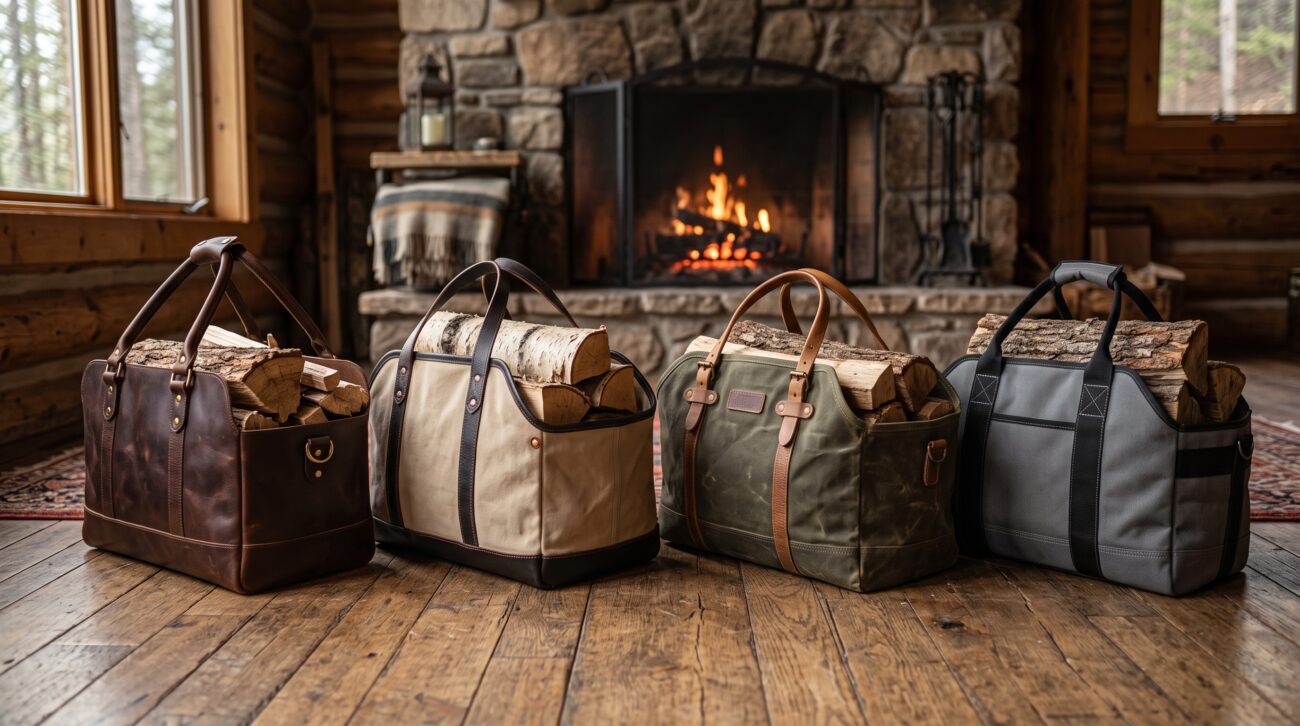
Tote-style carriers have a more defined shape with sturdy handles and enclosed sides.
They distribute weight evenly and are comfortable for everyday trips between the woodpile and the fireplace.
Typical capacity:
- Small to medium loads
- Balanced carrying
- Easy indoor handling
Structured Box Style Carriers
These carriers hold their shape even when empty, making them useful for transporting and storing firewood indoors.
Their rigid construction helps keep logs neatly contained, though they may not accommodate oversized pieces as easily as sling-style designs.
Typical capacity:
- Medium loads
- Stable stacking
- Organized indoor storage
Standard Firewood Carrier Sizes
Unlike luggage, there are no universal size standards for firewood carriers. Most fall into four practical categories.
| Size | Typical Capacity | Best For |
| Small | 4 to 6 logs | Apartments and indoor fireplaces |
| Medium | 6 to 10 logs | Everyday household use |
| Large | 10 to 15 logs | Backyard fire pits and patios |
| Extra Large | Large hardwood bundles | Cabins and wood storage areas |
These capacities will vary depending on log diameter and wood species, but they provide a useful starting point when comparing carriers.
Choosing the Right Size for Different Places
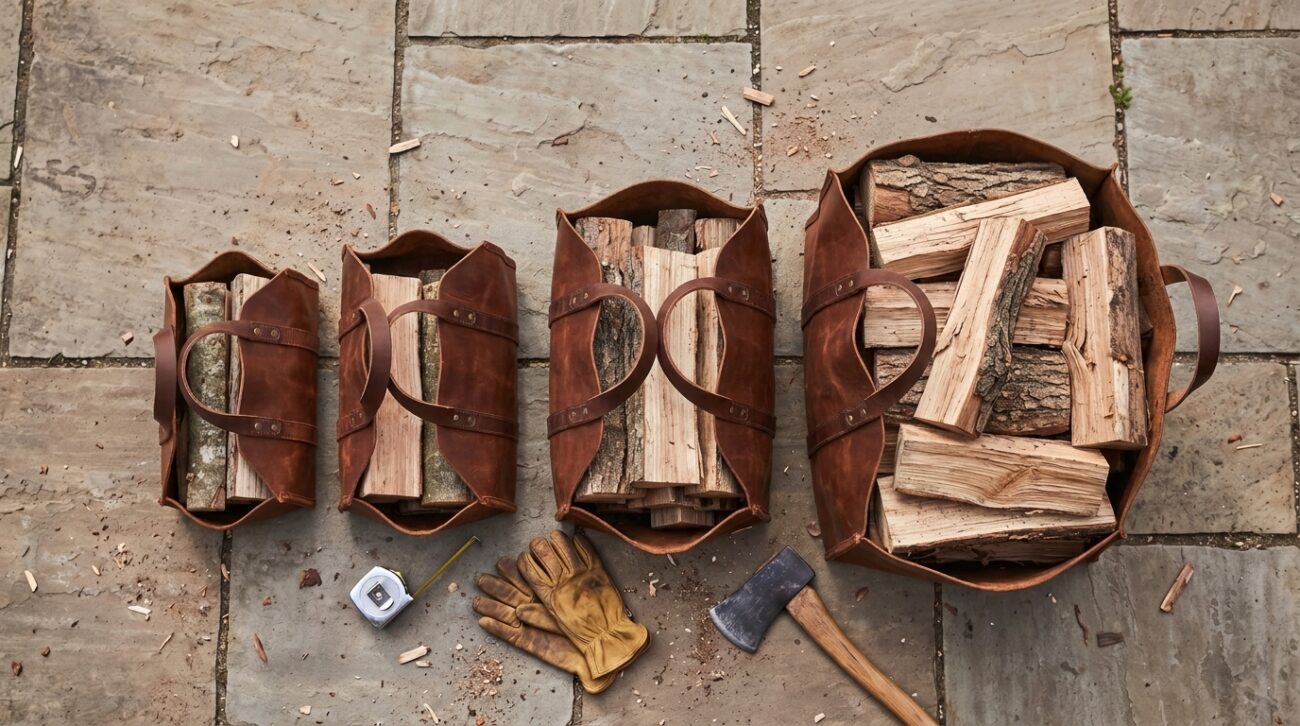
The same carrier won’t be ideal for every situation. Where you use it often determines which size feels the most practical.
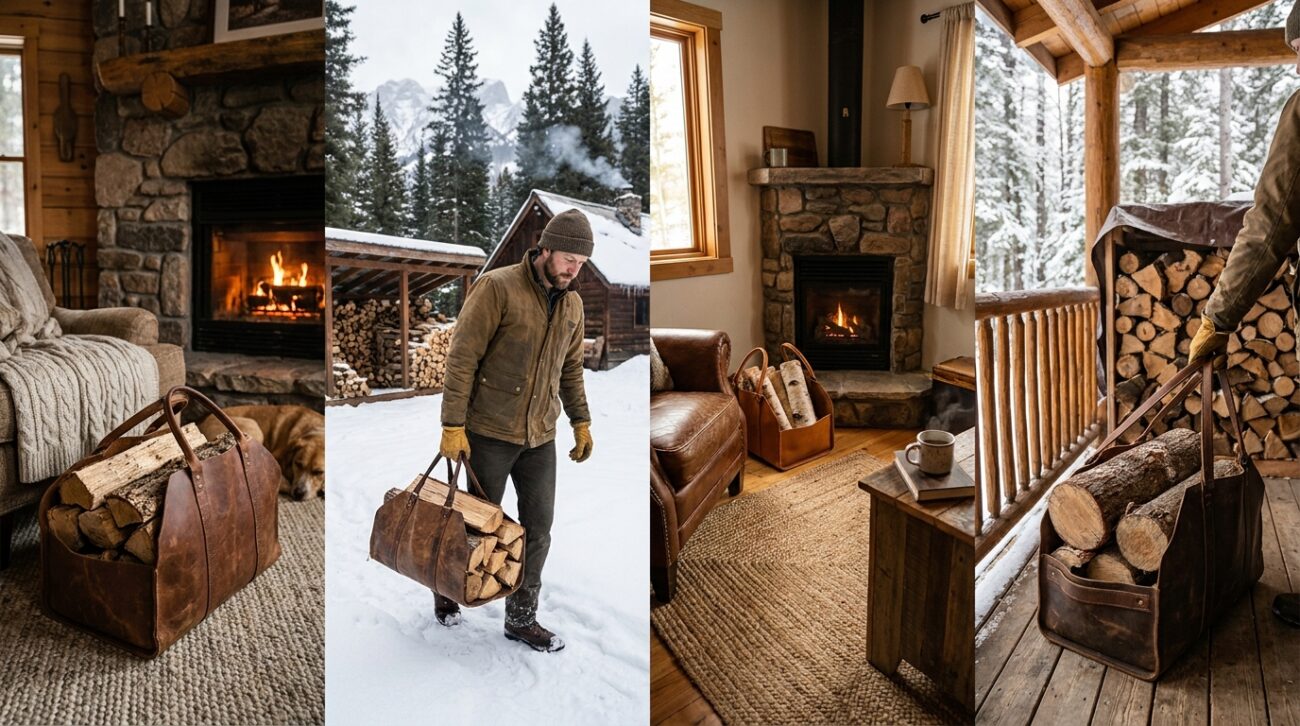
Indoor Fireplaces
For most homes, a small or medium carrier is the easiest option.
It carries enough wood for an evening fire without taking up much floor space beside the hearth. Smaller loads are also easier to maneuver through hallways and around furniture.
If your home uses a fireplace regularly during winter, choosing a size that fits comfortably beside the hearth is often more useful than simply maximizing capacity. This is one of the factors that separates carriers designed for indoor fireplace use from those intended for larger outdoor fires.
Backyard Fire Pits
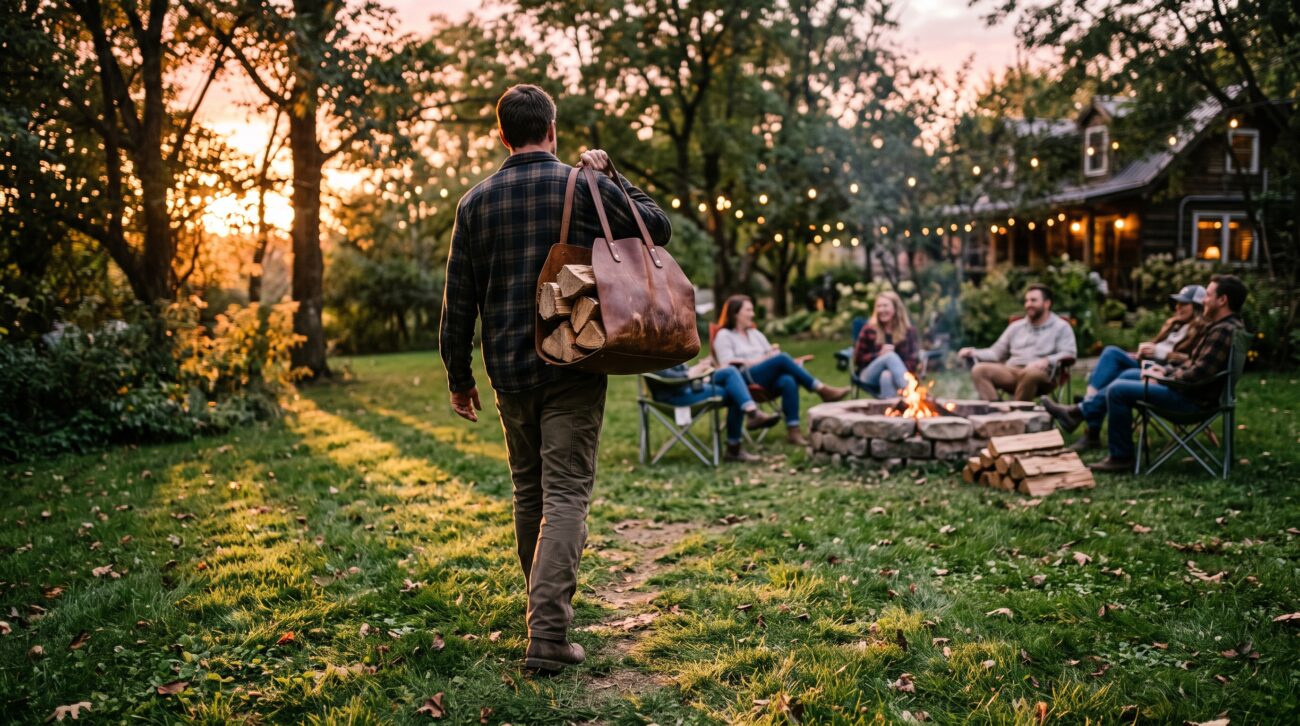
Fire pits usually require more wood than indoor fireplaces, especially when entertaining family or friends.
A medium or large carrier allows you to move enough logs in a single trip while still keeping the load manageable across a patio or backyard.
Choosing a slightly larger capacity can reduce repeated walks back to the woodpile without making the carrier difficult to handle.
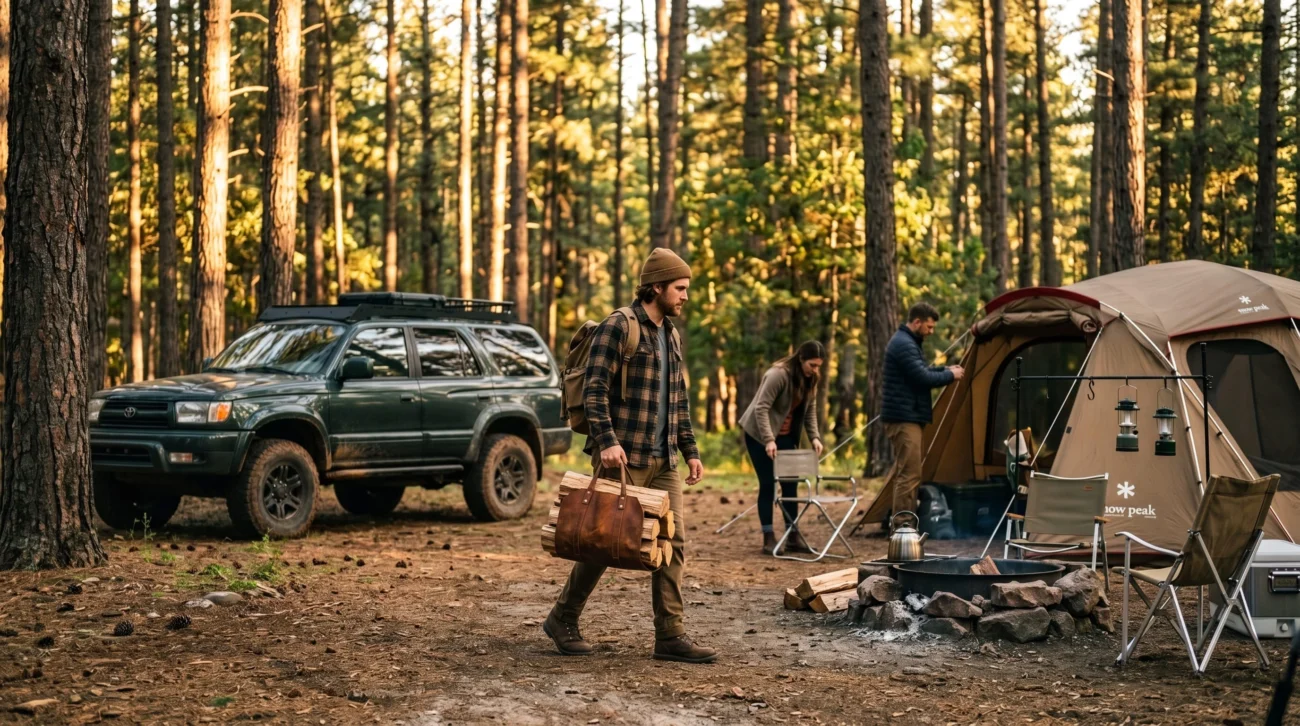
Camping Trips
Camping introduces a different set of priorities.
Storage space inside a vehicle is limited, and campsites often involve carrying wood over uneven ground.
A medium-sized carrier generally provides the best balance between portability and capacity. It’s large enough for several campfires while remaining easy to fold or pack between trips.
Cabins and Wood Sheds
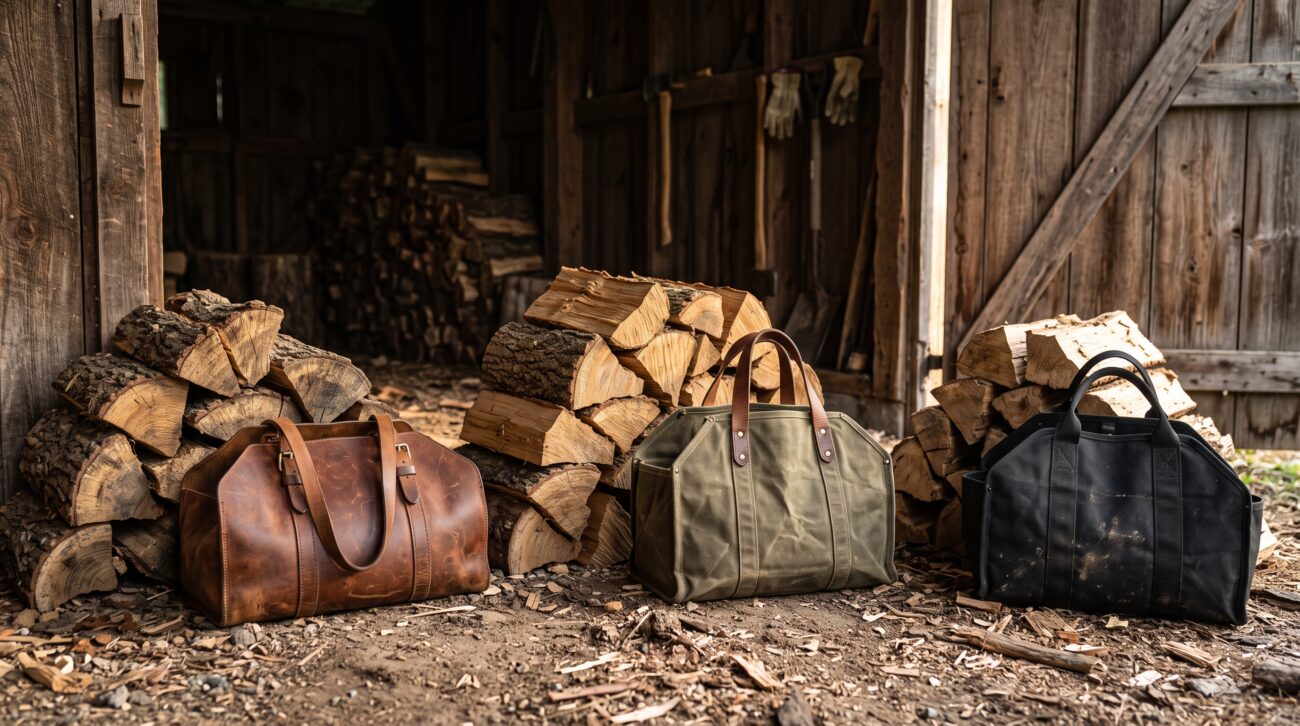
If you heat a cabin or rely on wood throughout the colder months, you’ll likely move larger quantities at a time. In these situations, a large or extra-large carrier can save time by reducing the number of trips between the woodpile and your storage area.
However, capacity shouldn’t come at the expense of comfort. If fully loaded hardwood becomes difficult to carry safely, a slightly smaller size that’s easier to handle is often the better long-term choice. This is especially true if you’re regularly moving dense bundles, where a heavy-duty firewood carrier can provide better support and durability.
One Large Carrier or Two Smaller Ones?
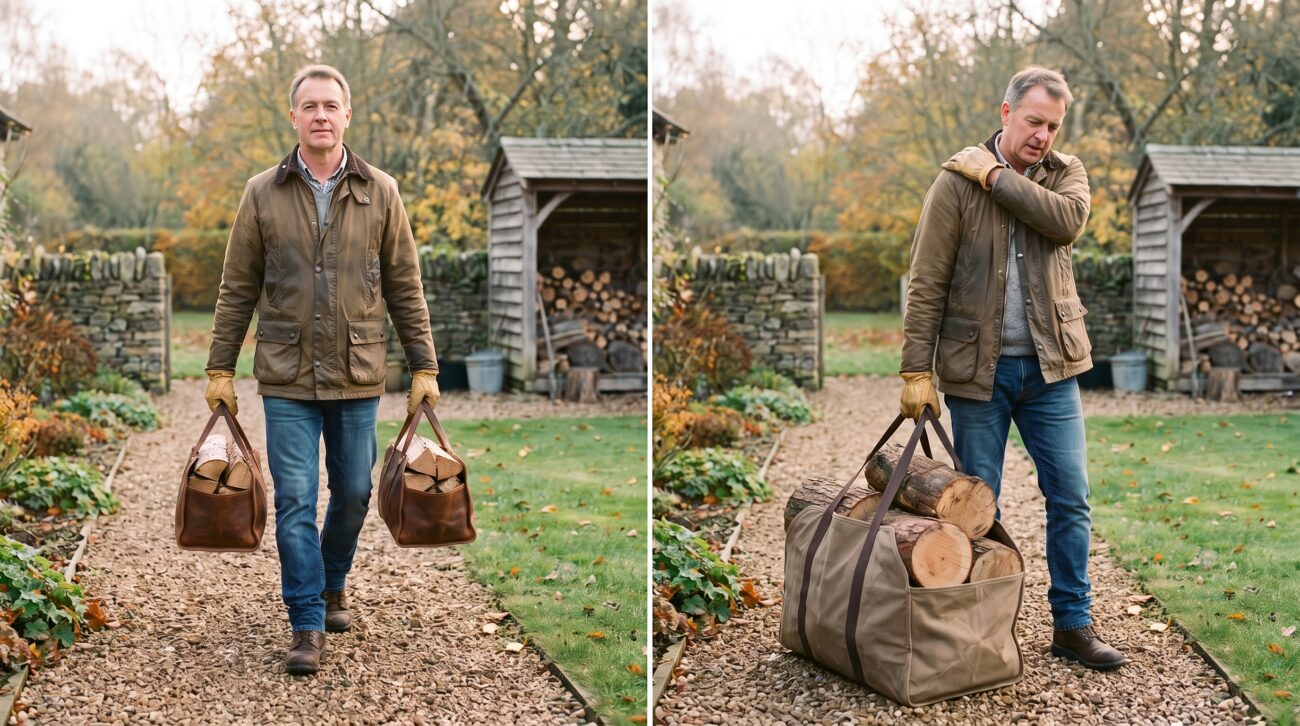
Many buyers assume that the biggest carrier is automatically the best option. In reality, your routine matters more than maximum capacity.
A Large Carrier Makes Sense If You:
- Carry firewood over short distances.
- Have plenty of storage space.
- Usually move wood only once or twice a day.
- Burn large amounts of firewood regularly.
Smaller Carriers Are Better If You:
- Walk longer distances.
- Carry wood through narrow doorways.
- Prefer lighter, easier-to-control loads.
- Share the task with other family members.
For many homeowners, two medium carriers often prove more practical than one oversized carrier because they provide greater flexibility without becoming overly heavy.
Consider the Type of Firewood You Burn
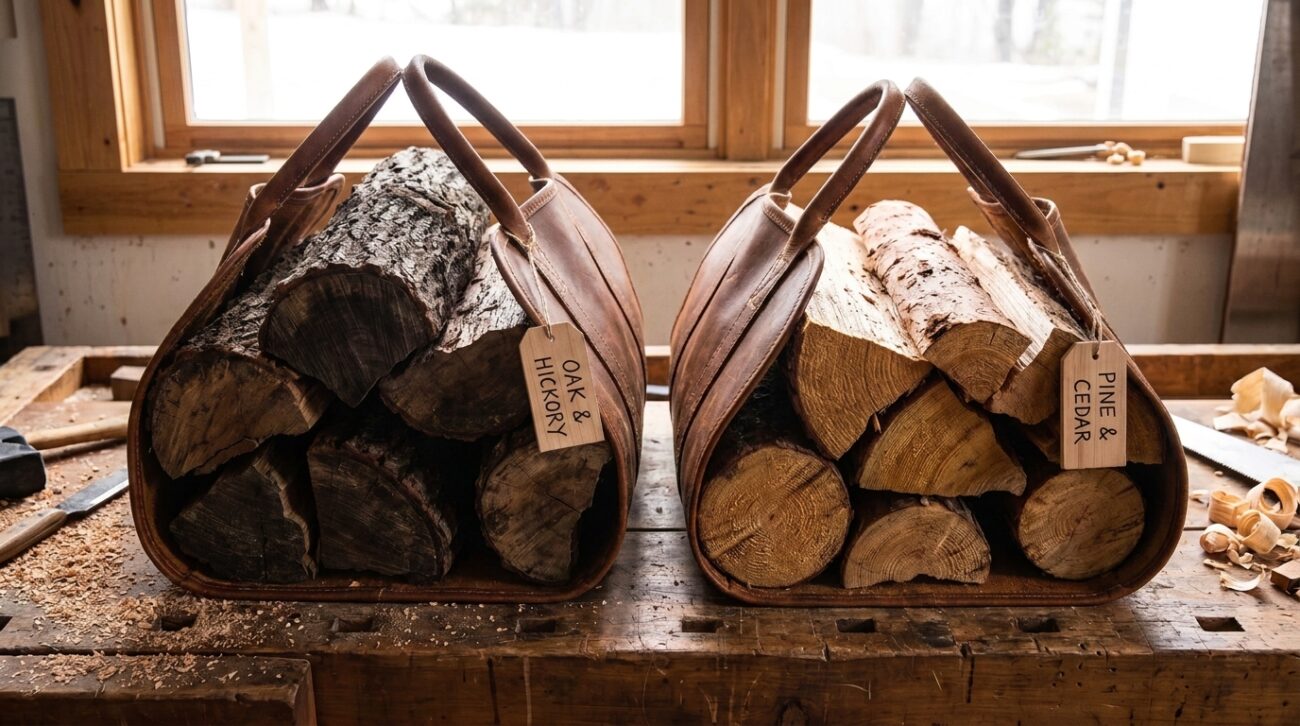
The same carrier can feel very different depending on what’s inside it.
Hardwood
Oak, maple, hickory, and similar hardwoods are much heavier than softwoods.
A medium-sized carrier filled with hardwood may weigh as much as a large carrier filled with pine. If hardwood is your primary fuel, choosing a size based on comfort rather than maximum capacity usually results in a better carrying experience.
Softwood
Pine, cedar, spruce, and fir are lighter, allowing you to carry more logs without adding excessive weight.
A larger carrier may work well if softwood makes up most of your firewood supply.
Fresh vs. Seasoned Firewood
Freshly cut logs contain more moisture and weigh considerably more than seasoned firewood.
If you often move green wood before it has fully dried, keep this additional weight in mind when selecting a carrier size.
Quick Size Comparison
| Where You Use It | Recommended Size |
| Indoor fireplace | Small to Medium |
| Backyard fire pit | Medium to Large |
| Camping | Medium |
| Cabin or wood shed | Large |
| Daily household use | Medium |
| Heavy hardwood | Medium with reinforced construction |
Common Sizing Mistakes
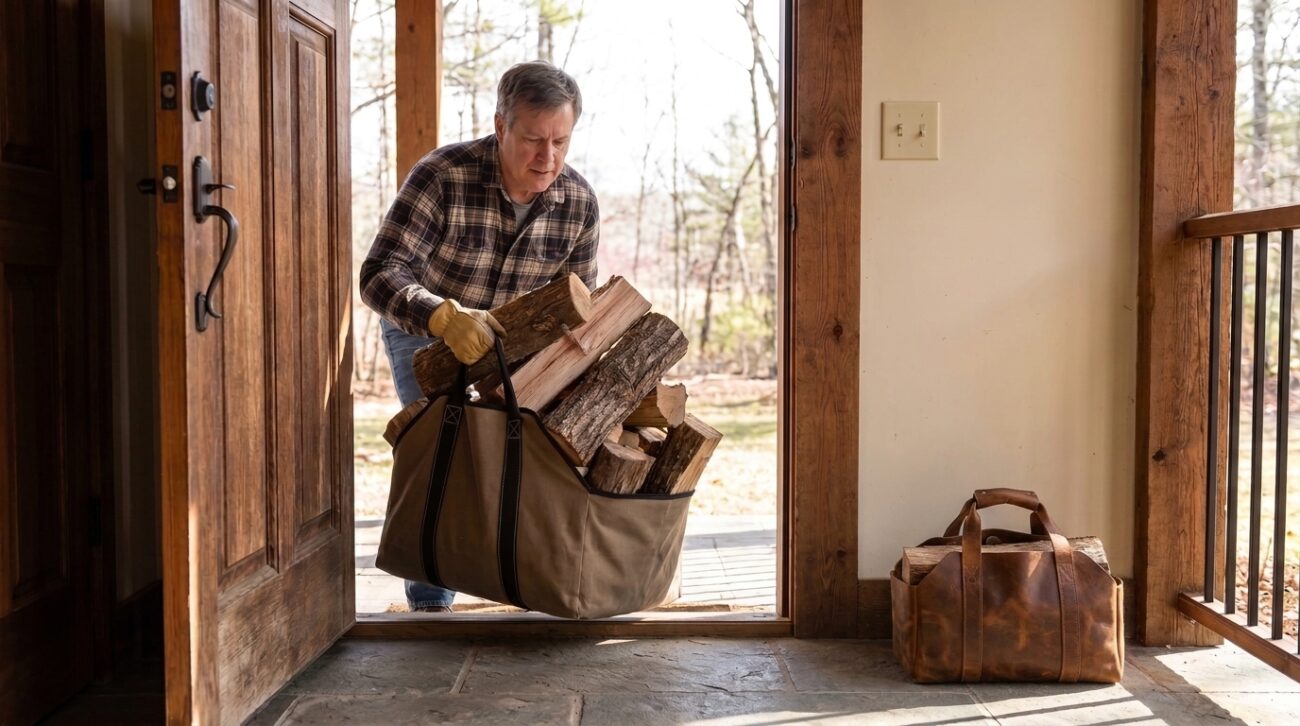
Even a well-made carrier won’t feel comfortable if the size doesn’t match how you actually use it.
Buying the Largest Available
More capacity isn’t always better. Overloading a carrier often makes it harder to carry and places extra strain on your hands, shoulders, and back.
Ignoring Carrying Distance
Walking ten feet from a woodshed is very different from crossing an entire yard or campground.
The farther you carry wood, the more important balance and manageable weight become.
Forgetting About Storage
Large carriers need more room when not in use.
If space beside your fireplace is limited, a compact carrier may fit your home much better than an oversized model.
Choosing Size Before Construction
A carrier’s dimensions matter, but so do its handles, stitching, and overall build quality.
After deciding on the right capacity, it’s worth considering the features that help a carrier stay comfortable and durable over years of regular use.
Quick Buying Checklist
Before making your decision, ask yourself:
- How much firewood do I normally carry?
- How far do I walk with each load?
- Will I use it indoors, outdoors, or both?
- Do I mostly burn hardwood or softwood?
- Where will I store the carrier?
- Can I comfortably lift a full load?
Answering these questions usually leads to a better choice than selecting a carrier based only on dimensions.
Pro Tip: Fill a cardboard box with the same number of logs you expect to carry. Walking a short distance with it is an easy way to estimate the size and weight that feels comfortable before purchasing a carrier.
Conclusion
The right firewood carrier size depends less on the dimensions printed in a product description and more on how you use it every day.
A medium-sized carrier works well for many households because it balances capacity with comfort, while larger options are better suited to cabins, wood sheds, and frequent outdoor fires. Smaller carriers remain a practical choice for indoor fireplaces and shorter carrying distances.
Once you’ve decided on the size that fits your routine, it’s easier to compare well-crafted firewood carriers built for everyday use that offer the durability and construction to match your needs.
FAQs
1. What size firewood carrier is best for most homes?
A medium-sized carrier is the most versatile choice for everyday fireplace use and general household firewood transport.
2. Is a larger firewood carrier always better?
No. A larger carrier holds more wood but can become difficult to carry if it’s overloaded.
3. What size is best for camping?
A medium carrier usually offers the best balance between carrying capacity and portability.
4. Should I choose a different size for hardwood?
Yes. Hardwood weighs more than softwood, so many people find a medium-sized carrier more comfortable.
5. What size works best beside an indoor fireplace?
Small to medium carriers are easier to store and fit neatly beside most hearths.
6. Can one carrier work for both indoor and outdoor use?
Yes. A medium-sized carrier is often practical enough for fireplaces, backyard fire pits, and occasional camping.
7. How many logs fit in a medium-sized carrier?
Depending on the size of the logs, most medium carriers hold approximately six to ten pieces of split firewood.
8. Does carrier style affect capacity?
Yes. Sling-style, tote-style, and structured carriers all hold firewood differently, even when their dimensions appear similar.