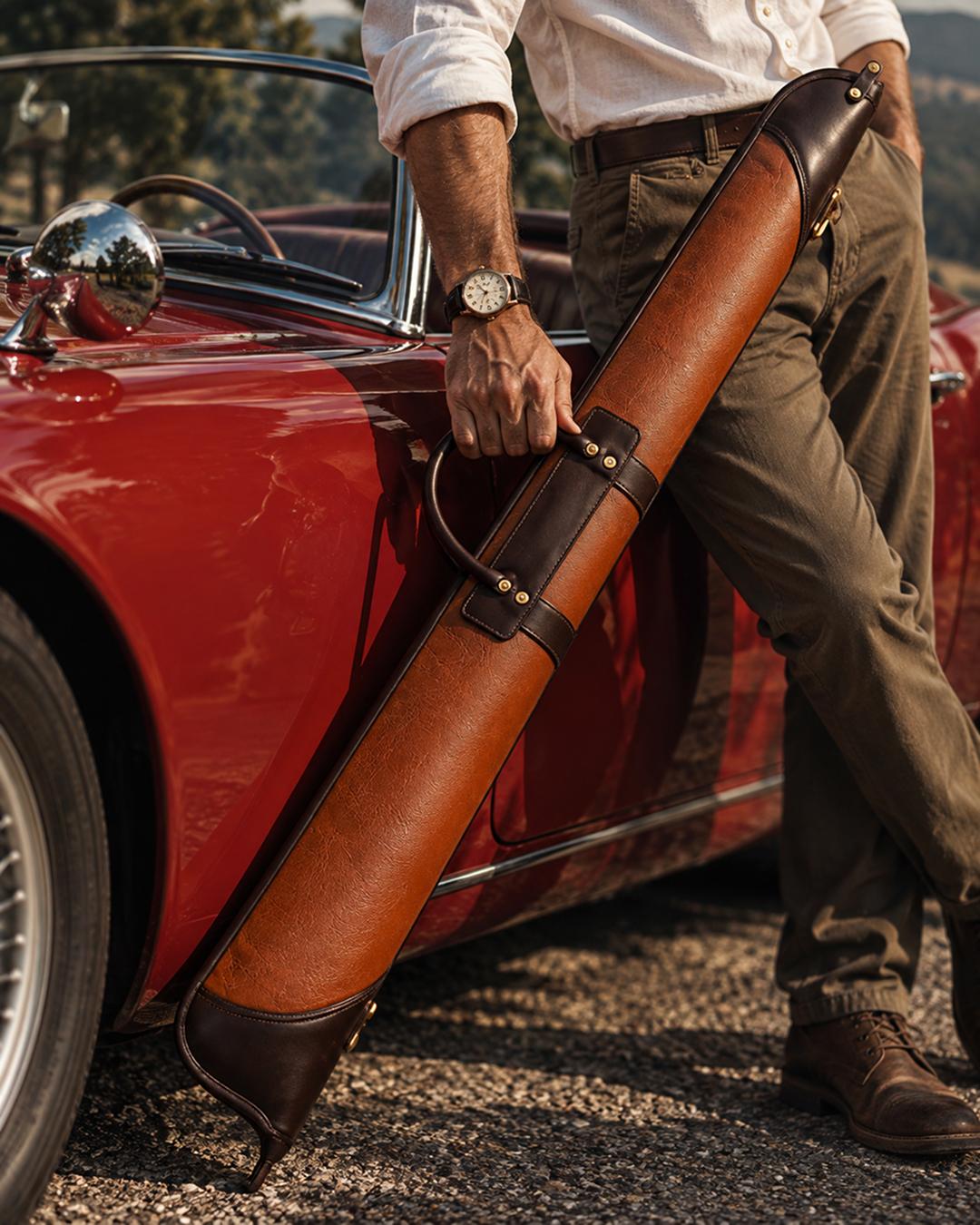


The history of leather gun cases reflects a long journey of craftsmanship and innovation. From frontier environments to refined hunting estates and modern production lines, leather has remained a trusted material for safeguarding firearms.
Before advanced synthetic materials existed, leather was the most reliable shield against moisture, impact, and environmental damage. Over time, designs evolved from simple protective sleeves to structured, padded cases crafted by skilled artisans.
Each era added improvements in structure, comfort, and security, while still relying on leather’s natural strength. Understanding this evolution can help you appreciate why leather continues to symbolize durability and tradition today. And in this article, we’ll talk about exactly that.
The Frontiersman Era: Utilitarian Roots (Pre-19th Century)
During the Frontiersman Era, leather gun cases were designed purely for survival. Life in the wilderness demanded practical solutions, and protection was essential.
That’s why firearms needed proper protection from rain, dust, snow, and rough travel conditions. Moisture protection was critical, as flints and powder had to remain completely dry to function reliably. Leather became the only dependable material available for this purpose.
The Purpose
The main purpose was survival. Early gun carriers required concealment, durability, and weather resistance in harsh environments. Protection was functional, not decorative.
The Materials
Craftsmen used brain-tanned buckskin, raw cowhide, and heavy buffalo hides. These materials were strong, accessible, and naturally resistant to the elements.
The Designs
Designs were simple and hand-stitched. Minimalist slip-sleeves and fringed scabbards were sewn using sinew or basic hand tools.
The Golden Age of Craftsmanship: Victorian & Edwardian Eras (1800–1914)
As society evolved, gun cases transformed from survival tools into refined accessories. The Victorian and Edwardian eras marked the rise of organized sport hunting, international safaris, and elite shooting clubs. That’s where firearms became part of gentlemanly recreation rather than daily survival.
The Shift
Luxury sport hunting created demand for more refined storage solutions. Gun owners required protection that reflected status and professionalism.
The Innovations
This era introduced hard-sided “leg-o-mutton” cases and fitted trunk-style designs. These cases provided structured protection during travel by rail and ship.
The Details
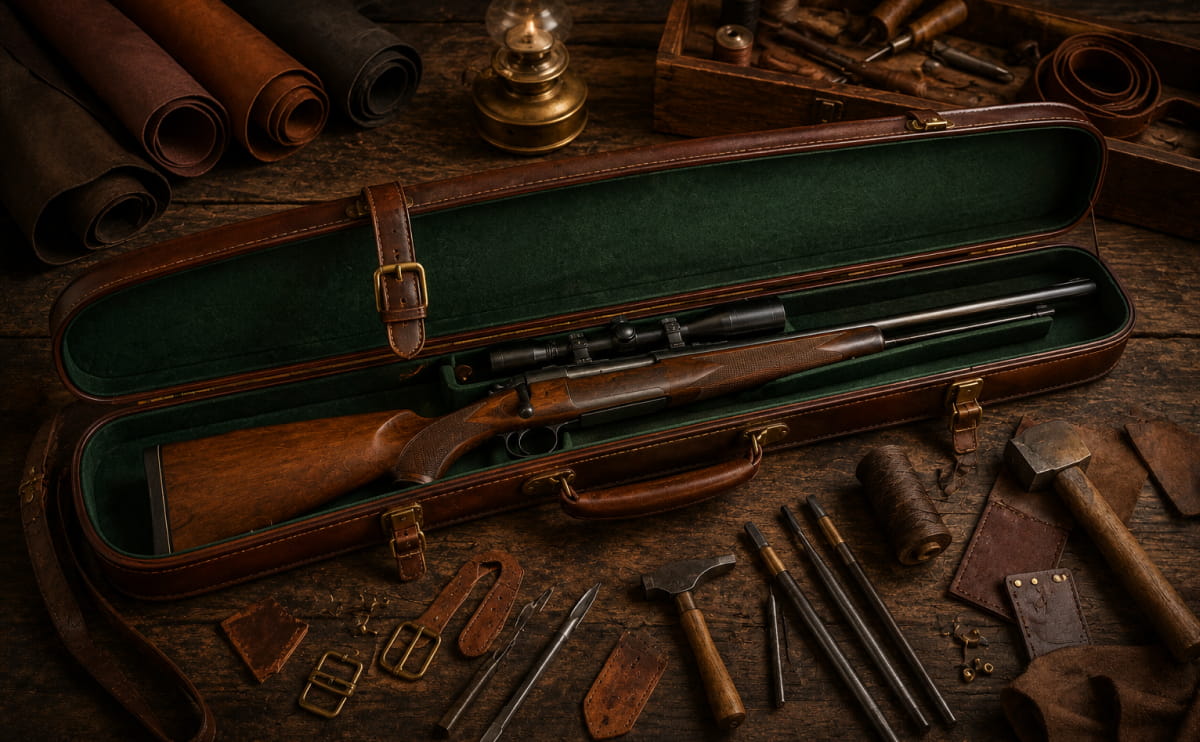
Craftsmen incorporated oak-framed interiors lined with green baize wool to cushion firearms. Brass corner bumpers reinforced durability, while secure lock-and-key systems improved safety and transport confidence.
The Craft
Master saddlers and luggage makers expanded their expertise into the manufacture of firearms cases. Their craftsmanship elevated gun protection into a specialized art form.
During this period, leather gun cases became symbols of refinement, combining functionality with elegance and meticulous detail.
War & Industrialization: The Mid-20th Century Transition
The mid-20th century brought significant transformation to leather gun case production. Global conflicts and industrial growth changed manufacturing processes, materials, and design efficiency. We can call this time the most important for the globalization of leather, because those region who were primarily unaware of the value of leather started getting it.
The Shift
World War I and World War II accelerated mass production techniques. Factories began prioritizing speed, scalability, and uniformity over fully custom craftsmanship. This industrial mindset influenced leather goods, including gun cases.
The Materials
Standardized, heavy-duty vegetable-tanned cowhides became more common. Unlike earlier exotic or highly customized materials, these leathers were durable, accessible, and suitable for broader production. This shift allowed consistent quality while supporting higher output.
The Designs
Design simplicity became a priority. Zippered soft cases gradually replaced complex buckle systems. Zippers enabled quicker access, which was valuable in field conditions. Streamlined construction, on the other hand, reduced production time and improved practicality for everyday users.
The Impact
As manufacturing scaled, high-quality leather protection became more affordable for average civilian hunters. What was once exclusive to elites became accessible to a broader audience. Leather gun cases were no longer limited to luxury estates, but they entered mainstream use.
This era balanced tradition with efficiency. While design became more practical, leather remained the trusted foundation for durable firearm protection.
The Modern Era: Leather vs. Synthetics (Late 20th Century–Present)
The modern era introduced new materials that changed the protective gear industry. While leather remained respected for tradition and craftsmanship, synthetic alternatives began gaining popularity due to manufacturing efficiency and tactical performance.
The Competitors
Ballistic nylon, injection-molded plastics, and advanced foam inserts became widely used in the production of gun cases. These materials are lightweight, cost-effective, and easy to mass-produce.
Tactical markets especially adopted synthetics because they offered water resistance, flexibility, and modern design features. As technology advanced, manufacturers explored materials that could meet fast-paced operational demands.
The Verdict
Today, synthetics dominate tactical and military-focused markets. Their lightweight structure and modular designs make them practical for field use. However, leather continues to hold a strong position in premium hunting, heritage collections, and traditional craftsmanship sectors.
Many enthusiasts prefer leather for its authenticity, durability, and classic appeal. It represents heritage rather than trend-driven manufacturing.
The Patina Factor
One of the main reasons collectors still choose leather is the natural patina that develops over time. Full-grain leather ages gracefully, creating a unique surface character.
It is breathable, long-lasting, and visually classic. Unlike synthetic materials that remain unchanged or degrade, leather evolves. This aging process adds depth, personality, and individuality to each case.
Conclusion
The history of leather gun cases reflects centuries of craftsmanship, innovation, and adaptation. From rugged frontier slip-sleeves to elegant Victorian trunk designs and modern premium heirloom cases, leather has consistently served as a reliable protective material.
While industrialization introduced synthetic competitors, leather maintained its presence in traditional and heritage markets. Its strength, natural durability, and ability to develop character over time make it more than just a material, as it represents legacy.
Synthetic cases may offer seasonal convenience, but well-crafted leather cases carry meaning across generations. They connect past and present through skill and tradition.
FAQ’s
1. When were leather gun cases first used?
Leather gun cases date back to early frontier periods, where they were used for protection against moisture and environmental damage.
2. Why did leather remain popular after synthetic materials were introduced?
Leather continues to be valued for its durability, heritage appeal, and natural aging characteristics.
3. What materials replaced leather in modern tactical cases?
Ballistic nylon, molded plastics, and foam inserts became common in tactical and mass-produced designs.
4. Are leather gun cases still practical today?
Yes, premium leather cases remain widely used in heritage hunting, collections, and traditional firearm storage.
5. What makes leather cases different from synthetic ones?
Leather offers natural breathability, long-term durability, and a unique patina that develops over time, while synthetics focus on lightweight utility.