
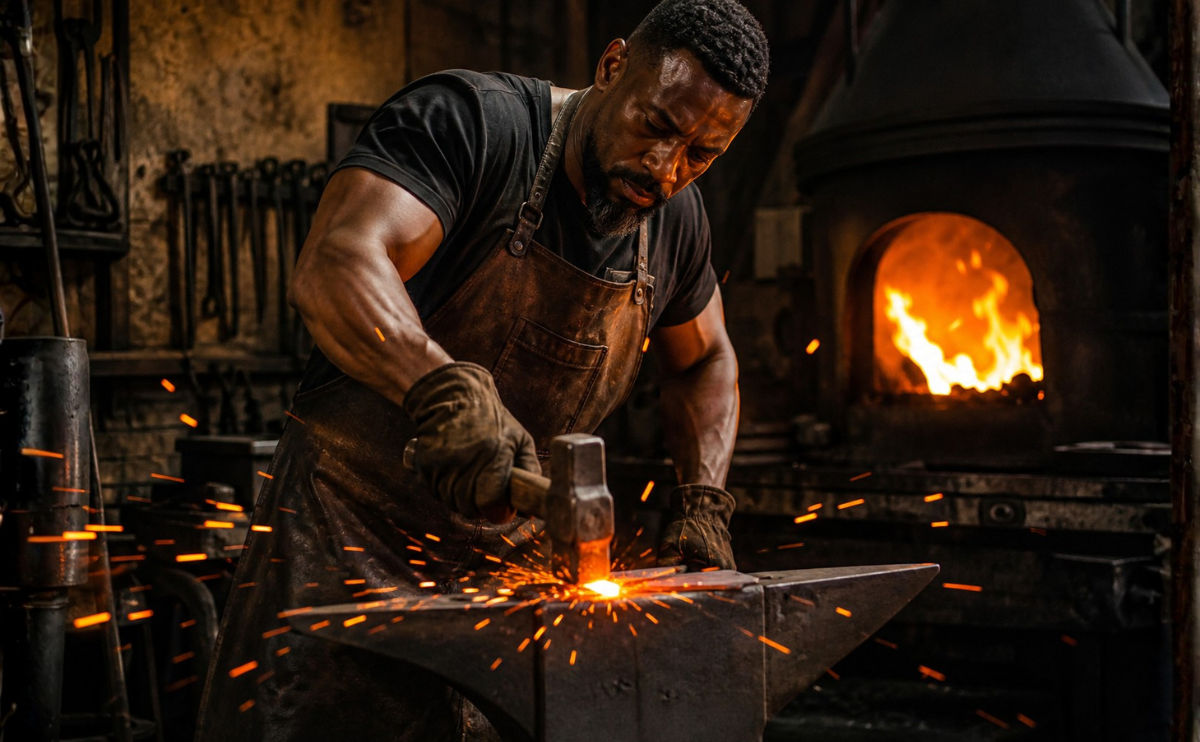

It is not hidden from anyone that blacksmithing is one of the oldest and most demanding trades, which involves intense heat, flying sparks, and heavy tools. Because of that, proper protective gear is more than just important.
That’s where leather options come in. Leather has long been the preferred material for blacksmith aprons due to its durability and heat-resistant properties. Unlike fabric, leather provides a reliable barrier against molten metal and sharp edges.
However, many new blacksmiths wonder that the reason why many experienced professionals in this field wear leather is because of the classic appearance. But that’s not the only case. That’s why in this guide, we’ll share everything regarding this.
The Unique Hazards of Blacksmithing
Blacksmithing involves working with heated metal, open flames, and heavy tools. These elements create multiple safety risks, and without proper protection, they can damage your skin instantly.
On top of that, sharp edges and heavy tools create additional risks, as metal pieces may strike the body. Abrasion from rough materials can wear down regular clothing quickly. Heat exposure is constant, especially near the forge, which can weaken fabrics and increase fire risk.
Because of these conditions, blacksmiths need protective gear that handles heat, impact, and friction, and leather aprons provide a reliable barrier.
Heat Resistance: How Leather Protects from Sparks and Molten Metal
Leather’s Natural Thermal Properties
Leather naturally resists heat because of its dense fiber structure. Animal hide contains tightly packed collagen fibers that slow heat transfer. This means that sparks and hot metal cool down before reaching your skin. On top of that, unlike synthetic fabrics, leather does not melt when exposed to high temperatures. Instead, it forms a protective barrier.
When sparks land on leather, they usually bounce off or lose heat quickly, which significantly reduces burn risk. Leather also provides insulation as it slows down the movement of heat from the surface to the inner layer, which gives you, the wearer, time to brush off hot particles.
Another advantage is thickness. Even moderately thick leather can absorb brief contact with heated metal.
Temperature Thresholds of Different Leathers
Different types of leather offer varying levels of heat resistance. Full-grain leather is one of the most durable options. Its dense structure handles high temperatures effectively. Split leather, on the other hand, also provides protection but may be slightly less resistant. If we talk about thicker leather, it generally performs better in forge environments.
Vegetable-tanned leather tends to resist heat well as it maintains strength under exposure to sparks. Lastly, chrome-tanned leather is more flexible but may offer slightly lower heat resistance. However, both types still outperform fabric materials.
Fire Resistance: Why Leather Doesn’t Catch Fire Easily
Leather does not ignite easily because of its natural composition. Its dense fiber structure resists flames and slows combustion. When exposed to sparks, leather tends to char instead of burning quickly. This charring creates a protective layer that reduces further damage.
Unlike synthetic fabrics, leather does not melt. Melted materials can stick to skin and worsen burns. Cotton, while natural, can ignite faster under direct flame. Leather’s resistance provides valuable protection in forge environments.
Another advantage is thickness. Thicker leather requires more heat before ignition, which gives blacksmiths time to remove sparks.
Puncture and Cut Protection in the Forge
Blacksmiths frequently handle sharp metal edges and heavy tools. These create risks of cuts and punctures. That’s where leather aprons provide a strong protective layer against these hazards. Its dense fibers resist penetration better than fabric materials, which helps prevent injuries from sharp fragments.
During hammering, metal scale can also fly toward the body, and leather absorbs that impact and reduces injury risk. It also protects against accidental contact with sharp corners. Thick leather acts as a cushion, which minimizes damage from dropped tools.
Durability: How Leather Withstands Repeated Exposure
Blacksmithing environments are harsh, with constant heat, sparks, and friction. Leather stands out for its long-lasting durability. It maintains strength even after repeated exposure to high temperatures. Unlike fabric, leather does not weaken quickly, which makes it ideal for daily use.
Leather also resists abrasion from tools and rough surfaces. Frequent contact does not easily damage it. Over time, leather softens while retaining strength, which improves comfort without reducing protection.
Another advantage is resistance to tearing, as strong stitching combined with thick leather increases lifespan. Even in demanding conditions, leather aprons hold their shape. This reliability reduces replacement needs.
Why Cotton and Synthetic Aprons Fail in Blacksmithing
Cotton and synthetic aprons are not suitable for blacksmithing. Cotton may seem comfortable, but it ignites easily when exposed to sparks. Once burning, it spreads flame quickly, which increases the risk of injury. Not to forget that cotton also wears out faster in harsh environments.
Synthetic fabrics, on the other hand, present different dangers. Many synthetic materials melt under high heat, and melted fabric can stick to skin, causing severe burns. This makes them unsafe near forges.
Both cotton and synthetic materials offer limited durability. They cannot handle repeated exposure to sparks and friction. Leather, by contrast, resists heat and abrasion. This is why blacksmiths avoid fabric aprons.
The Science of Leather Thickness for Forge Work
Lightweight vs Heavyweight Leather
Leather thickness plays a major role in protection and comfort. Lightweight leather is more flexible and easier to move in. It works well for light-duty tasks but offers limited heat resistance. Thin leather may allow heat to transfer faster, which reduces protection against sparks and hot metal.
Heavyweight leather provides stronger insulation. Thicker material slows heat transfer and improves safety, and it also offers better resistance to cuts and abrasion.
Choosing between lightweight and heavyweight leather depends on the task. Blacksmithing typically involves high heat and sharp edges. Therefore, heavier leather is often preferred as it balances safety and durability.
Recommended Thickness for Blacksmiths
Blacksmiths generally benefit from thicker leather for maximum protection. Leather measuring around two to three millimeters is commonly recommended because this thickness offers strong resistance to sparks and molten metal. Not only that, but it also improves puncture protection.
Very thick leather above three millimeters provides additional safety. However, it may reduce flexibility. Some blacksmiths choose medium thickness for better movement. However, the right balance depends on working conditions. For heavy forging, thicker leather is safer. For lighter tasks, medium thickness may be comfortable.
FAQs
1. Why do blacksmiths specifically use leather aprons?
Because leather provides heat resistance, durability, and protection from sparks and sharp metal.
2. Is thicker leather always better for blacksmithing?
Thicker leather offers more protection, but it should balance comfort and mobility.
3. Can fabric aprons be used for blacksmithing?
Fabric aprons are unsafe because they can burn or melt under high heat.
4. What type of leather is best for blacksmith aprons?
Full-grain or heavy split leather is commonly recommended for durability.
5. Do leather aprons completely prevent burns?
They significantly reduce risk, but proper caution and safety practices are still necessary.