

A quality knife roll does much more than carry knives from one place to another. It protects valuable blades, keeps tools organized, and helps chefs work efficiently whether they are in a restaurant, a catering event, a culinary school, or a private kitchen.
That’s why choosing the right knife roll is an important decision because every collection is different. Some chefs carry only a few essential knives, while others travel with an extensive selection of specialized tools.
Before making a purchase, it is worth understanding exactly what separates a great knife roll from an average one. Here are ten expert tips to help you choose the right knife roll for your collection.
Match the Knife Roll to Your Collection Size
The first step in choosing a knife roll is evaluating the size of your knife collection. A roll that is too small can force you to leave important tools behind, while one that is excessively large may add unnecessary bulk.
Consider how many knives you currently own and whether you plan to expand your collection. Professional chefs often carry a combination of chef knives, utility knives, paring knives, slicing knives, and specialty tools.
Each item requires dedicated storage space. Choosing a knife roll with the appropriate capacity helps keep tools organized and prevents overcrowding.
A properly sized roll also makes transportation easier and improves accessibility during busy workdays.
Consider Blade Length Compatibility
Not all knives are the same size, which is why blade length compatibility is an important factor when selecting a knife roll. Some chef knives, slicers, and specialty blades can be significantly longer than standard kitchen knives.
If the compartments are too short, blades may not fit securely or remain fully protected. Before purchasing a knife roll, review the dimensions of your longest knives and compare them to the available storage slots.
A good knife roll should comfortably accommodate both smaller utility knives and larger professional blades. Proper sizing helps prevent unnecessary pressure on knife tips and edges during transport.
Ensuring blade compatibility not only protects your investment but also makes the knife roll more versatile as your collection grows.
Related Article: Evolution of the Leather Knife Roll
Choose High-Quality Materials
Material quality directly affects a knife roll’s durability, appearance, and lifespan. Full-grain leather remains one of the most trusted choices because of its exceptional strength and long-term performance.
Unlike lower-quality materials, premium leather can withstand daily use while developing a rich character over time. A durable exterior also provides better protection against wear, moisture, and environmental exposure.
While synthetic materials and canvas may be more affordable, professional chefs often prefer leather for its reliability and timeless appeal. Investing in quality materials means fewer replacements and better protection for valuable knives.
When selecting a knife roll, prioritize craftsmanship and material quality to ensure it performs consistently throughout years of demanding use.
Look for Strong Blade Protection
The primary purpose of a knife roll is to protect your knives. A well-designed knife roll should keep each blade securely separated to prevent contact with other tools. Individual compartments, protective flaps, and reinforced interiors all contribute to better blade safety.
Without proper protection, knives can become scratched, chipped, or dulled during transport. This not only affects performance but may also shorten the lifespan of expensive culinary tools.
Professional chefs rely on sharp, well-maintained knives, making protection a top priority. When comparing knife rolls, pay close attention to how blades are secured and whether additional protective features are included.
Evaluate Storage for Additional Tools
Most chefs carry more than just knives. Sharpening stones, thermometers, scissors, tweezers, peelers, and other culinary accessories are often part of a professional toolkit. Choosing a knife roll with dedicated storage for these items improves organization and convenience.
Additional pockets and utility compartments help prevent tools from becoming misplaced or damaged. Organized storage also allows chefs to access equipment quickly during busy service hours. Instead of carrying multiple bags, a thoughtfully designed knife roll can hold everything you need in one place.
Before making a decision, consider which accessories you regularly use and ensure the knife roll offers adequate storage space. A more organized setup contributes to greater efficiency and professionalism.
Check the Closure System and Security Features
A knife roll should keep your tools secure, whether you are walking across a restaurant, driving to a catering event, or traveling between cities. Reliable closure systems such as leather straps, brass buckles, reinforced snaps, or strong zippers help ensure everything remains safely contained.
Weak closures can allow tools to shift during transport, increasing the risk of damage or accidents. Security becomes even more important for chefs who frequently carry expensive knife collections.
A dependable closure system keeps knives firmly in place while providing easy access when needed. When evaluating a knife roll, examine both the quality of the hardware and the overall design.
Prioritize Comfortable Carrying Options
A knife roll may look impressive, but it also needs to be comfortable to carry. Many chefs travel between restaurants, catering venues, culinary schools, and private events, often carrying several knives and accessories at once.
A well-designed knife roll should include sturdy handles, adjustable shoulder straps, or an ergonomic carrying system that reduces strain during transport.
Comfort becomes even more important when carrying heavier collections over long distances. Poorly designed handles or thin straps can make transportation uncomfortable and inconvenient.
A quality knife roll distributes weight evenly while allowing easy mobility. When evaluating your options, think about how often you travel and how much equipment you typically carry.
Consider Your Travel Requirements
Not every chef works in the same environment. Some spend most of their time in a single kitchen, while others frequently travel for catering jobs, competitions, private events, or culinary consulting. Your travel habits should influence the type of knife roll you choose.
For chefs on the move, portability is essential. A compact design with secure storage and lightweight construction can make transportation much more convenient.
Features such as weather-resistant materials and reinforced closures offer additional protection during travel. If you often carry your knives between locations, look for a knife roll designed specifically for mobility.
Examine Craftsmanship and Stitching Quality
The quality of craftsmanship often determines how well a knife roll performs over time. Strong stitching, reinforced seams, and durable hardware help ensure the roll can handle daily use without premature wear. Even the best materials can fail if construction standards are poor.
Take time to inspect details, including stitching consistency, edge finishing, buckle quality, and overall workmanship. These small elements often reveal the true quality of the product.
Professional chefs depend on reliable equipment, and a poorly constructed knife roll can become a weak link in protecting valuable tools.
Invest in Long-Term Value
Choosing a knife roll should be viewed as a long-term investment rather than a short-term purchase. While lower-cost options may seem attractive initially, they often require replacement much sooner due to wear and tear.
A well-crafted knife roll made from premium materials can provide years of dependable service. Full-grain leather knife rolls, for example, offer exceptional durability and often develop a distinctive character over time.
Rather than deteriorating, they frequently become more attractive with age. Investing in quality upfront can save money in the long run while providing better protection for your knives.
Conclusion
Selecting the right knife roll is one of the most important decisions a chef can make when it comes to protecting and organizing valuable tools. The ideal knife roll should match your collection size, accommodate your longest blades, provide excellent protection, and offer practical storage for accessories.
A carefully chosen knife roll not only safeguards your knives but also supports your daily workflow and professional image. Whether you are a culinary student, restaurant chef, caterer, or private cook, investing in a durable and well-designed knife roll helps ensure your tools remain protected wherever your career takes you.
FAQ’s
What size knife roll should I choose?
The best size depends on how many knives and tools you regularly carry.
Is a leather knife roll worth the investment?
Yes, full-grain leather knife rolls are indeed worth the investment.
How many knives can a typical knife roll hold?
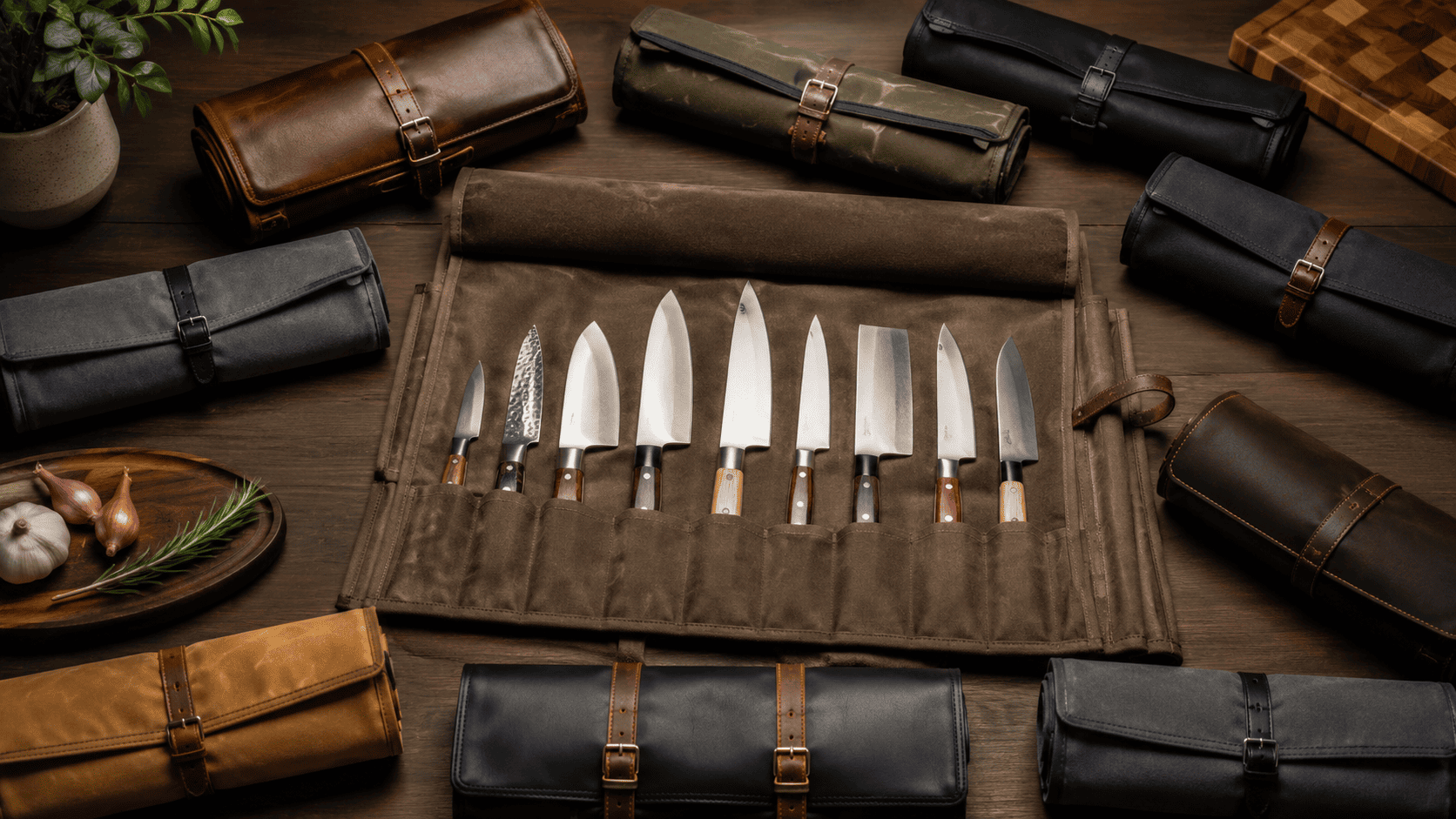
Capacity varies by design. Some knife rolls hold five to seven knives, while larger professional models can accommodate ten or more knives along with additional tools.
Are knife rolls safe for transporting expensive knives?
A quality knife roll with secure compartments, protective flaps, and reliable closures provides excellent protection for expensive knives during daily transport and travel.