
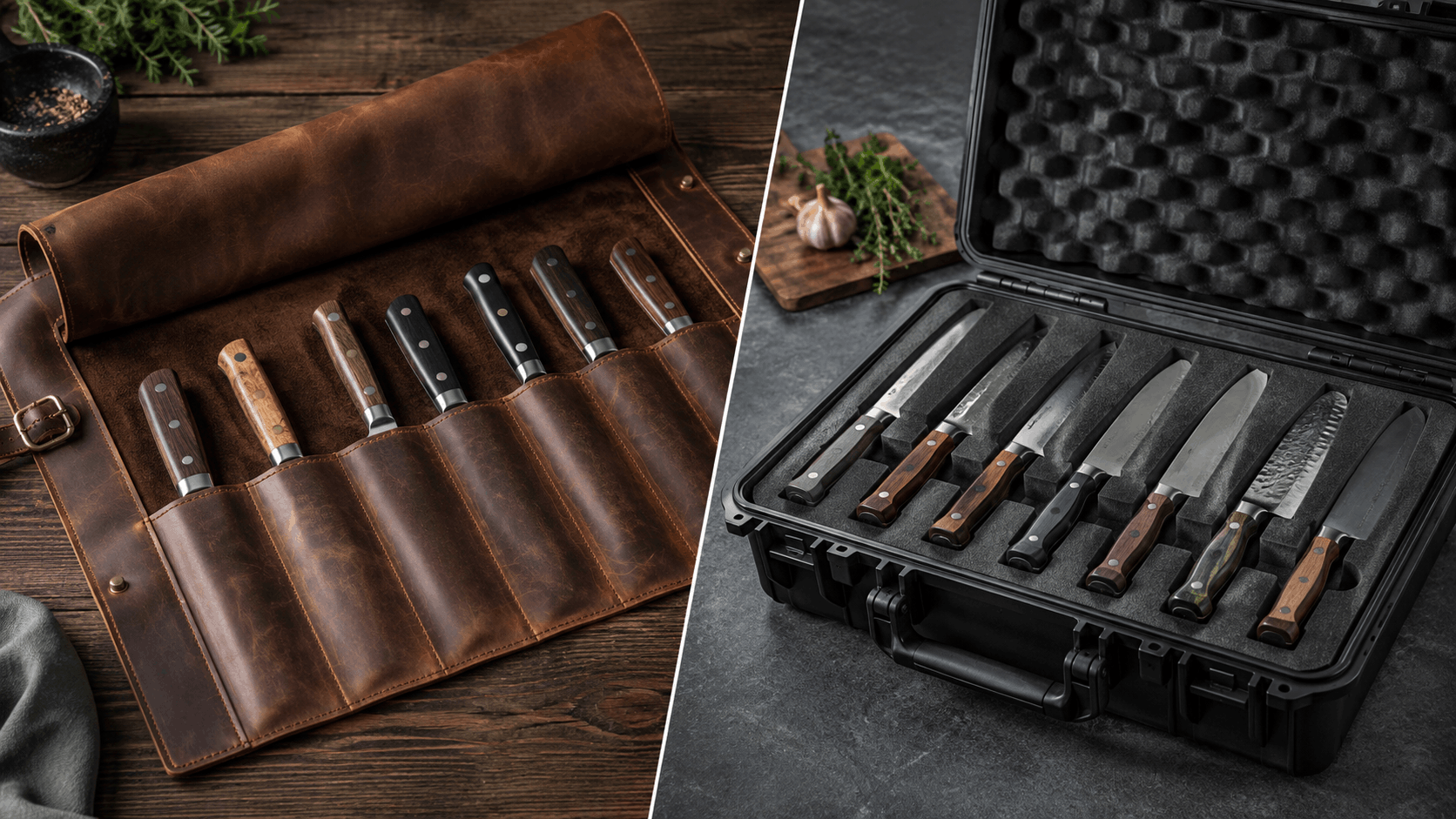

For professional chefs, culinary students, and serious cooking enthusiasts, protecting valuable knives is a top priority. High-quality knives are significant investments, and how they are stored and transported can directly affect their longevity and performance.
In that regard, two of the most popular storage solutions are leather knife rolls and hard knife cases. While both are designed to keep knives secure, they offer very different advantages depending on how and where they are used.
Choosing the right option in this regard can be confusing. But don’t you worry, after reading this guide, you’ll be sure as to which option suits you best.
What Is a Leather Knife Roll?
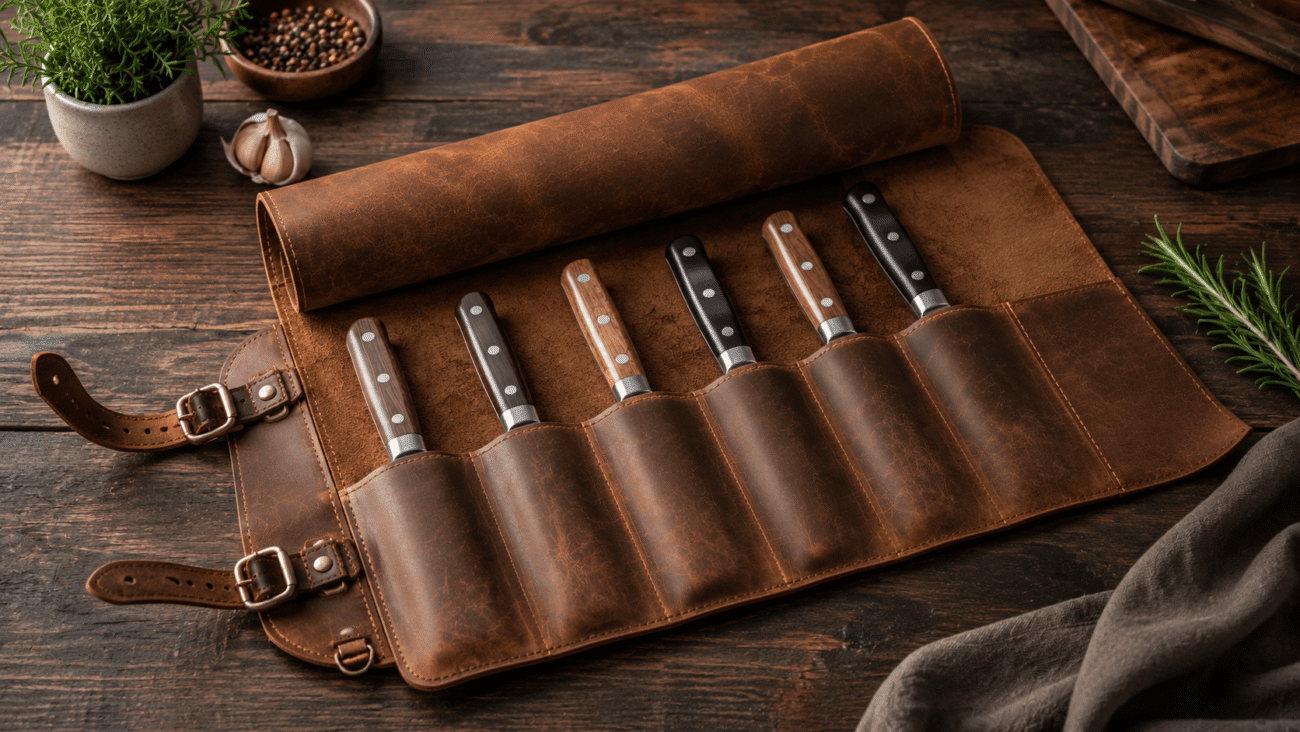
In simple terms, a leather knife roll is a portable storage solution that organizes, protects, and transports knives and culinary tools. Typically crafted from durable materials such as full-grain leather, these rolls feature individual compartments that securely hold knives while preventing blades from contacting one another.
Once loaded, the roll folds into a compact package that can be carried by hand or with a shoulder strap. Professional chefs often prefer leather knife rolls because they combine functionality with classic craftsmanship.
In addition to knife slots, many models include utility pockets for sharpeners, thermometers, tweezers, and other kitchen essentials. Full-grain leather offers excellent durability and develops a rich character over time, making the knife roll both practical and visually appealing.
What Is a Hard Knife Case?
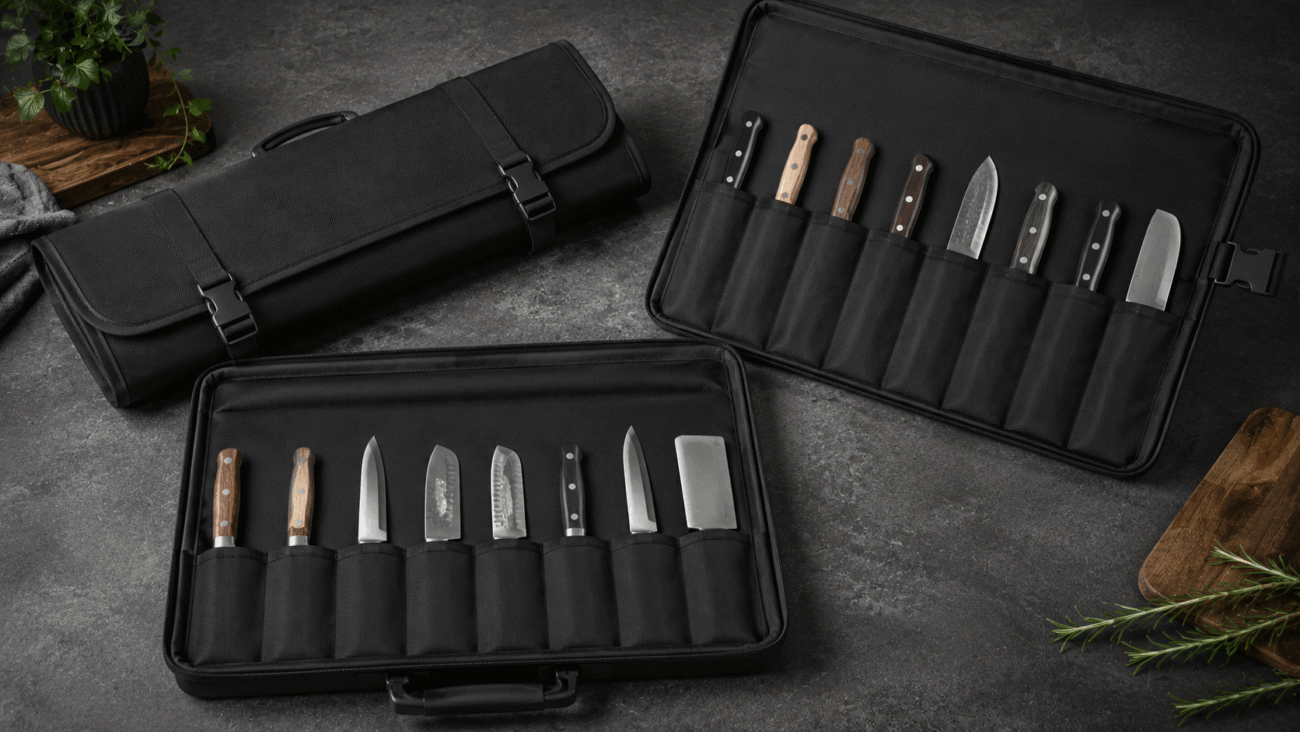
A hard knife case is a rigid storage container designed to provide maximum protection for knives during transport and storage. These cases are typically made from durable materials such as molded plastic, reinforced polymers, or composite materials. Inside, foam inserts or dedicated compartments help secure knives and prevent them from moving while traveling.
Hard knife cases are commonly used by chefs who transport expensive knife collections or travel long distances, where equipment may be exposed to rough handling.
The rigid exterior provides strong resistance against impacts, pressure, and accidental drops. Many hard cases also include locking mechanisms for added security. While they are generally bulkier and heavier than knife rolls, they offer a high level of protection that can be valuable for professionals carrying premium culinary tools in demanding travel environments.
Pros and Cons of Leather Knife Roll
Pros
Lightweight and Easy to Carry
One of the biggest advantages of a leather knife roll is portability. Unlike bulky storage options, a knife roll remains compact and lightweight, making it ideal for chefs who regularly move between kitchens.
Its flexible design allows it to fit easily into vehicles, lockers, and storage spaces without taking up excessive room. For professionals who prioritize convenience and mobility, a leather knife roll offers an efficient way to transport essential tools.
Professional Appearance and Timeless Style
A well-crafted leather knife roll offers more than practical storage. It reflects professionalism, craftsmanship, and attention to detail. Full-grain leather develops a unique patina over time, giving the roll character that synthetic materials often lack.
Many chefs appreciate the timeless look of leather because it complements the tradition and skill associated with professional cooking. In addition to protecting tools, a leather knife roll creates a strong visual impression that aligns with a chef’s professional identity and personal style.
Flexible Storage and Organization
Leather knife rolls are designed to accommodate a variety of knives and culinary tools. Dedicated slots, utility pockets, and adaptable layouts allow chefs to organize equipment according to their needs.
This flexibility makes it easy to store chef knives, paring knives, sharpening tools, thermometers, and more in a single place. The ability to customize how tools are arranged improves efficiency and accessibility, helping chefs stay organized whether working in restaurants, catering events, or culinary schools.
Related Article: 10 Ways to Choose the Right Knife Roll for Your Collection
Cons
Less Impact Protection
Although leather knife rolls provide excellent organization and blade protection, they cannot match the impact resistance of a hard knife case. If dropped or subjected to significant pressure, the knives inside may still be vulnerable.
This limitation can be important for chefs who travel frequently through environments where equipment is subject to rough handling. While a knife roll offers sufficient protection for everyday transportation, it may not be the ideal choice for situations requiring maximum external protection against impacts.
Limited Security Features
Most leather knife rolls rely on straps, buckles, or simple closure systems to keep tools secure. While these closures work well for daily use, they generally do not offer the same level of security as lockable hard cases.
Chefs transporting expensive knife collections may prefer additional security measures to prevent unauthorized access. For users who place a high priority on protection and controlled access, the lack of advanced locking systems can be a potential drawback.
Vulnerable to Extreme Weather Conditions
Leather is durable, but prolonged exposure to excessive moisture, heavy rain, or extreme environmental conditions can affect its appearance and longevity.
Although many modern leather knife rolls feature protective treatments, they still require reasonable care to maintain their condition. Chefs working outdoors or frequently traveling in unpredictable weather may need to take extra precautions.
Pros and Cons of Hard Knife Case
Pros
Maximum Impact Protection
The greatest advantage of a hard knife case is its ability to protect knives from physical impacts. The rigid outer shell acts as a barrier against drops, pressure, and rough handling that could potentially damage valuable blades.
This level of protection is especially useful for chefs who frequently travel or transport expensive knife collections. When safety is the primary concern, a hard knife case provides confidence that knives will remain secure even in demanding conditions where softer storage options may offer less protection.
Enhanced Security Features
Many hard knife cases include built-in locking systems or compatibility with external locks. These features provide an additional layer of security that can be valuable when transporting premium knives or storing them in shared environments.
For chefs who attend events, competitions, or travel frequently, having the ability to lock a case offers added peace of mind.
Excellent for Air Travel
Hard knife cases are often the preferred choice for chefs who travel by air with their equipment. The rigid construction helps protect knives from rough baggage handling and the pressure that can occur during transportation.
Many cases are specifically designed to meet travel requirements while providing secure storage. For culinary professionals who regularly attend events or work opportunities in different locations, a hard knife case offers reliable protection.
Cons
Heavier and Bulkier Design
One of the most common drawbacks of a hard knife case is its size and weight. The rigid construction that provides excellent protection also makes the case bulkier than a leather knife roll.
Carrying a heavy case between kitchens, events, or work locations can become inconvenient over time. Chefs who prioritize portability often find hard cases less practical for everyday use.
Less Convenient for Daily Use
Hard knife cases are designed primarily for protection rather than convenience. Opening, accessing, and repacking tools can take longer compared to a knife roll. In fast-paced culinary environments where quick access is important, this extra effort may become frustrating.
The larger size can also make storage more difficult in crowded kitchens or small workspaces.
Limited Flexibility
Unlike a leather knife roll, which can accommodate different tool arrangements, a hard knife case typically features a fixed interior layout. This can limit customization options when carrying unique tools or changing knife collections.
If the compartments are not designed for a particular blade shape or accessory, fitting everything comfortably may become challenging.
Must Read This Article: Evolution of the Leather Knife Roll
Conclusion
Both leather knife rolls and hard knife cases offer valuable benefits, but the best choice depends on how you use and transport your knives.
A leather knife roll excels in portability, organization, flexibility, and timeless craftsmanship. It is ideal for chefs who travel regularly between kitchens and want a practical, professional-looking storage solution that is easy to carry.
A hard knife case, on the other hand, provides superior impact protection, enhanced security, and excellent performance during long-distance travel or in situations where equipment may be subject to rough handling.
For many culinary professionals, a leather knife roll offers the best balance of functionality, durability, and convenience for everyday use. However, chefs who prioritize maximum protection may find that a hard knife case better suits their specific needs. The right choice ultimately depends on your workflow, travel habits, and collection size.
FAQ’s
Which is better for professional chefs: a leather knife roll or a hard knife case?
Both are effective, but many professional chefs prefer leather knife rolls for everyday use because they are lighter.
Do leather knife rolls provide enough protection for expensive knives?
Yes, a quality leather knife roll offers excellent blade protection and organization for daily transportation.
Are hard knife cases suitable for air travel?
Yes, hard knife cases are often preferred for air travel.
How long does a leather knife roll last?
A full-grain leather knife roll can last for many years when properly maintained.
Can I store other culinary tools in a knife roll?
Yes, many leather knife rolls include utility pockets and additional compartments for sharpeners, thermometers, scissors, tweezers, and other essential culinary accessories.