

For chefs and culinary professionals, knives are essential instruments of the trade. Whether working in a restaurant, at a catering event, in a culinary school, or in a private kitchen, transporting and protecting those valuable knives is a top priority. That is where a knife roll comes in.
A quality knife roll helps keep knives organized, protected, and easy to carry from one location to another. It not only safeguards blades from damage but also helps chefs work more efficiently by keeping their tools readily accessible.
However, not all knife rolls are created equal. Material quality, storage capacity, durability, and comfort all play a role in finding the right option. In this guide, we will explain what a knife roll is and explore important factors every chef should consider before investing in one.
What Is a Knife Roll?
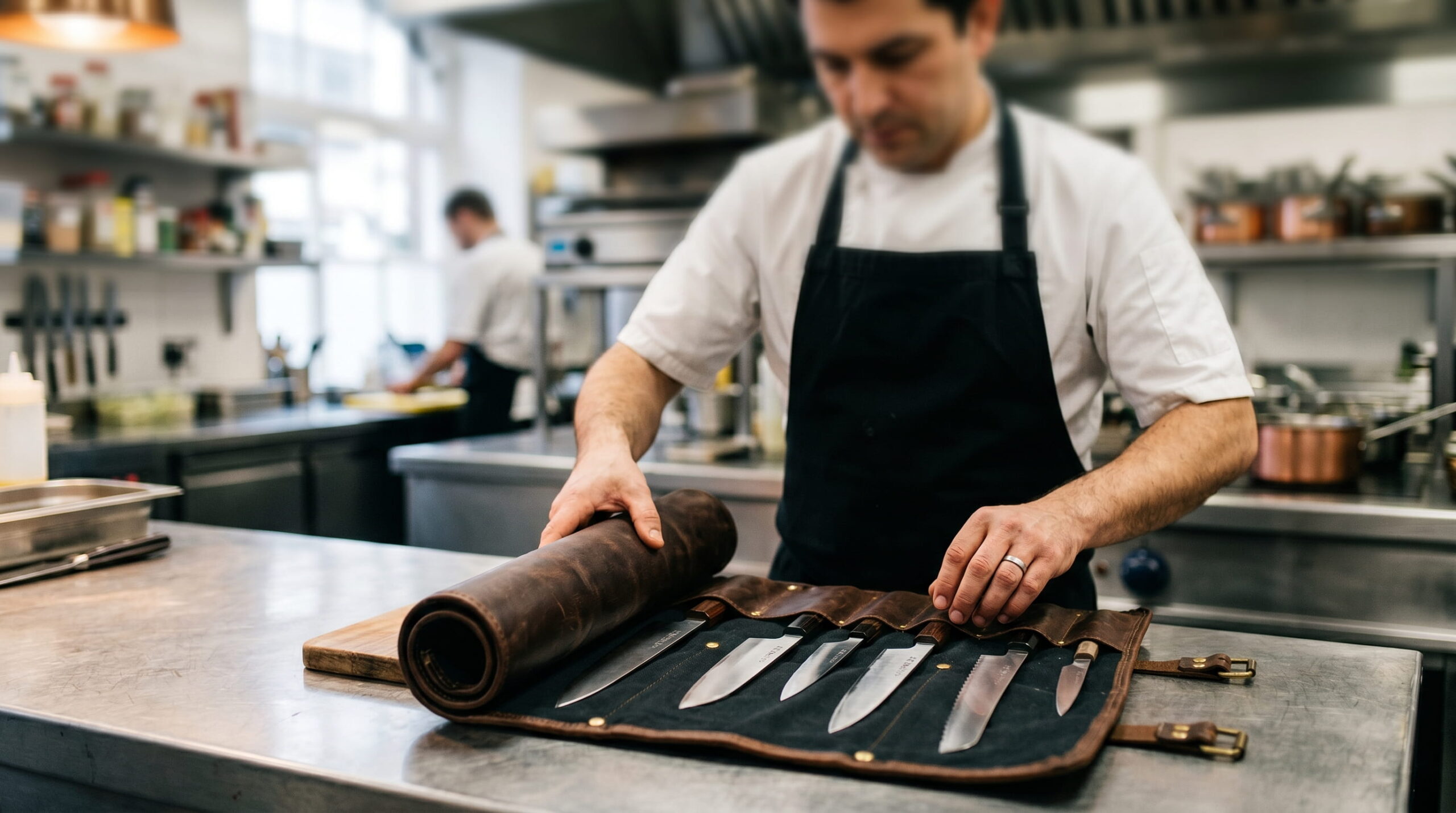
A knife roll is a portable storage solution that safely organizes, protects, and transports kitchen knives and culinary tools. Typically made from durable materials such as leather, canvas, or synthetic fabrics, a knife roll features multiple compartments that securely hold knives of different sizes.
Once loaded, the roll folds or rolls up into a compact package that can be easily carried to kitchens, catering events, culinary classes, or professional cooking jobs.
Professional chefs often rely on knife rolls because they provide both convenience and protection. Sharp blades remain separated, reducing the risk of damage during transport.
In addition to knives, many knife rolls include extra pockets for tools such as sharpeners, thermometers, scissors, and plating equipment. A well-made knife roll helps culinary professionals stay organized while protecting the tools they use every day.
8 Things a Chef Should Look for When Choosing the Right Knife Roll
1. Full-Grain Leather or High-Quality Material
The material of a knife roll plays a major role in its durability and performance. Full-grain leather is often considered the premium choice because of its strength, longevity, and classic appearance.
Unlike lower-quality materials, full-grain leather can withstand years of daily use while developing character over time. It also provides excellent protection against wear and tear.
For chefs who travel frequently or use their knife roll daily, investing in durable materials ensures greater long-term value.
2. Adequate Knife Storage Capacity
Every chef has a different collection of knives and tools, so storage capacity is an important consideration. A knife roll should have enough slots to accommodate your essential knives without overcrowding them.
Some chefs may only need space for a few core blades, while others require room for specialized knives and additional culinary tools.
Having dedicated compartments helps keep everything organized and accessible. Before purchasing a knife roll, consider both your current toolkit and any future additions.
3. Strong Blade Protection
Protecting knife edges is one of the primary purposes of a knife roll. Look for designs that keep blades securely separated and prevent them from contacting one another.
Individual slots, reinforced compartments, and secure retention systems help minimize movement during transport. Proper blade protection not only preserves the sharpness of your knives but also reduces the risk of accidental damage.
Professional-quality knife rolls are designed with safety in mind, ensuring that valuable culinary tools remain protected whether you’re traveling across town or working in a busy kitchen environment every day.
4. Secure Closure System
A reliable closure system helps keep knives safely contained while carrying the roll. Whether it uses buckles, straps, snaps, or reinforced fasteners, the closure should provide a secure hold without being difficult to open and close.
Weak closures can cause tools to shift or accidental openings during transport. This creates unnecessary risks for both the knives and the user. A well-designed closure system ensures that everything stays in place while maintaining quick access when needed.
5. Durable Stitching and Construction
Even premium materials can fail if the construction quality is poor. Strong stitching is essential because knife rolls are frequently handled, moved, and weighed down by stored tools.
Reinforced seams help maintain the structural integrity of the roll over time and prevent premature wear. Quality craftsmanship becomes especially important for chefs who use their knife roll daily in demanding environments.
Examining stitching quality, edge finishing, and overall construction can reveal how well a knife roll is built. Investing in durable craftsmanship helps ensure the product continues performing reliably for years rather than requiring frequent replacement.
6. Comfortable Carrying Options
A knife roll should be easy to carry, especially for chefs who frequently travel between kitchens, cater events, compete, or attend culinary classes. Look for features such as sturdy handles, adjustable shoulder straps, or ergonomic carrying systems that evenly distribute weight.
A well-designed carrying system reduces strain and makes transportation more convenient. Even if the knife roll is fully loaded with knives and tools, it should remain comfortable to handle. Practical portability can make a significant difference during long workdays.
7. Additional Storage Pockets
Modern chefs often carry more than just knives. Items such as sharpeners, thermometers, scissors, tweezers, notebooks, and plating tools are commonly used throughout the day.
A knife roll with additional storage pockets helps keep these essentials organized and easily accessible. Dedicated compartments prevent tools from shifting around and reduce clutter inside the roll.
This organization not only improves efficiency but also helps protect equipment from unnecessary damage. Before purchasing a knife roll, consider the extra tools you regularly use.
8. Easy Organization and Accessibility
A good knife roll should make it easy to locate and access tools quickly. In busy kitchen environments, every second matters, and searching through disorganized equipment can slow down workflow.
Well-placed compartments, clearly separated slots, and thoughtful layouts help chefs stay organized throughout the day. Each knife should have its designated place, making packing and unpacking efficient.
Good organization also reduces the risk of forgetting tools when moving between locations. A knife roll designed with accessibility in mind allows culinary professionals to focus on cooking rather than managing equipment, making daily operations smoother and more productive.
Conclusion
Choosing the right knife roll is about more than simply finding a place to store your knives. It is about protecting valuable tools, improving organization, and making daily work more efficient.
From material quality and storage capacity to portability and craftsmanship, every feature contributes to a knife roll’s overall performance.
For chefs and culinary professionals who rely on their equipment every day, investing in a durable and thoughtfully designed knife roll is a smart decision. High-quality options made from full-grain leather offer exceptional durability, professional appearance, and long-term value.
By considering the factors outlined in this guide, you can confidently select a knife roll that meets your needs and supports your workflow. The right knife roll not only protects your tools but also reflects the professionalism and dedication you bring to your craft.
FAQ’s
What is the purpose of a knife roll?
A knife roll is designed to safely store, organize, and transport knives and culinary tools while protecting them from damage during travel and daily use.
Why do professional chefs use knife rolls?
Professional chefs use knife rolls because they provide secure storage, easy portability, and organized access to essential knives and kitchen tools.
Is a leather knife roll better than a fabric knife roll?
Full-grain leather knife rolls are generally more durable, offer better long-term value, and provide a professional appearance, while fabric options are often lighter and more affordable.
How many knives should a knife roll hold?
The ideal capacity depends on your needs.
How do I maintain a leather knife roll?
Regular cleaning, proper storage, and occasional leather conditioning can help preserve the appearance of a leather knife roll for many years.