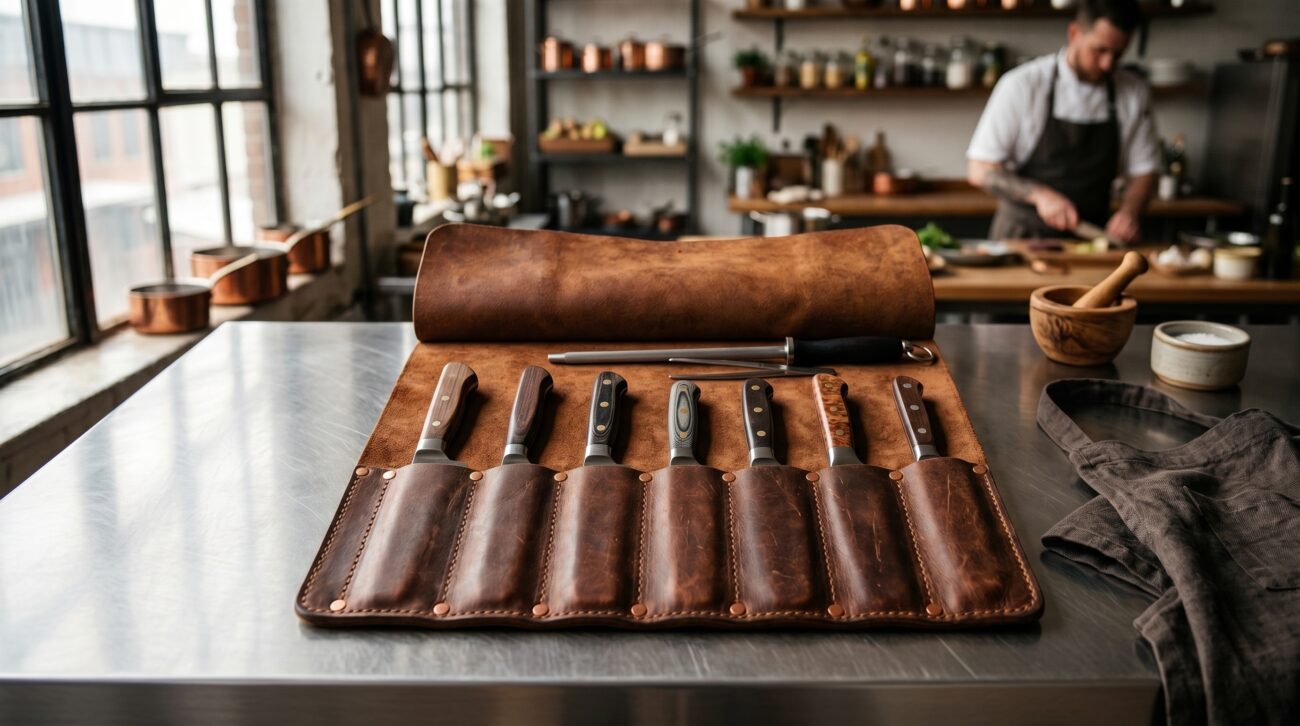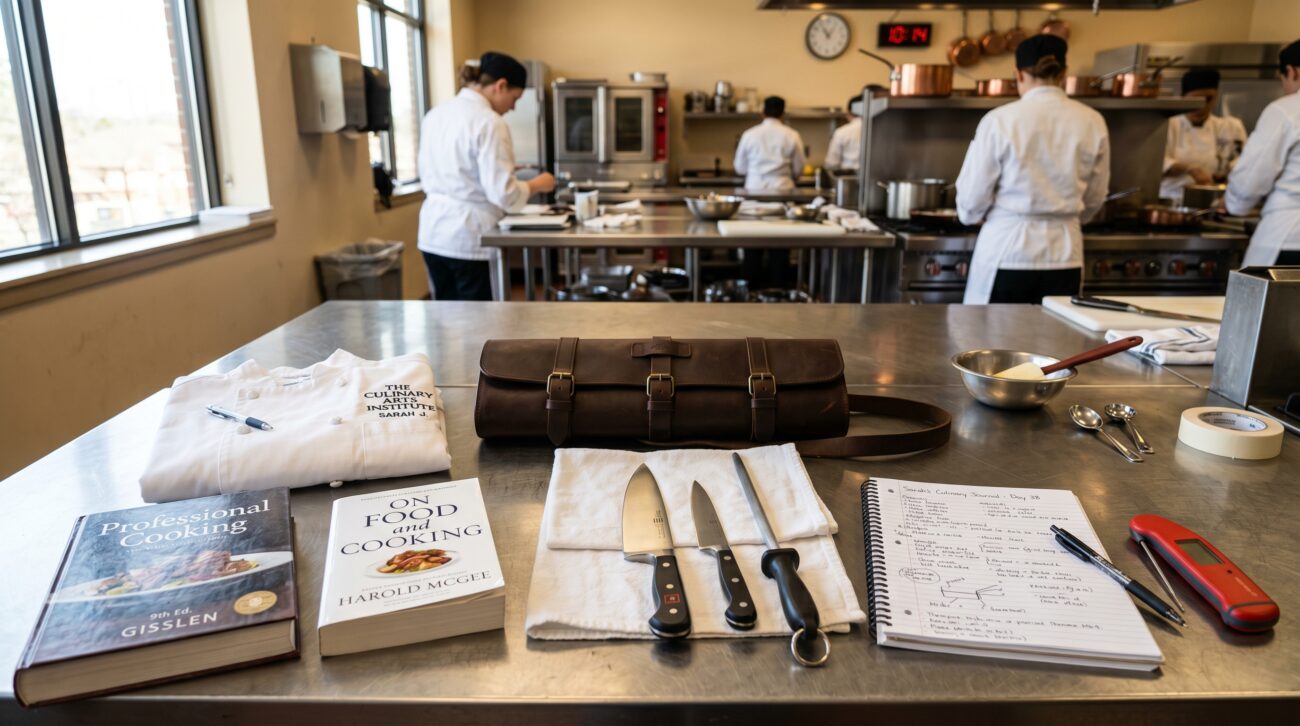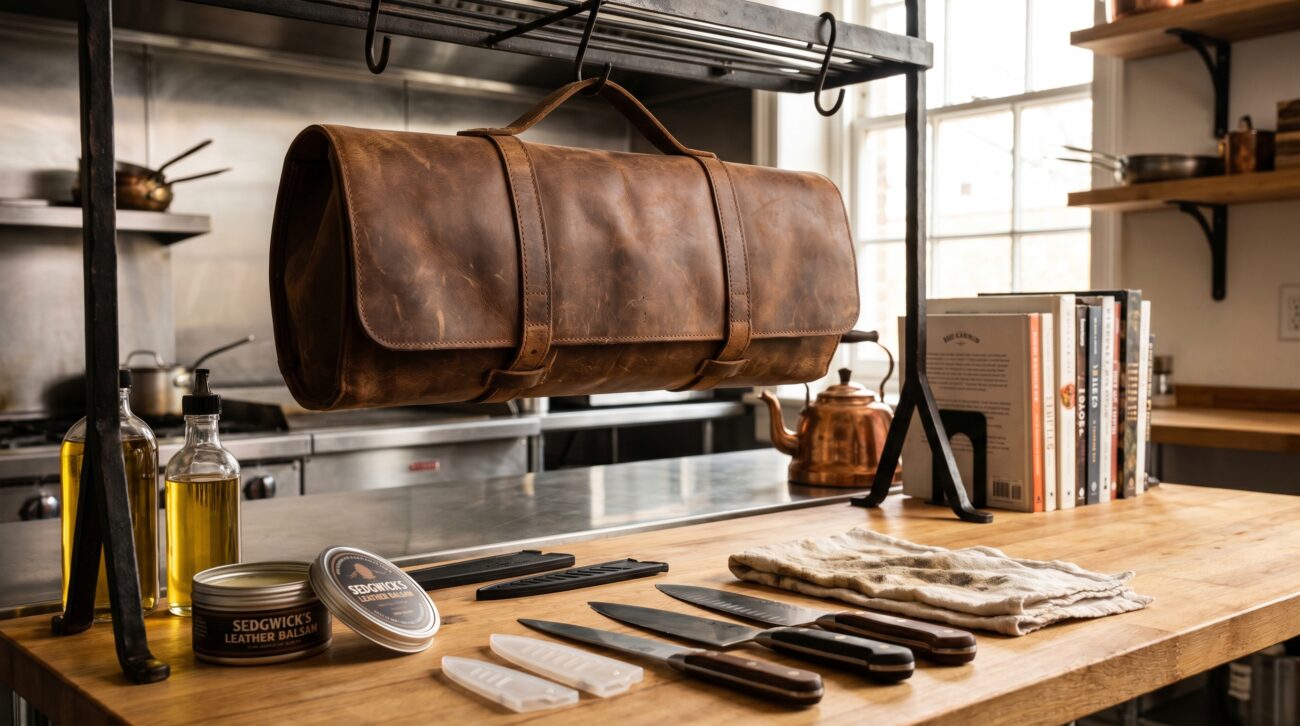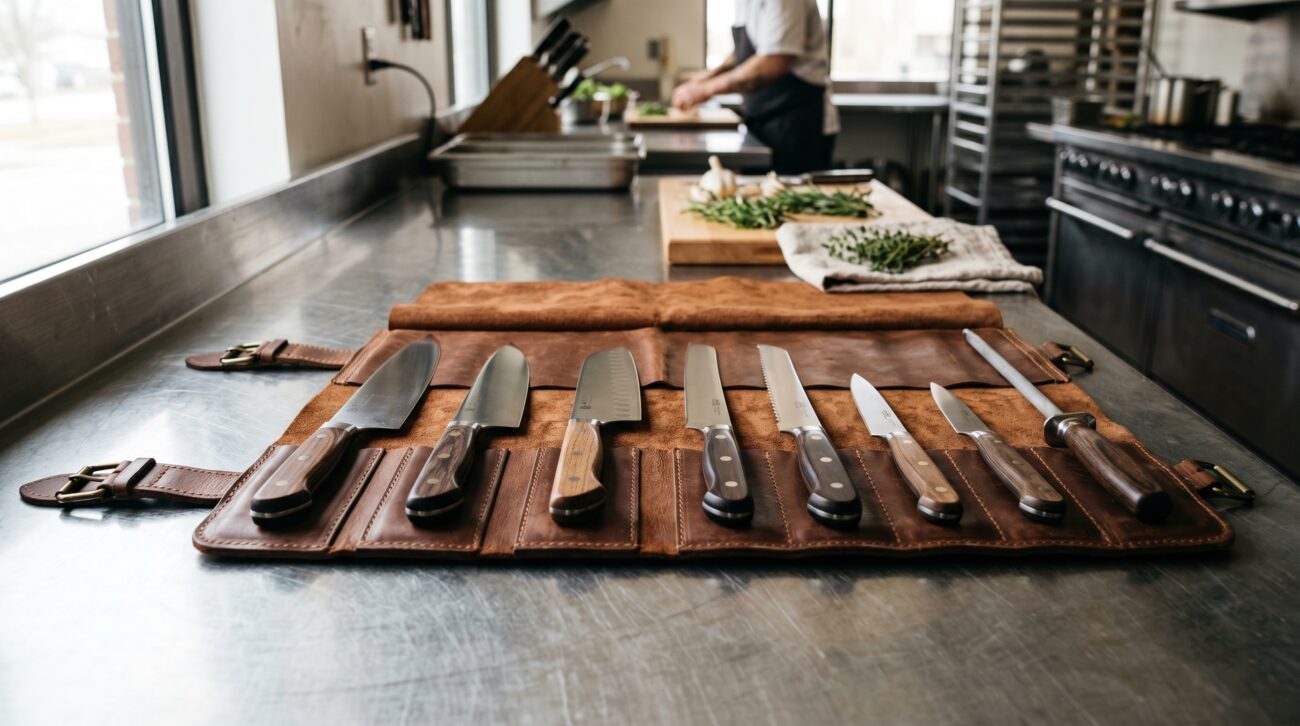

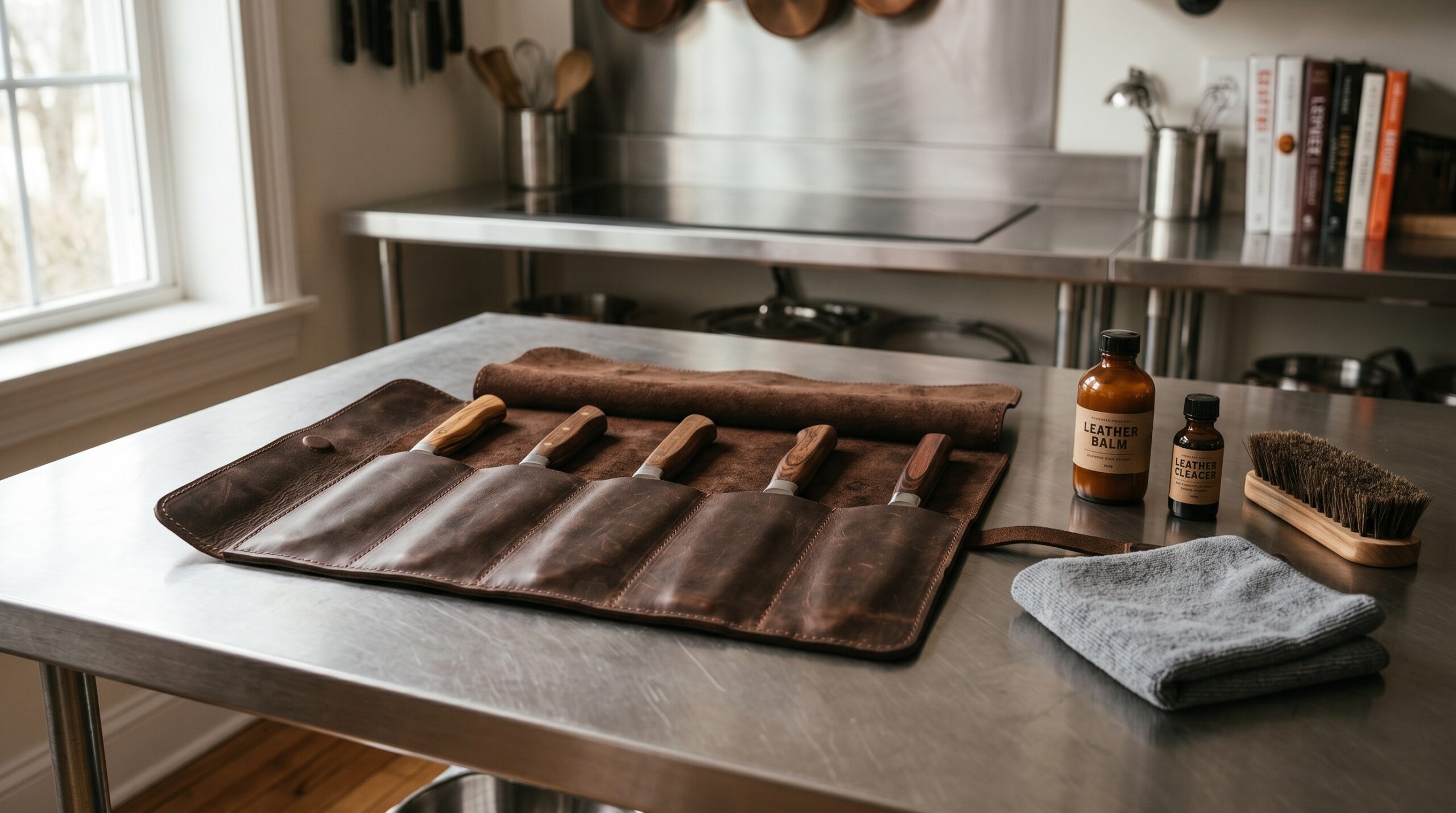

A quality leather knife roll protects valuable knives, keeps culinary tools organized, and serves as a trusted companion for chefs, caterers, and culinary students. Like any premium leather product, however, a knife roll requires proper care to maintain its durability and performance over time.
Without regular maintenance, leather can dry out, crack, stain, or lose its natural flexibility. Dust, moisture, and everyday wear can gradually reduce its lifespan if left unchecked.
Fortunately, keeping a leather knife roll in excellent condition does not require complicated routines or expensive products. In this guide, we’ll share with you some of the most effective DIY ways to clean and maintain a leather knife roll, along with precautions that you must take while cleaning and maintaining it.
5 Ways to Effectively Clean and Maintain a Leather Knife Roll
Way 1: Remove Dust and Debris Regularly
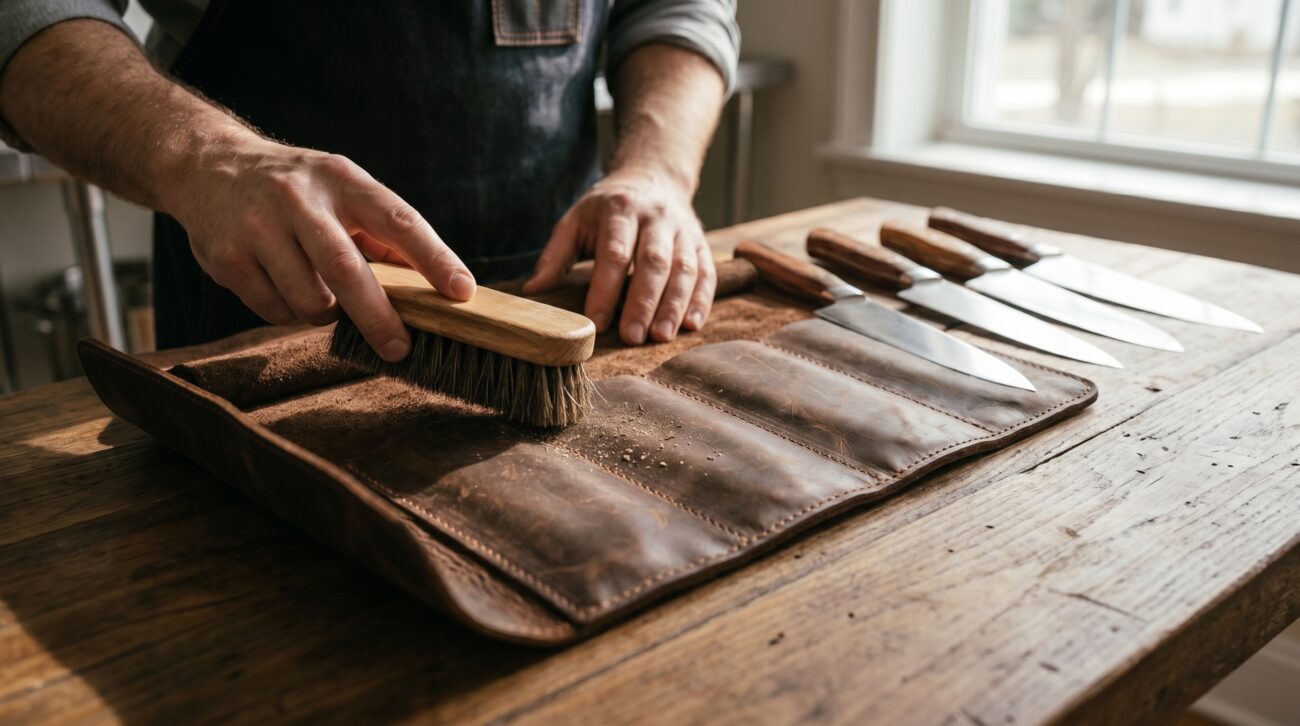
One of the easiest ways to maintain a leather knife roll is by removing dust, crumbs, and debris on a regular basis. Small particles often collect inside knife pockets and folds during daily use. Over time, this buildup can cause abrasion and affect the appearance of the leather.
Empty the knife roll completely before cleaning. Shake out loose debris and use a soft brush or dry microfiber cloth to clean hard-to-reach areas. Pay special attention to corners where dirt tends to accumulate.
Regular cleaning prevents grime from becoming embedded in the leather and helps maintain a clean environment for your knives.
Way 2: Wipe the Surface with a Soft Damp Cloth
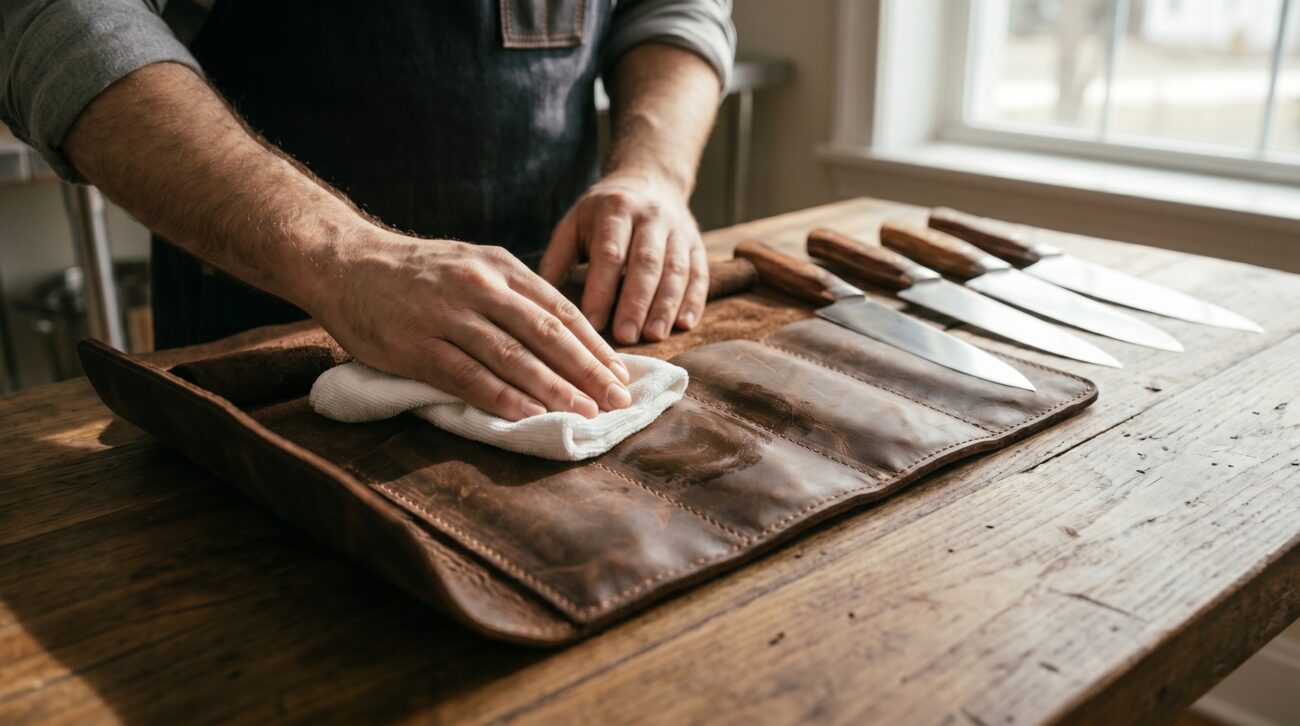
Routine surface cleaning helps remove fingerprints, light stains, and everyday dirt before they become permanent. Use a soft cloth slightly dampened with clean water to gently wipe the exterior and interior leather surfaces.
Avoid soaking the cloth, as excessive moisture can damage leather. Work in smooth circular motions while focusing on areas that experience the most handling. After wiping, use a dry cloth to remove any remaining moisture.
This simple process helps maintain the leather’s natural appearance while preventing dirt from accumulating over time. Regular surface cleaning keeps the knife roll looking professional and preserves the rich character that quality leather develops through use.
Way 3: Use a Leather-Safe Cleaner for Deep Cleaning
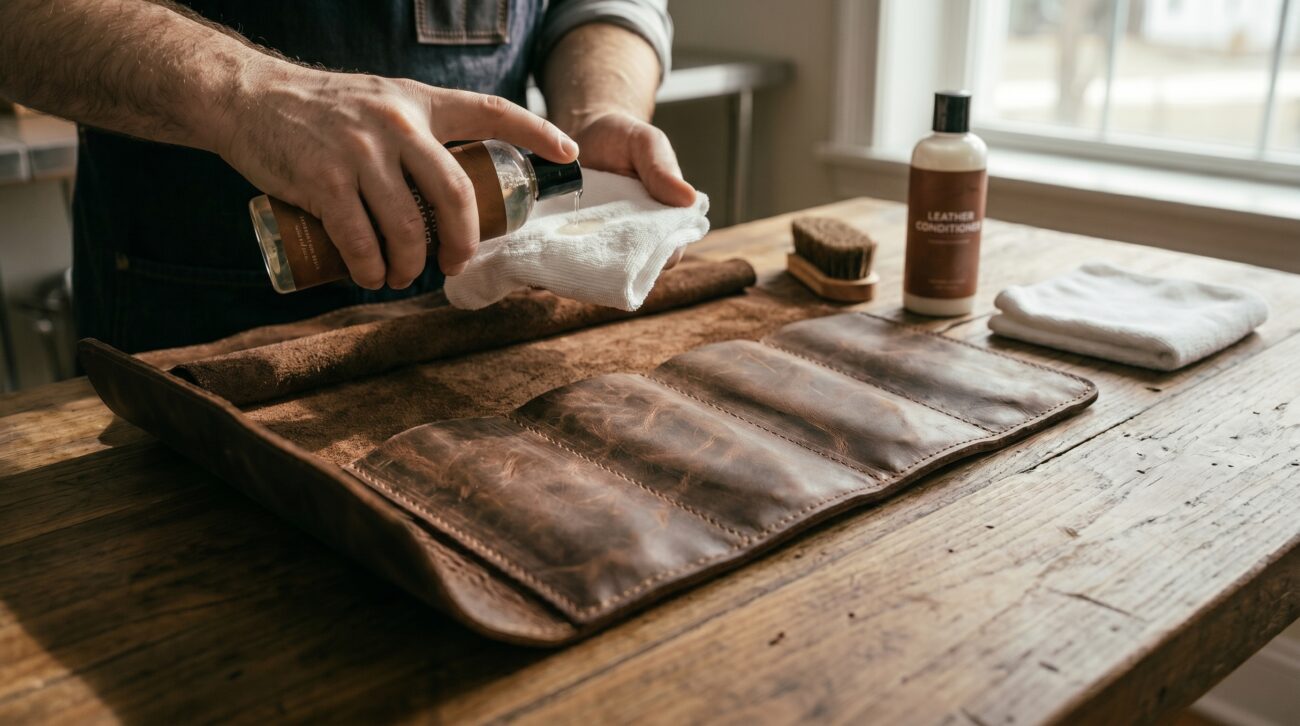
Occasionally, a leather knife roll may require deeper cleaning to remove stubborn stains, oils, and accumulated grime. In these situations, use a cleaner specifically designed for genuine leather.
Leather-safe cleaners are formulated to clean effectively without stripping away natural oils. Apply a small amount to a soft cloth and test it on an inconspicuous area first. Once confirmed safe, gently clean the affected sections using light pressure.
Aggressive scrubbing can damage the leather surface. After cleaning, allow the knife roll to air dry naturally. Deep cleaning every few months helps maintain the leather’s appearance.
Way 4: Condition the Leather Periodically
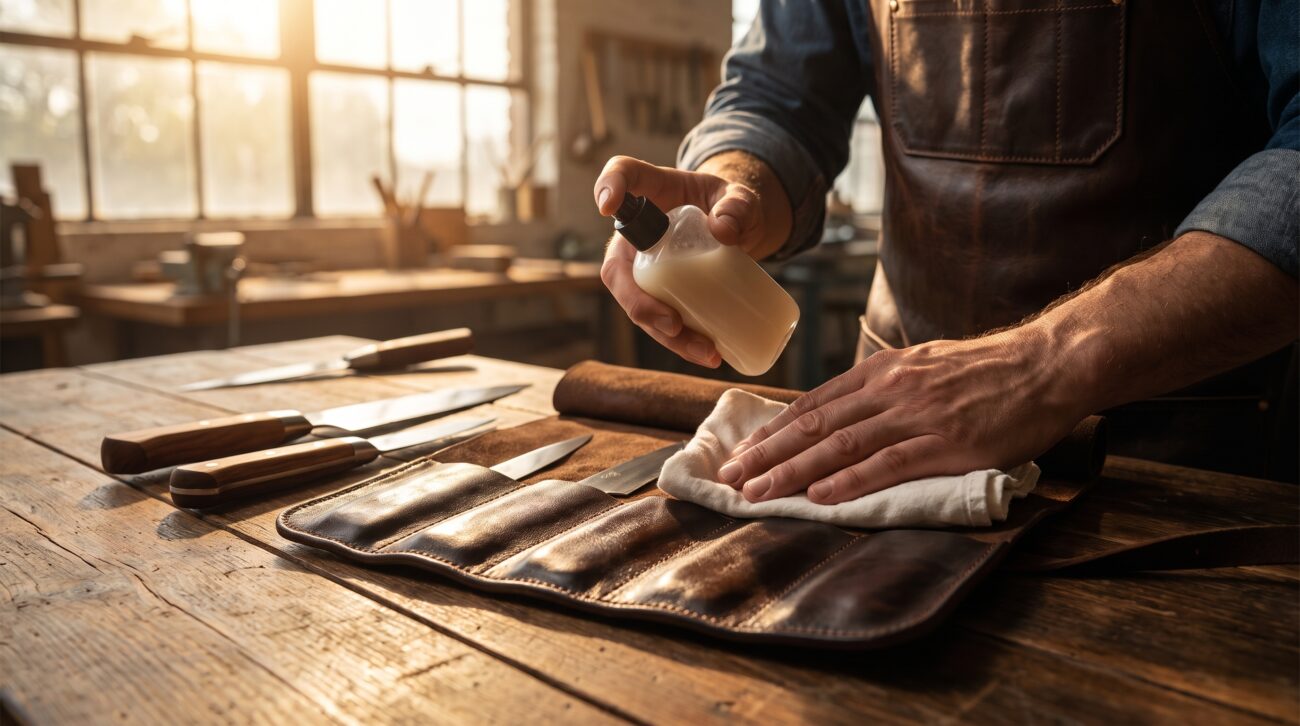
Leather naturally loses moisture over time, especially when exposed to frequent handling, dry climates, or temperature fluctuations. Conditioning replenishes essential oils and helps maintain flexibility.
A quality leather conditioner prevents cracking, stiffness, and premature aging. Apply the conditioner according to the manufacturer’s instructions using a clean cloth. Work it evenly into the leather and allow it to absorb fully before buffing away any excess.
Most leather knife rolls benefit from conditioning every three to six months, depending on usage. Regular conditioning helps preserve the rich texture and appearance of the leather while ensuring it remains strong.
Way 5: Dry the Knife Roll Properly After Moisture Exposure
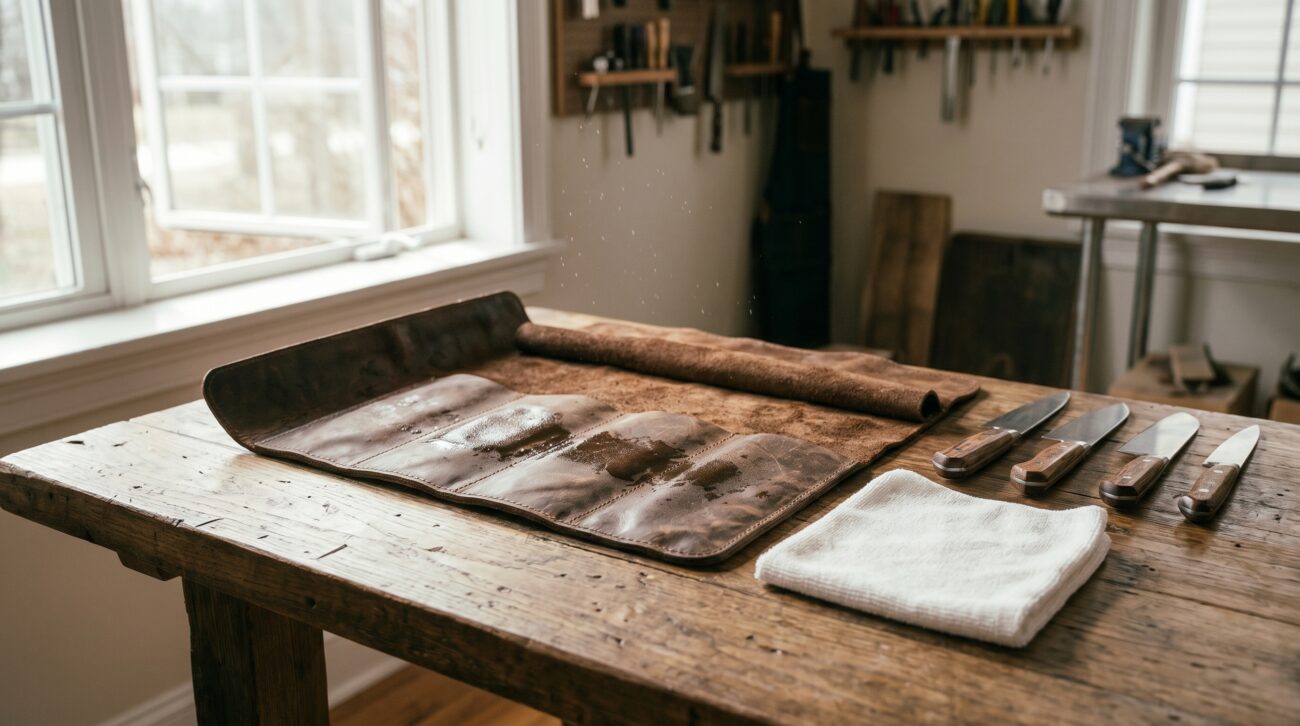
Accidental spills, exposure to rain, or storing damp knives can introduce unwanted moisture into a leather knife roll. When this happens, proper drying is essential. Never leave wet leather folded or stored away, as trapped moisture can lead to mold, mildew, and unpleasant odors.
If the knife roll becomes damp, open it completely and allow it to air dry in a well-ventilated area. Avoid direct sunlight, heaters, hair dryers, or other heat sources, as excessive heat can dry out and damage the leather.
Once completely dry, consider applying a light conditioner if needed. Proper drying practices protect the leather’s structure and help prevent long-term deterioration.
4 Precautions While Cleaning and Maintaining a Leather Knife Roll
Precaution 1: Avoid Harsh Chemical Cleaners
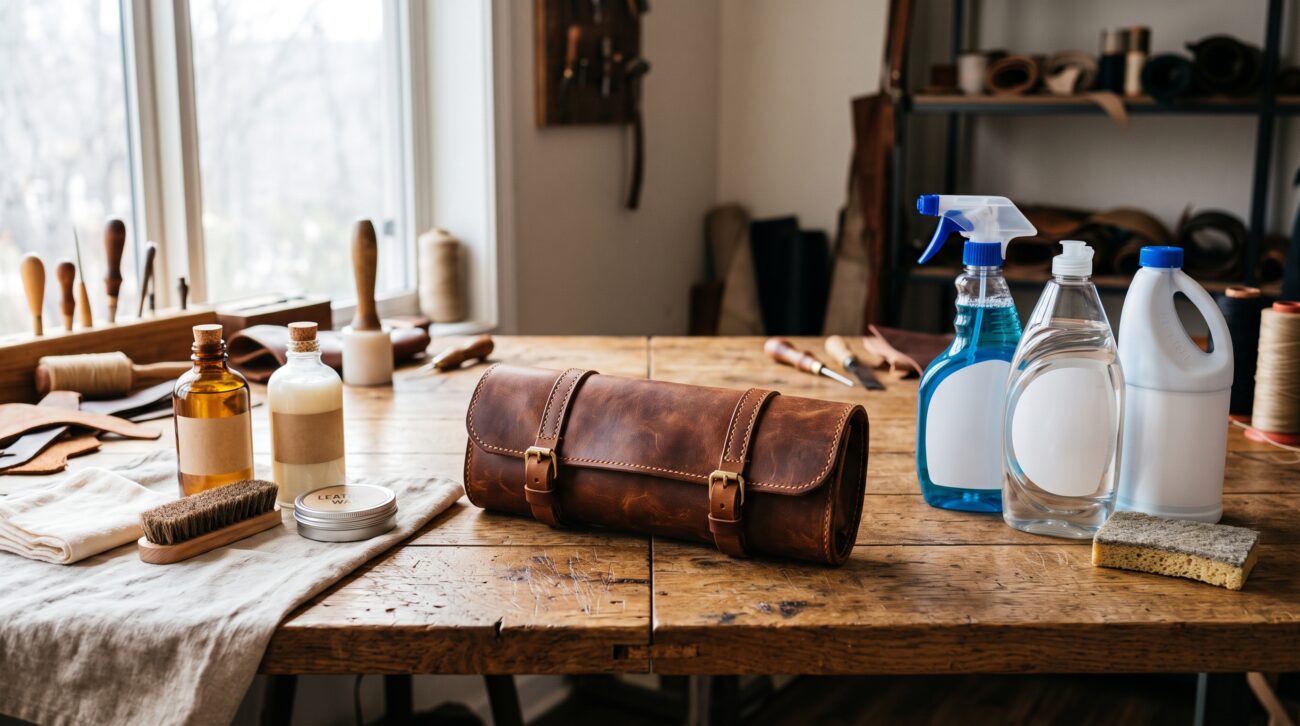
Not all cleaning products are safe for leather. Household cleaners containing bleach, alcohol, or strong detergents can strip away the natural oils that keep leather flexible and durable.
These chemicals may cause discoloration, dryness, cracking, and permanent surface damage. When cleaning a leather knife roll, always use products specifically formulated for leather care. If you are unsure about a product, test it on a small hidden area first.
Even a cleaner marketed as gentle can react differently depending on the leather type. Taking the time to choose the right knife cleaning solution helps preserve the finish, texture, and longevity of your knife roll.
Precaution 2: Never Soak the Leather in Water
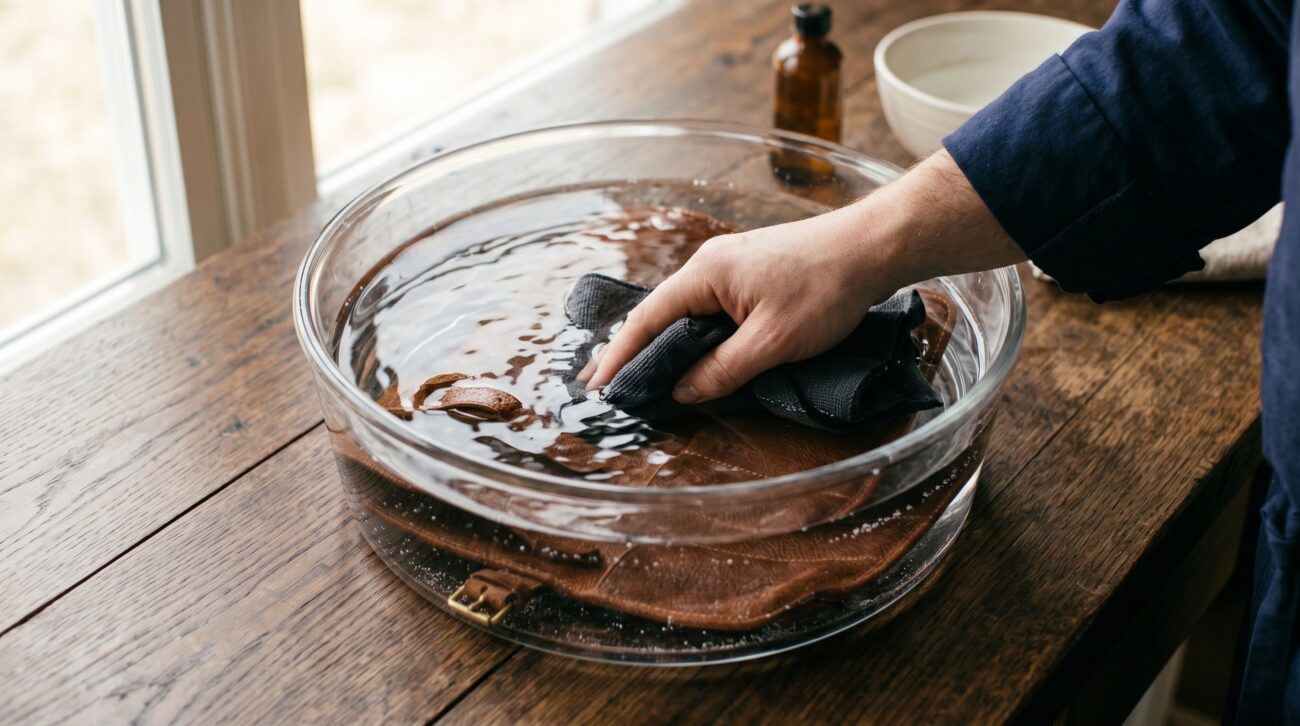
Leather is naturally durable, but excessive water exposure can weaken its structure. Some people mistakenly believe soaking leather helps remove stains, but it often creates more problems than it solves.
Saturated leather may lose its shape, become stiff after drying, or develop mold and mildew if moisture remains trapped inside. Instead of soaking, use a lightly damp cloth to clean the surface and immediately dry any excess moisture.
If deeper cleaning is required, use a leather-safe cleaner rather than water alone.
Precaution 3: Keep Leather Away from Direct Heat Sources
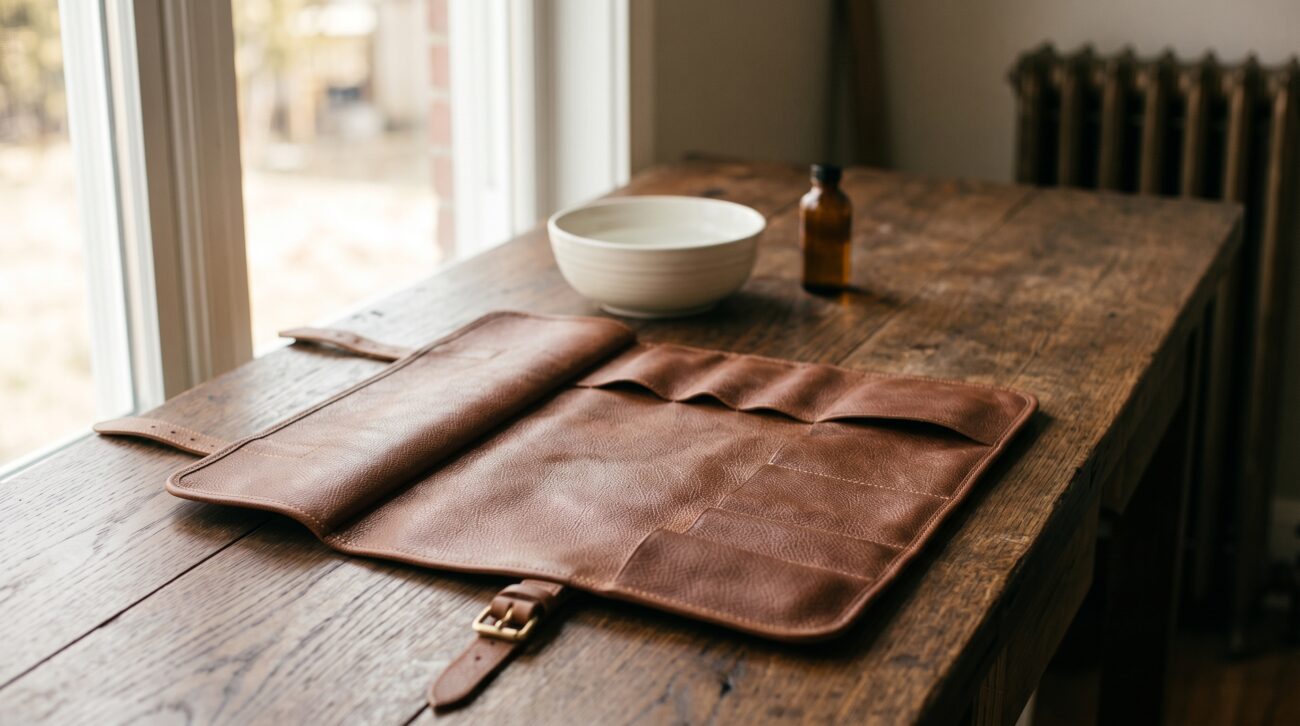
After cleaning, it may be tempting to speed up the drying process by placing the knife roll near a heater, radiator, fireplace, or in direct sunlight. However, intense heat can be extremely damaging to leather.
Rapid drying removes natural moisture too quickly, leading to shrinkage, stiffness, and surface cracking. The safest method is to allow the knife roll to air dry naturally at room temperature.
Place it in a well-ventilated area away from direct heat and let the leather dry gradually. This approach preserves flexibility and prevents unnecessary stress on the material.
Precaution 4: Avoid Over-Conditioning the Leather
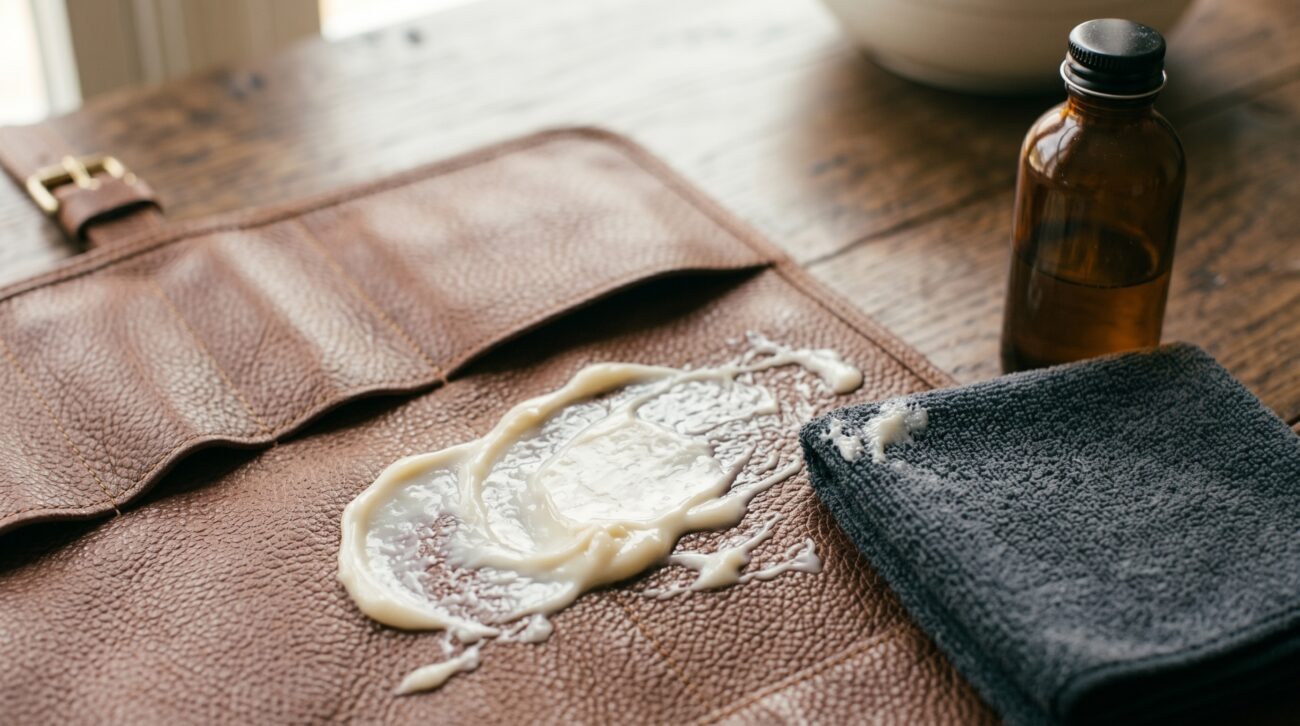
Conditioning is essential for maintaining leather, but applying too much conditioner can create its own problems. Excessive conditioning may leave the leather feeling greasy, attract dirt and dust, and soften the material more than necessary.
Over time, this can affect the structure and appearance of the knife roll. Most leather knife rolls only require conditioning every few months, depending on usage and environmental conditions.
Always follow the product manufacturer’s recommendations and apply thin, even layers rather than excessive amounts. A balanced approach keeps the leather supple and protected without overwhelming the material.
Conclusion
A leather knife roll is an investment that deserves proper care. With regular cleaning, occasional conditioning, and smart storage habits, you can keep it looking professional and functioning reliably for many years.
Simple maintenance practices such as removing dust, cleaning stains promptly, and drying the leather correctly help prevent premature wear and preserve its natural beauty.
A well-maintained leather knife roll not only lasts longer but also develops the rich character and timeless appeal that make premium leather products so highly valued.
FAQ’s
How often should I clean my leather knife roll?
Light cleaning should be done regularly, while deeper cleaning can be performed every few months, depending on how frequently the knife roll is used.
Can I use household cleaners on a leather knife roll?
No, household cleaners often contain harsh chemicals that can damage leather. Always use products specifically designed for leather care.
How often should I condition a leather knife roll?
Most leather knife rolls benefit from conditioning every three to six months, depending on climate, usage, and exposure to dry conditions.
What should I do if my knife roll gets wet?
Open it completely and allow it to air dry naturally in a well-ventilated area.
Can proper maintenance increase the lifespan of a leather knife roll?
Yes, regular cleaning, proper storage, careful drying, and occasional conditioning can significantly extend the life and appearance of a leather knife roll.