

A leather knife roll does more than simply carry your knives from one kitchen to another. It helps protect your valuable tools, keeps them organized, and allows you to work more efficiently. However, even the highest-quality knife roll can become frustrating if it is poorly organized.
Professional chefs understand that proper organization saves time, prevents damage, and ensures every tool is ready when needed. That’s why, in this guide, we’ll explore eight ways to organize a leather knife roll like a professional chef and keep your essential tools protected and accessible.
Arrange Knives by Frequency of Use
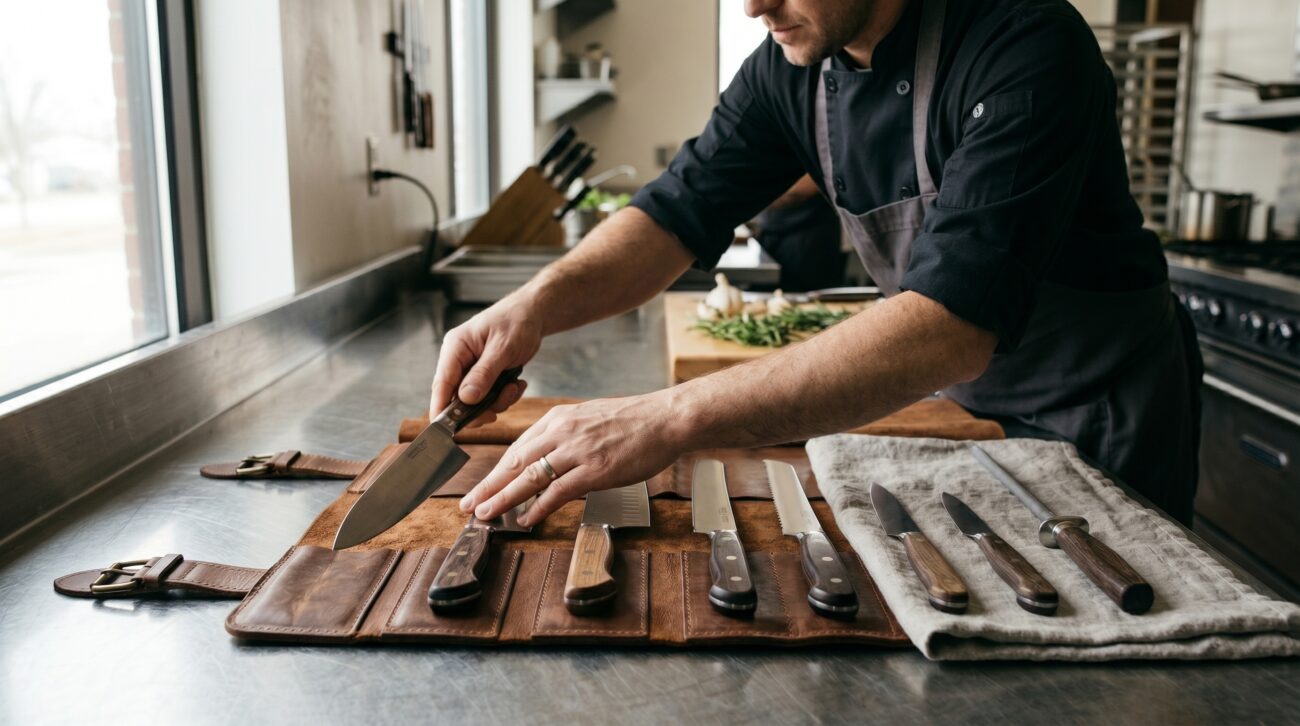
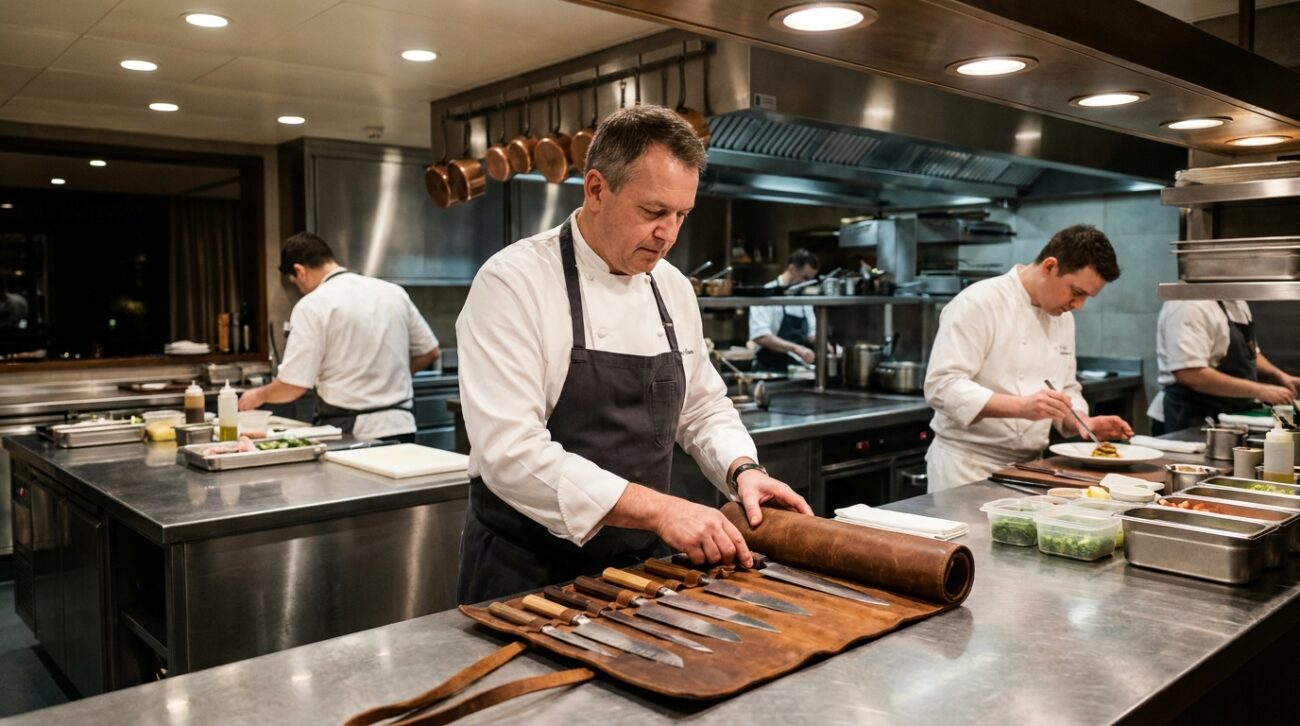
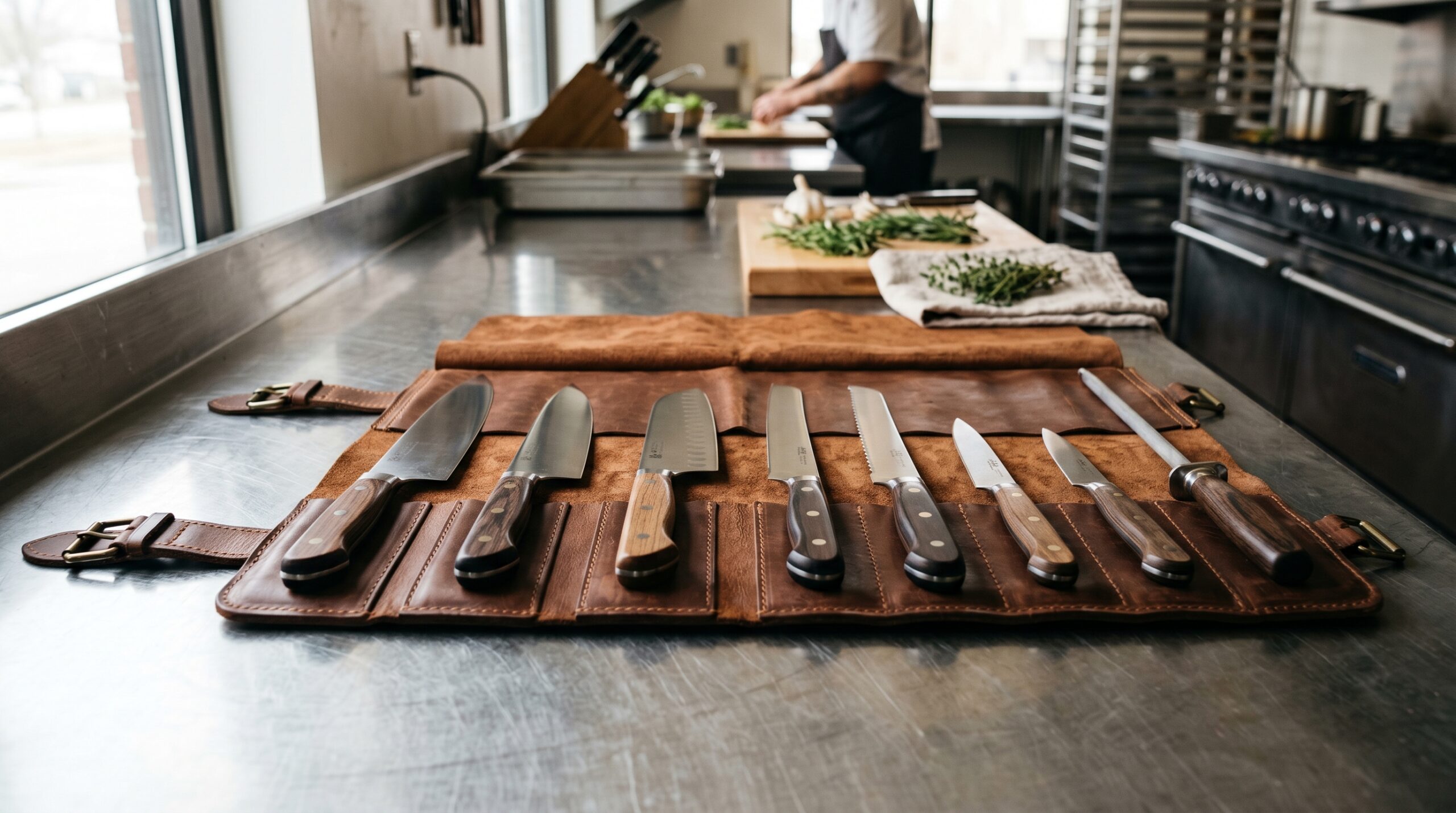
Professional chefs reach for certain knives more often than others. So after choosing the right leather knife roll, they place the ones they use most frequently in the easiest-to-access slots.
Chef knives, utility knives, and paring knives should typically occupy the most convenient positions. Less frequently used tools can be stored in the outer sections of the roll. This simple arrangement reduces the time spent searching for equipment during busy shifts.
It also creates a more efficient workflow when setting up or packing away your tools. By organizing according to usage, you ensure that the knives you rely on most are always within immediate reach when needed.
Store Larger Knives Separately from Smaller Blades
Mixing large and small knives without a system can make your knife roll feel cluttered and difficult to navigate. Professional chefs often organize knives by size, keeping larger blades together and smaller knives in separate sections.
This method creates a cleaner layout and makes it easier to identify each tool quickly. It also reduces the chances of accidentally grabbing the wrong knife during service.
Grouping knives by size improves overall balance within the roll and helps maintain a structured organization system. A neatly arranged knife roll reflects the same attention to detail that chefs bring to their work.
Use Every Dedicated Slot Properly
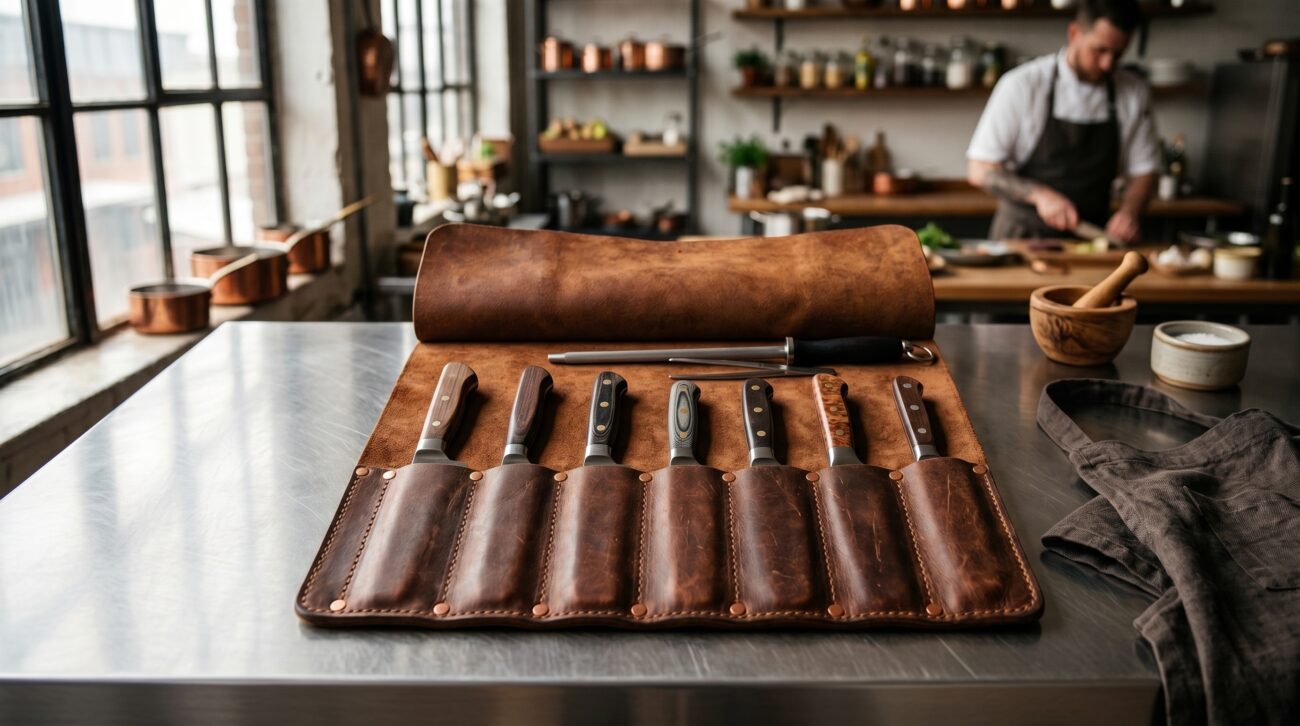
Knife rolls are designed with individual compartments for a reason. Each slot helps keep blades separated and protected from unnecessary contact. Make sure to avoid placing multiple knives in a single compartment, as this can increase the risk of scratches and edge damage.
Assign each knife its own designated space and return it to the same location after use. Consistency makes it easier to notice if a tool is missing and helps maintain organization over time.
Proper use of every compartment ensures maximum protection while keeping your collection neat and professional.
Keep Similar Tools Together
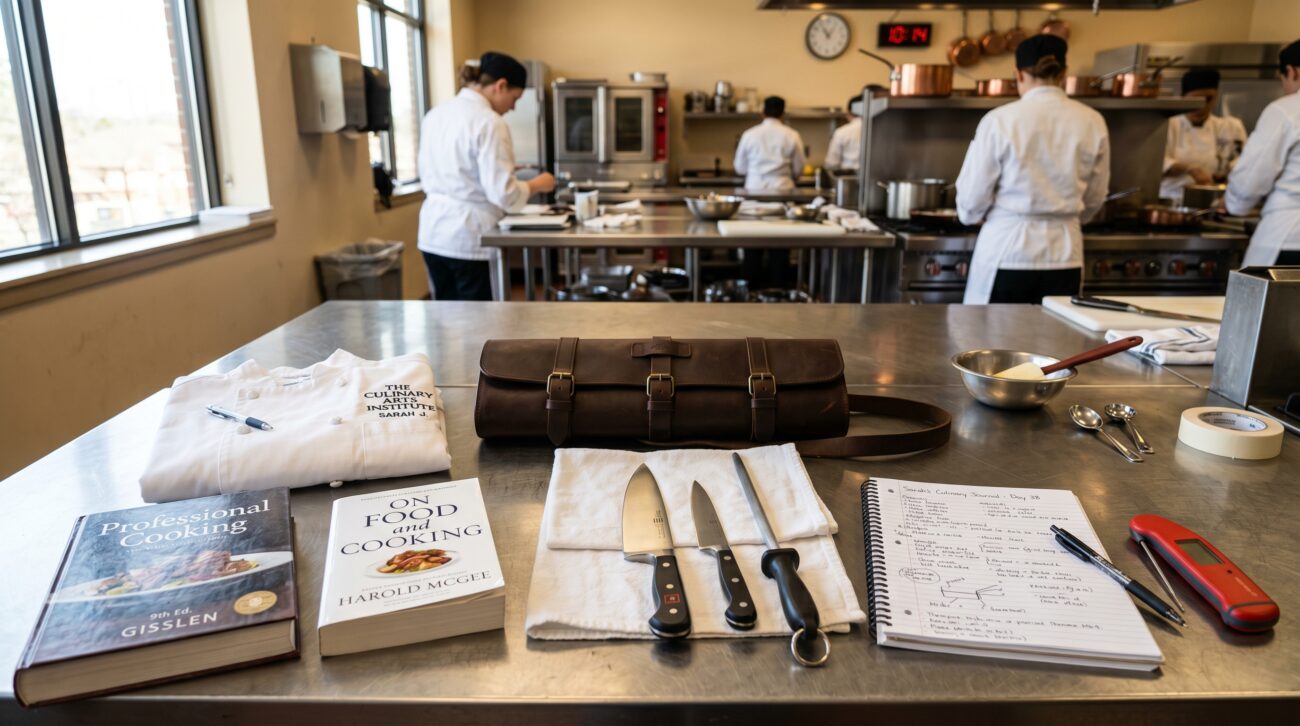
Beyond knives, most chefs carry a variety of supporting tools. Tweezers, peelers, thermometers, and other accessories should be grouped logically within your leather knife roll. Keeping similar items together makes them easier to locate when needed.
For example, store sharpening tools in one section and plating tools in another. This approach prevents unnecessary searching and streamlines your workflow.
Organized categories also help reduce clutter and ensure that every item has a designated place. A well-structured system saves valuable time during preparation and service.
Protect Premium Knives with Blade Guards
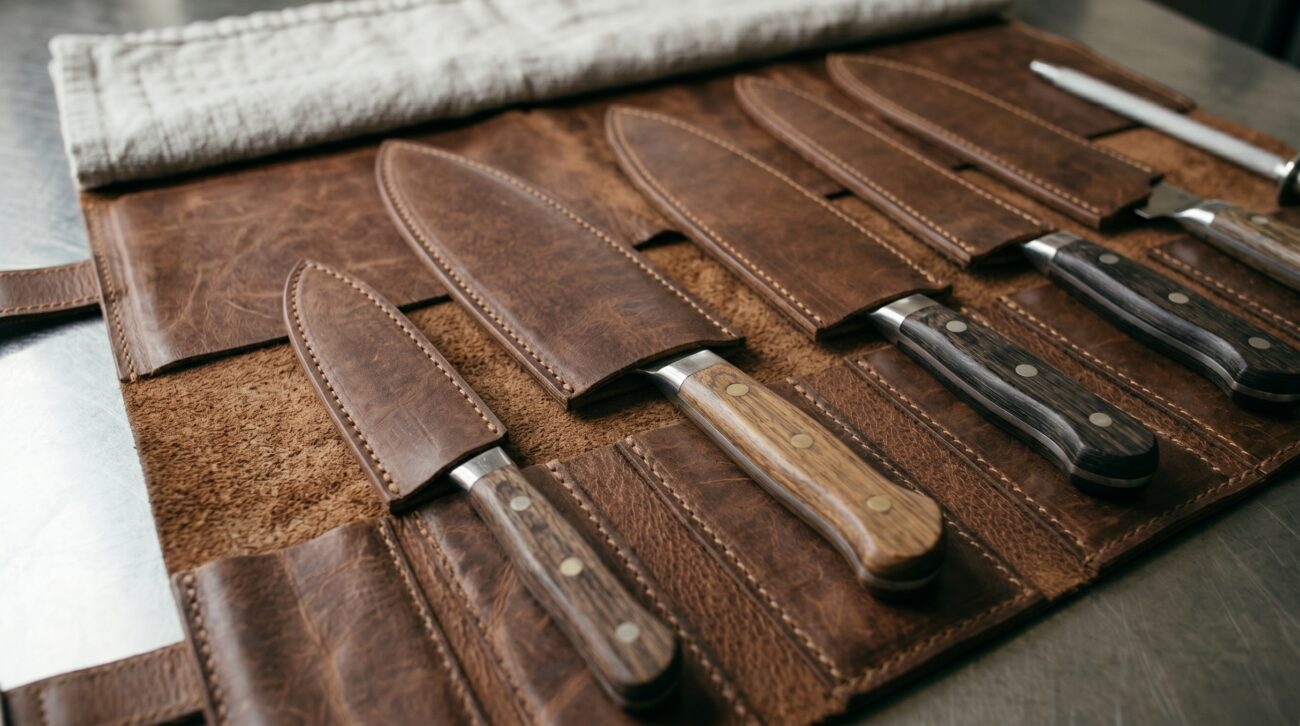
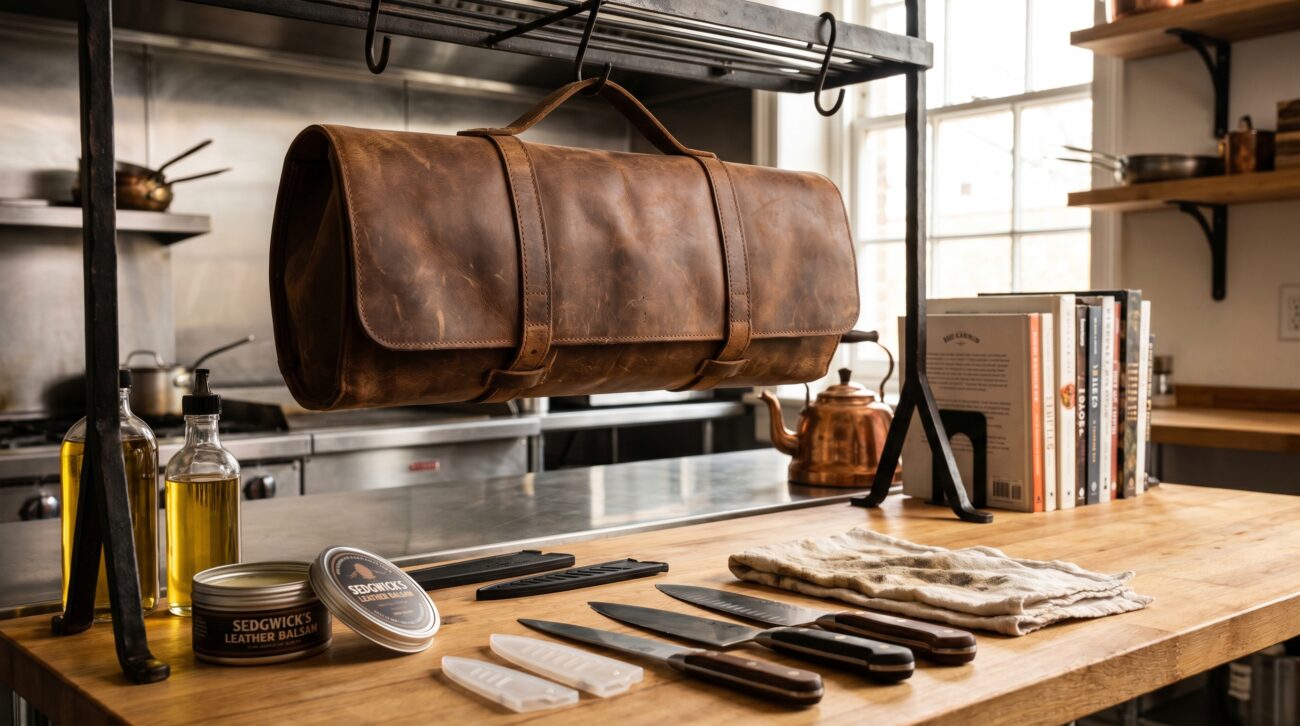
Even though a leather knife roll provides excellent protection, many professionals add blade guards for additional security. Blade guards help protect delicate edges from accidental impacts while preventing scratches during transportation.
This extra layer of protection is especially valuable for expensive Japanese knives and specialty blades. Using guards also improves safety when inserting or removing knives from the roll.
Combining a quality leather knife roll with proper blade protection helps preserve sharpness and maintain the condition of valuable tools over the long term.
Dedicate Pockets for Accessories
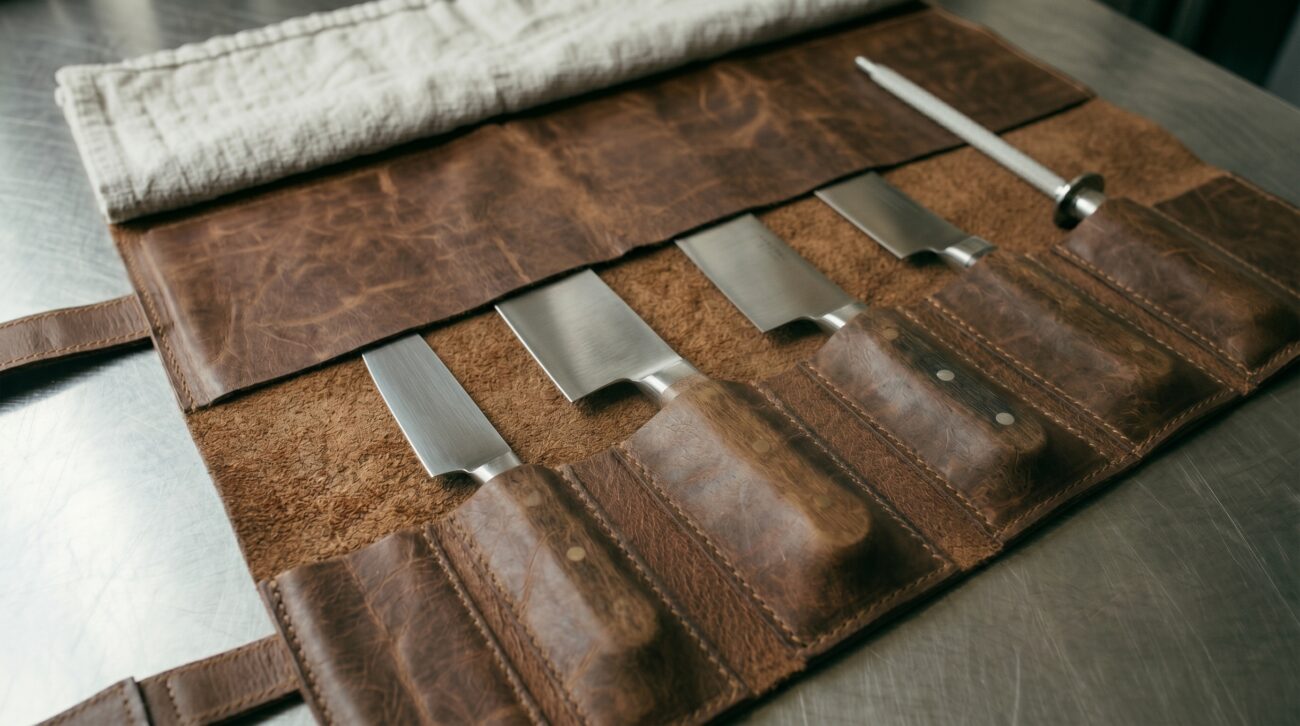
Many leather knife rolls include utility pockets designed for small accessories. Instead of placing miscellaneous items randomly throughout the roll, assign each pocket a specific purpose. One pocket can hold pens and markers, while another stores thermometers or notebooks.
This organization method keeps accessories easy to locate and prevents them from shifting during transport. Dedicated storage also reduces wear on knives by preventing loose objects from coming into contact with blades.
Making full use of available pockets improves efficiency and keeps everything neatly organized.
Balance the Weight Evenly
An unevenly packed knife roll can become uncomfortable to carry and may place unnecessary strain on handles and straps. Professional chefs distribute weight evenly throughout the roll to improve comfort and stability.
Place heavier knives across multiple sections rather than concentrating them on one side. This balanced arrangement makes the roll easier to carry and helps prevent excessive stress on stitching and hardware.
Proper weight distribution not only improves portability but also contributes to the longevity of the knife roll itself.
Clean and Reorganize Regularly
Organization is not a one-time task. Professional chefs regularly review their knife roll setup to remove unnecessary items and maintain efficiency.
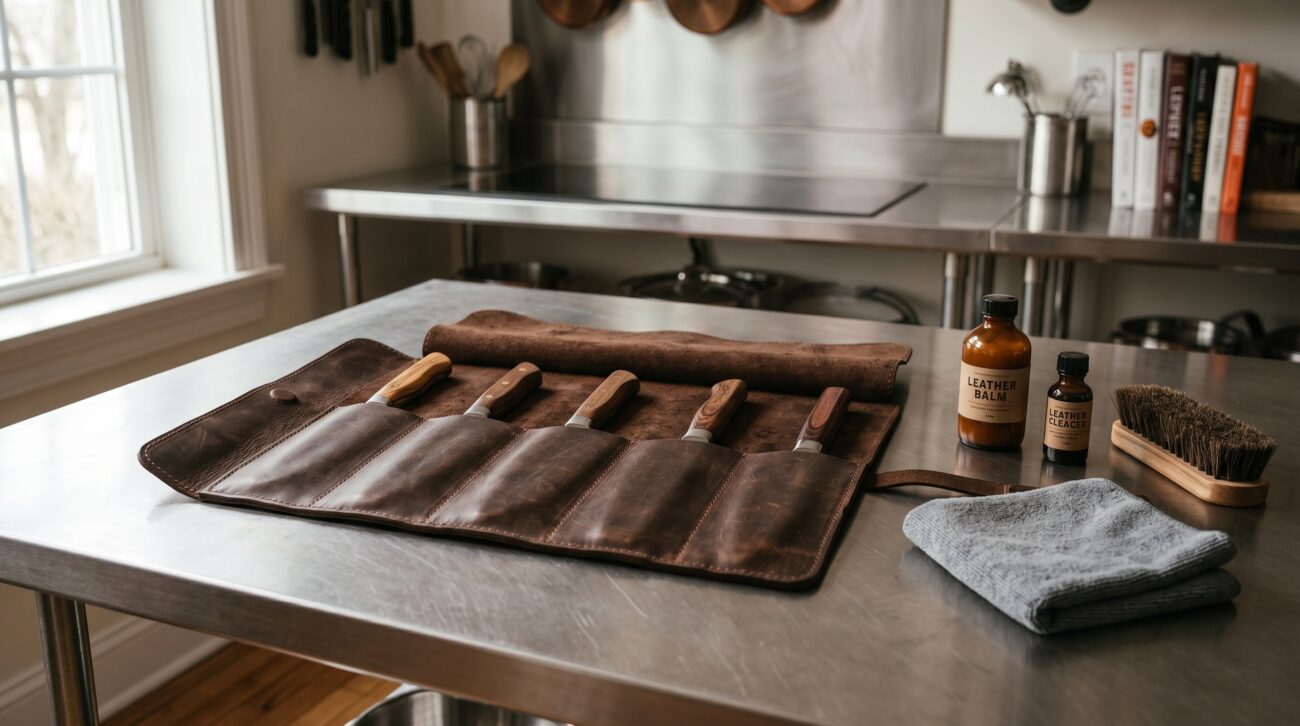
Cleaning out debris, checking compartments, and reorganizing tools helps keep everything in optimal condition. As your knife collection grows or changes, your organization system may need adjustments.
Regular maintenance ensures that your roll continues to meet your needs and prevents clutter from accumulating. A few minutes spent reorganizing can save significant time and frustration later, especially during busy workdays.
Conclusion
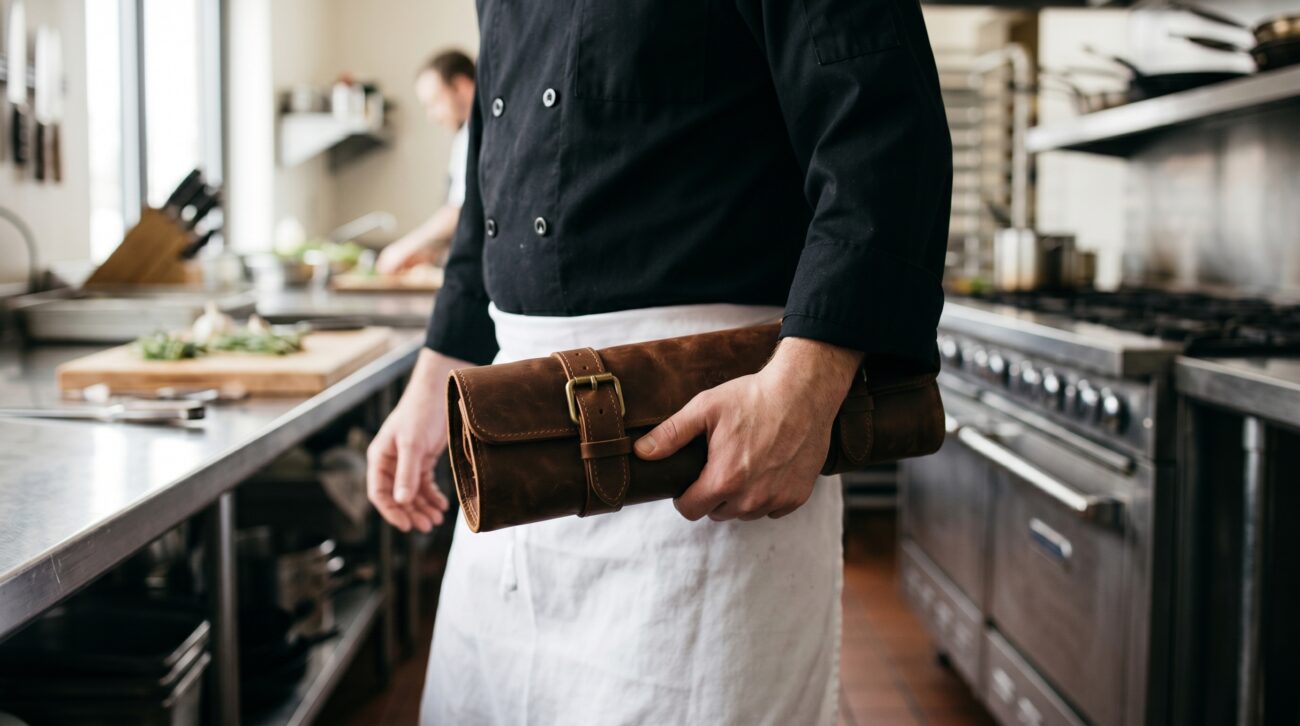
A well-organized leather knife roll does more than protect your tools, as it improves efficiency, safety, and professionalism. By arranging knives according to use, grouping similar tools together, utilizing dedicated compartments, and balancing weight properly, chefs can create a system that supports their daily workflow.
Regular maintenance and careful organization also help extend the life of both your knives and your knife roll. Whether you’re carrying a few essential blades or an extensive collection, proper organization ensures everything remains protected and easy to access.
For culinary professionals who depend on their tools every day, mastering the art of knife roll organization is a simple habit that delivers lasting benefits in and out of the kitchen.
FAQ’s
Why is it important to organize a leather knife roll?
Because proper organization protects knives from damage, improves accessibility, and helps maintain a professional workflow.
Should I use blade guards inside a leather knife roll?
Yes. you can use blade guards inside a leather knife roll.
How often should I reorganize my knife roll?
You can benefit from reviewing and reorganizing their knife roll every few weeks or whenever new tools are added.
Can I store accessories in the same compartments as knives?
It is best to use dedicated accessory pockets whenever possible.
What is the best way to arrange knives in a knife roll?
Arrange knives by frequency of use, keep similar sizes together, and distribute weight evenly for maximum convenience and protection.