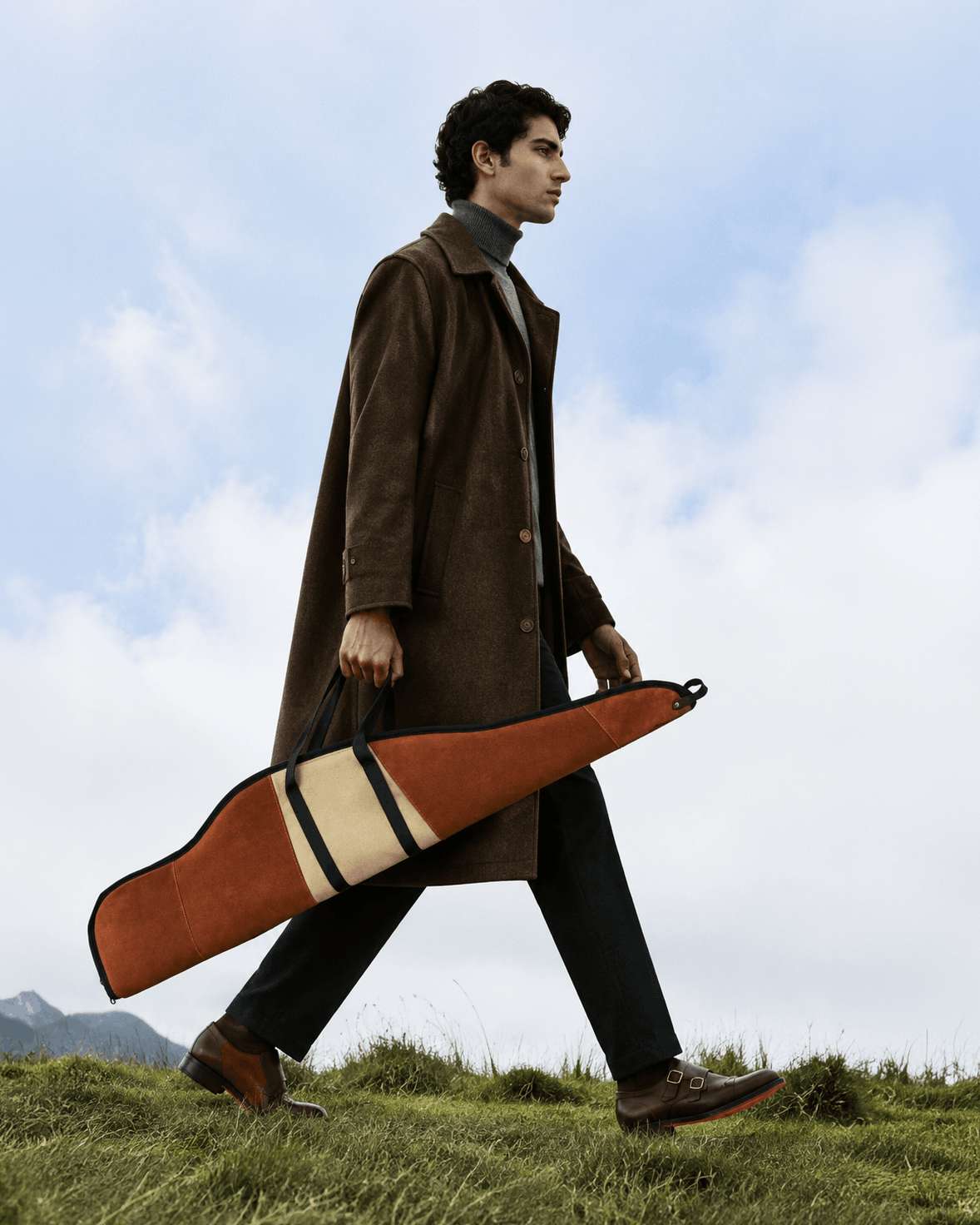

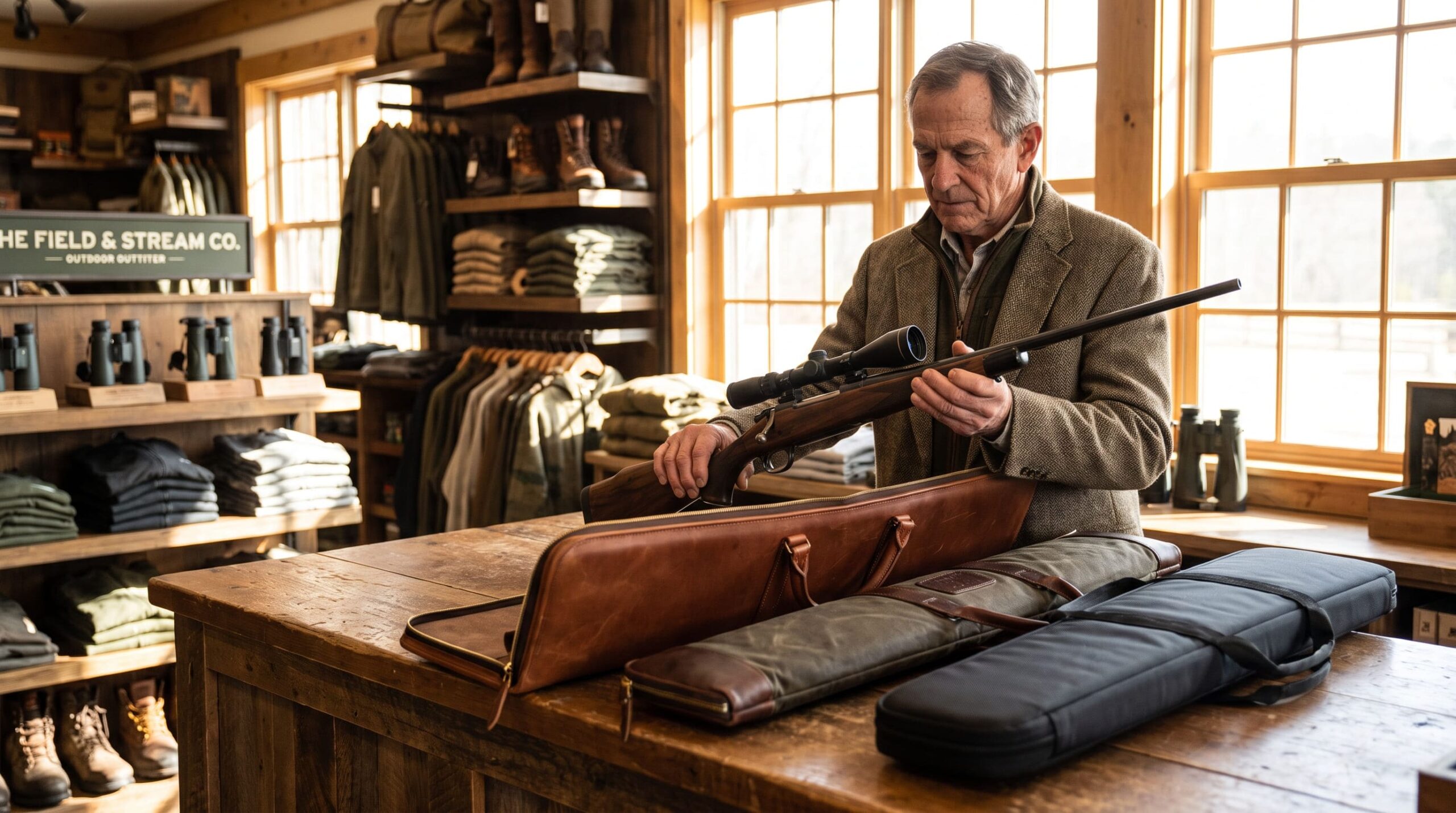

A quality scope is one of the biggest investments you can make for your rifle, so it deserves the same level of protection during storage and transport. Standard rifle cases often leave little room around mounted optics, increasing the risk of pressure, movement, or accidental damage.
The best leather rifle case isn’t simply the one that looks premium. It should fit your scoped rifle comfortably, protect delicate optics, and withstand years of hunting trips, range visits, and travel.
This guide highlights the key features to look for and compares the most common materials so you can choose the right case with confidence.
Why Scoped Rifles Need Extra Protection
Adding a scope changes the overall size and balance of your rifle.
A case designed for a basic rifle may press against the optic, making it harder to close or allowing unnecessary movement inside. Over time, repeated pressure and vibration can affect both the firearm and mounted accessories.
A properly designed rifle case provides enough clearance for the scope while keeping the firearm stable from end to end.
What Makes a Good Scoped Rifle Case?
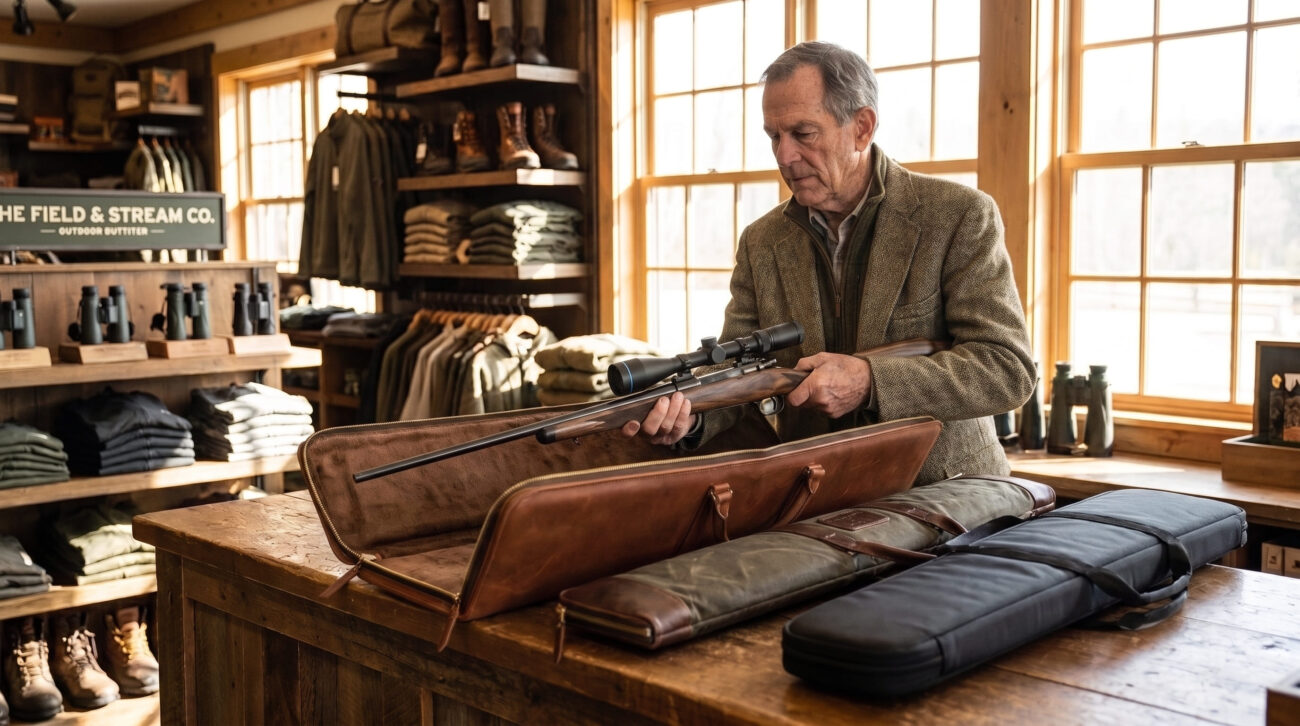
Not every leather rifle case is built the same. These features make the biggest difference.
Proper Scope Clearance
The interior should provide enough depth for the mounted optic without squeezing it against the zipper or outer shell.
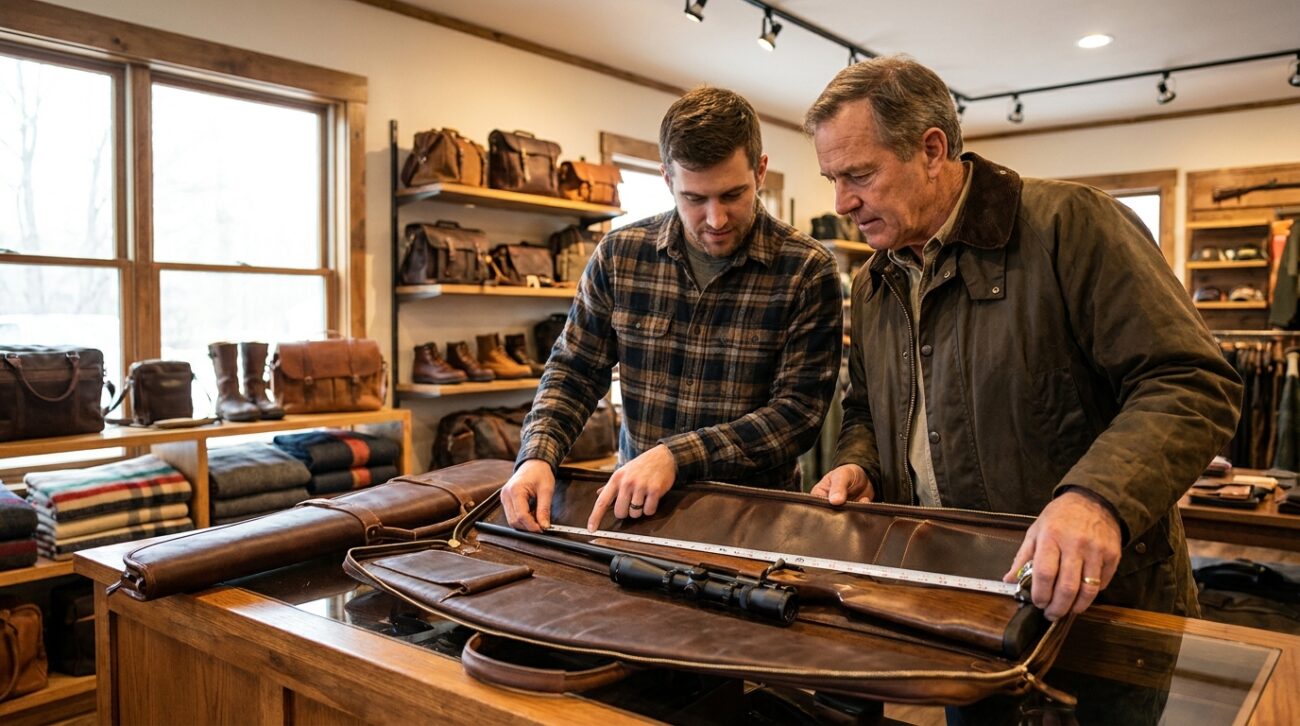
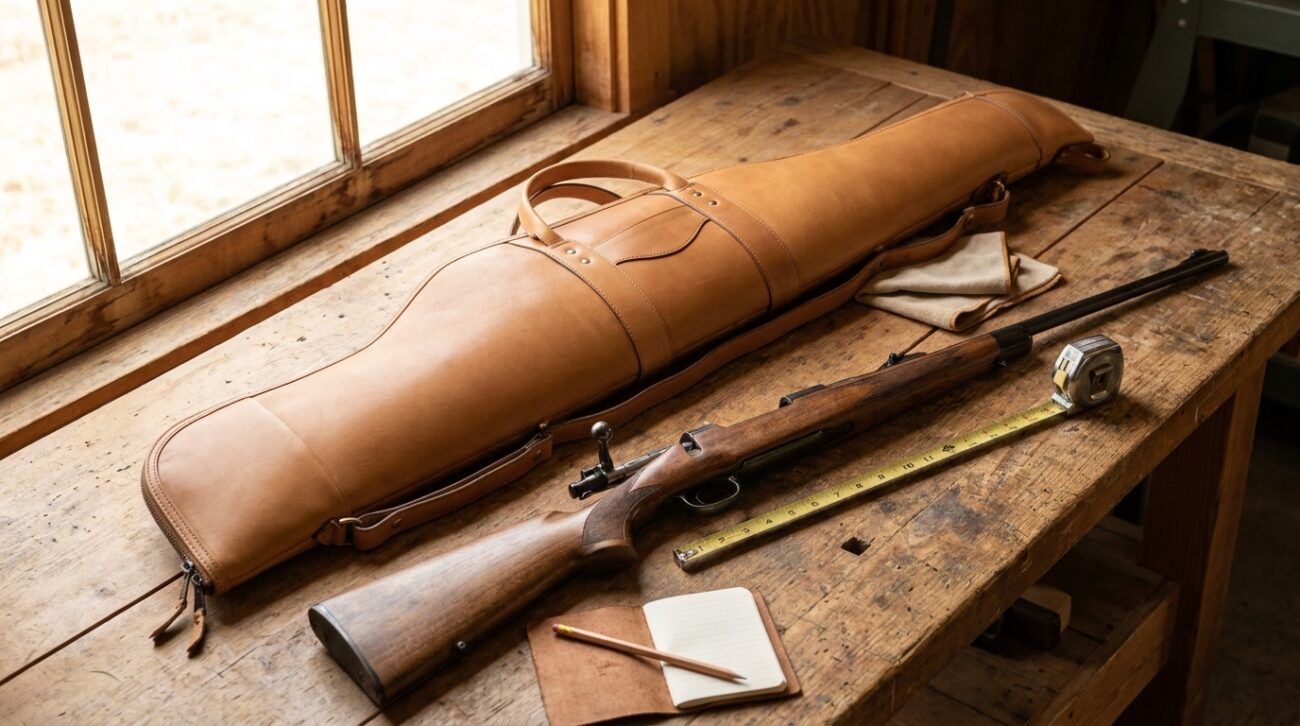
Before buying, measure the overall height of your rifle with the scope installed, not just the barrel length.
High-Density Padding
Good padding absorbs everyday bumps without allowing the rifle to shift around.
Look for padding that stays supportive over time instead of flattening after repeated use.
Full Grain Leather
Material quality affects both protection and longevity.
Full-grain leather offers excellent strength, resists everyday wear, and develops a natural patina rather than simply looking worn. The same craftsmanship that shaped the history of leather gun cases continues to make full grain leather the preferred choice for serious hunters and shooting enthusiasts.
Durable Hardware
Strong zippers, solid brass hardware, reinforced handles, and quality stitching all contribute to a case that performs well year after year.
Small construction details often determine how long a rifle case lasts.
2026 Buyer’s Picks
1. Best Overall: Full Grain Leather Rifle Case

For most rifle owners, a handmade full grain leather case offers the best combination of protection, durability, and appearance.
Its structured construction supports the rifle evenly while giving the mounted scope enough room to remain protected during transport.
Pros
- Outstanding durability
- Excellent protection for optics
- Premium craftsmanship
- Ages beautifully with use
- Ideal for long-term ownership
Things to Consider
- Costs more initially
- Slightly heavier than canvas or synthetic options
2. Best for Frequent Hunters
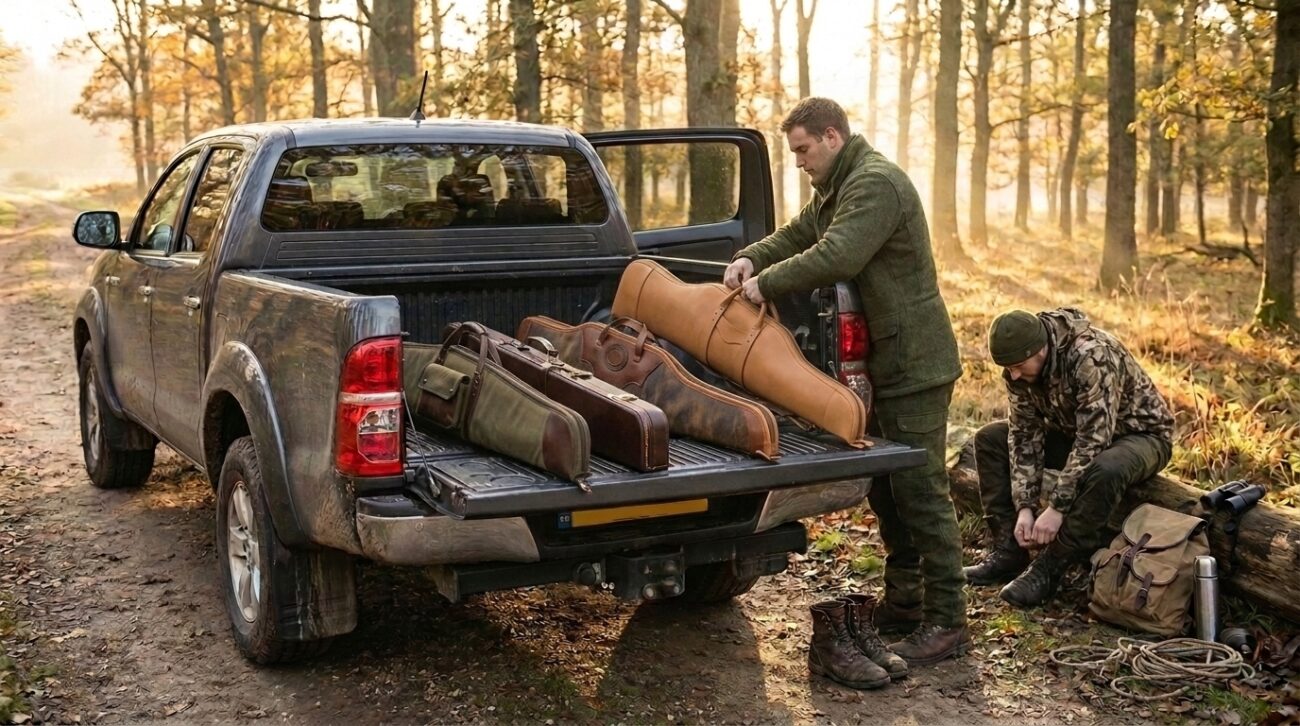
Hunters often carry rifles across rough ground, load gear into vehicles, and spend long days outdoors.
A quality hunting rifle case should include:
- Reinforced carrying handles
- Adjustable shoulder strap
- Weather-resistant finish
- Soft protective lining
- Reliable zipper or buckle closure
Construction quality matters just as much as material. Learning how handmade leather gun cases are made helps explain why reinforced stitching and careful craftsmanship make such a noticeable difference during years of regular use.
Quick Material Comparison
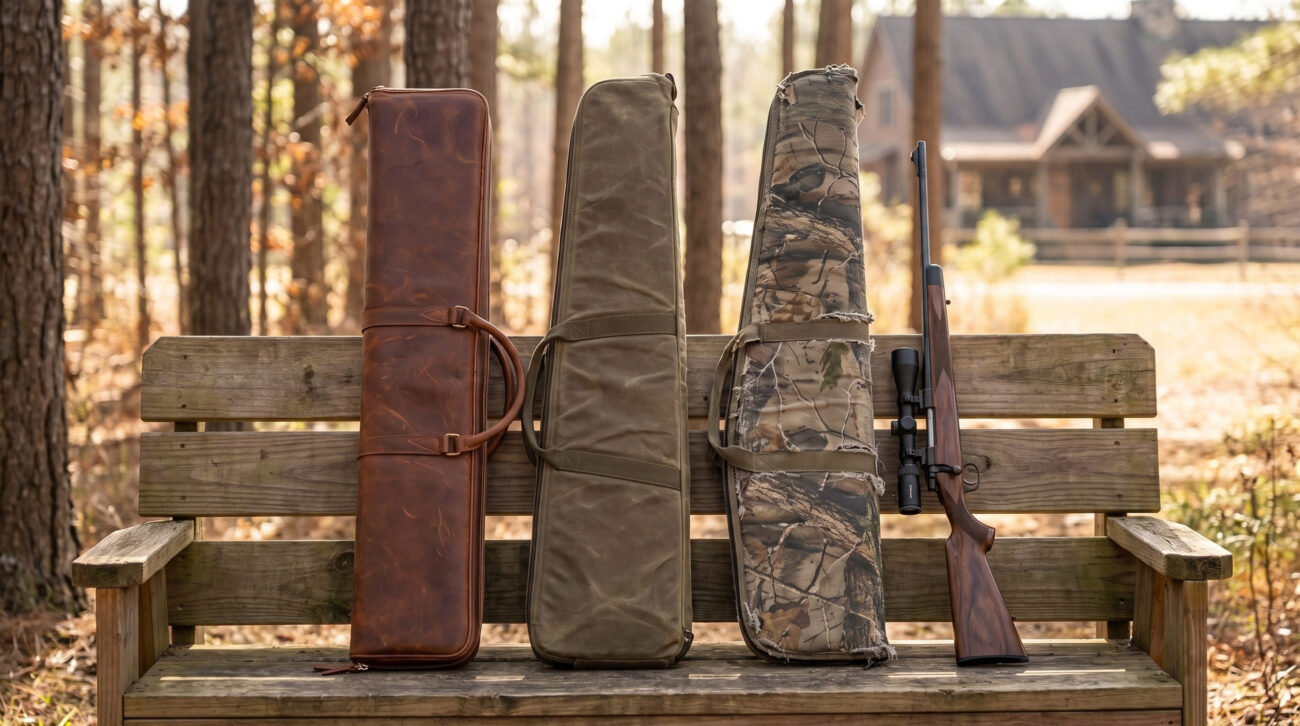
| Material | Protection | Durability | Weight | Best For |
| Full Grain Leather | Excellent | Excellent | Heavy | Regular hunting and long-term use |
| Waxed Canvas | Good | Good | Medium | Seasonal use |
| Synthetic | Good | Fair | Light | Occasional transport |
Pro Tip: Choose your rifle case based on the complete size of your scoped rifle, not the barrel length alone. Larger optics often require extra interior clearance.
3. Best Lightweight Option: Waxed Canvas Rifle Case
If weight matters more than premium materials, waxed canvas is a practical alternative. It offers decent protection while being easier to carry over long distances.
Pros
- Lighter than leather
- Comfortable for long walks
- Good weather resistance
- Easy to fold and store
Things to Consider
- Less rigid than leather
- Can lose its shape after years of heavy use
- Doesn’t provide the same long-term support for larger scopes
4. Best Budget Option: Reinforced Synthetic Rifle Case
Synthetic rifle cases have improved in recent years and work well for occasional range trips or transporting a rifle short distances.
Pros
- Budget friendly
- Lightweight
- Easy to clean
- Readily available
Things to Consider
- Shorter lifespan
- Less structural support
- Shows wear sooner than leather
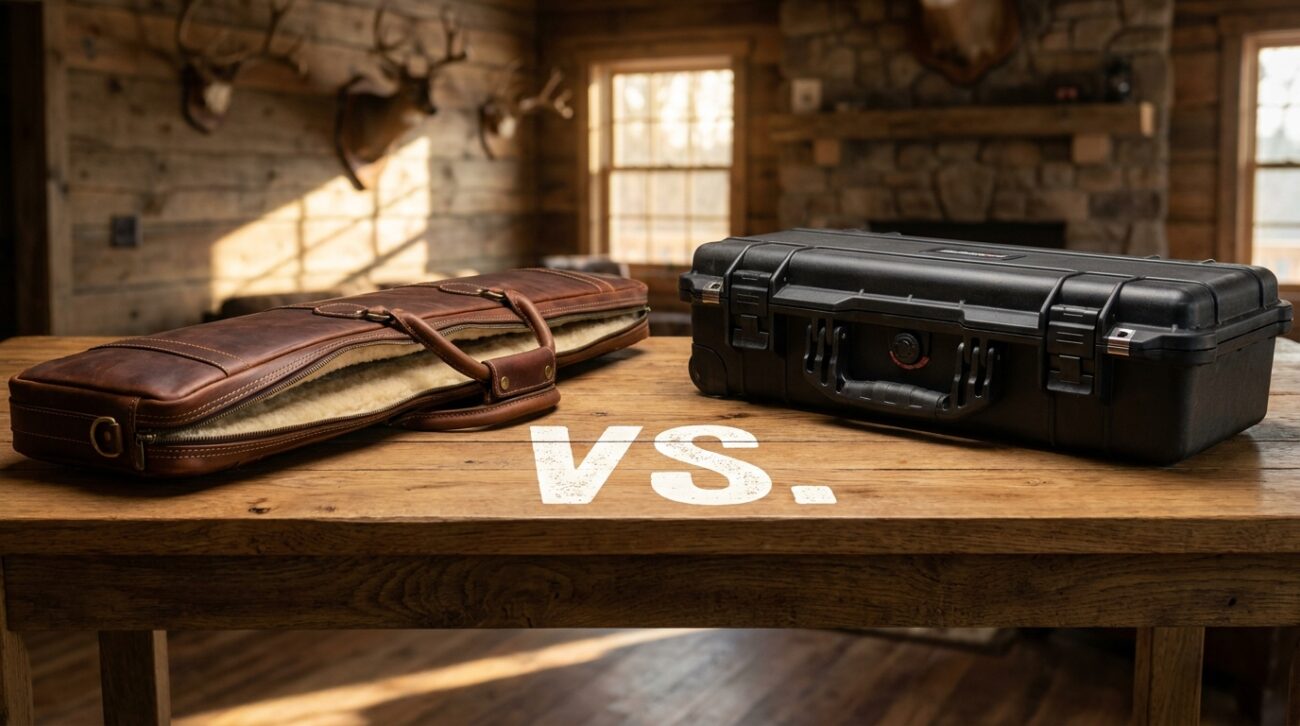
If you’re deciding among materials, comparing leather, canvas, and synthetic gun cases can help you determine which best matches your hunting style and frequency of use.
Common Buying Mistakes
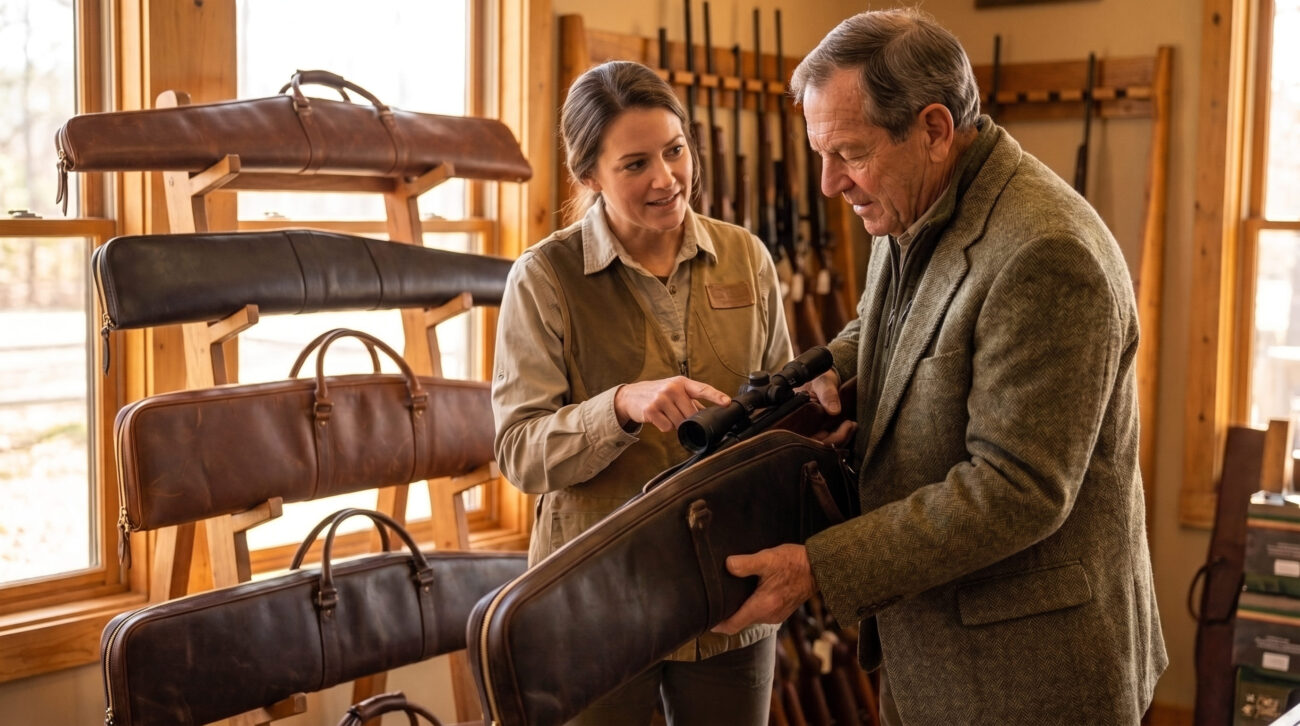
Buying the wrong rifle case usually comes down to overlooking a few important details.
Choosing the Wrong Size
Many people measure only the rifle’s overall length and forget about the mounted scope.
Always measure the complete height and width of your rifle before buying a case.
Focusing Only on Appearance
A beautiful leather case isn’t necessarily a protective one.
Check the padding, stitching, hardware, and handle construction before making your decision.
Ignoring Hardware Quality
The zipper, buckles, rivets, and shoulder strap receive the most stress during everyday use.
Quality hardware often determines how well a rifle case performs after years of hunting trips.
Forgetting Routine Care
Even premium leather benefits from simple maintenance.
Cleaning dust, removing moisture, and conditioning the leather occasionally will help preserve its appearance and flexibility. Learning how to clean leather gun cases is one of the easiest ways to extend the life of your investment.
Quick Buying Checklist
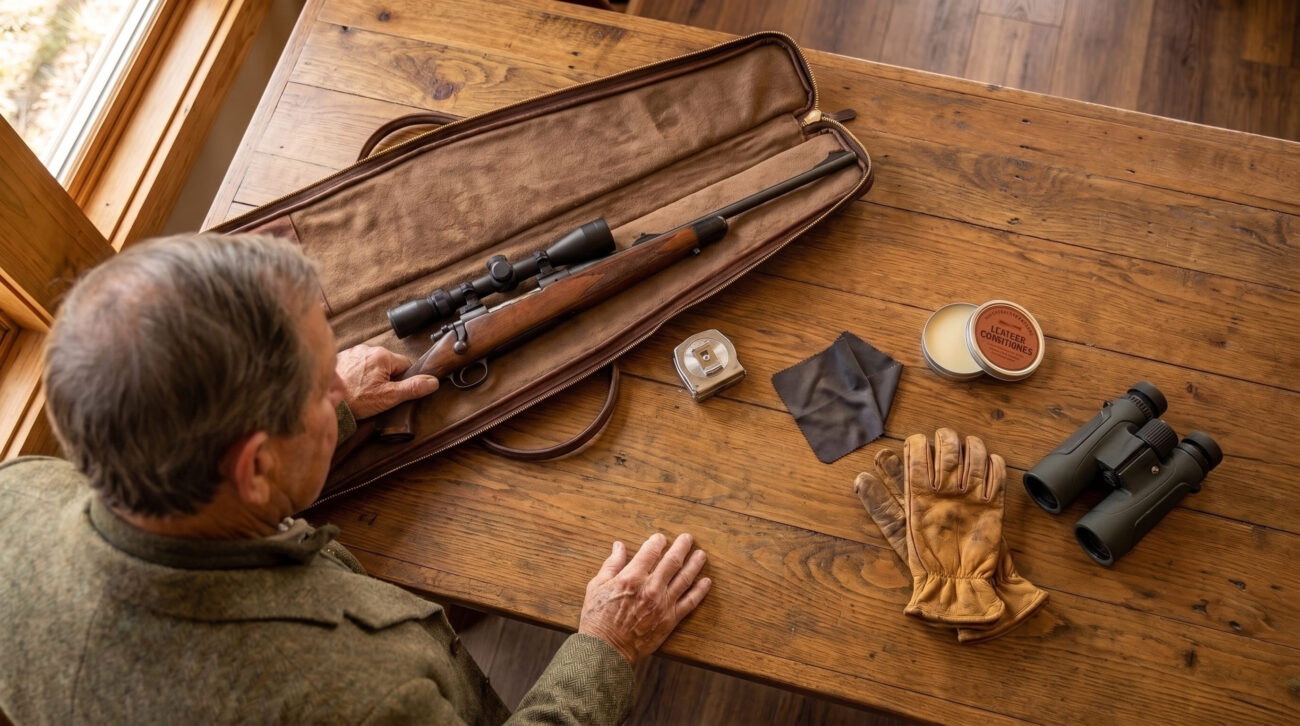
Before purchasing, ask yourself:
- Will my scoped rifle fit comfortably?
- Is there enough clearance around the optic?
- Are the handles reinforced?
- Is the padding firm enough to prevent movement?
- Is the interior lining soft enough to protect the finish?
- Will this case suit how I normally hunt or travel?
Answering these questions can help you avoid buying a case that looks good but falls short in daily use.
Pro Tip: A rifle should slide into the case naturally. If you need to force the zipper closed because of the scope, the case is too small.
Conclusion
Choosing the right rifle case is about protecting both your firearm and the optic mounted on it. A well-built case should fit properly, support the rifle during transport, and continue performing season after season.
While waxed canvas and synthetic options have their place, full-grain leather remains the best choice for hunters and shooters who want long-term durability, dependable protection, and classic craftsmanship.
If you’re ready to compare premium options, browse a selection of handcrafted leather rifle cases designed for modern scoped rifles to find a style that matches your firearm and how you use it.
FAQs
1. What is the best leather rifle case for a scoped rifle?
A full-grain leather case with quality padding and enough interior clearance provides the best overall protection.
2. Can a standard rifle case hold a scoped rifle?
Sometimes, but many standard cases don’t provide enough space around larger optics.
3. Is leather better than synthetic?
Leather offers greater durability, structure, and a longer service life, while synthetic cases are lighter and more affordable.
4. How much padding should a rifle case have?
Enough to absorb impacts without allowing the rifle to move inside the case.
5. Are leather rifle cases waterproof?
Leather is naturally resistant to light moisture but is not completely waterproof. Regular care helps maintain its performance.
6. How do I choose the correct rifle case size?
Measure your rifle with the scope attached, including the overall height and length.
7. How often should I condition a leather rifle case?
For most users, conditioning once or twice a year is enough, depending on use and climate.
8. Are handmade leather rifle cases worth buying?
Yes. Quality craftsmanship, stronger construction, and premium materials often result in a case that lasts significantly longer than budget alternatives.