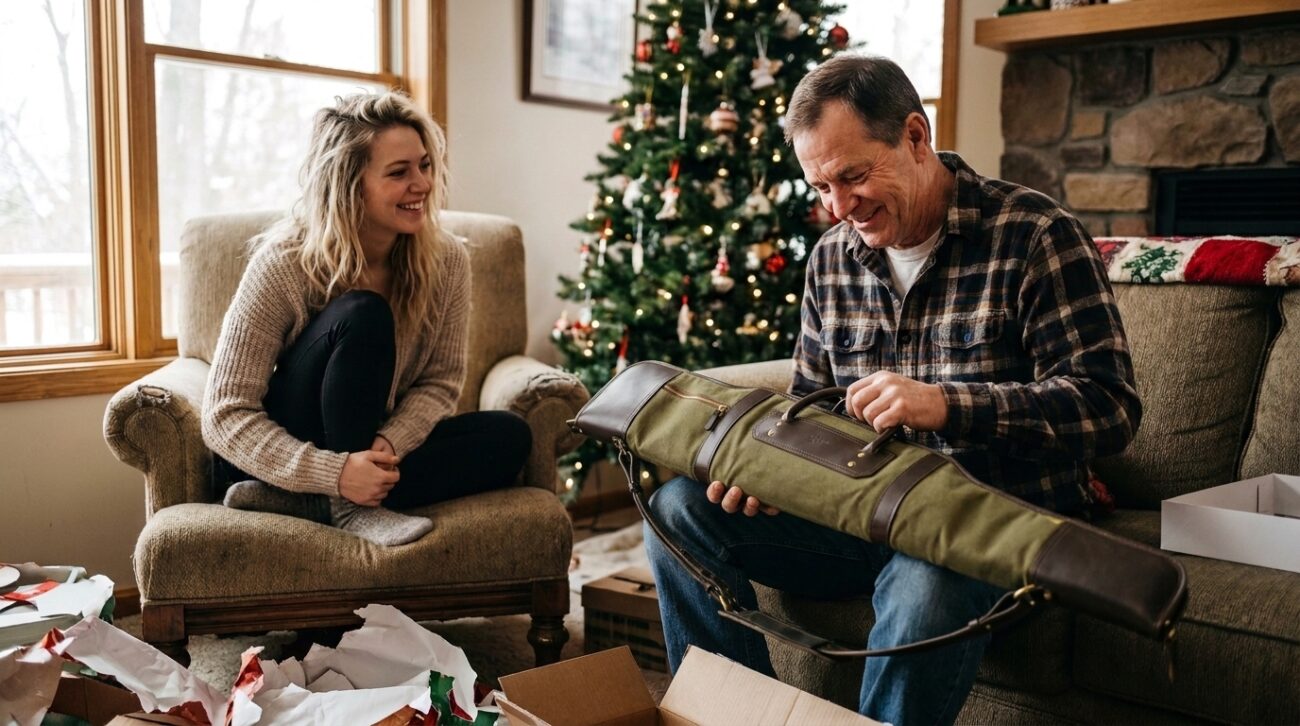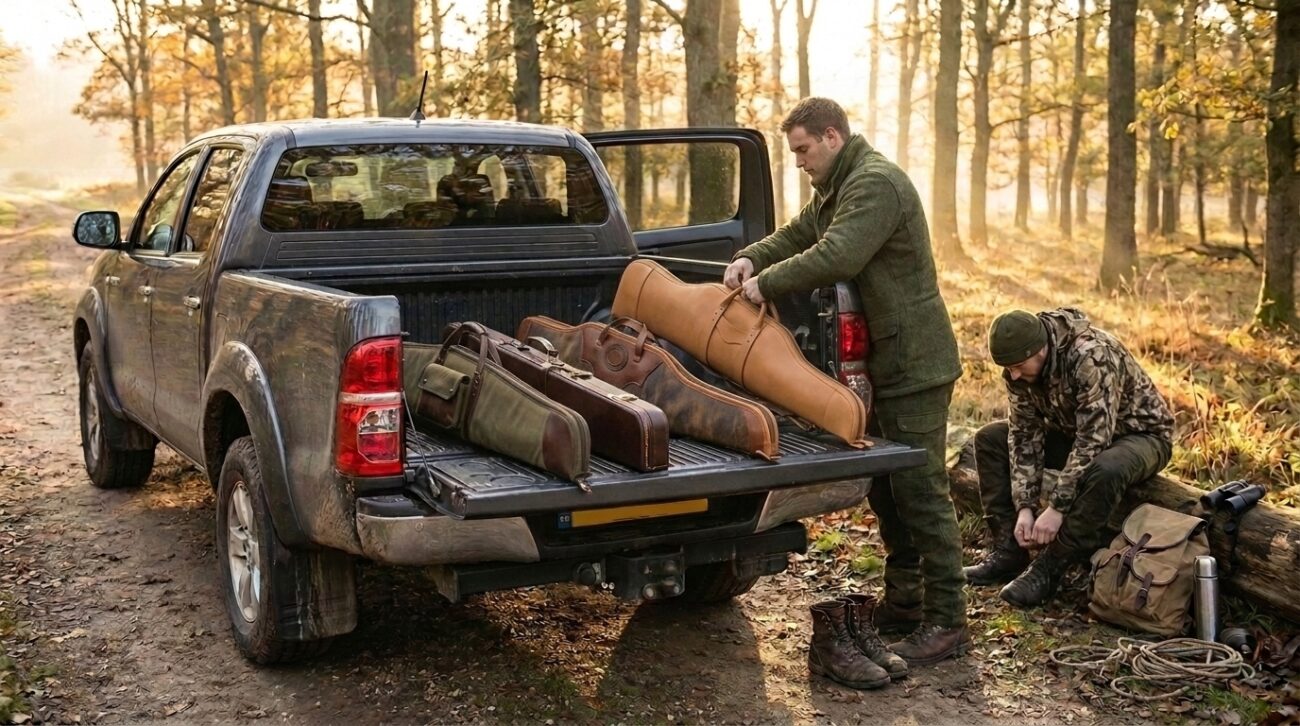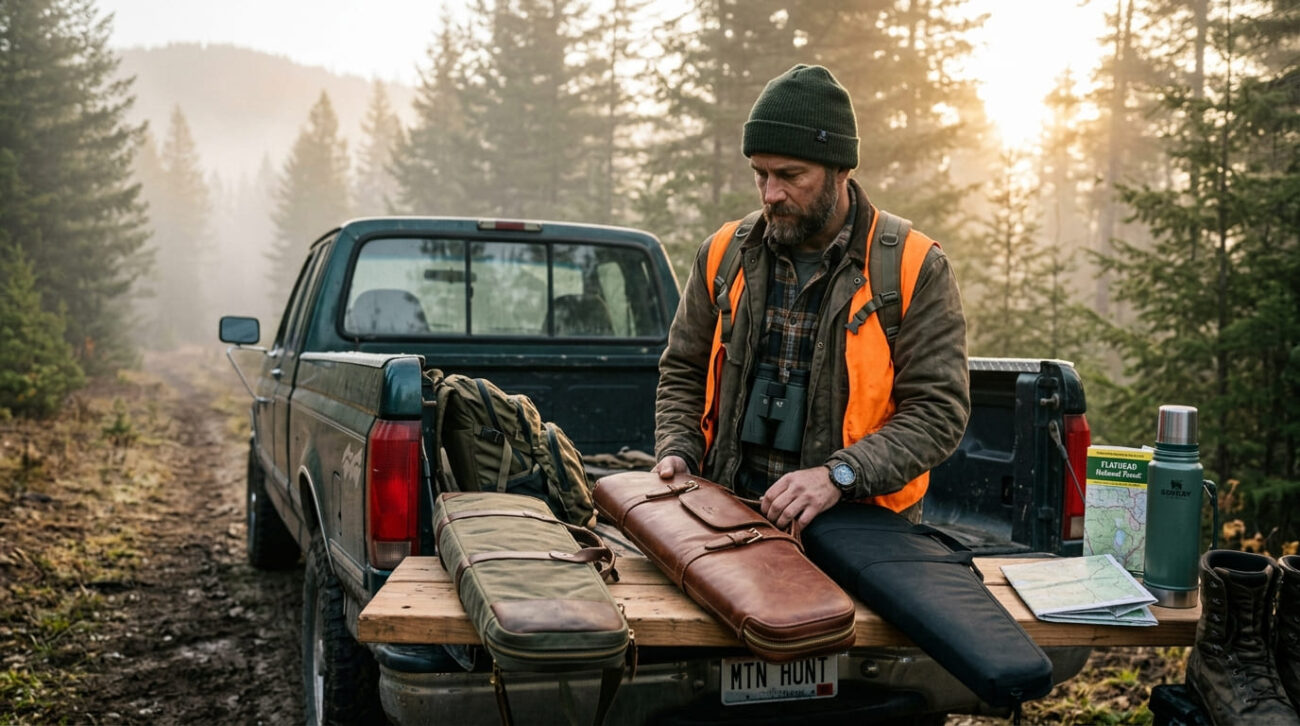


One of the most common reasons hunters end up with the wrong gun case is simple: they never measure their rifle.
Instead, many rely on estimated barrel lengths or assume every bolt-action rifle needs the same size case. In reality, overall length, mounted optics, stock design, and accessories all affect how well a rifle fits.
A case that’s too short may place pressure on the muzzle or scope, while one that’s too large allows the firearm to move around during transport.
If you’ve already started comparing different styles, such as leather and hard rifle cases, measuring your rifle first makes that decision much easier because you’ll know exactly what size you’re shopping for.
Taking accurate measurements before you buy helps you:
- Choose the correct case size on your first order.
- Protect your rifle and optics.
- Prevent unnecessary movement inside the case.
- Avoid returns caused by poor fit.
The entire process takes less than five minutes.
What You’ll Need
You don’t need any specialized tools.
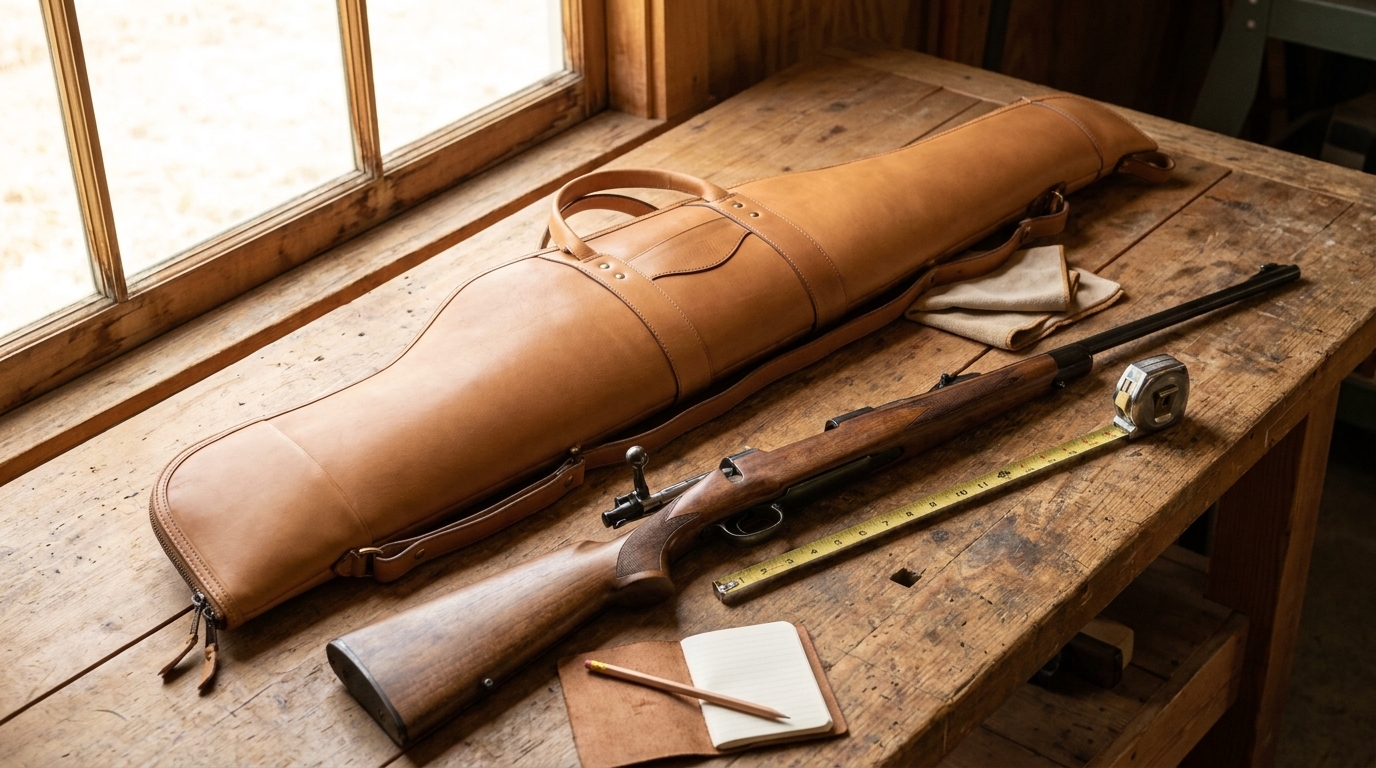
Simply gather:
- An unloaded rifle
- A tape measure
- A flat work surface
- A notebook or your phone for recording measurements
Safety Tip: Always confirm that the rifle is unloaded before handling or measuring it.
Step 1: Measure the Overall Length
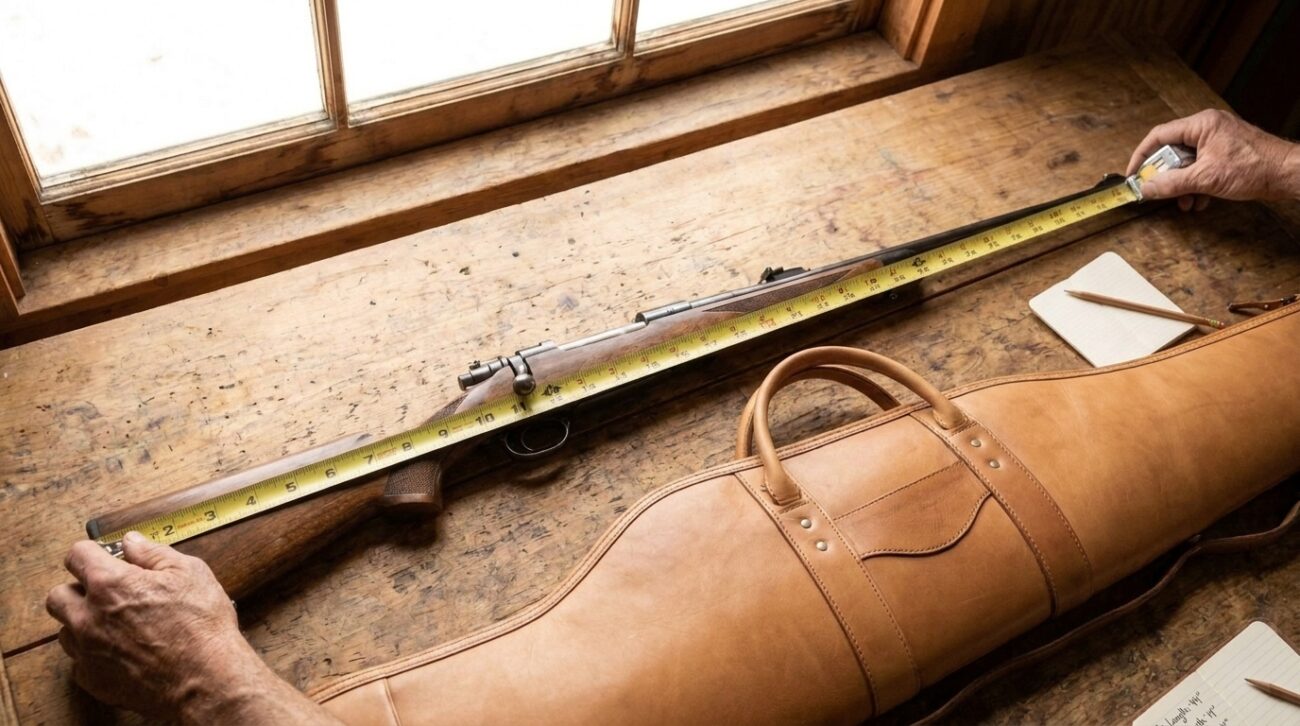
This measurement determines the minimum case length you’ll need.
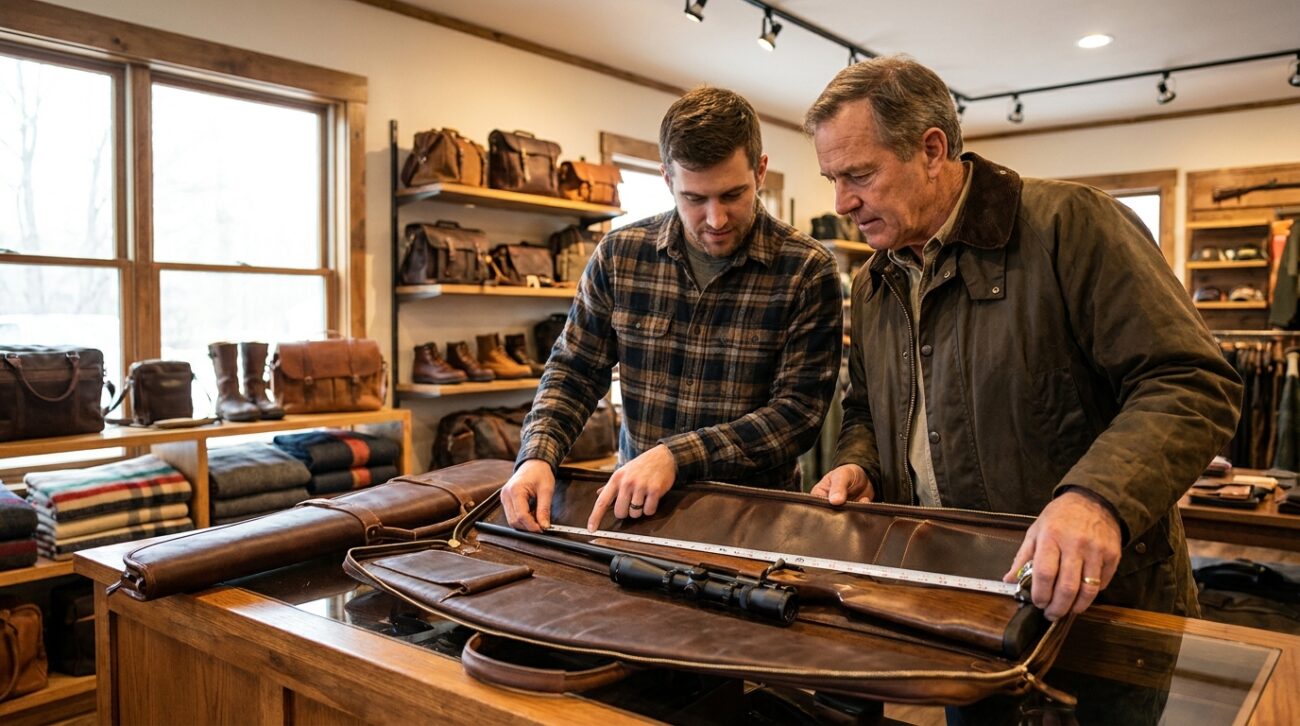
Lay the unloaded rifle on a flat surface and measure in a straight line from the very end of the buttstock to the end of the barrel or permanently attached muzzle device.
Don’t curve the tape along the stock. A straight measurement gives the most accurate result.
Measure from:
- End of the buttstock
- Tip of the barrel or permanently attached muzzle brake
Expert Tip: Measure your rifle exactly as you transport it. If a muzzle brake or thread protector always stays installed, include it in the measurement.
Step 2: Measure with the Scope Attached
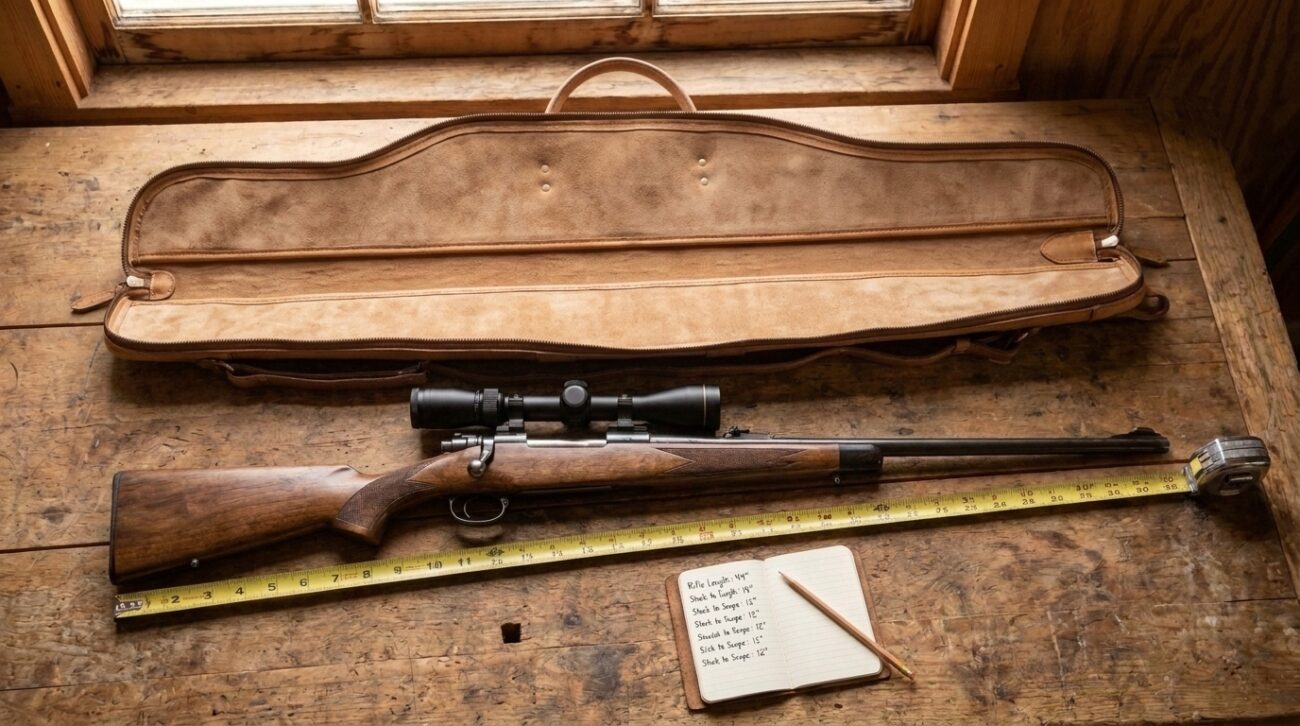
Many hunters remove the scope when measuring but leave it installed every time they travel.
That often leads to buying a case that’s technically long enough but doesn’t provide enough clearance around the optic.
If your scope remains mounted during transport, leave it installed while taking measurements.
This is especially important if your rifle uses:
- Large objective lenses
- Tall scope rings
- Tactical optics
- Adjustable cheek rests
If you’re unsure how much room a scoped hunting rifle needs, our guide on choosing a leather rifle case for scoped rifles explains what to look for when comparing different case designs.
Step 3: Measure the Tallest Point
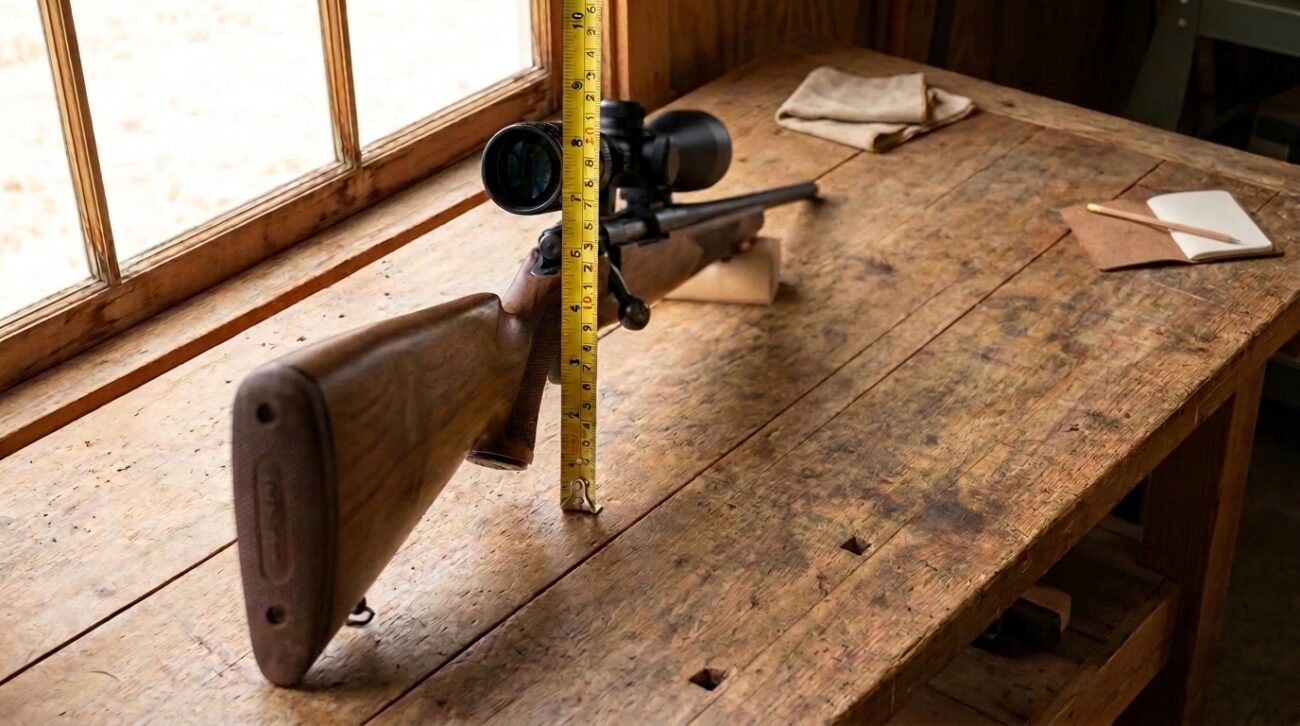
Length tells you whether the rifle fits.
Height tells you whether it fits comfortably.
Measure from the bottom of the stock to the highest point of the mounted scope.
This simple measurement helps prevent pressure on the optic once the case is zipped closed.
It’s an easy step to overlook, but one that can make a significant difference when protecting expensive glass.
Step 4: Don’t Forget Accessories
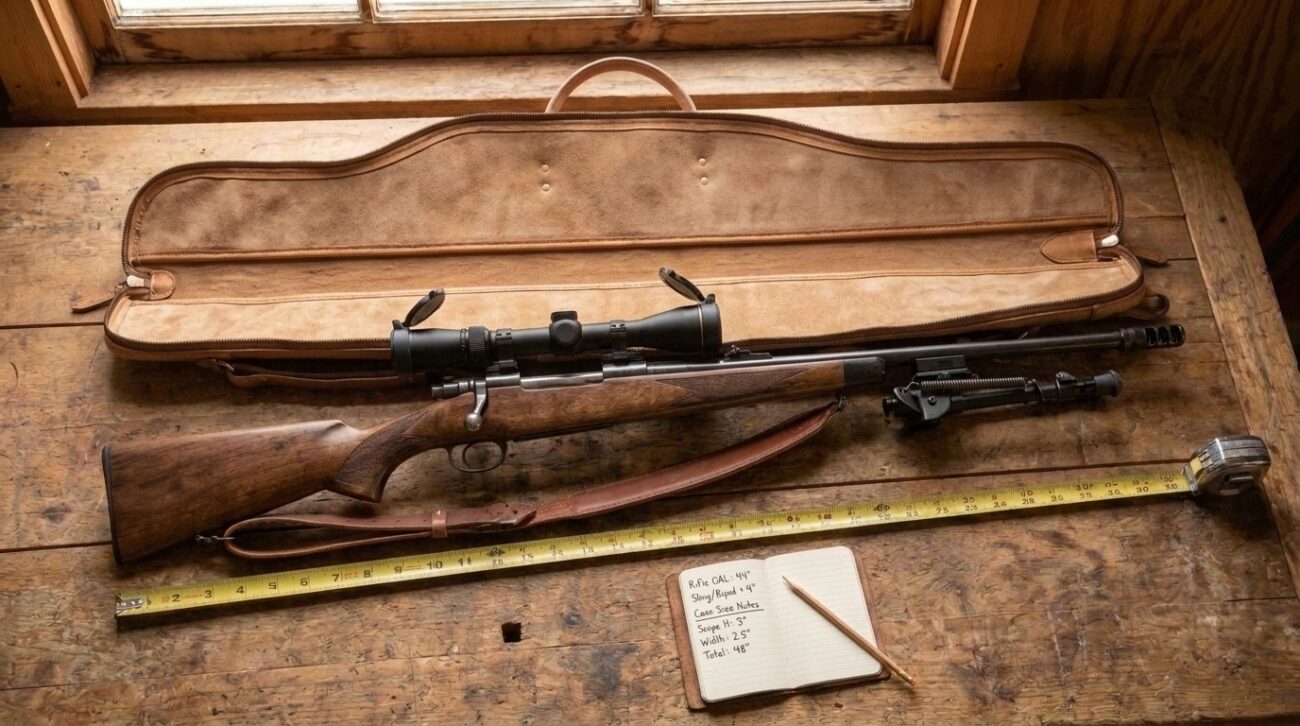
Before choosing a case size, think about how your rifle actually travels.
Do you normally leave these attached?
- Bipod
- Sling
- Scope covers
- Muzzle brake
- Large bolt handle
If the answer is yes, account for them before ordering.
Small accessories can affect both the length and interior clearance needed for a proper fit.
Match Your Measurements to the Right Case Size
After you’ve measured your rifle, compare the overall length to the available case sizes.
The chart below provides a quick reference.
| Measured Rifle Length | Recommended Case Size |
| Up to 35″ | 36″ |
| 35-37″ | 38″ |
| 37-39″ | 40″ |
| 39-41″ | 42″ |
| 41-43″ | 44″ |
| 43-45″ | 46″ |
| 45-47″ | 48″ |
| 47-49″ | 50″ |
| 49-51″ | 52″ |
If you’re ready to compare available sizes, Frontier Leather Co. offers handcrafted leather gun cases in nine different lengths, from 36 to 52 inches, making it much easier to choose a properly fitted case instead of settling for a one-size-fits-most option.
Interior Dimensions Matter More Than Exterior Length
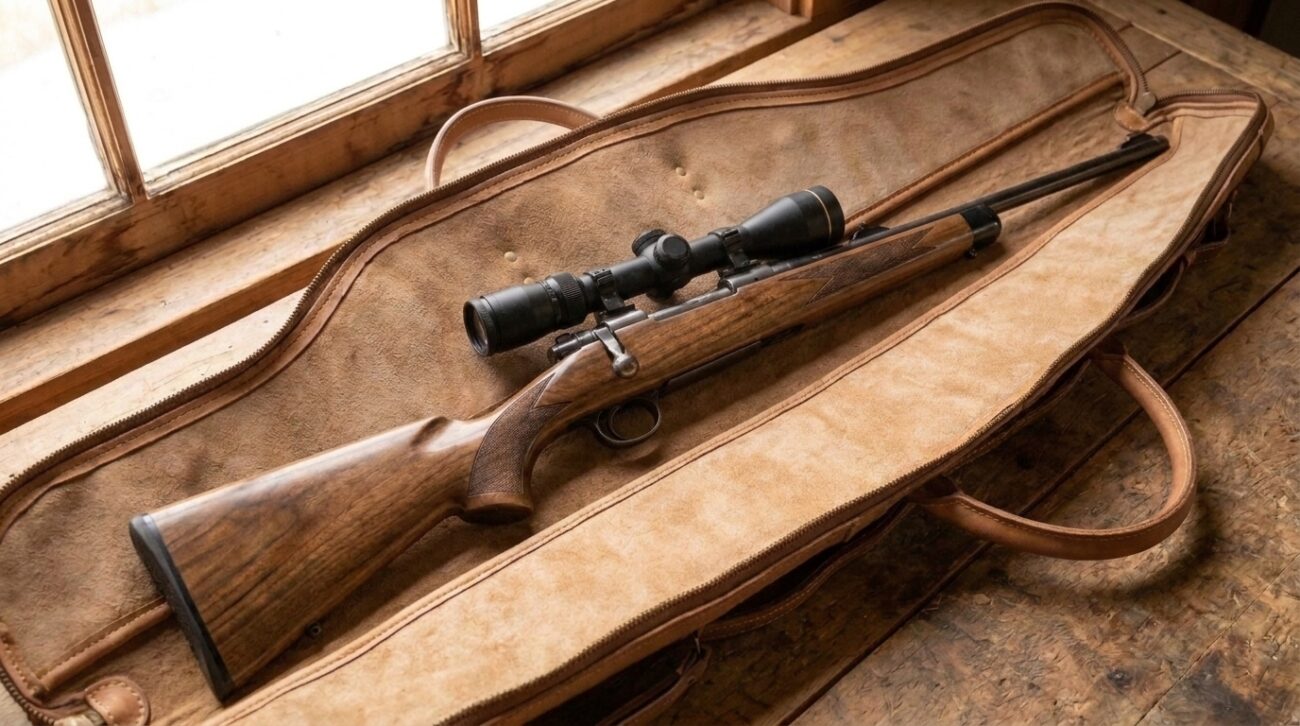
One of the biggest mistakes buyers make is choosing a rifle case based only on its advertised size.
For example, a “48-inch rifle case” refers to the outside length in some cases, while others list the usable interior length. Padding, end caps, and lining can reduce the actual space available for your firearm.
Whenever possible, compare your rifle’s measurements with the interior dimensions provided by the manufacturer.
This becomes even more important with handcrafted leather cases, where generous padding is designed to protect the firearm while still providing a snug, secure fit. If you’re interested in how premium cases are built, our article on how handcrafted leather gun cases are made explains why quality construction plays such an important role in protection.
Should You Buy a Larger Rifle Case?
Many buyers assume a larger case is always safer.
In reality, that’s not usually the best approach.
A properly fitted case should leave just enough room for easy loading without allowing the rifle to slide around during transport.
A Slightly Larger Case Can Be Helpful
- Easier to insert and remove the rifle
- Space for a sling or soft scope cover
- Less pressure when closing the zipper
A Case That’s Too Large Can Cause Problems
- The rifle shifts while being carried
- The scope may bump against the sides
- Extra movement reduces protection
As a general guideline, 1 to 2 inches of additional interior length is usually sufficient for most hunting rifles.
Common Rifle Measuring Mistakes
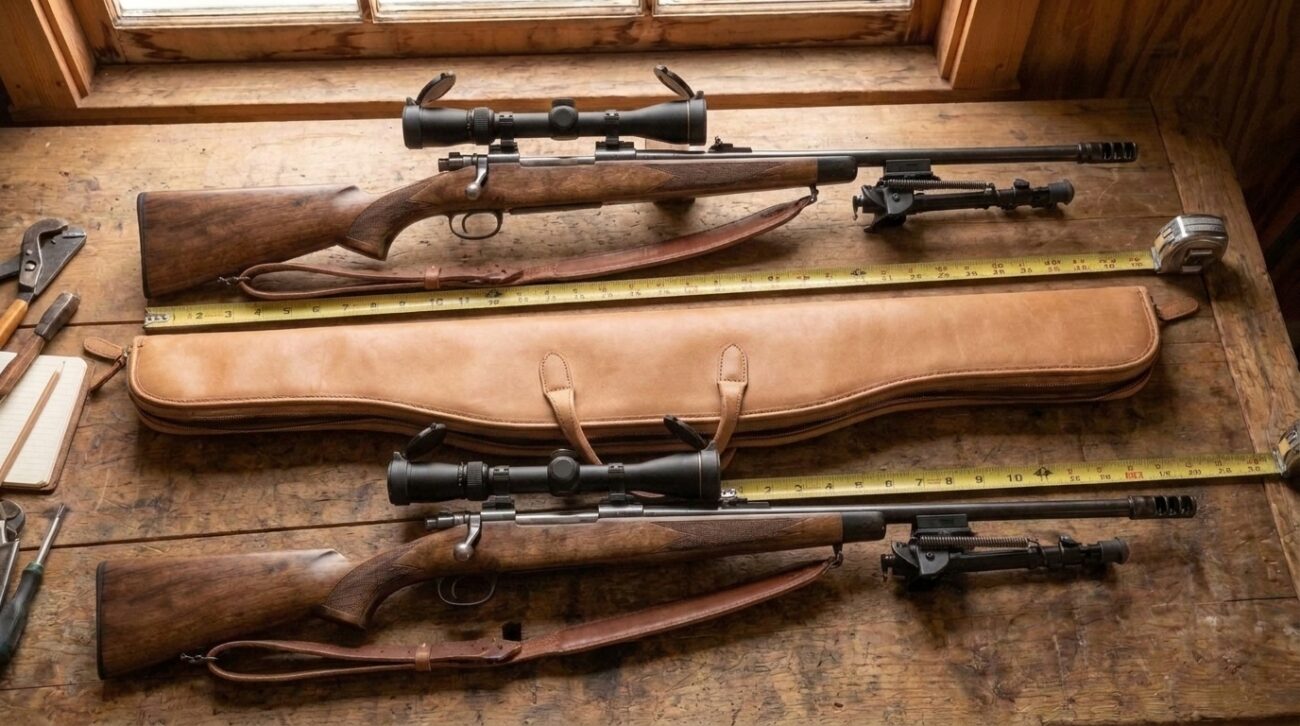
Even experienced hunters occasionally make sizing mistakes. Avoid these common errors before ordering your next rifle case.
Measuring Only the Barrel
The barrel length alone doesn’t determine the correct case size.
Always measure the entire rifle from the buttstock to the muzzle.
Forgetting the Scope
A mounted scope changes both the height and overall profile of your rifle.
Always measure the rifle in the same configuration you use during transport.
Ignoring Accessories
Bipods, slings, oversized bolt handles, and muzzle devices can all affect how the rifle fits inside the case.
Choosing the Longest Case Available
More space doesn’t always mean better protection.
A properly fitted case holds the rifle securely, while an oversized one allows unnecessary movement.
Guessing Instead of Measuring
Many rifles look similar but differ by several inches in overall length.
A tape measure provides a much more reliable answer than an estimate.
Quick Rifle Case Size Checklist
Before placing your order, make sure you’ve completed these steps.
✔ Measured the rifle’s overall length
✔ Measured with the scope installed
✔ Checked the tallest point of the optic
✔ Considered any attached accessories
✔ Compared your measurements with the case’s interior dimensions
✔ Selected the closest matching case size
Following this checklist only takes a few minutes and can save you from ordering the wrong size.
Conclusion
Choosing the right rifle case starts long before you compare materials or styles. It starts with accurate measurements.
By measuring your rifle’s overall length, scope height, and attached accessories, you’ll have a much better idea of the size that offers the best fit and protection. A properly sized case helps prevent unnecessary movement during transport while making it easier to load and unload your firearm.
Once you know the measurements, selecting the right case becomes much simpler. Whether you’re storing your rifle at home, transporting it in a truck, or heading into the field, a well-fitted case provides better protection and greater confidence every time you travel.
FAQs
What size rifle case do I need?
Measure your rifle from the end of the buttstock to the tip of the barrel or permanently attached muzzle device. Then choose a case with approximately 1 to 2 inches of additional interior length.
Should I measure my rifle with the scope attached?
Yes. If the scope stays mounted during transport, leave it installed while measuring to ensure the case provides enough interior clearance.
Is a longer rifle case better?
Not necessarily. A case that’s too large allows the rifle to move inside, while one that’s properly fitted offers better protection.
How much extra room should a rifle case have?
For most hunting rifles, about 1 to 2 inches of additional interior length provides a secure fit without excessive movement.
Do rifle case sizes refer to interior or exterior dimensions?
It varies by manufacturer. Always check the product specifications and compare your rifle’s measurements with the interior dimensions whenever they’re available.
Can one rifle case fit multiple rifles?
Sometimes, but only if the rifles have similar dimensions. Always measure each firearm individually before assuming one case will fit all.
Does a scoped rifle need a different case?
Not always, but the case should provide enough interior height and padding to protect the mounted optic during transport.