

It is quite evident that choosing the right leather apron is not only about material and style, but also about comfort. And for that, strap design plays a major role in overall comfort, especially during long working hours.
For that reason, leather aprons typically come with either fixed straps or adjustable straps, and each option offers different benefits. Some individuals prefer fixed straps for their simplicity, while others value adjustable straps for a customized fit.
However, many individuals still feel confused as to whether to choose an adjustable or a fixed strap. If you are also one of those, then don’t worry because in this guide, we will talk in great detail about it.
Understanding Leather Apron Strap Designs
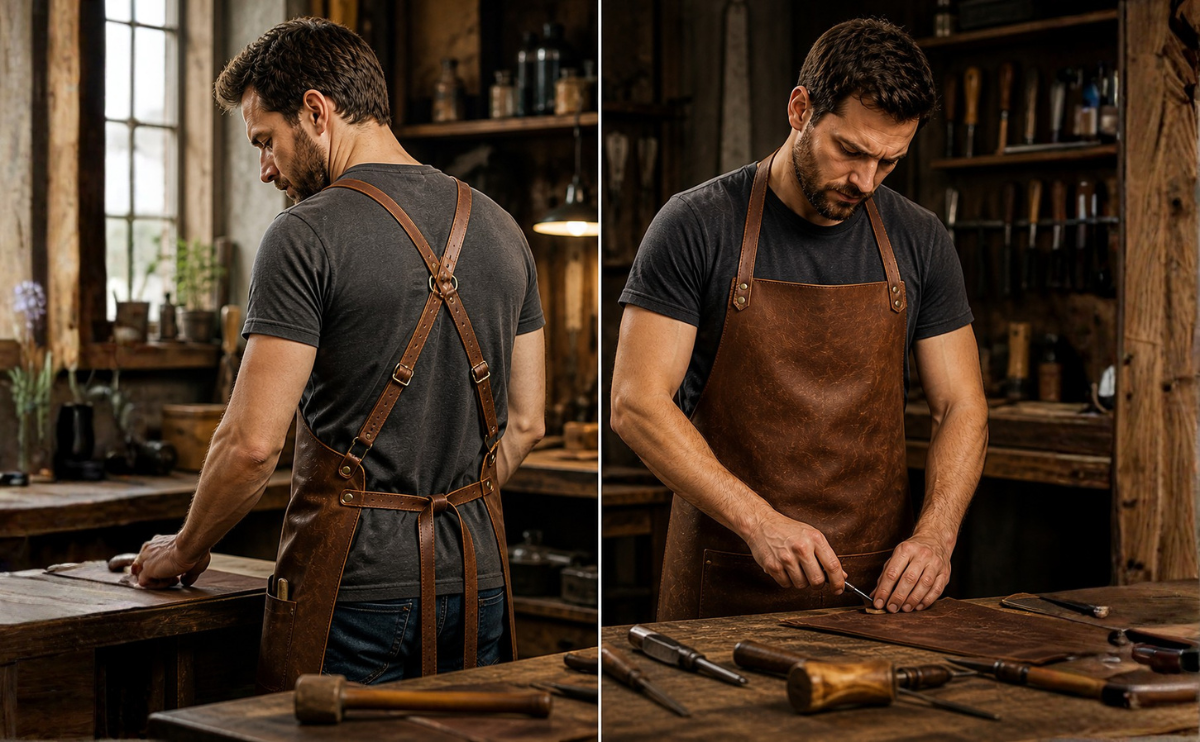
Leather apron strap designs influence how the apron fits and feels during use. Straps support the weight of tools, pockets, and thick leather material. That’s where a well-designed strap system can distribute weight evenly across the shoulders, which reduces fatigue. And a poor strap design can create pressure points and discomfort.
Keep in mind that there are two main types of strap designs: fixed and adjustable. Fixed straps come in a preset length and are stitched permanently. Adjustable straps, on the other hand, include buckles, snaps, or sliding mechanisms to modify fit. Each design suits different preferences and body types. Some individuals value simplicity, while others need flexibility.
What Are Fixed Straps on Leather Aprons?
Common Materials Used
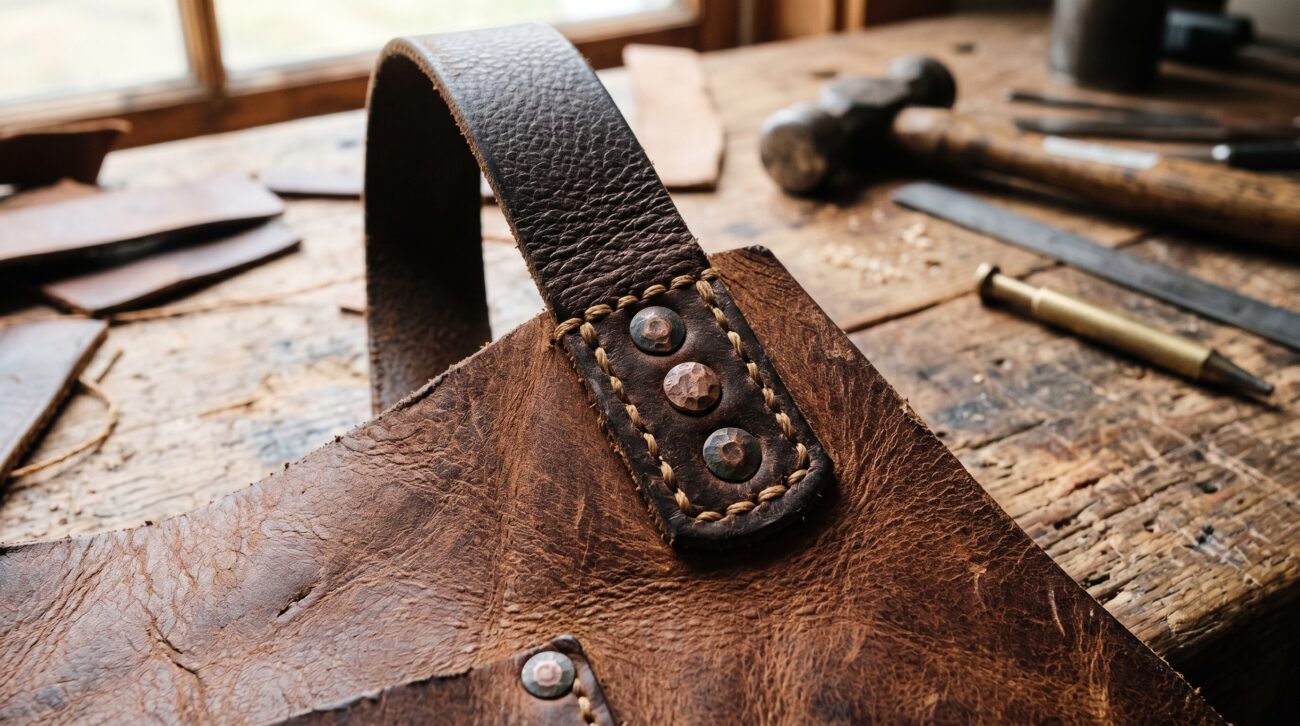
Fixed straps on leather aprons are usually made from the same leather as the apron body, which creates a consistent look and strong construction. Full-grain or top-grain leather is commonly used because of its durability. Some designs also use reinforced fabric backing to improve flexibility.
Manufacturers often stitch fixed straps directly into the apron body. Heavy-duty thread ensures secure attachment. In some cases, rivets are added for extra reinforcement. These materials provide long-lasting support.
Typical Length and Fit
Fixed straps come in predetermined lengths that are designed to fit average body sizes. Once stitched, they cannot be adjusted. This means that the fit depends on the original design. Some individuals find this comfortable if the size matches their body. Others may experience tightness or looseness.
Manufacturers often offer small, medium, and large options. However, limited flexibility remains. Fixed straps usually provide a stable feel because they do not shift during use. This stability can improve consistency while working. On the downside, incorrect length may create pressure on the neck or shoulders.
What Are Adjustable Straps on Leather Aprons?

Buckle Mechanisms
Adjustable straps with buckles allow you to modify the length easily. Leather straps pass through metal buckles, similar to belts. This design provides secure adjustment and holds position during work. Brass and stainless steel buckles are commonly used for durability. These materials resist rust and wear.
Buckle systems offer flexibility for different body types. What makes them better is that you can tighten or loosen straps for better comfort. This is useful when wearing layered clothing. However, buckles add slight weight to the apron.
Slide and Snap Adjustments
Slide and snap adjustments provide another flexible strap option. Sliding adjusters allow straps to move through loops for quick length changes. Snap buttons enable you to switch between preset sizes. These systems are lightweight and easy to use.
Compared to buckles, slide adjustments feel less bulky. They also allow faster changes. Snap systems offer convenience but may have limited size options. High-quality snaps provide a strong hold, while lower-quality ones may loosen over time.
Comfort Comparison: Fixed vs Adjustable Straps

Shoulder Pressure Distribution
Shoulder pressure distribution is a key factor in apron comfort. That’s where fixed straps provide consistent support because they stay in one position. When sized correctly, they distribute weight evenly. However, if the fit is not ideal, pressure may concentrate on one area, which can lead to discomfort during long use.
Adjustable straps also allow you to fine-tune the fit. By adjusting the length, the weight can be spread more evenly across both shoulders. This flexibility reduces strain. Proper distribution also improves posture and reduces fatigue.
Adjustable straps usually offer better customization. Fixed straps provide stability but depend on correct sizing.
Neck Strain and Tension
Neck strain often occurs when the apron weight pulls downward. Fixed strap designs, especially neck-loop styles, may place more tension on the neck. If the strap length is not ideal, the overall discomfort may increase. Over time, this can cause fatigue.
Adjustable straps can help reduce neck strain. You can loosen or reposition straps for better balance. Cross-back adjustable designs shift weight to the shoulders instead of the neck, which significantly improves comfort.
Breathability and Movement
Breathability and movement affect how comfortable an apron feels during work. Fixed straps usually stay in one position, which allows predictable movement. They do not require adjustments, which some individuals prefer. However, they may restrict flexibility if the fit is tight.
Adjustable straps provide more freedom. You can loosen straps slightly to improve airflow, which reduces heat buildup. Adjustable designs also allow better arm and shoulder movement. This is helpful for tasks requiring reaching or bending.
Fit and Body Type Considerations

Best for Slim Builds
People with slim builds often prefer adjustable straps because they allow a closer and more secure fit. Fixed straps designed for average sizes may hang loosely on narrower shoulders. This can cause shifting during movement and reduce comfort. Adjustable designs help tighten the apron to prevent slipping.
Cross-back adjustable straps work particularly well for slim users. They prevent the apron from sliding forward and reduce neck strain. Slim builds also benefit from lighter strap materials. These reduce pressure on smaller frames.
Best for Broader Shoulders
Individuals with broader shoulders often require more room for comfortable movement. Adjustable straps provide flexibility to increase length and prevent tightness. Fixed straps may feel restrictive if designed for smaller frames, which can cause pressure points across the shoulders.
Adjustable cross-back straps are ideal for broader builds. They distribute weight evenly and reduce strain. Wider strap designs also improve comfort. They prevent digging into the shoulders.
Durability and Longevity of Each Design
Fixed Strap Weak Points
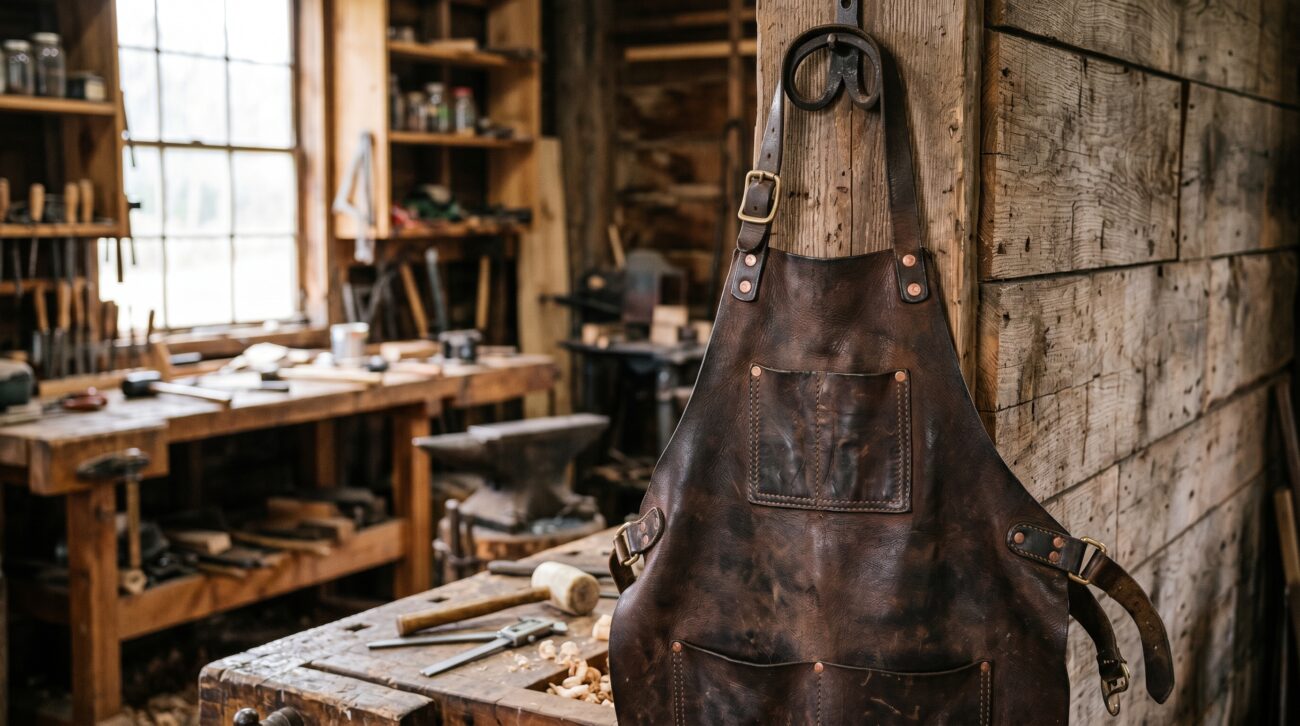
Fixed straps are known for their simple and sturdy construction. However, they have certain weak points. Because straps are stitched permanently, stress concentrates at attachment areas. Over time, heavy use may loosen stitching, which can affect durability.
Thick leather straps themselves rarely fail. The main concern is stitching or rivet points. If damaged, repairs may require professional work. Fixed straps also lack flexibility, which can increase strain on specific areas.
Despite these limitations, fixed straps generally last longer. Their design has fewer moving parts, which reduces mechanical wear. Regular inspection can also help you identify early damage.
FAQs
1. Are adjustable straps more comfortable than fixed straps?
Adjustable straps are usually more comfortable.
2. Do fixed straps last longer than adjustable straps?
Fixed straps may last longer due to fewer moving parts, but both designs are durable when made with quality materials.
3. Which strap design is better for long working hours?
Adjustable cross-back straps are generally better for long hours.
4. Are adjustable straps harder to maintain?
They may require occasional checking, but maintenance is minimal with proper care.
5. Can fixed straps be adjusted later?
Fixed straps usually cannot be adjusted unless professionally modified.