
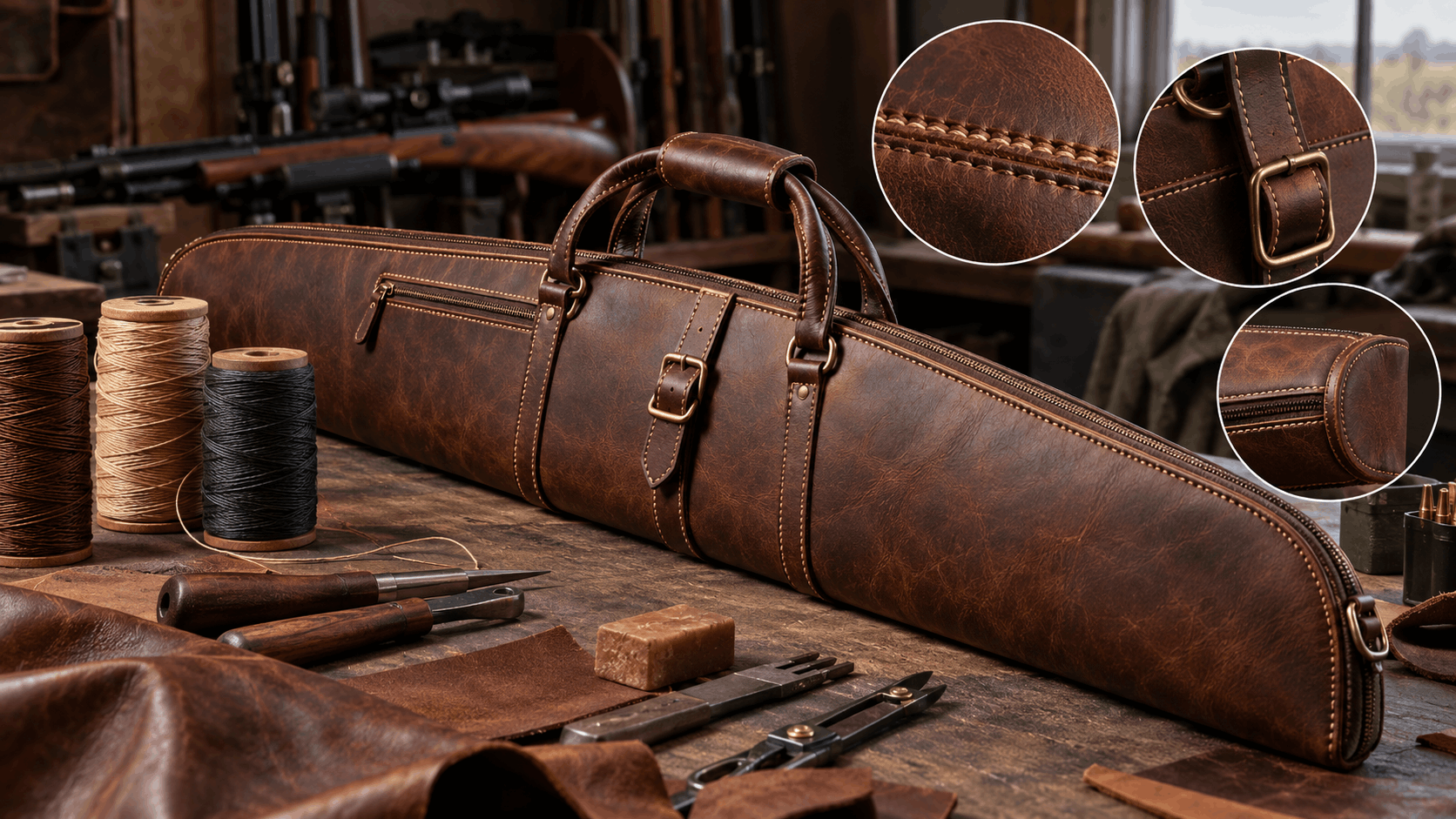

Stitching is a key structural element of a leather gun case. It secures panels, edges, closures, straps, and hardware while helping the case withstand regular handling, bending, friction, and movement.
Three factors strongly influence stitching performance: thread quality, seam placement, and construction method. Together, they affect durability, shape retention, protection, and long-term reliability.
Whether comparing a traditional case with a Modern Leather Gun Case or sourcing custom products, understanding stitching can help buyers evaluate manufacturing quality.
Why Stitching Matters
A gun case’s seams must withstand repeated opening, closing, handling, and movement. Weak or poorly finished stitching may lead to loose seams, broken thread, panel separation, or premature wear.
When combined with suitable leather and proper reinforcement, quality stitching helps a case remain durable, secure, and functional over time.
Thread Quality: The Foundation of Durable Stitching
Thread should match the leather thickness, construction, and expected use of the case. Important qualities include:
- Strength: It should withstand repeated stress without breaking.
- Abrasion resistance: High-use seams need protection against friction.
- Appropriate thickness: The thread should support the seam without overpowering the leather.
- Leather compatibility: Thread size and construction must suit the layers being joined.
Unsuitable thread can cause broken stitches, reduced seam strength, uneven appearance, and faster wear. For manufacturers, thread selection is therefore a structural decision, not merely an aesthetic one.
Seam Placement: Where Stitching Goes Matters
Even strong thread cannot compensate for poorly positioned seams. Seam placement should account for how stress moves through the case.
Areas Requiring Careful Placement
- Edges and openings: Seams should support the edge without placing excessive stress directly on it.
- Corners and curves: Changes in direction can increase tension in the leather and thread.
- Attachment points: Straps, handles, closures, and hardware may require additional reinforcement.
- Stress-bearing areas: Seams should be positioned to distribute pulling forces rather than concentrate them.
Poor placement can accelerate thread wear, leather deformation, or seam failure.
Construction: More Than Just Stitching
A durable leather gun case depends on how stitching works with the rest of the construction. Important factors include:
- Leather thickness and layering: These should provide structure without unnecessary bulk.
- Panel alignment: Proper alignment creates clean seams and consistent dimensions.
- Edge finishing: Finished edges improve appearance and help reduce wear.
- Reinforcement: High-stress areas may need extra leather layers or support.
- Stitch spacing and tension: Consistency improves both seam strength and appearance.
Manufacturing quality should therefore be judged by the complete construction, not thread alone.
Common Stitching Problems in Leather Gun Cases
| Stitching Problem | Possible Cause | Potential Impact |
| Loose stitches | Poor tension or finishing | Seam can open over time |
| Broken thread | Inadequate thread selection | Reduced seam strength |
| Uneven stitching | Poor machine setup or workmanship | Inconsistent appearance and performance |
| Seams too close to edge | Incorrect seam placement | Edge may pull or tear |
| Weak attachment points | Insufficient reinforcement | Straps or hardware may loosen |
Small defects can become larger structural problems with repeated use, making inspection essential during production.
How Quality Manufacturers Approach Stitching
Professional manufacturers treat stitching as part of quality control. Buyers should look for:
- Consistent stitch length
- Even thread tension
- Clean, accurately positioned seams
- Reinforcement at high-stress points
- Secure thread finishing
- Accurate panel alignment
- Seam inspection before shipment
For private-label and wholesale orders, consistent construction standards are especially important because buyers need predictable quality across every unit.
For businesses researching the History of Leather Gun Cases, one lesson remains clear: construction quality matters in both traditional and contemporary designs.
What Buyers Should Check Before Ordering
Before placing an order, ask manufacturers:
- What type and thickness of thread do you use?
- How are high-stress seams reinforced?
- Where are the primary seams positioned?
- How is stitching inspected?
- Can stitching be customized for private-label orders?
- Can samples be provided before bulk production?
Review previous work and examine construction details rather than judging a case only by appearance or price. A Rifle Case Size Guide can also help buyers compare dimensions and determine whether a design suits the intended application.
FAQ: Leather Gun Case Stitching
What type of thread is best for leather gun cases?
A strong, abrasion-resistant thread with a thickness suited to the leather and construction is generally preferred. The exact specification depends on the design and manufacturing method.
Why is seam placement important?
Proper placement distributes stress more effectively and helps prevent premature wear, deformation, or separation.
How does stitching affect durability?
Stitching connects the main leather components and helps the case retain its structure. Weak thread, poor tension, or inadequate reinforcement can reduce durability.
Where should seams be reinforced?
Reinforcement is especially important around strap, handle, closure, and hardware attachment points.
What indicates quality stitching?
Look for consistent stitch length, even tension, clean seam lines, secure thread finishing, accurate panel alignment, and reinforcement where needed.
Can stitching be customized?
Yes. Depending on the manufacturer, thread specifications, stitch appearance, seam placement, and reinforcement can often be customized.
Conclusion
A durable leather gun case depends on more than leather quality. Thread selection, seam placement, and overall construction must work together to create a case that remains strong and reliable.
Buyers sourcing leather gun cases should examine stitching as an indicator of manufacturing standards. Whether developing a custom product or evaluating an Inch Rifle Case, ask about materials, reinforcement, stitching specifications, and quality control before placing a bulk order.
At Frontier Leather Co., we focus on construction details that support consistent quality, durability, and professional finishing.