

Choosing between a 36, 38, 40, 42, 44, 46, or 48-inch rifle case can be confusing, especially when different manufacturers measure their cases differently.
The most important number is not the barrel length. It is the rifle’s overall length, along with enough extra interior space for the muzzle, stock, padding, and any mounted optic.
Whether you are buying a case for a compact rifle, a standard hunting rifle, or a longer scoped setup, understanding rifle case sizes makes it much easier to choose the right fit.
How to Choose the Right Rifle Case Size
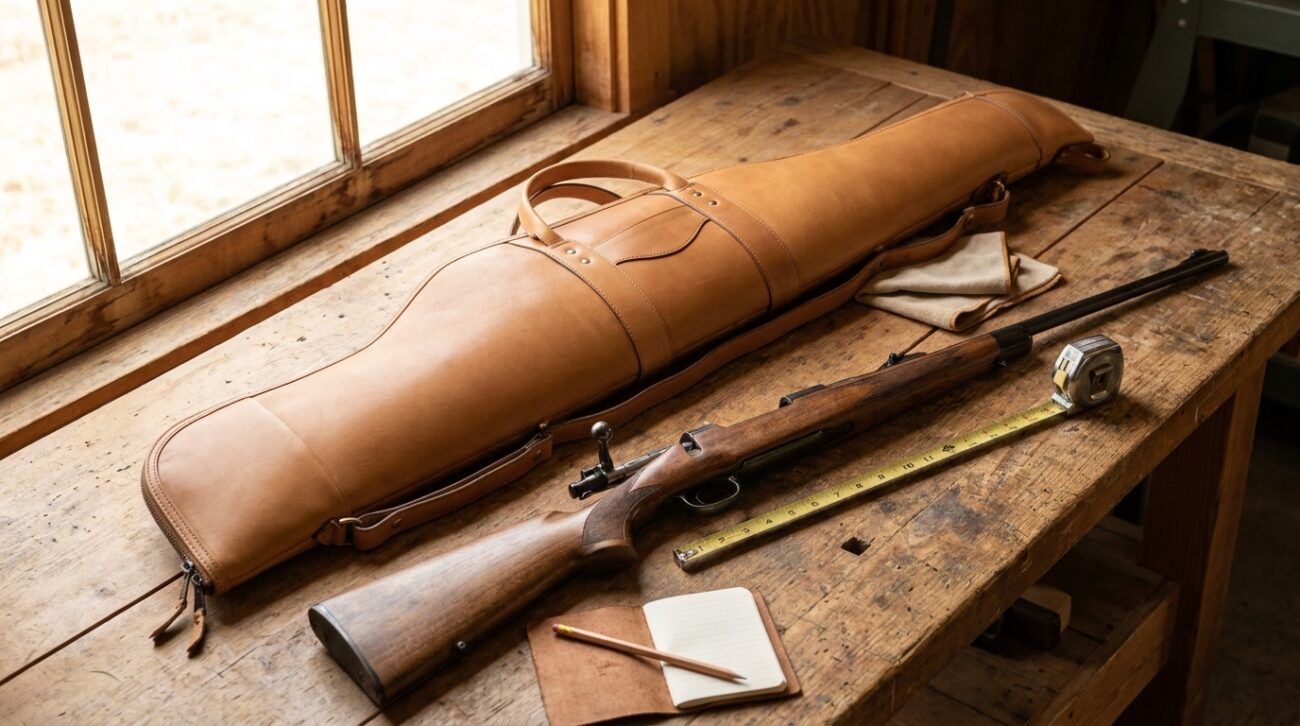
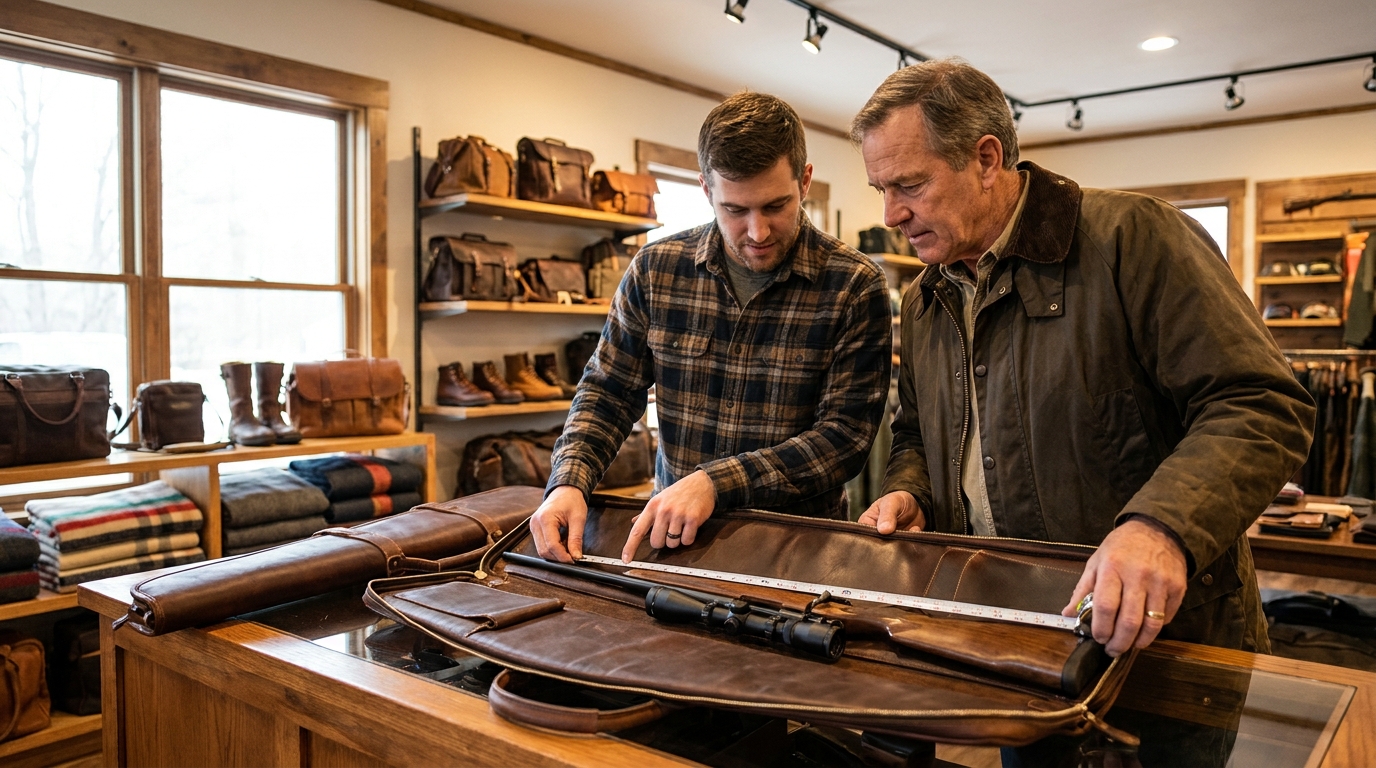
Start by measuring the unloaded rifle from the furthest point of the muzzle to the end of the buttstock. Include any permanently attached muzzle device, such as a brake or flash hider.
Then allow additional room for clearance.
As a practical starting point, look for an interior case length that provides roughly 2 to 4 inches of additional space beyond the rifle’s overall length. The exact amount depends on the case construction, padding, and how securely the firearm needs to sit inside.
For example:
| Rifle Overall Length | Approximate Minimum Case Interior |
| 32 inches | 34 to 36 inches |
| 34 inches | 36 to 38 inches |
| 36 inches | 38 to 40 inches |
| 38 inches | 40 to 42 inches |
| 40 inches | 42 to 44 inches |
| 42 inches | 44 to 46 inches |
| 44 inches | 46 to 48 inches |
These are starting points rather than universal rules. Always compare your measurements with the manufacturer’s stated interior dimensions.
Interior vs. Exterior Case Dimensions
One of the easiest mistakes is assuming a 42-inch case always provides 42 inches of usable space.
It may not.
Some manufacturers list the outside dimensions of a case, while padding, seams, hardware, and construction reduce the actual interior space.
Before ordering, check:
- Interior length
- Interior width
- Interior height or depth
- Padding thickness
- Clearance around the muzzle and stock
- Space available for a mounted scope
If only exterior dimensions are provided, look for a detailed specification from the manufacturer before assuming your rifle will fit.
36-Inch Rifle Case: Best for Compact Rifles
A 36-inch case is generally aimed at shorter firearm configurations where the overall length is comfortably below the available interior space.
It can be suitable for compact rifles and shorter configurations, including some AR-style setups with shorter barrels or collapsed/folding stocks.
The key is not the barrel length by itself. A rifle with a 16-inch barrel, for example, can have a considerably longer overall length once the stock and receiver are included.
Choose 36 inches when:
- Your rifle has a short overall length
- You have measured it and confirmed sufficient clearance
- You want a compact case for easier storage
- Your configuration does not require substantial additional room
If the rifle is close to the usable limit, moving up to a 38-inch case may provide a more comfortable fit.
38-Inch Rifle Case: Compact With More Clearance
A 38-inch case provides a little more room than a 36-inch model while remaining relatively compact.
This size can work well for shorter rifles that need additional length for comfortable insertion and removal.
It can also make sense when a 36-inch case leaves very little clearance around the rifle.
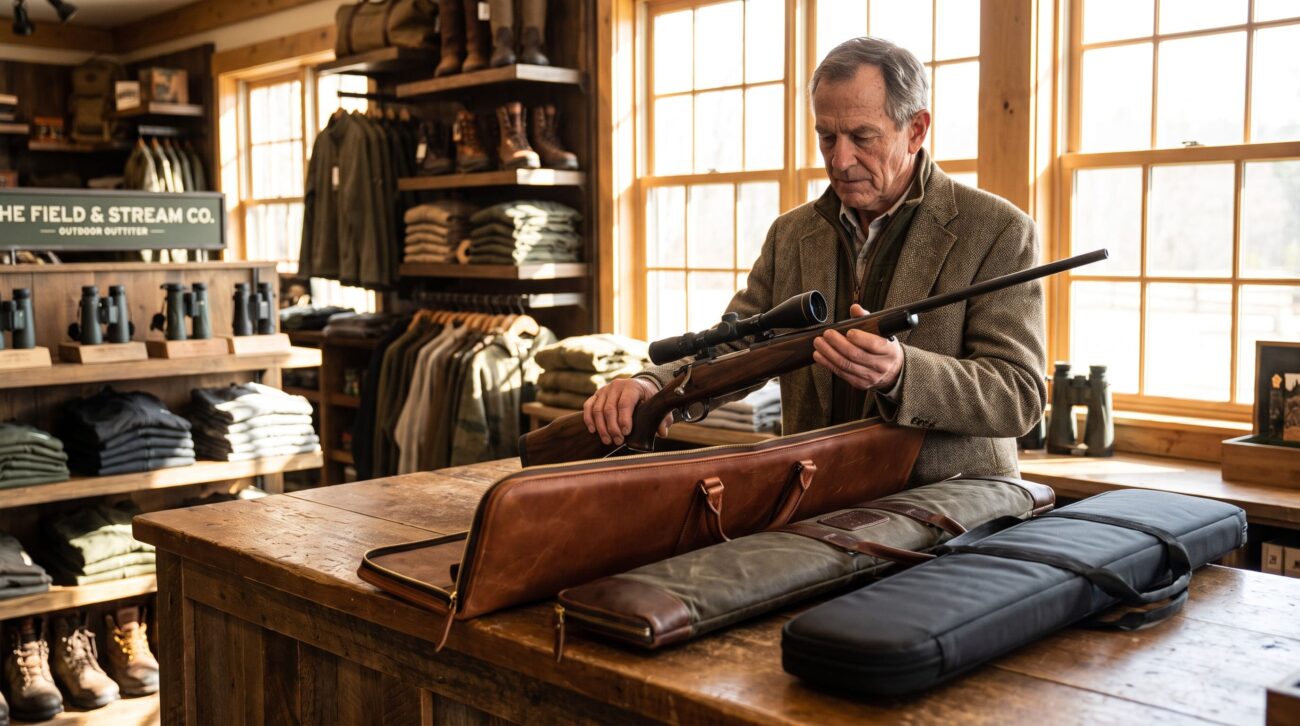
For a scoped configuration, however, length is only part of the equation. Make sure the case also has enough internal height and width for the optic.
40-Inch Rifle Case: A Flexible Mid-Size Option
A 40-inch case sits in the middle of the compact-to-standard range.
It can be a practical choice for rifles with overall lengths that make a 36- or 38-inch case too restrictive but do not justify a much longer case.
This size can be useful for:
- Medium-length hunting rifles
- Standard rifle configurations
- Compact setups requiring extra clearance
- Rifles with folding or adjustable components
Measure first rather than assuming a 40-inch exterior measurement means 40 inches of usable interior space.
42-Inch Rifle Case: A Versatile Choice
The 42-inch range is one of the more practical sizes for many standard rifle configurations.
It can accommodate a wide range of hunting rifles and other full-length setups when the interior dimensions provide enough room.
A 42-inch case can be especially useful when you want some additional length without carrying a significantly oversized case.
If your rifle’s overall length is close to the interior limit, consider the next size up.
44-Inch Rifle Case: More Room for Standard and Scoped Rifles
A 44-inch case gives additional length for rifles that are too close to the limit of a 42-inch case.
It can be a useful choice for longer hunting rifles and configurations where additional clearance is desirable.
For scoped rifles, check the case’s internal height carefully. The optic should not press against the case when it is closed.
Our guide on choosing leather cases for scoped rifles covers additional considerations when an optic is mounted.
46-Inch Rifle Case: For Longer Configurations
A 46-inch case is better suited to longer rifles that need more interior length.
It may be appropriate for:
- Long hunting rifles
- Longer bolt-action configurations
- Rifles with extended overall dimensions
- Setups that need additional clearance
The extra length can make handling easier when the rifle is close to the maximum usable length of a 44-inch case.
48-Inch Rifle Case: When You Need Maximum Length
A 48-inch case is the largest size in this guide and is intended for particularly long configurations.
It may be useful for longer bolt-action rifles, extended-barrel setups, or configurations where additional length is necessary.
However, choosing a 48-inch case simply because it is the largest option is not always the best decision.
If your rifle is significantly shorter, excessive space can make the case bulkier without providing a meaningful advantage.
Rifle Case Size Comparison
| Case Size | Best Suited For | Main Advantage |
| 36 inch | Compact rifles and shorter configurations | Small and easy to store |
| 38 inch | Compact rifles needing more clearance | Extra room without much bulk |
| 40 inch | Medium-length configurations | Flexible middle option |
| 42 inch | Standard hunting rifles | Versatile overall size |
| 44 inch | Longer standard rifles and scoped setups | Additional clearance |
| 46 inch | Long rifle configurations | More room for extended setups |
| 48 inch | Particularly long rifles | Maximum length in this range |
Remember that these categories are general. Your rifle’s actual dimensions should determine the final choice.
Don’t Forget Width and Height
Length gets most of the attention, but it is not the only measurement that matters.
A rifle with a large scope can require significantly more vertical room than an unscoped rifle.
Before buying, measure:
Overall Length
Measure from the furthest point of the muzzle to the end of the buttstock.
Scope Height
Measure from the bottom of the rifle’s grip or relevant stock area to the highest point of the mounted optic.
Overall Width
Consider the width created by the stock, scope, sling attachments, or other fixed components.
Interior Clearance
Make sure the rifle does not press against the zipper, seams, padding, or other parts of the case when closed.
How Much Extra Room Should a Rifle Case Have?
A case should not be an exact-length enclosure.
Some clearance is necessary so the rifle can be inserted and removed without forcing it against the case. It also gives padding room to protect the firearm without creating excessive pressure.
For many cases, allowing approximately 2 to 4 inches beyond the rifle’s overall length is a useful starting point.
However, the ideal clearance depends on the case design.
A padded soft case may need different clearance from a molded hard case. Always prioritize the manufacturer’s actual interior measurements.
5 Common Rifle Case Sizing Mistakes
1. Measuring Only the Barrel
Barrel length does not tell you the complete length of the rifle.
2. Ignoring the Muzzle Device
If a muzzle brake, flash hider, or similar component extends beyond the barrel, include it when measuring.
3. Looking Only at Exterior Dimensions
A case’s outside measurement can be noticeably larger than its usable internal space.
4. Forgetting the Scope
A rifle can fit lengthwise while still being too tall or wide for the case.
5. Choosing Too Much Extra Space
More room is not automatically better. A properly sized case should provide clearance without allowing excessive movement.
A Simple Formula for Choosing Your Case
You can use this basic approach:
Measure rifle overall length → add appropriate clearance → compare with interior case length
For example, if your rifle measures 40 inches from muzzle to buttstock, you would generally look for a case with an interior length comfortably above 40 inches rather than choosing a case listed as exactly 40 inches.
The final decision should be based on the manufacturer’s actual interior specifications.
Which Rifle Case Size Is Best for a Scoped Rifle?
There is no single size that works for every scoped rifle.
A scope affects the case’s required height and width, while the rifle itself determines the required length.
For a scoped hunting rifle, measure the complete rifle with the optic installed and compare those dimensions with the case’s interior space.
If you are comparing different types of rifle protection, our guide to leather versus hard rifle cases can also help you evaluate the tradeoffs beyond size.
What If Your Rifle Falls Between Two Sizes?
This is where measuring the interior dimensions becomes especially important.
If your rifle comfortably fits within the smaller case while maintaining reasonable clearance, there may be no reason to move up.
If the smaller case leaves only minimal room, choose the next size.
For example:
40-inch rifle → 42-inch case: potentially suitable if the interior dimensions provide adequate clearance.
42-inch rifle → 42-inch case: potentially too tight if 42 inches refers to the exterior measurement.
42-inch rifle → 44-inch case: generally gives you more useful clearance, assuming the interior dimensions support the fit.
When in doubt, prioritize a comfortable fit over saving a couple of inches.
When a Smaller Case Makes More Sense
A shorter case can be advantageous when your rifle fits comfortably inside it.
Benefits may include:
- Easier storage
- Less bulk
- Convenient transportation
- Lower overall weight
- Better maneuverability in vehicles or storage spaces
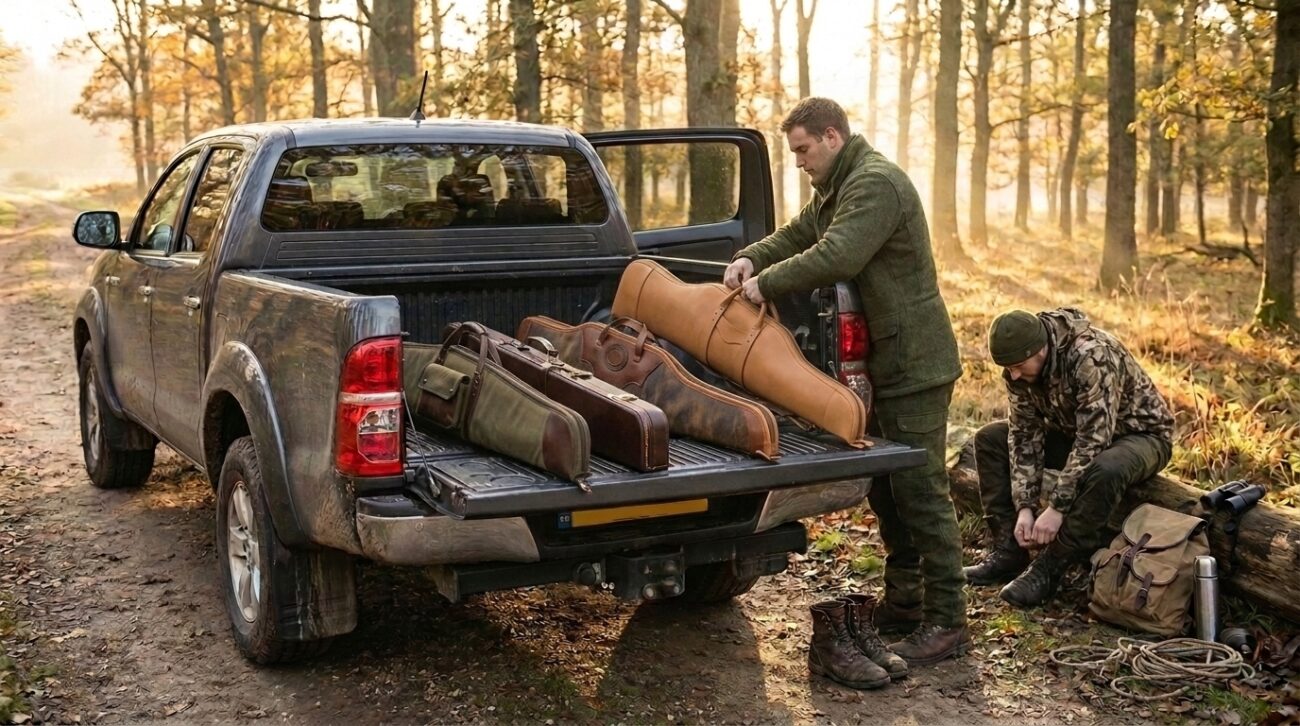
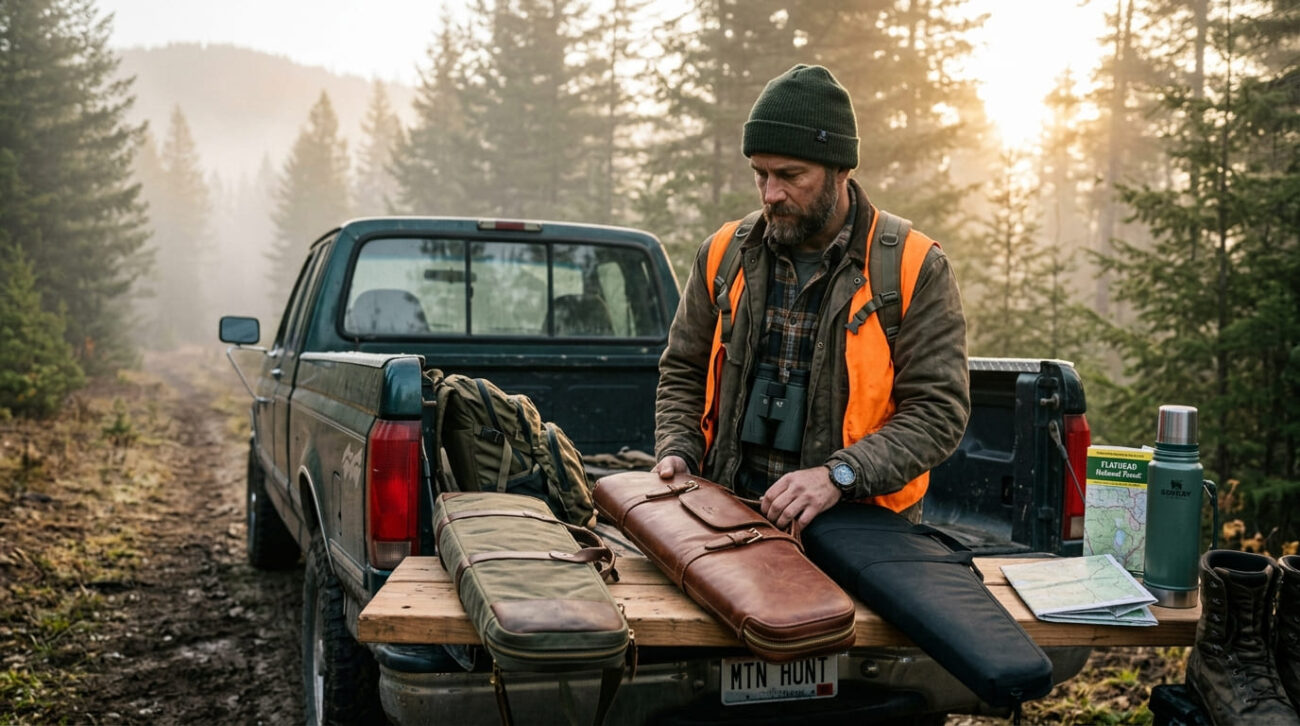
This is particularly relevant if you regularly carry your rifle in a vehicle. Our guide to rifle cases designed for truck use discusses some of the practical considerations for vehicle storage and transport.
When a Larger Case Is Worth It
Moving to the next size can make sense when:
- Your rifle is close to the smaller case’s interior limit
- A mounted scope needs additional room
- The stock or muzzle configuration adds length
- You need additional padding clearance
- The smaller case would require forcing the rifle inside
The goal is not to buy the biggest case. It is to buy the smallest case that provides a safe, comfortable fit for your complete setup.
Related Rifle Case Considerations
Case size is only one part of selecting the right protection for your rifle. Material, construction, padding, carrying method, and storage conditions also matter.
For hunters comparing case options, our guide to rifle cases for hunting provides additional considerations.
If you are looking for a gift, you may also find our guide to rifle cases for hunters under $250 useful.
Once you know the size you need, you can browse Frontier Leather Co.’s leather gun case collection to compare available options.
Final Verdict: Which Rifle Case Size Should You Buy?
There is no universal best rifle case length.
A 36-inch case is better suited to compact configurations. 38 and 40 inches provide additional room for shorter and medium-length rifles. 42 and 44 inches are versatile options for many standard hunting configurations, while 46 and 48 inches are better suited to longer rifles.
The safest way to choose is to:
- Unload the rifle and measure its complete overall length.
- Include the muzzle device and buttstock.
- Measure the rifle with its scope or fixed accessories installed.
- Check the case’s interior dimensions.
- Allow enough clearance for padding and comfortable handling.
- Move up one size if the rifle is close to the case’s usable limit.
The right case should fit the complete rifle, not just its barrel.
FAQs
What is the best length for a rifle case?
The best length depends on the rifle’s overall length. Measure the unloaded rifle from muzzle to buttstock, then choose a case with sufficient additional interior clearance.
How much longer should a case be than the rifle?
A useful starting point is around 2 to 4 inches of additional interior length, although the ideal clearance depends on the case construction and padding.
What are the dimensions of a standard rifle case?
There is no single standard rifle case dimension. Cases are available in various lengths, widths, and depths, commonly ranging from compact sizes around 36 inches to longer options around 48 inches.
Should I choose a hard or soft rifle case?
It depends on how and where the rifle will be transported or stored. Hard cases generally provide a rigid protective shell, while soft cases can be lighter and easier to carry. Your storage and transportation needs should determine which construction is more practical.
Do I need a case for my rifle?
A suitable case provides a practical way to protect and transport a rifle while helping prevent contact with surrounding objects. Always follow applicable firearm transportation and storage laws in your location.
What is the difference between rifle case interior and exterior dimensions?
Exterior dimensions measure the outside of the case. Interior dimensions indicate the usable space available for the rifle and are therefore more important when determining whether the firearm will fit.
What size rifle case do I need for a scoped rifle?
Measure the rifle with the scope installed. You need enough interior length for the complete rifle and enough height and width to prevent the optic from pressing against the case when closed.
What should I do if my rifle is between two case sizes?
If the rifle fits comfortably within the smaller case with adequate clearance, the smaller option may work. If it is close to the smaller case’s interior limit, choosing the next size up is usually the more practical approach.