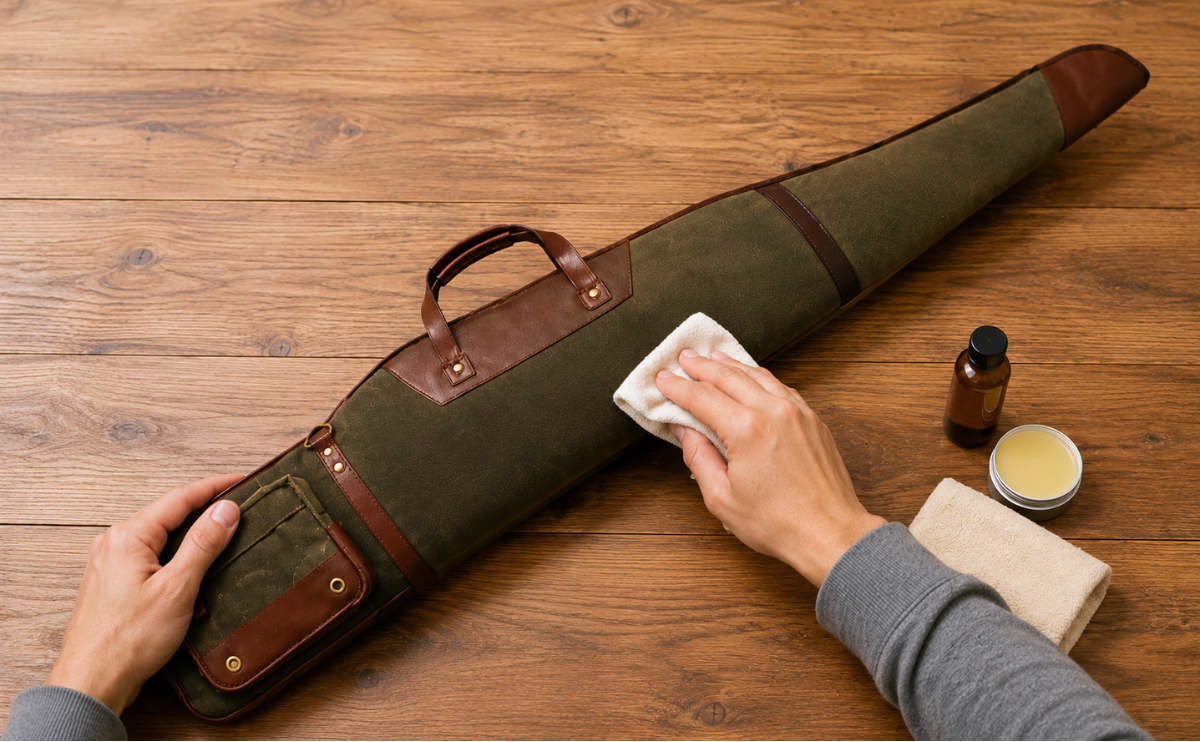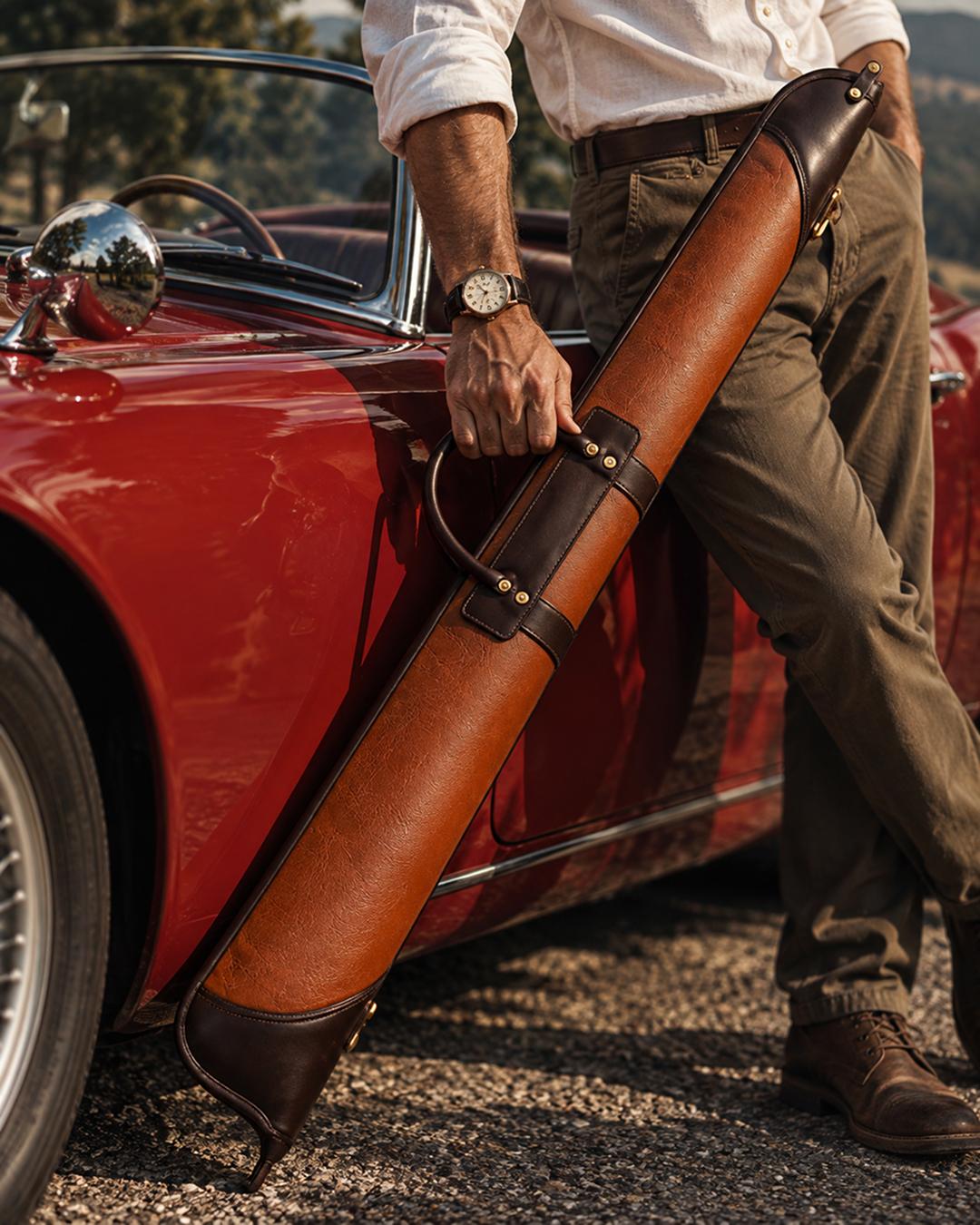



The best way to store a leather rifle case between hunting seasons is to clean and condition the leather, keep the firearm out of the case, preserve its shape, and place it somewhere cool, dry, dark, and well ventilated.
After months of hunting trips, your case may have collected dust, mud, moisture, and natural oils from handling. Putting it straight into a closet can leave those problems sitting against the leather for months. A few simple preparation steps can help keep the case ready for the next season.
1. Remove the Rifle Before Storage
Always remove the firearm before storing the case for an extended period.
A leather case is useful for transporting a firearm, but it should not automatically be treated as a permanent firearm-storage container. Moisture can become trapped inside a closed case, potentially contributing to corrosion.
Store the firearm separately according to the manufacturer’s instructions and applicable local requirements. The case should be cleaned and prepared as an empty piece of leather gear.
2. Remove Dirt and Hunting Debris
Start with a dry inspection.
Use a soft brush or clean cloth to remove loose dirt, dust, grass, and dried mud. Pay particular attention to seams, corners, handles, and areas around the closure where debris can collect.
If the leather needs deeper cleaning, use a leather-safe cleaner sparingly. A slightly damp cloth is usually preferable to soaking the case.
Never put the case away while it is still wet.
3. Let the Leather Dry Naturally
If the case became wet during a hunting trip, give it enough time to dry completely before conditioning or storing it.
Place it in a well-ventilated room at normal indoor temperature. Keep it away from radiators, heaters, fireplaces, hair dryers, and direct sunlight.
Fast, intense heat can remove natural moisture from leather too quickly and may contribute to stiffness, shrinkage, or cracking.
Once the leather feels completely dry, move on to conditioning.
4. Condition the Leather When Needed
Leather benefits from appropriate conditioning, especially after frequent outdoor use.
Apply a suitable leather conditioner according to the product’s instructions. Use a small amount and distribute it evenly rather than saturating the surface.
Conditioning helps maintain flexibility and can reduce the risk of excessive dryness during long periods of storage. The frequency depends on the leather, its finish, how often the case is used, and the surrounding climate.
For broader leather-care considerations, factors affecting the lifespan of full-grain leather are covered in how long full-grain leather lasts.
5. Keep the Case in Shape
An empty leather case can gradually lose its shape if it remains folded or compressed for several months.
Loosely fill the interior with clean, acid-free tissue paper or another clean, non-abrasive material. This provides gentle support without putting unnecessary pressure on the leather.
Do not overstuff the case. Excessive filling can stretch the material, put pressure on stitching, or place unnecessary stress on zippers and fasteners.
The goal is simply to maintain the case’s natural form.
6. Control Moisture During Storage
Humidity is one of the biggest concerns when storing leather for an extended period.
Choose an indoor location with relatively stable temperature and low humidity. Good airflow is also important because stagnant, damp conditions can encourage mold and mildew.
Small silica-gel packets can be placed nearby or inside the empty case to help manage residual humidity, but they should not be considered a substitute for a suitable storage environment.
Avoid:
- Damp basements
- Hot attics
- Poorly ventilated sheds
- Areas prone to condensation
- Garages with major temperature fluctuations
- Locations near water leaks
7. Avoid Sealing Leather in Plastic
Do not wrap a leather rifle case tightly in a plastic bag for long-term storage.
Plastic can restrict airflow and trap moisture against the leather. That combination can create an environment where mold and mildew become more likely.
If you want protection from dust, use a breathable cotton or fabric cover instead. Store the case on a clean shelf where air can circulate it.
8. Choose the Right Storage Position
A leather case can generally be stored flat or upright, provided it is properly supported.
If storing it flat, avoid placing heavy equipment on top of it. Heavy objects can create permanent pressure marks or deform the leather.
If storing it upright, make sure the case is supported so it does not slump or fold. Whichever position you choose, keep it away from direct sunlight and excessive heat.
9. Inspect the Case Before Hunting Season
Do not wait until the morning of your first hunting trip to discover a damaged strap or weakened seam.
A few weeks before the next season, inspect the case carefully for:
- Dry or cracked leather
- Loose stitching
- Worn handles
- Damaged shoulder straps
- Weak buckles or closures
- Moisture or mildew
- Deformed sections
- Damaged lining
Small problems are easier to address before the case is needed. If the leather has suffered a tear or structural problem, repairing a leather gun case can help determine whether the damage can be fixed or whether replacement makes more sense.
10. Adjust Storage to Your Climate
Your climate should influence how you prepare leather for the off-season.
Dry environments can cause leather to lose moisture more quickly, while humid environments increase concerns about mildew and condensation. In either situation, stable indoor conditions are preferable to extreme temperature or humidity changes.
If you live in a particularly humid area, prioritize ventilation and moisture control. If your environment is very dry, pay closer attention to the leather’s condition and avoid excessive heat.
Different materials also respond differently to storage conditions. The differences between leather, canvas, and synthetic gun cases are worth considering when choosing equipment for repeated seasonal use.
Off-Season Storage Checklist
Before putting the case away, make sure you have:
- Removed the firearm.
- Brushed away dirt and debris.
- Cleaned the leather when necessary.
- Allowed the case to dry completely.
- Conditioned the leather if required.
- Supported the interior without overstuffing.
- Chosen a dry, ventilated storage location.
- Kept the case away from direct heat and sunlight.
- Avoided airtight plastic wrapping.
- Scheduled an inspection before the next hunting season.
Following these steps takes little time but can prevent months of poor storage from damaging a quality leather case.
Protect Your Case Between Hunting Trips
A leather rifle case should not simply disappear into a closet when hunting season ends. Cleaning it, maintaining the leather, supporting its shape, and controlling moisture give it a better chance of staying functional and presentable for years.
For hunters looking for a replacement or an additional case for the next season, Frontier Leather Co.’s leather gun case collection features full-grain leather options made for practical transport and outdoor use.
FAQs
Should you store a rifle in a case?
No, you should generally not store a rifle long-term inside a leather or padded case. Cases are primarily intended for transportation, while long-term firearm storage should follow the manufacturer’s recommendations and applicable safety requirements.
Should you store a leather rifle case empty?
Yes, you should store a leather rifle case empty between hunting seasons. Removing the firearm allows you to clean, dry, condition, and inspect the case without trapping moisture around the firearm.
How should I store a leather rifle case between hunting seasons?
You should clean and condition the leather, support its shape with clean paper, and store it in a cool, dry, dark, and ventilated location. Avoid damp areas, direct heat, and airtight plastic wrapping.
Can I leave my rifle inside a leather case overnight?
No, you should avoid leaving a rifle inside a leather case unnecessarily, particularly in humid conditions. Moisture trapped inside the case can contribute to corrosion, so the firearm should be stored separately according to appropriate storage requirements.
Can a leather rifle case develop mold?
Yes, a leather rifle case can develop mold when exposed to prolonged moisture and poor airflow. Keeping the case dry and allowing air circulation can reduce this risk.
Should I put a leather rifle case in a plastic bag?
No, you should not tightly seal a leather rifle case in plastic for long-term storage. Plastic can trap humidity against the leather and create conditions favorable to mold and mildew.
How do you prevent a leather rifle case from cracking?
You can help prevent cracking by keeping the leather clean, conditioning it when necessary, and protecting it from excessive heat and prolonged dryness. Natural drying is preferable after exposure to moisture.
Should you condition a leather rifle case before storage?
Yes, you should condition the leather before storage when it is dry or needs additional moisture and flexibility. Use a suitable leather conditioner sparingly and follow its application instructions.
How do you keep a leather rifle case in shape?
You should loosely fill the empty interior with clean acid-free tissue paper or another suitable non-abrasive material. This supports the leather without placing excessive pressure on the seams or closures.
Where is the best place to store a leather rifle case?
The best place is a cool, dry, dark, and well-ventilated indoor location with relatively stable temperature and humidity. A clean shelf is generally preferable to a damp basement or hot attic.
Can you store a leather rifle case in a garage?
No, a garage is generally not ideal for long-term leather storage. Temperature fluctuations, humidity, condensation, dust, and potential water exposure can negatively affect leather over time.
Can you store a leather rifle case in a basement?
You should avoid a damp basement for leather case storage. Excessive humidity can encourage mold and mildew and may create poor conditions for leather over an extended period.