

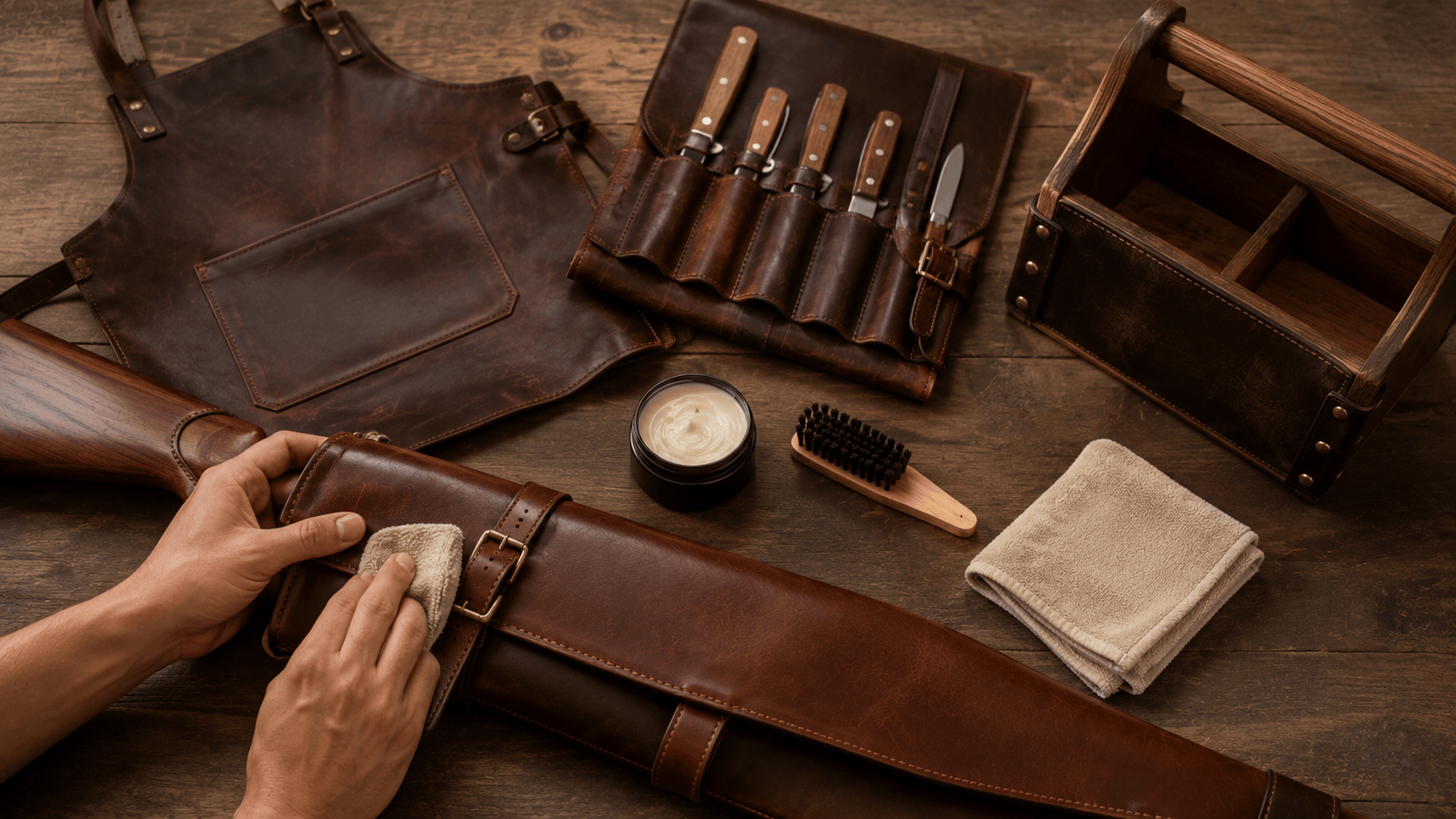

Whether you own a leather gun case, firewood carrier, apron, or knife roll, proper care is what keeps it looking strong, rich, and durable for decades. The good news is that leather care is not complicated. You do not need expensive tools or complicated routines. You just need consistency and the right approach.
In this complete guide, you will learn exactly how to clean, condition, store, and protect your leather products the right way.
Why Leather Care Matters
High-quality leather, especially full-grain leather, is extremely durable. But like any natural material, it needs maintenance.
Without proper care, leather can:
- Dry out
- Crack
- Lose flexibility
- Fade unevenly
- Absorb stains
With proper care, leather can:
- Last 20 years or more
- Develop a rich patina
- Stay soft and strong
- Maintain its shape
- Look better over time
Taking care of leather is not about keeping it perfect. It is about preserving its strength and character.
Step 1: Regular Cleaning
The first rule of leather care is simple. Keep it clean.
Dust, dirt, grease, and moisture can slowly damage the surface if left unattended.
For Light Cleaning
For everyday maintenance:
- Use a soft dry cloth.
- Wipe the surface gently.
- Remove dust and loose dirt.
This is enough for most weekly maintenance.
For Deeper Cleaning
If your leather product has stains, sweat marks, or grease buildup:
- Use a slightly damp cloth.
- Apply a small amount of mild leather cleaner.
- Rub gently in circular motions.
- Wipe off any residue with a clean cloth.
- Let it air dry naturally.
Important: Never soak leather in water. Excess moisture weakens the fibers and causes damage.
Step 2: Conditioning the Leather
Leather is natural skin. Just like skin, it can dry out.
Conditioning keeps leather soft, flexible, and crack-resistant.
How Often Should You Condition?
- Light use: Every 6 months
- Heavy use: Every 3 to 4 months
- Dry climates: More frequently
If the leather feels stiff or looks dull, it is time to condition.
How to Apply Leather Conditioner
- Clean the leather first.
- Apply a small amount of conditioner to a soft cloth.
- Rub gently into the leather in circular motions.
- Let it absorb for a few hours.
- Buff lightly with a dry cloth.
Do not over-apply. Too much conditioner can clog pores and make the leather sticky.
Step 3: Protecting Leather from Water
Leather is water-resistant, not waterproof.
If your leather gets wet:
- Pat it dry with a clean cloth.
- Let it air dry at room temperature.
- Never use a hair dryer or heater.
- After drying, apply conditioner if needed.
Heat can cause leather to shrink and crack. Always allow natural drying.
For products like firewood carriers or outdoor gear, occasional exposure to moisture is normal. Just make sure it dries properly afterward.
Step 4: Storing Leather Properly
Proper storage is just as important as cleaning.
Avoid These Mistakes:
- Storing in plastic bags
- Keeping in damp environments
- Exposing to direct sunlight for long periods
- Folding in tight positions
Best Storage Practices:
- Store in a cool, dry place
- Use breathable dust bags
- Keep away from humidity
- Maintain natural shape
For knife rolls or gun cases, store them empty in a dry cabinet when not in use.
Good storage prevents mold, odor, and structural damage.
Step 5: Handling Scratches and Marks
Scratches are normal. Especially with full-grain leather.
Minor scratches can often be fixed easily:
- Rub gently with clean fingers. Natural oils help blend marks.
- Use a small amount of conditioner to restore appearance.
Remember, full-grain leather develops character. Not every mark needs removal. Many blend into the patina over time.
Step 6: Dealing with Stains
Different stains require different approaches.
Oil or Grease Stains
- Blot immediately with a dry cloth.
- Do not rub aggressively.
- Let it absorb naturally.
- Apply leather cleaner if needed.
Water Stains
- Dampen the entire surface lightly to even out tone.
- Let it air dry slowly.
Ink Stains
Ink is difficult to remove. It is best to consult a professional leather cleaner.
Act quickly. The faster you treat a stain, the better the result.
Step 7: Avoiding Common Leather Care Mistakes
Many people damage leather by trying to protect it.
Here are common mistakes to avoid:
- Using household cleaners
- Applying too much water
- Using baby wipes
- Using alcohol-based products
- Drying with direct heat
- Over-conditioning
Stick to products specifically made for leather.
Leather Care Based on Usage
Different leather products face different stresses.
Leather Gun Cases
- Keep dry and clean after outdoor use
- Avoid long-term moisture exposure
- Condition twice a year
Leather Firewood Carriers
- Wipe off wood dust regularly
- Allow to dry after outdoor use
- Check stitching occasionally
Leather Aprons
- Wipe off grease after cooking
- Clean gently with damp cloth
- Condition more frequently due to heat exposure
Leather Knife Rolls
- Keep interior clean and dry
- Avoid storing damp knives
- Store flat when possible
Routine maintenance keeps them functional and attractive.
How Long Does Leather Last with Proper Care?
With consistent care:
- High-quality leather can last 20 years or more
- Stitching remains strong
- Shape stays intact
- Surface develops rich character
Neglected leather may crack within a few years.
Care determines lifespan.
Signs Your Leather Needs Attention
Watch for:
- Dull appearance
- Stiff texture
- Visible dryness
- Surface cracking
These signs mean it is time to clean and condition.
Early action prevents permanent damage.
Final Thoughts
Leather care is not difficult. It is simply about regular maintenance and smart handling.
Clean gently.
Condition occasionally.
Store properly.
Avoid excess moisture and heat.
When cared for correctly, leather products do not wear out. They improve with time.
Investing in quality leather is only the first step. Maintaining it ensures it becomes something you can rely on for decades.
Frequently Asked Questions
1. How often should I clean my leather products?
Light cleaning with a dry cloth can be done weekly. Deep cleaning is only needed when visible dirt or stains appear.
2. Can I use coconut oil or olive oil on leather?
It is not recommended. Household oils can darken leather unevenly and cause long-term damage. Use a proper leather conditioner instead.
3. What happens if leather gets wet?
Leather can handle light moisture, but it should be dried naturally at room temperature. Avoid direct heat sources.
4. How do I prevent leather from cracking?
Regular conditioning and proper storage are the best ways to prevent cracking and dryness.