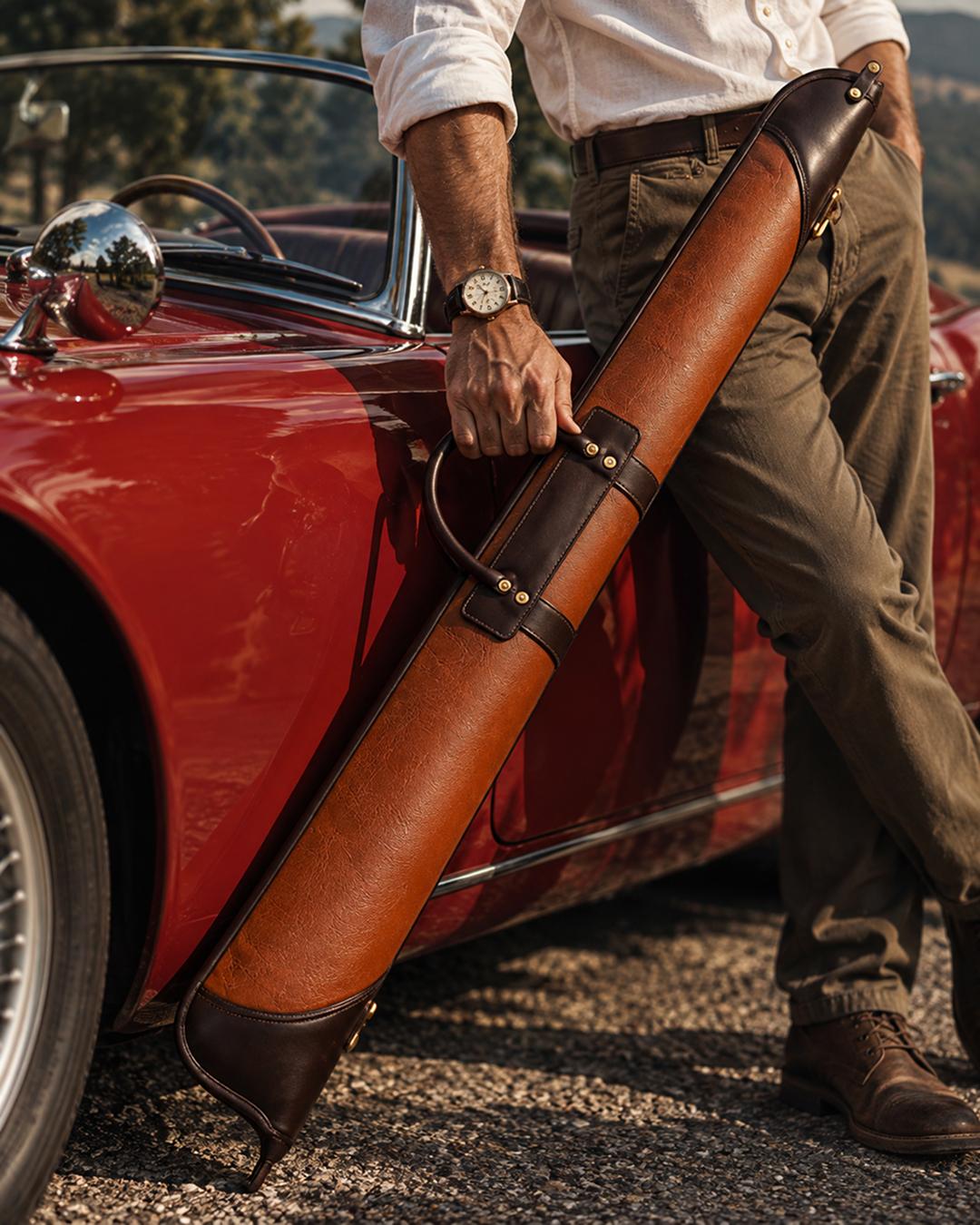

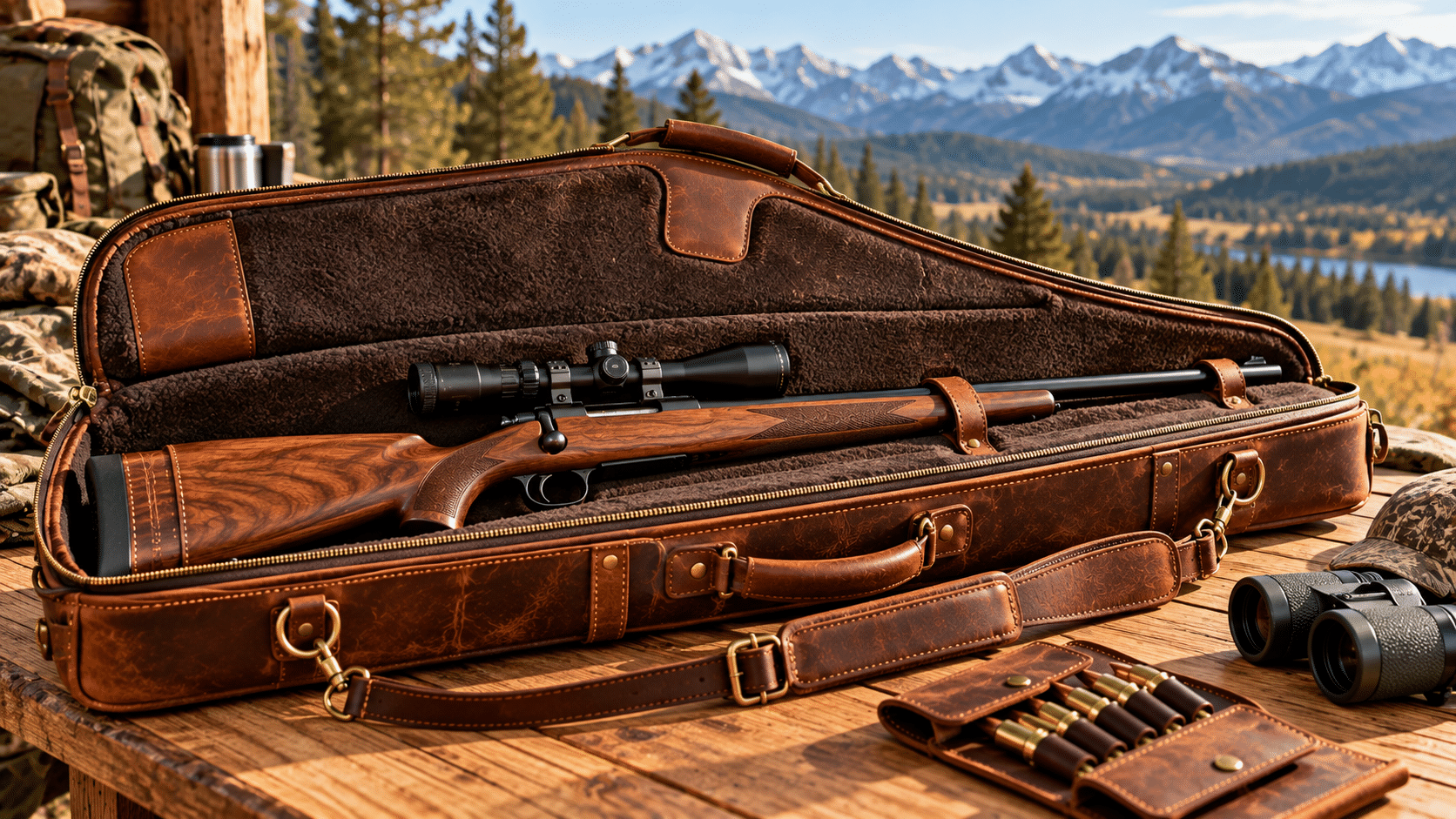

A leather rifle case should fit your firearm without forcing it inside, placing excessive pressure on its components, or leaving too much room for unnecessary movement. The right fit depends on the case’s internal dimensions, shape, lining, padding, and closure system. Before purchasing a case, compare your firearm’s measurements with the manufacturer’s sizing specifications to ensure suitable protection and a secure fit.
What Is the Right Fit for a Leather Rifle Case?
A properly fitted leather rifle case accommodates the firearm’s overall profile while allowing the case to close comfortably. It should provide enough room for the stock, barrel, and other relevant components without creating excessive empty space.
When evaluating fit, consider these factors:
- Overall dimensions: The internal length and width should accommodate the firearm’s measurements.
- Shape and configuration: The case should suit the stock profile, barrel configuration, and any mounted accessories permitted by the design.
- Protective lining: A suitable interior helps reduce scratches caused by contact with the case.
- Padding: Adequate cushioning can help protect the firearm from minor impacts during handling.
- Closure: Zippers, buckles, or straps should operate without excessive tension.
The objective is a comfortable fit that balances protection, accessibility, and practical handling.
How to Measure Your Rifle for a Leather Case
Accurate measurements help you select a leather rifle case that matches your firearm. Follow the case manufacturer’s measuring instructions and compare the results with the product’s stated internal dimensions.
1. Check the Overall Length
Measure the firearm according to the manufacturer’s guidance, accounting for the components that affect its overall length. Do not assume that the case’s advertised external length represents the usable interior space.
2. Consider the Width and Shape
A firearm’s stock, grip, and other components can affect how it sits inside a case. Compare the overall profile with the case’s internal width and shape, not just its length.
3. Account for Mounted Accessories
Optics and other mounted accessories can change the space required. Check whether the case is designed to accommodate the firearm in that configuration. Never force the firearm or accessories into a case that does not fit.
4. Compare the Manufacturer’s Specifications
Review the internal dimensions, product description, and sizing guidance before ordering. If the specifications are unclear, ask the manufacturer to confirm compatibility rather than relying on external measurements alone.
For additional guidance on dimensions and measurements, see our Rifle Case Size Guide.
What Features Affect the Fit of a Leather Rifle Case?
Several construction features influence how well a case accommodates and protects a firearm.
Internal dimensions: These determine the usable space available for the firearm. Confirm both length and width when reviewing specifications.
Padding and lining: The interior should offer suitable cushioning without making the case excessively restrictive. A soft lining may help protect the finish, while padding can provide additional impact protection.
Case shape: Straight cases may suit simpler profiles, while contoured designs can follow a firearm’s general shape more closely. The correct choice depends on the actual dimensions and construction.
Closure system: Zippers, buckles, and straps should secure the case without requiring force. Excessive tension can indicate that the case is too small or poorly suited to the firearm’s configuration.
Leather construction: Leather thickness, stitching, reinforced areas, and overall structure affect durability and how the case retains its shape over time.
How Tight or Loose Should a Leather Rifle Case Be?
A leather rifle case should be neither excessively tight nor unnecessarily spacious. The firearm must fit without being forced inside, and the closure should operate smoothly without compressing components or straining the leather.
Excessive space can allow unwanted movement during handling, while an overly tight case may place pressure on the firearm and stress the seams or closure. Suitable lining and padding should support the intended level of protection.
Check the fit according to the manufacturer’s guidance, and make sure the firearm is unloaded before placing it in or removing it from the case.
How to Choose the Right Leather Rifle Case for Your Needs
Start with the firearm’s measurements and the manufacturer’s internal dimensions. Then consider how you intend to use the case and which features matter most.
- Fit and compatibility: Confirm that the dimensions and case shape suit the firearm’s configuration.
- Interior protection: Look for appropriate lining and padding for your intended use.
- Material quality: Examine the leather, stitching, reinforcement, and closure construction.
- Portability: Consider the handle, carrying comfort, and overall case weight.
- Additional storage: Determine whether accessories require separate compartments or a different case design.
- Transport requirements: Confirm that the case meets the applicable storage and transportation requirements for your location.
If you are comparing different designs, our article on the Top 5 Rifle Case options can provide another starting point for evaluating case styles and features.
For hunting applications, the right case should also suit your planned travel and storage conditions. Our guide to a Leather Rifle Case Between Hunting can be linked here if it covers choosing or using a case between hunting trips.
Common Leather Rifle Case Fit Mistakes to Avoid
Choosing a case based on appearance alone can lead to an unsuitable fit. Avoid these common mistakes:
- Relying only on external length: External measurements do not indicate the exact usable interior space.
- Ignoring the firearm’s profile: Stock shape and mounted accessories may affect compatibility.
- Choosing a case that is too tight: A closure that requires excessive force can indicate an incorrect fit.
- Allowing excessive movement: Too much interior space may permit unnecessary shifting during handling.
- Overlooking interior construction: Leather quality alone does not establish the case’s padding or impact protection.
- Assuming every case is compatible: Always verify the manufacturer’s sizing specifications for your specific configuration.
Frequently Asked Questions
How should a leather rifle case fit a rifle?
It should accommodate the firearm’s overall dimensions without forcing, excessive pressure, or unnecessary movement. The closure should operate comfortably, and the interior should provide suitable protection.
How do you measure a rifle case correctly?
Follow the manufacturer’s measuring instructions and compare the firearm’s relevant dimensions with the case’s internal length, width, and shape. Do not rely solely on external case measurements.
Should a rifle case fit tightly or loosely?
Neither extreme is ideal. The firearm should fit comfortably, with enough room to avoid pressure but not so much space that it shifts excessively during handling.
Should you measure the inside or outside of a rifle case?
Use the manufacturer’s internal dimensions to evaluate fit. External dimensions include the leather, seams, padding, and other construction features that reduce usable space.
Can a leather rifle case accommodate a rifle with mounted accessories?
Some cases are designed for particular mounted accessories, while others are not. Check the manufacturer’s specifications and confirm compatibility before purchasing.
Conclusion
Choosing a properly fitted leather rifle case starts with accurate measurements and a clear understanding of the case’s internal dimensions. Consider the firearm’s shape, mounted accessories, interior lining, padding, leather construction, and closure system before making a decision.
A suitable case should close comfortably, avoid unnecessary pressure, and limit excessive movement. By checking the manufacturer’s sizing guidance and evaluating construction quality, you can make a more informed choice for practical handling, storage, and transportation.