

A leather artist apron helps protect clothing, keeps essential tools within reach, and supports everyday work in studios and workshops. However, the right apron depends on the materials you handle, the tools you use, and how long you wear it.
When choosing a leather artist apron, consider leather quality, fit, pocket placement, stitching, and overall weight. The best option balances durability and practical protection with the comfort and flexibility needed for your craft.
What Makes a Good Leather Artist Apron?
A good leather artist apron should withstand regular use without making work uncomfortable. Its quality depends on the leather, construction, and design features.
Look for these essential qualities:
- Durable leather construction: Suitable leather resists everyday wear and helps protect clothing from minor scratches, dust, and surface debris.
- Comfortable, adjustable straps: Adjustable neck and waist straps help distribute weight and provide a secure fit.
- Practical pockets: Well-positioned pockets keep frequently used tools and supplies accessible.
- Strong stitching: Reinforced seams and stress points help the apron withstand repeated movement and regular use.
- Suitable coverage: The apron should cover the areas most exposed during your work.
- Balanced weight and flexibility: The material should provide useful protection without unnecessarily restricting movement.
The right combination depends on whether you prioritize tool organization, coverage, mobility, or long-term durability.
Which Leather Is Best for an Artist Apron?
Leather type influences an apron’s durability, texture, flexibility, weight, and maintenance requirements. Choosing the right material starts with understanding how you will use it.
Full-grain leather: Full-grain leather retains the hide’s natural grain and is valued for its durability and distinctive appearance. It can be a suitable choice for artists who want a sturdy apron for regular workshop use.
Top-grain leather: Top-grain leather has a refined surface and can offer a balance of durability and appearance. Its characteristics vary according to how the leather has been processed and finished.
Other leather options: Split leather and other leather varieties may suit particular budgets or applications. Their durability, flexibility, and resistance to wear depend on the specific material and finishing process.
Leather thickness also matters. Thicker leather may offer more substantial coverage but can feel heavier, while thinner leather generally provides greater flexibility. Choose based on your working conditions rather than thickness alone.
For artists who frequently handle tools and abrasive materials, prioritize durable construction. For detailed craftwork requiring frequent bending and reaching, flexibility and manageable weight may be more important.
How to Choose an Apron for Your Type of Work
Different crafts require different levels of protection, pocket organization, and freedom of movement.
Leatherworkers and Leathercraft Artists
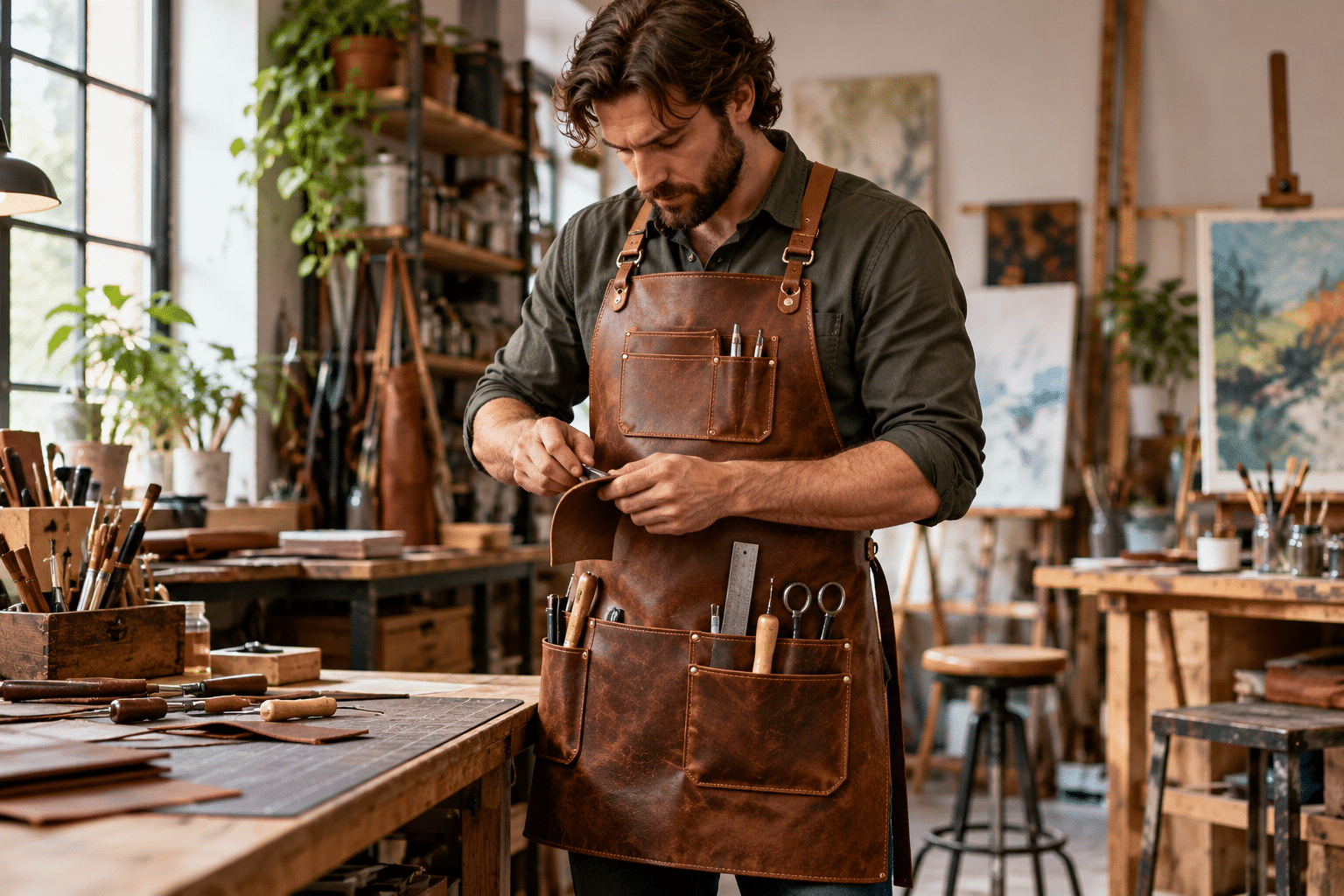
Leatherworkers often handle cutting tools, punches, stitching supplies, and small hardware. An apron with dedicated pockets and tool loops helps keep these essentials organized. Durable leather and reinforced stitching are useful for regular bench work.
Woodworkers and Furniture Makers
Woodworkers need an apron that accommodates measuring tools, pencils, marking equipment, and other frequently used supplies. Adequate coverage and securely positioned pockets are practical features. Those exploring specialized options can also consider Leather Aprons for Woodworkers.
Painters and Mixed-Media Artists
Painters may need pockets for brushes, pencils, palette knives, and small supplies. Consider an apron with convenient storage and enough flexibility for reaching across a canvas or moving between work surfaces. Remember that leather can stain, so choose a finish suitable for your working environment.
Potters and Craftspeople
Pottery and similar crafts involve frequent movement, contact with materials, and occasional splashes. A comfortable apron with practical coverage and easy-to-clean surfaces can help protect clothing. Leather is not automatically waterproof, so material suitability and cleaning requirements should be considered.
Jewelry Makers and Workshop Artists
Jewelry makers often work with small components and precision tools. Compact pockets and carefully positioned tool loops can improve organization without creating unnecessary bulk. A lighter, flexible apron may be preferable for detailed bench work.
For more demanding workshop environments, compare the construction and intended use of specialized products such as Leather Aprons for Blacksmiths and Leather Aprons for Butchers. These applications may require different protection levels and should not be treated as interchangeable with general artist aprons.
What Features Should You Look for in a Leather Artist Apron?
The right features make an apron more useful throughout a working day.
- Pocket size and placement: Choose pockets that accommodate your actual tools without allowing them to shift or fall out easily.
- Tool loops and compartments: These help organize frequently used equipment and reduce time spent searching for supplies.
- Adjustable straps: Adjustable neck and waist straps allow you to adapt the apron to your body and clothing.
- Reinforced stitching and hardware: Strong seams, reliable buckles, and durable attachment points support regular use.
- Appropriate coverage: A full apron offers more torso coverage, while a shorter design may provide greater mobility.
- Easy-to-wear construction: Simple adjustments and a balanced design make the apron easier to put on and remove during busy work sessions.
Avoid choosing an apron based on pocket count alone. Storage is useful only when the pockets fit your tools and remain accessible while you work.
How Should a Leather Artist Apron Fit?
A properly fitted apron should provide suitable coverage without interfering with normal working movements.
First, check that the apron covers your chest and torso adequately for your craft. Its lower edge should allow you to bend, sit, and reach comfortably without excessive restriction.
Adjustable straps help distribute the apron’s weight and prevent it from pulling around the neck. If you carry several tools, make sure their combined weight does not cause the apron to sag or shift.
Consider the apron’s weight before purchasing, especially if you work for several hours at a time. A heavier design may feel substantial and durable, but a lighter option can be more practical for tasks involving frequent movement.
Always consult the manufacturer’s sizing guide and check the apron’s actual dimensions rather than relying on a general size label.
How to Maintain Your Leather Artist Apron
Regular care helps preserve leather quality, appearance, and usability.
- Remove surface debris: Brush away dust and wipe the apron with a soft, dry cloth after use.
- Clean carefully: Follow the manufacturer’s instructions and use a leather-compatible cleaner when necessary. Test products on an inconspicuous area first.
- Dry naturally: If the apron becomes damp, allow it to air-dry away from direct heat and sunlight.
- Condition when needed: Apply a suitable leather conditioner according to the leather type and product instructions. Excessive conditioning can affect the finish.
- Store properly: Keep the apron in a dry, ventilated place, away from prolonged moisture and direct sunlight.
Avoid using harsh chemicals or soaking the apron unless the manufacturer specifically recommends an appropriate cleaning method.
FAQs About Leather Artist Aprons
What is the best leather for an artist apron?
Full-grain leather is a strong option for artists who prioritize durability and natural character. However, the best choice depends on the required flexibility, weight, working conditions, and budget.
Are leather artist aprons suitable for everyday use?
Yes. A well-constructed leather artist apron can be suitable for regular studio and workshop use when its design and material match the intended tasks. Routine cleaning and appropriate storage help maintain its condition.
What should a leather artist apron have in its pockets?
Look for pockets that fit your commonly used tools, such as pencils, brushes, measuring tools, or small craft supplies. Tool loops and compartments are useful when they match your specific equipment.
Are leather aprons comfortable for long working hours?
They can be comfortable when they fit properly, distribute weight evenly, and allow unrestricted movement. Adjustable straps and appropriate leather thickness are particularly important for extended use.
How do you choose the right size leather artist apron?
Check the manufacturer’s measurements, torso coverage, strap adjustment range, and overall length. Choose a design that remains secure while allowing you to bend, reach, and move naturally.
Conclusion
Choosing the best leather artist apron requires balancing leather quality, durability, comfort, fit, and tool organization. Full-grain leather can provide a durable option, while a lighter or more flexible material may better suit artists who prioritize mobility.
Consider your craft, the tools you carry, and the protection your working environment requires before making a decision. An apron with appropriate coverage, practical pockets, adjustable straps, and strong construction can make everyday work more organized and comfortable.