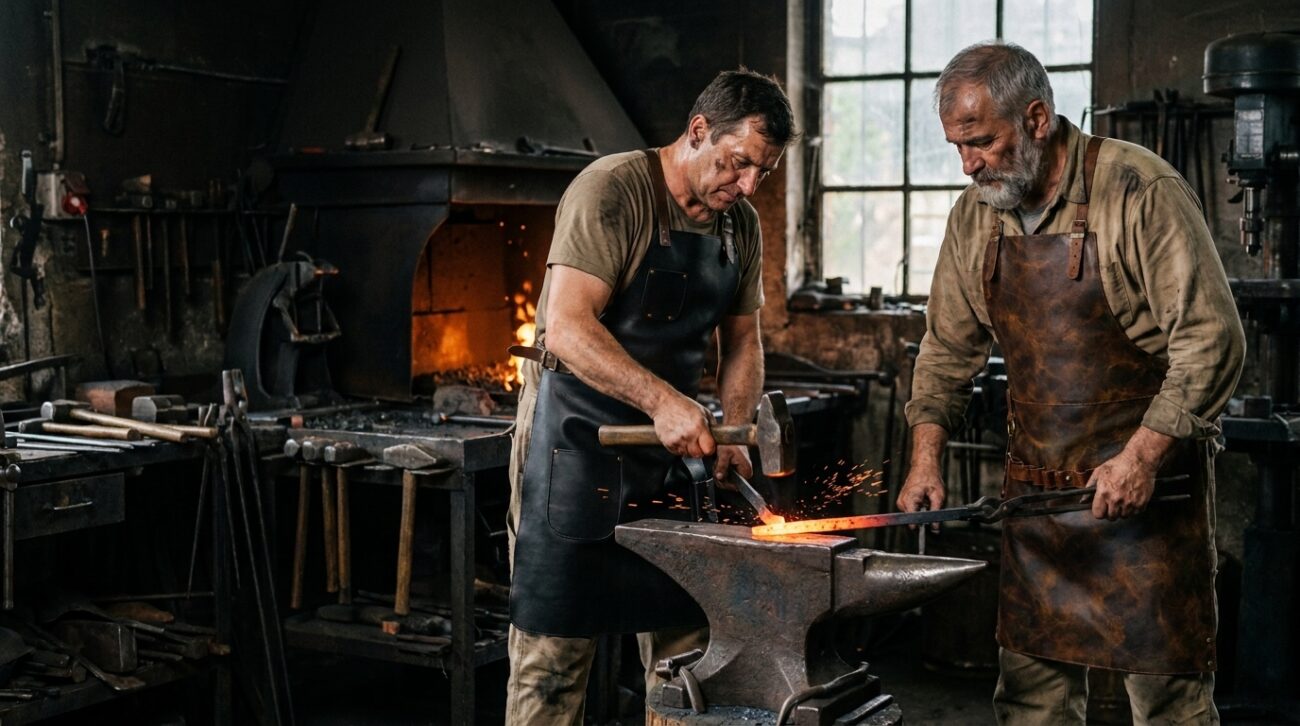

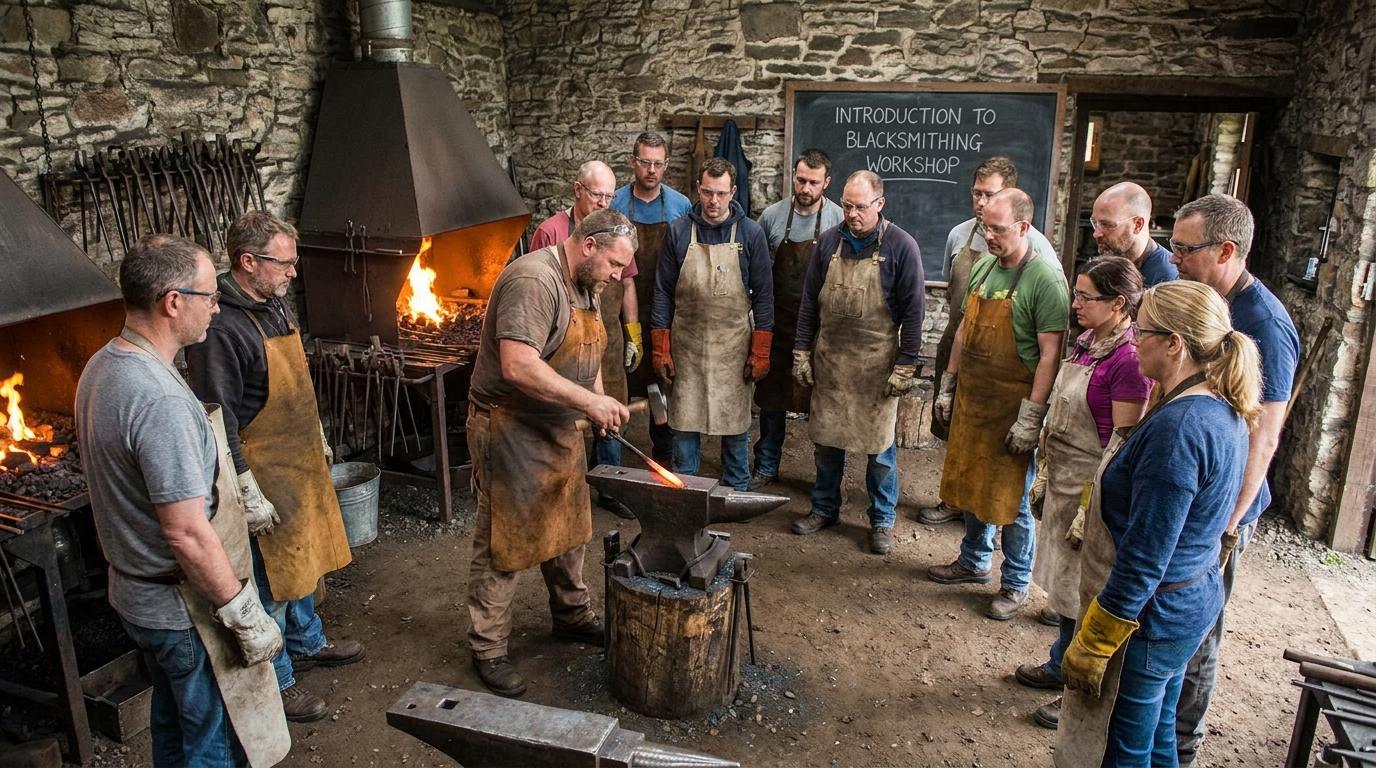

If you want to learn blacksmithing beyond online videos, attending a live workshop or blacksmithing event in 2026 or 2027 can give you something a screen cannot: direct practice with hot metal, tools, instructors, and other makers.
Blacksmithing events range from beginner classes and intensive courses to conferences, demonstrations, competitions, and large gatherings where experienced smiths share techniques. The best choice depends on whether you want hands-on instruction, networking, traditional forging, bladesmithing, or simply an introduction to the craft.
Blacksmithing Events at a Glance
| Event / Opportunity | Location | Date | Best For |
| CBA Spring Conference | Hollister, California, USA | Apr. 22-24, 2027 | Makers & experienced smiths |
| BAM 2027 Conference | USA | 2027 | Blacksmiths & demonstrators |
| North House blacksmithing courses | Minnesota, USA | 2026-27 schedule | Beginners & learners |
| The Forge 2027 | UK | May 26-27, 2027 | Industry & technology |
| European forging gatherings | Various European locations | 2026-27 | Makers & traditional smiths |
Dates and availability should be checked with the event organizer before making travel arrangements. For example, the California Blacksmith Association currently lists its 2027 Spring Conference for April 22-24 in Hollister, California. (California Blacksmith Association)
Blacksmithing Events in the USA
The USA has one of the broadest blacksmithing communities, with regional associations, conferences, hammer-ins, folk schools, and specialist workshops operating throughout the country.
California Blacksmith Association Spring Conference 2027
The California Blacksmith Association has announced its Spring Conference for April 22-24, 2027, at the San Benito County Fairgrounds near Hollister, California. Planned demonstrations include sculpture, curved stair-making, and knife-making.
This type of conference is particularly useful for makers who want to see different forging approaches rather than spend the entire event in a beginner classroom.
BAM 2027 Conference
The BAM 2027 conference is another option for people interested in demonstrations and meeting other smiths. Its announced demonstrator lineup includes Coy Baker, Derek Melton, and Elizabeth Belz. (bamsite.org)
For someone starting, a conference can be more useful after taking an introductory class because you will have enough basic knowledge to understand what experienced demonstrators are doing.
Hands-On Learning in Minnesota
North House Folk School offers traditional blacksmithing instruction in a dedicated forge environment. Its blacksmithing programming includes courses designed for complete beginners as well as people looking to improve existing skills. (northhouse.org)
A hands-on class is also a practical way to decide whether blacksmithing is something you want to pursue before investing heavily in a personal forge.
Blacksmithing Workshops and Events in the UK
The UK has a long blacksmithing tradition, and its current workshop scene combines traditional forging with modern craft education.
The Forge 2027
The Forge 2027 conference is scheduled for May 26-27, 2027, at the Technology and Innovation Centre at the University of Strathclyde. It offers a different perspective from a traditional forge class, with a stronger connection to technology and innovation. (pcig.co.uk)
For makers interested in where forging and modern manufacturing overlap, this type of event can complement practical workshop training.
The UK is also home to established blacksmithing education, including the National School of Blacksmithing in Herefordshire, which has trained students from the UK and internationally. (Wikipedia)
Blacksmithing Festivals and Gatherings in Europe
Europe offers opportunities ranging from historical forging demonstrations to international artist-blacksmith gatherings.
Germany, for example, has a continuing calendar of blacksmith meetings, festivals, and trade events. One current European event calendar lists gatherings involving demonstrations, traditional forging, and specialist metalworking. (Angele Shop)
For people interested in the cultural side of the craft, these events can be particularly valuable because they often combine live forging with exhibitions, competitions, and historical demonstrations.
Look Beyond Conventional Workshops
Not every worthwhile blacksmithing event is marketed as a “workshop.” Festivals, hammer-ins, competitions, and craft gatherings can provide opportunities to watch skilled smiths work and talk directly with makers.
That matters for beginners because seeing a technique performed repeatedly in person can make it easier to understand hammer positioning, heat control, material movement, and tool handling.
What Should You Wear to a Blacksmithing Workshop?
Wear practical clothing that provides coverage and does not interfere with movement. Closed-toe footwear, appropriate eye protection, and workshop-approved clothing are essential.
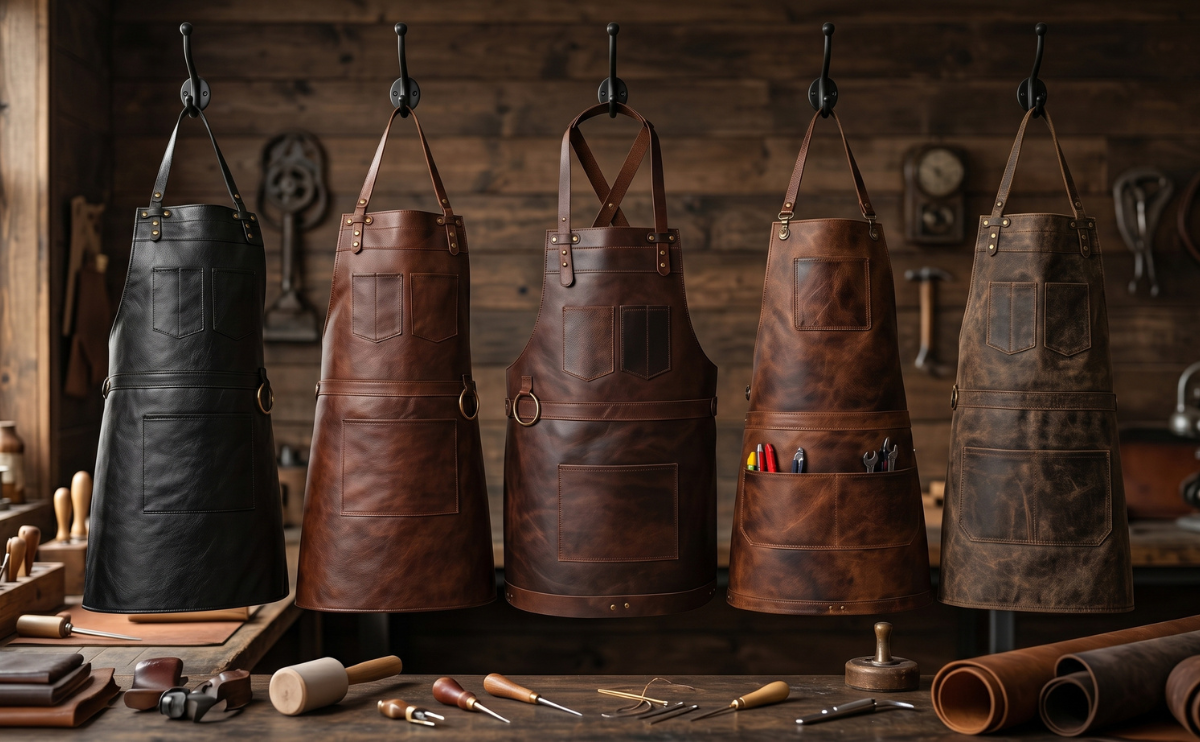
A leather apron can also be useful when the workshop permits it. Leather remains common in forge environments because it provides a durable protective layer around the torso and clothing. Frontier Leather Co. has a dedicated leather apron collection for people working in demanding environments.
For more context on why leather is commonly used around hot work, the discussion of why blacksmiths wear leather covers the protective reasoning behind the material.
How to Choose the Right Event
Choose the event according to your current skill level and objective.
For complete beginners: Look for a short introductory class with an instructor and supervised forge time.
For developing makers: Choose multi-day workshops where you can practice specific techniques repeatedly.
For experienced smiths: Conferences, demonstrations, competitions, and specialist gatherings can provide more value than introductory classes.
For networking: Regional associations and larger conferences are usually better because they bring multiple makers together.
Before booking, check the class length, tools supplied, materials included, age requirements, protective equipment rules, cancellation policy, and whether accommodation is available nearby.
Plan Your 2026-27 Blacksmithing Calendar
The strongest blacksmithing experiences are not necessarily the largest events. A three-hour introductory class may be more valuable to a first-time learner than a major conference, while an experienced maker may gain more from specialist demonstrations and networking.
With 2026 events already underway and 2027 conferences and workshops being announced, this is a good time to shortlist opportunities based on location, skill level, and the type of forging you want to practice. Check organizer pages before booking because event dates, demonstrators, and registration availability can change.
FAQs
Are blacksmiths still in demand?
Yes, blacksmiths are still in demand in specialized areas such as custom metalwork, restoration, architectural ironwork, artistic forging, and traditional craft.
Modern blacksmithing is smaller than the industrial trade of the past, but handmade and custom work continues to create opportunities for skilled makers.
How expensive is blacksmithing as a hobby?
Blacksmithing can cost a few hundred dollars for basic equipment or several thousand dollars for a more developed workshop.
Taking a class first can be a sensible way to learn the fundamentals before purchasing an anvil, forge, hammers, tongs, and other equipment.
Do blacksmiths get paid well?
Yes, experienced blacksmiths can earn well when they specialize in areas such as custom commissions, architectural work, restoration, artistic metalwork, or teaching.
Earnings vary considerably according to specialization, location, experience, and whether the smith operates an independent business.
How long does it take to learn blacksmithing?
You can learn basic forging techniques in a few classes, but developing reliable blacksmithing skills takes regular practice over months or years.
Introductory workshops normally focus on fundamentals such as drawing, bending, tapering, punching, and controlling the hammer.
What are female blacksmiths called?
Female blacksmiths are called blacksmiths.
The word describes the profession rather than the person’s gender, so no separate occupational title is necessary.
Is blacksmithing a good career?
Yes, blacksmithing can be a viable career for people interested in skilled manual work and metal fabrication.
Potential work includes custom forging, architectural metalwork, restoration, artistic pieces, teaching, demonstrations, and independent commissions.
What replaced blacksmiths?
Industrial manufacturing, machine tools, welding, and mass production replaced much of the traditional work once performed by blacksmiths.
Traditional forging still exists because custom, artistic, restoration, and specialist work cannot always be replaced by mass production.
Is blacksmithing a hard job?
Yes, blacksmithing is physically demanding.
The work requires standing, lifting, repetitive hammering, handling heated metal, and maintaining concentration around hot equipment. Proper technique, workshop procedures, and protective equipment are important.
Can you make money from blacksmithing?
Yes, blacksmiths can make money through custom commissions, architectural pieces, tools, restoration work, classes, demonstrations, and finished craft products.
Many independent makers combine several of these income sources rather than depending on one type of commission.