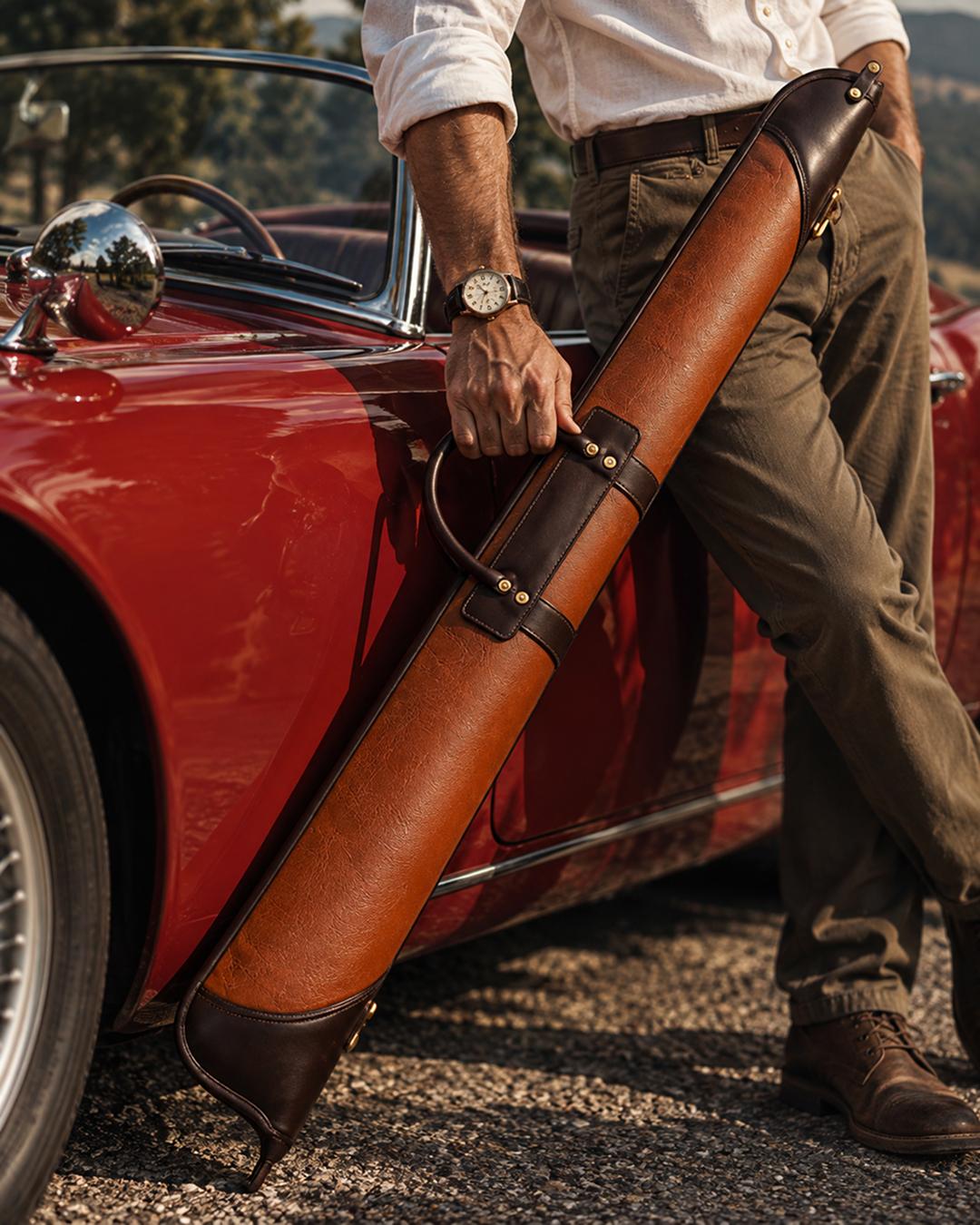

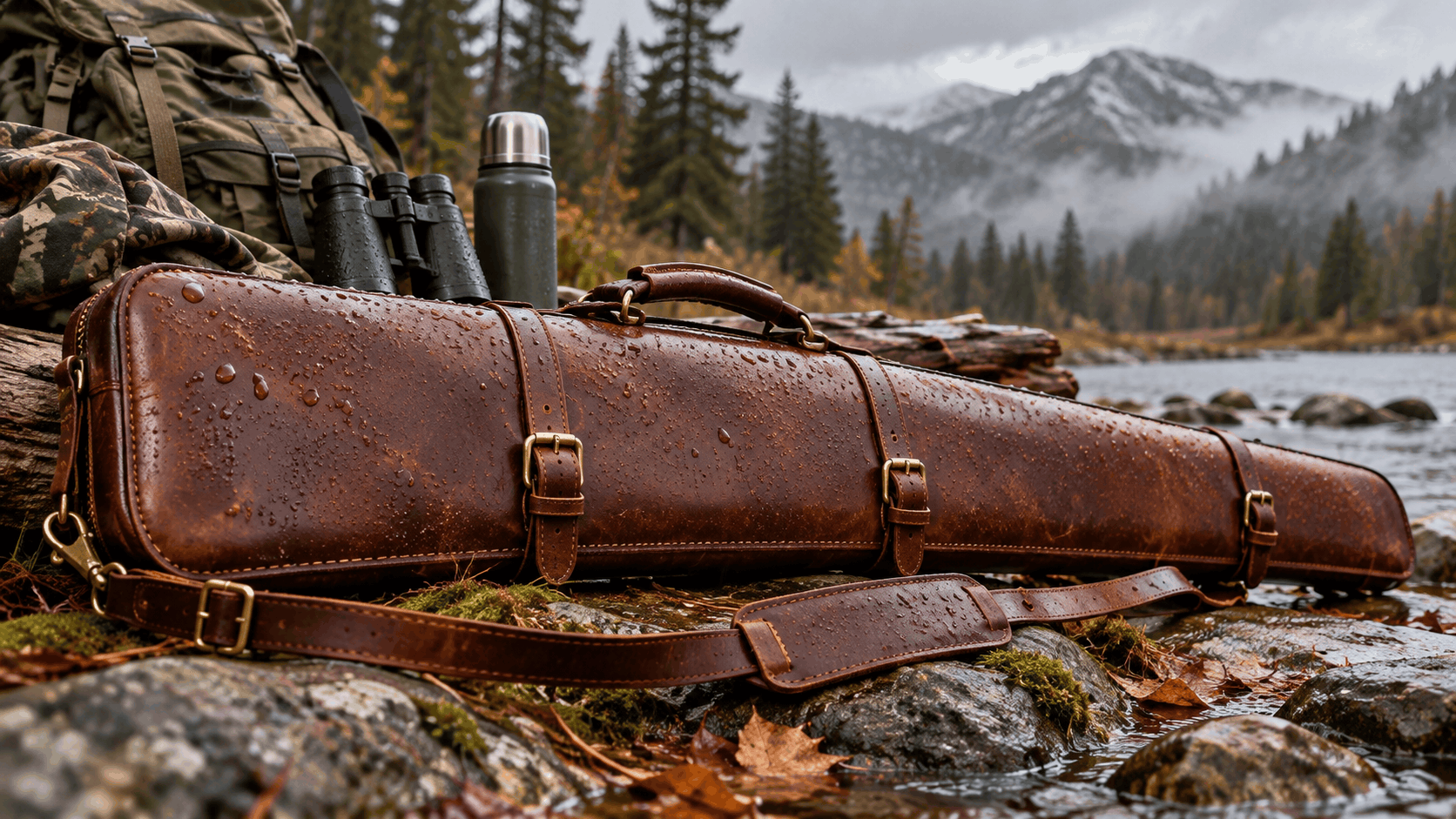

Hunting season brings early-morning adventures, unpredictable weather, damp forests, and long hours outdoors. While these conditions make hunting exciting, they can also expose your gear to moisture that gradually damages leather. Rain, fog, condensation, and humidity can leave a leather rifle case damp, stiff, stained, or vulnerable to mold.
If you own a quality leather rifle case, protecting it from moisture is essential for preserving its appearance, durability, and protective function. The good news? With the right care routine and a few simple precautions, you can help your leather case withstand changing weather conditions throughout hunting season.
In this guide, you’ll learn how to protect a leather rifle case from moisture, prevent mold growth, dry wet leather safely, and maintain your case for years of reliable use.
Why Moisture Is a Problem for Leather Rifle Cases
Leather is a natural material that responds to changes in its environment. Although quality leather is durable, prolonged exposure to water and excessive humidity can affect its structure, finish, and flexibility.
Here are some common problems moisture can cause:
- Mold and mildew: Damp leather stored in poorly ventilated spaces can develop mold, unpleasant odors, and surface discoloration.
- Stiffness and cracking: Repeated wetting and improper drying can strip natural oils from leather, leaving it stiff and more susceptible to cracking.
- Water stains: Rainwater and mineral deposits can leave uneven marks on the leather surface.
- Damage to stitching: Persistent moisture can weaken threads and affect seams over time.
- Corrosion risks: Moisture trapped inside a case can contribute to rust on metal components and firearm surfaces.
Understanding these risks helps you establish a simple maintenance routine before heading into the field.
1. Apply a Suitable Leather Water Repellent Before Hunting
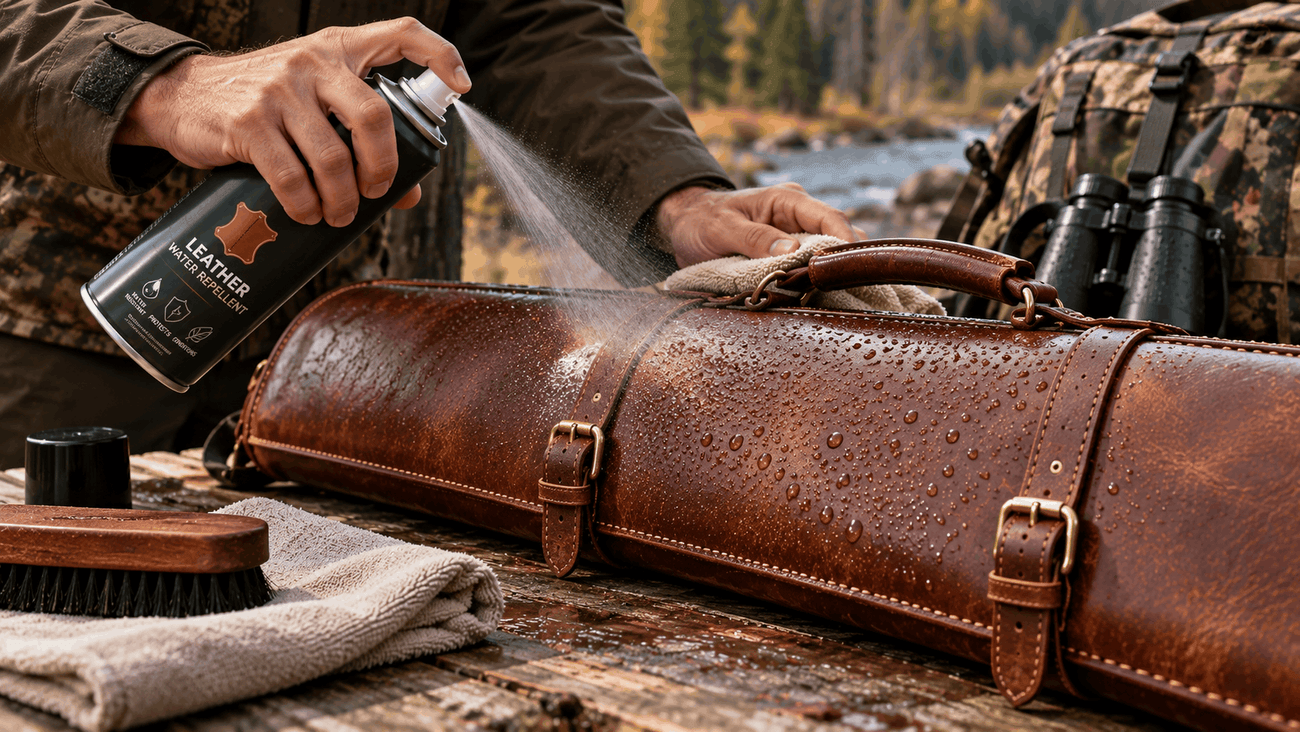
One of the most effective ways to protect your leather rifle case is to apply a water-repellent treatment designed specifically for its type of leather.
A suitable product creates a degree of resistance against light rain, splashes, and damp conditions. However, water resistance does not mean the case is completely waterproof.
Before applying any treatment, check the manufacturer’s care instructions. Some leather finishes respond differently to oils, waxes, and spray-on protectants.
Follow these steps:
- Remove dust and loose dirt with a clean, soft cloth.
- Test the treatment on a small, inconspicuous area.
- Apply a thin, even layer according to the product instructions.
- Allow the leather to dry or cure completely before use.
Avoid using household oils, petroleum-based products, or untested waterproofing chemicals. These may darken the leather, leave a sticky residue, or damage its finish.
Pro tip: Prepare your leather rifle case before hunting season begins rather than applying a new treatment immediately before heading outdoors.
2. Keep Your Leather Rifle Case Away From Direct Rain
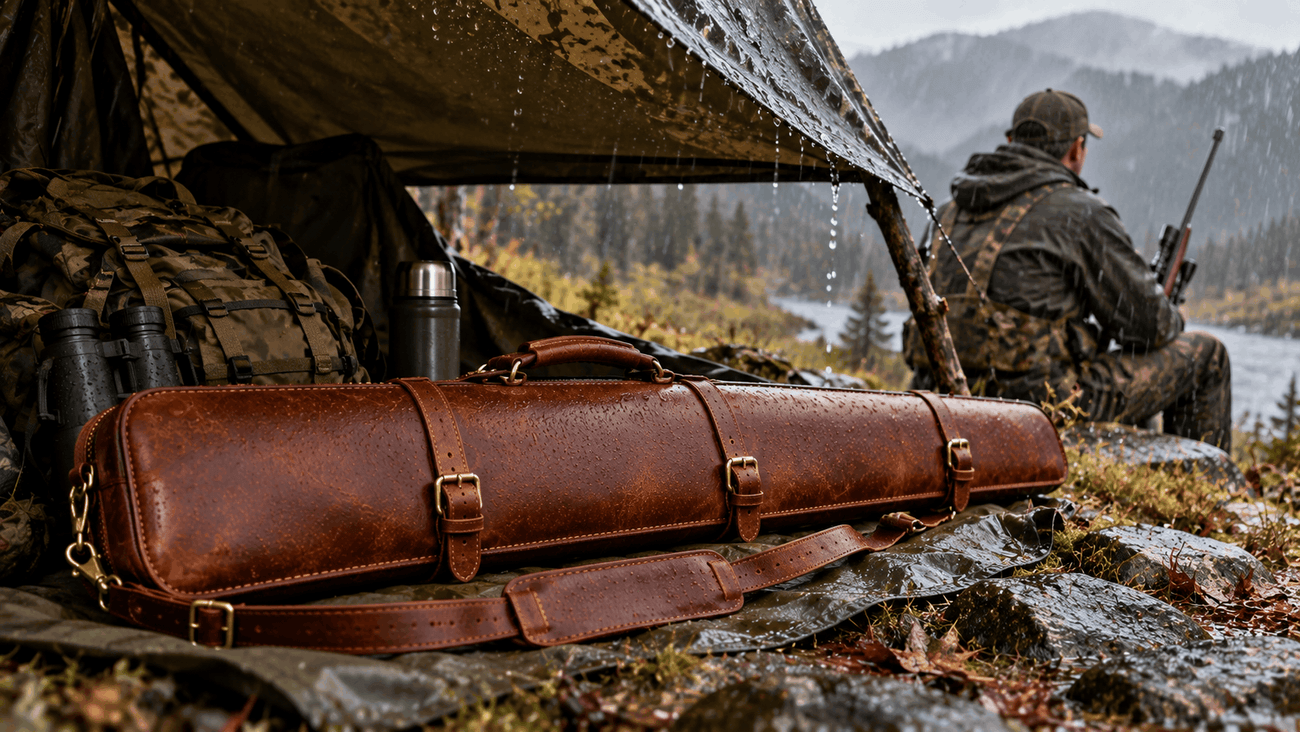
Even treated leather can absorb moisture when exposed to heavy rain for extended periods. Prevention is therefore just as important as conditioning.
When traveling to your hunting location, use a properly sized, weather-resistant outer cover or protective bag if your case’s manufacturer permits it. This extra layer can help reduce direct exposure to rain and splashes.
During breaks, avoid placing your case directly on wet grass, muddy ground, or damp rocks. Use a clean, dry, elevated surface whenever possible.
If you expect severe weather, choose protective storage specifically designed for those conditions rather than relying on leather alone.
Remember that leather is best maintained by limiting unnecessary exposure to water instead of repeatedly trying to restore it afterward.
3. Dry Your Leather Rifle Case Immediately After Exposure
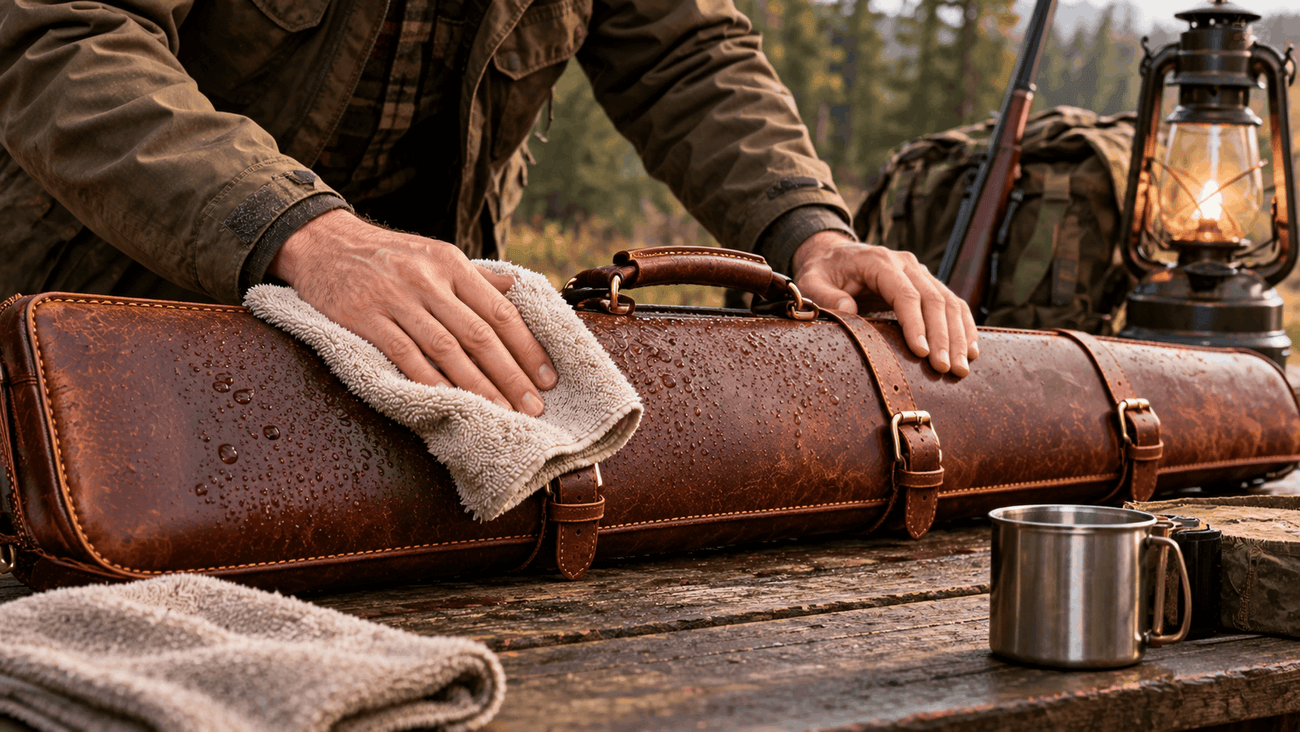
One of the most important leather-care habits is dealing with moisture as soon as possible.
If your case becomes wet from rain, fog, or damp vegetation, gently blot the exterior with a clean, absorbent cloth. Do not rub aggressively, as this can spread dirt or affect the leather finish.
Next, place the case in a dry, well-ventilated area away from direct sunlight and excessive heat.
Avoid these common mistakes:
- Never use a hair dryer or heat gun to speed up drying.
- Do not place wet leather next to a heater, radiator, or open fire.
- Avoid leaving the case in direct sunlight for extended periods.
- Do not seal a damp case inside a plastic bag or airtight container.
Rapid heating can cause leather to shrink, harden, or crack. Slow, natural drying is generally the safer approach.
If the case has a removable lining, follow the manufacturer’s instructions for drying it separately.
4. Control Humidity During Storage
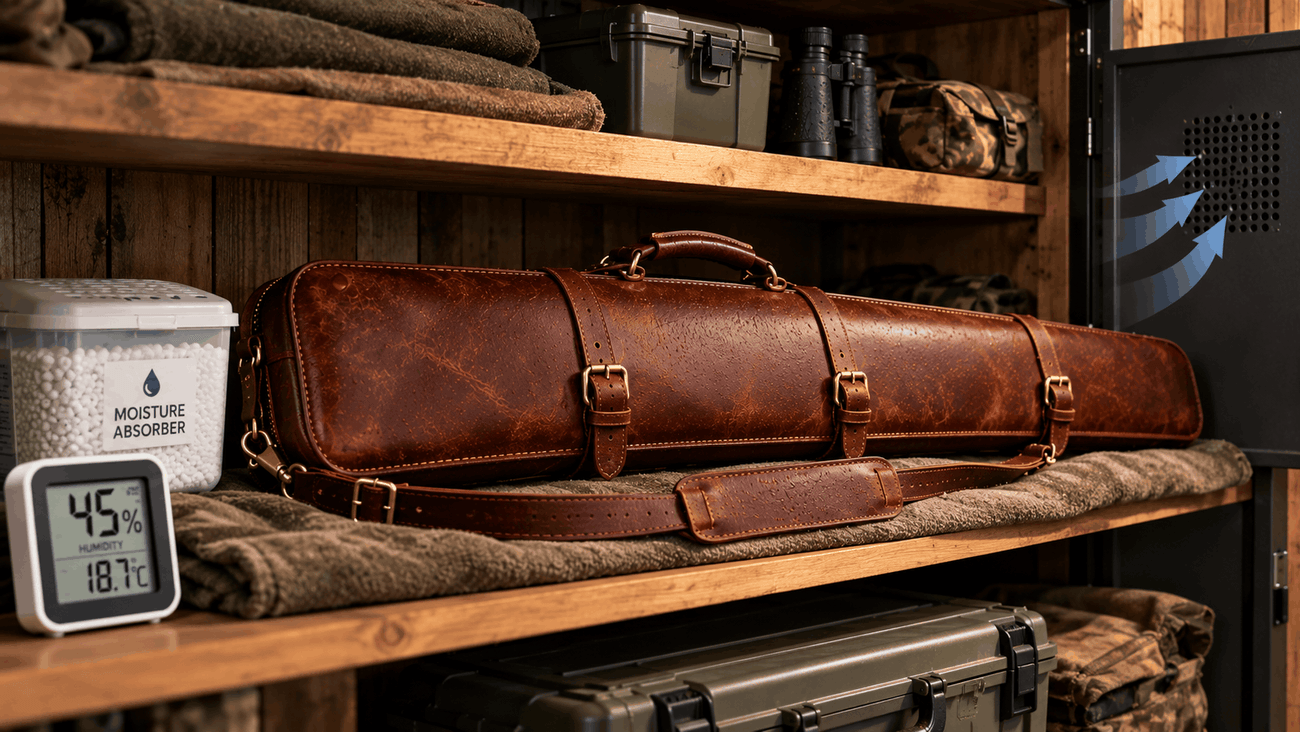
Protecting your case outdoors is only half the job. Improper storage after a hunting trip can allow moisture to remain trapped in the leather.
Before putting your case away, make sure it is completely dry inside and out. Store it in a cool, dry place with good air circulation.
Avoid damp basements, unventilated sheds, and storage areas where temperatures fluctuate significantly. These environments can encourage condensation and mold growth.
A household hygrometer can help you monitor storage conditions. Moderate indoor humidity is generally preferable to persistently damp air, although the ideal range depends on the leather, lining, and storage environment.
For additional protection, consider a moisture absorber in the storage area, provided it cannot leak or come into direct contact with the leather. Avoid placing loose desiccants where they could contaminate the case or come into contact with firearm components.
Never store a damp leather case in a closed cabinet and assume that the moisture will disappear on its own.
5. Condition the Leather Without Overdoing It
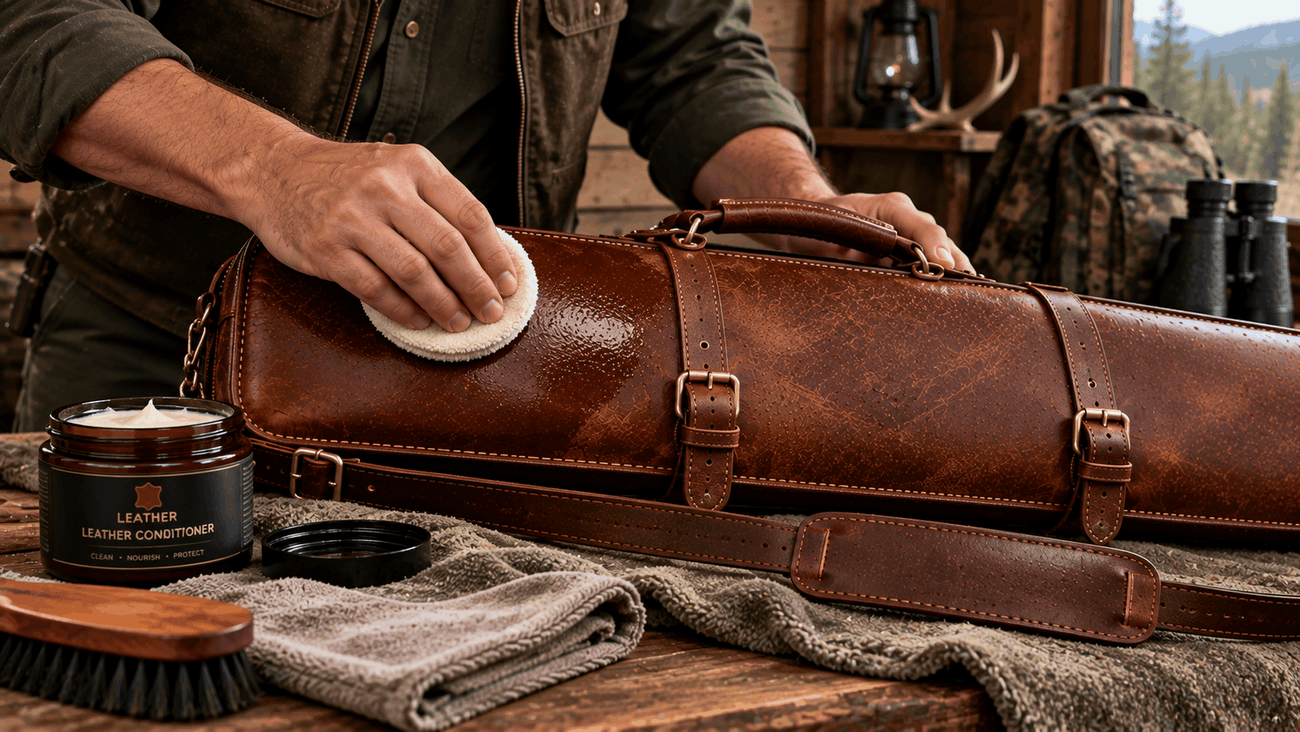
Leather conditioners help maintain flexibility and reduce the risk of dryness associated with environmental exposure and repeated use.
However, applying too much conditioner can leave the surface greasy, attract dirt, or alter the leather’s appearance.
For the best results:
- Choose a conditioner compatible with your leather’s finish.
- Clean away dust and surface dirt before conditioning.
- Apply a small amount according to the manufacturer’s directions.
- Allow the leather to absorb the product before buffing away excess residue.
- Avoid conditioning wet leather unless the product manufacturer specifically recommends it.
Conditioning frequency depends on the leather type, usage, and climate. A case used frequently in dry or variable weather may require different care from one stored indoors most of the year.
The goal is to maintain supple leather, not saturate it with oils or waxes.
6. Inspect the Case After Every Hunting Trip
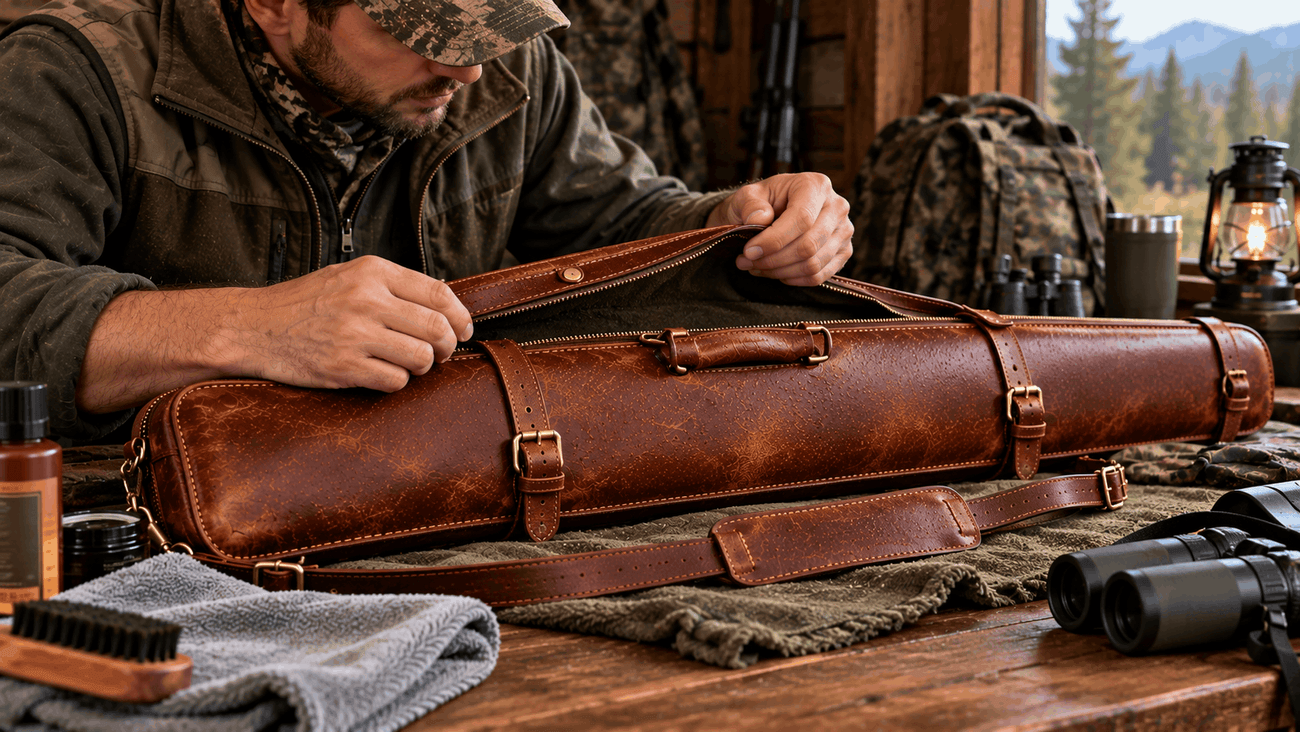
Small problems are easier to address before they become permanent damage.
After each trip, examine the exterior, seams, handles, straps, closures, and lining. Look for dark moisture marks, unusual odors, loose stitching, and signs of mold.
Pay particular attention to areas where water may collect, including folded edges, seams, and pockets.
If you notice a musty smell or visible mold, isolate the case from other leather goods. Avoid brushing mold aggressively indoors, as this can spread spores. Seek advice from a leather-care professional if the contamination is extensive or the case has a delicate finish.
Routine inspections also provide an opportunity to identify worn protective coatings before the next trip.
7. Protect the Interior From Trapped Moisture
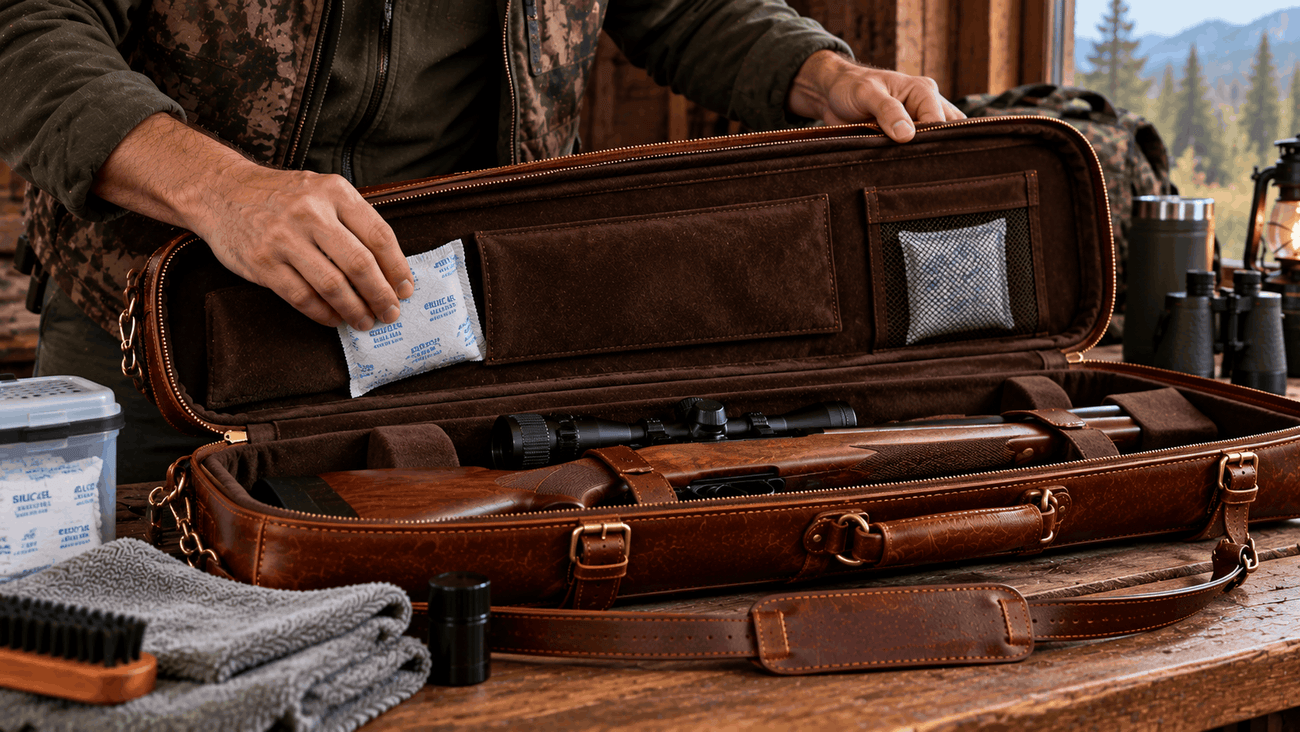
Moisture can accumulate inside a rifle case even when the exterior appears dry. Temperature changes, wet equipment, and humid air can all contribute to condensation.
Keep the lining clean and dry, and never return wet accessories to the case. Allow the case to air out after use, following the manufacturer’s instructions.
Important firearm-safety reminder: Before cleaning or storing a firearm, follow the manufacturer’s safety instructions and verify that it is unloaded. Do not store a firearm in a damp case. Inspect and maintain the firearm separately according to its manufacturer’s recommendations, paying attention to moisture and corrosion.
A leather case protects equipment from everyday handling and environmental exposure, but it should not be treated as a moisture-proof enclosure.
8. Choose the Right Storage Accessories for Hunting Season
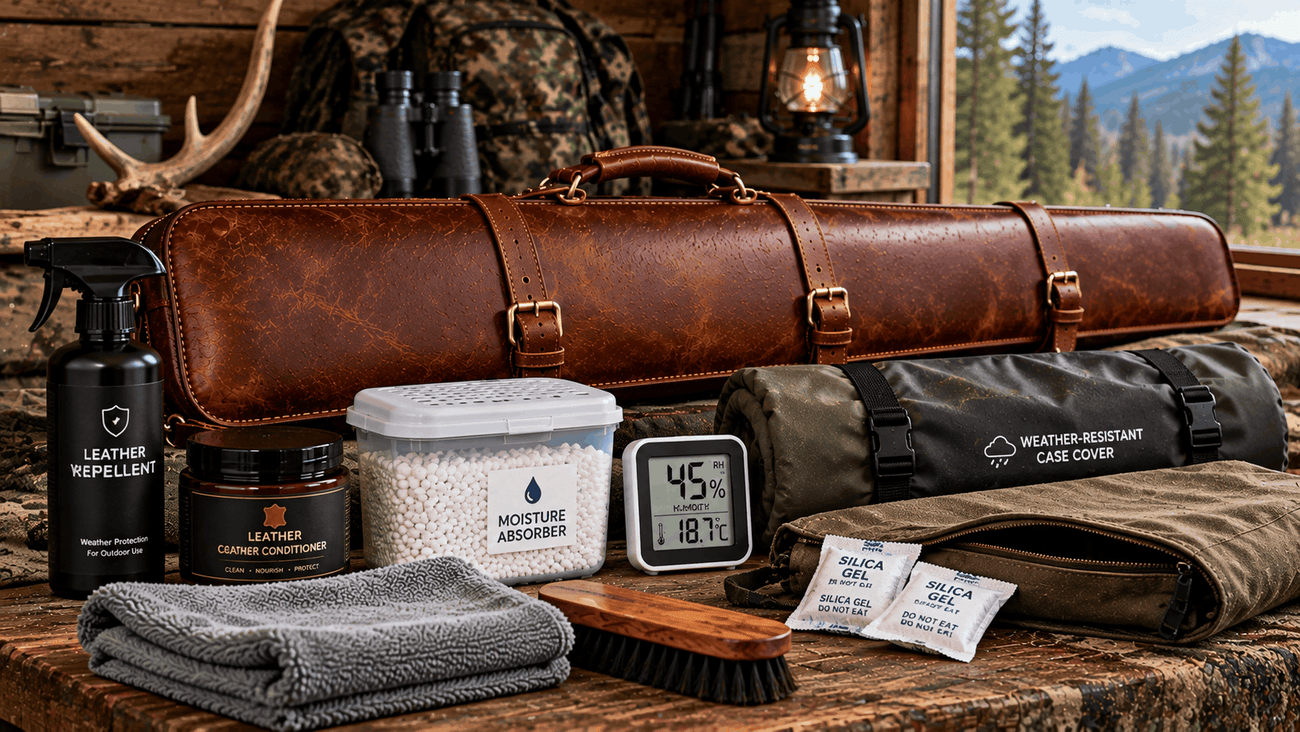
A few practical accessories can make leather care easier throughout the season.
Consider keeping these items in your hunting gear:
- Microfiber cloth: For gently blotting moisture from the leather surface.
- Leather-compatible water repellent: For maintaining appropriate water resistance.
- Suitable leather conditioner: For periodic maintenance when needed.
- Moisture absorber: For managing humidity in the surrounding storage area.
- Weather-resistant outer cover: For reducing direct exposure to rain during transport.
Choose products based on your case manufacturer’s recommendations and the conditions in which you hunt. More products do not necessarily provide better protection; the right products used correctly are what matter.
Frequently Asked Questions
Can a leather rifle case get wet in the rain?
Yes, but prolonged exposure should be avoided. Even treated leather can absorb water, develop stains, or lose flexibility. If your case gets wet, blot away excess moisture and allow it to dry naturally in a well-ventilated area.
How do I dry a wet leather rifle case without damaging it?
Use a clean cloth to absorb surface moisture, then leave the case to air-dry away from direct sunlight and artificial heat. Do not use a hair dryer or place the case near a heater. Follow the manufacturer’s instructions for the lining and interior components.
Should I waterproof my leather rifle case?
A compatible water-repellent treatment can help protect against light moisture. However, not every leather finish accepts the same products, and no ordinary leather treatment should be assumed to make a case completely waterproof.
How can I prevent mold on a leather rifle case?
Make sure the case is fully dry before storage, keep it in a ventilated environment, and avoid persistently humid spaces. Inspect it regularly for musty odors and visible mold. Use moisture absorbers in the surrounding storage area where appropriate.
How often should I condition a leather rifle case?
There is no universal schedule. Condition the leather when it shows signs of dryness or according to the manufacturer’s care instructions. Frequent, unnecessary conditioning may damage the finish or leave an oily residue.
Is a leather rifle case suitable for wet hunting conditions?
A leather rifle case can be suitable when maintained properly and protected from prolonged exposure to rain. For consistently wet environments, consider an appropriate weather-resistant outer cover and follow the case manufacturer’s guidance about environmental limitations.
Final Thoughts: Keep Your Leather Rifle Case Ready for Every Hunting Trip
A well-maintained leather rifle case can remain attractive and functional through many hunting seasons. The key is to prevent unnecessary moisture exposure, use compatible leather-care products, dry the case properly after each trip, and store it in a clean, ventilated environment.
Before your next outing, inspect your case, check its protective treatment, and pack a clean cloth for unexpected rain. These small steps can help preserve the leather’s appearance, reduce the risk of mold, and extend the useful life of your gear.
Protect your leather before the weather turns, and make proper care part of every hunting-season routine.