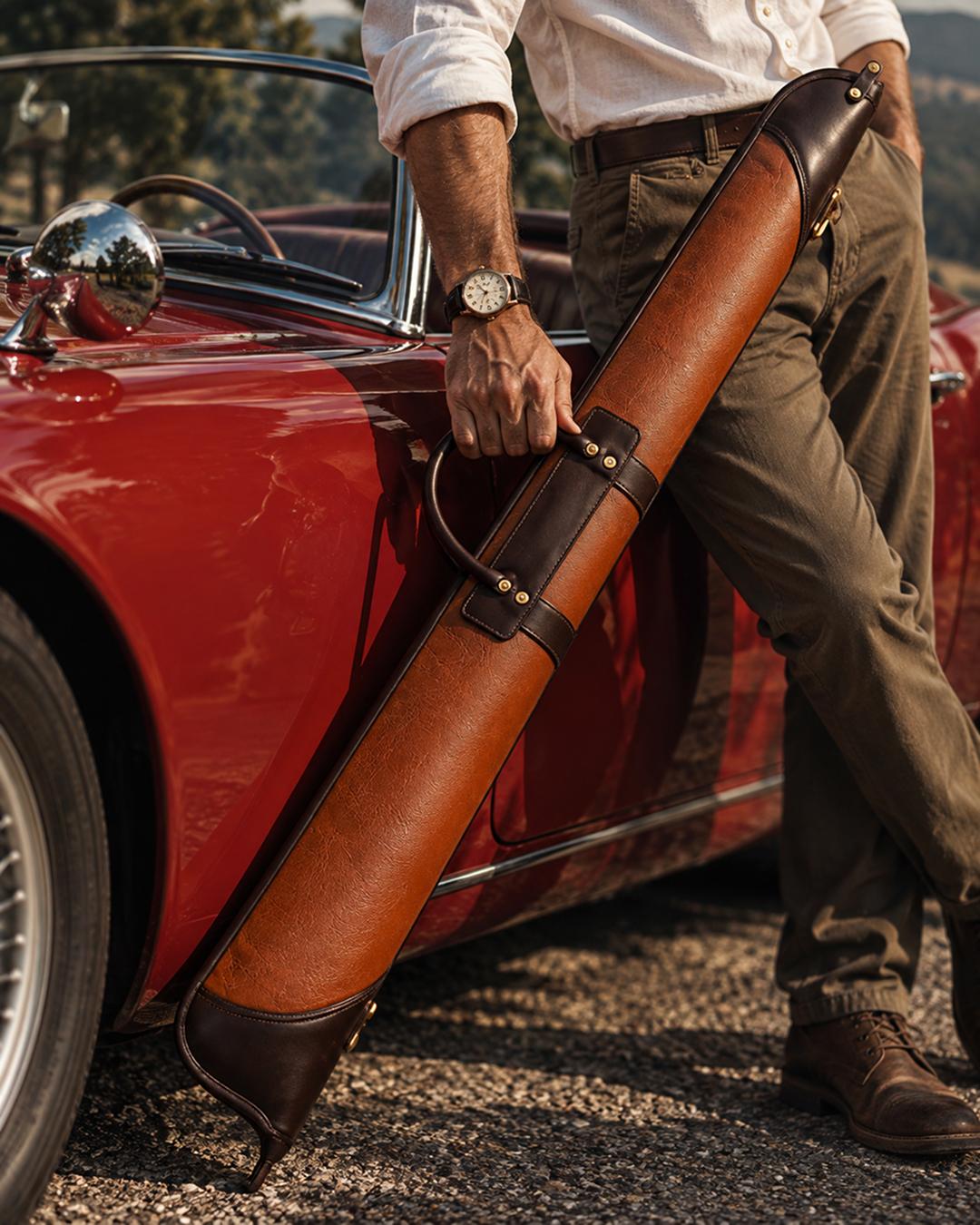

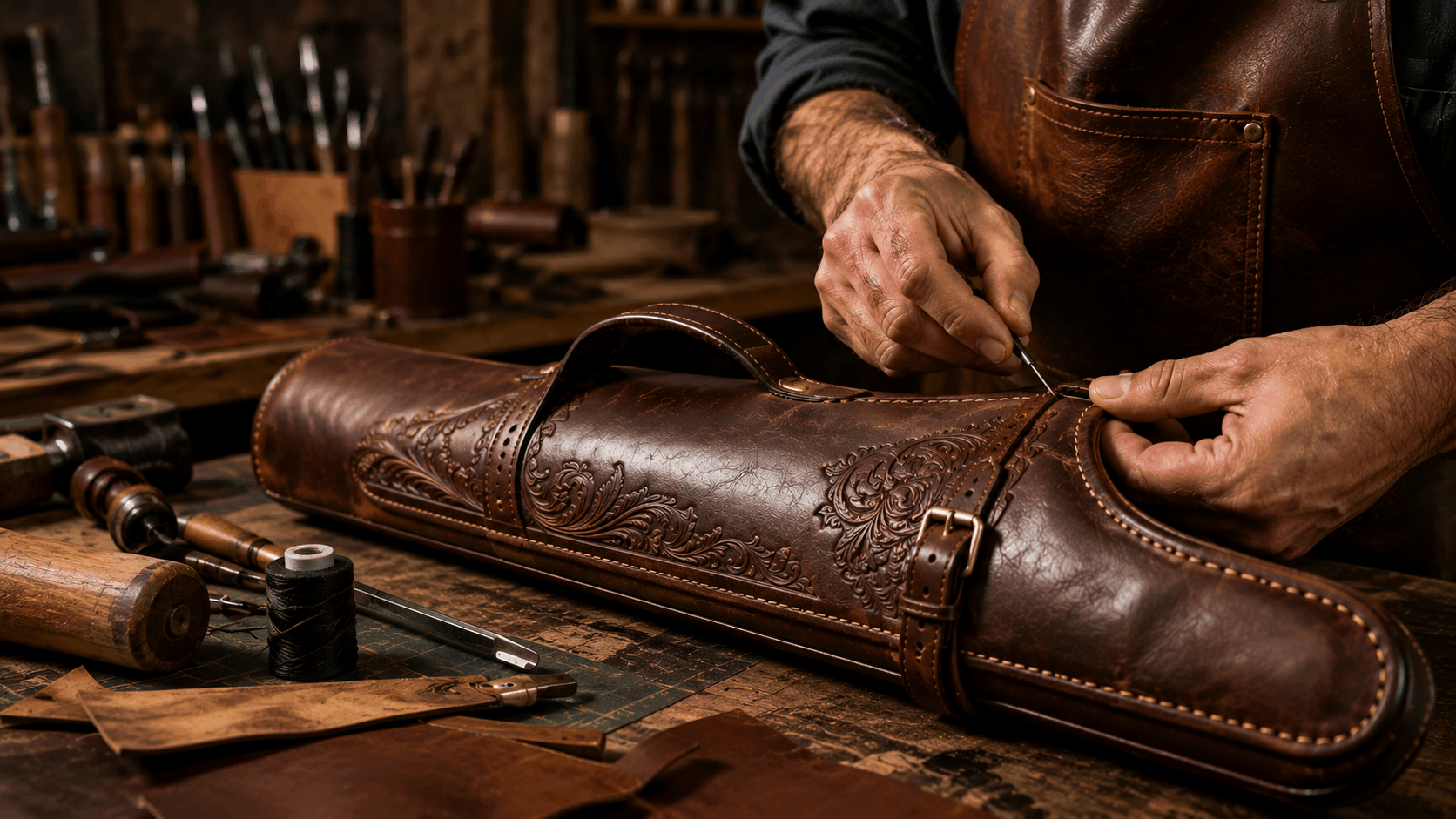

Inside every handmade leather gun case lies a process that is slow and deeply rooted in tradition. At Frontier Leather Co, nothing begins with machines or shortcuts; it begins with raw materials and skilled hands.
Each gun case is built not just to protect a firearm, but to carry a sense of heritage and purpose. From selecting premium hides to shaping and stitching every detail, the journey reflects years of leatherworking knowledge passed through generations.
The Heritage of Leather Craftsmanship
Leather craftsmanship has always been tied to utility, survival, and artistry. Long before modern tools and factories, leatherworkers created protective gear for hunters, soldiers, and travelers who depended on durability in harsh conditions.
Over time, this skill evolved into a respected craft, combining function with refined design. Handmade leather gun cases follow the same legacy, where every cut and stitch reflects experience rather than automation.
The heritage lies in understanding the material, how it stretches, breathes, and ages with time. At Frontier Leather Co, this tradition is preserved through careful, hands-on methods that prioritize quality over quantity.
Each piece carries the influence of old-world saddlery techniques, adapted for modern needs. Now, let’s take you a bit deep into this craft in 5 phases.
Phase 1: Selecting and Preparing the Raw Materials
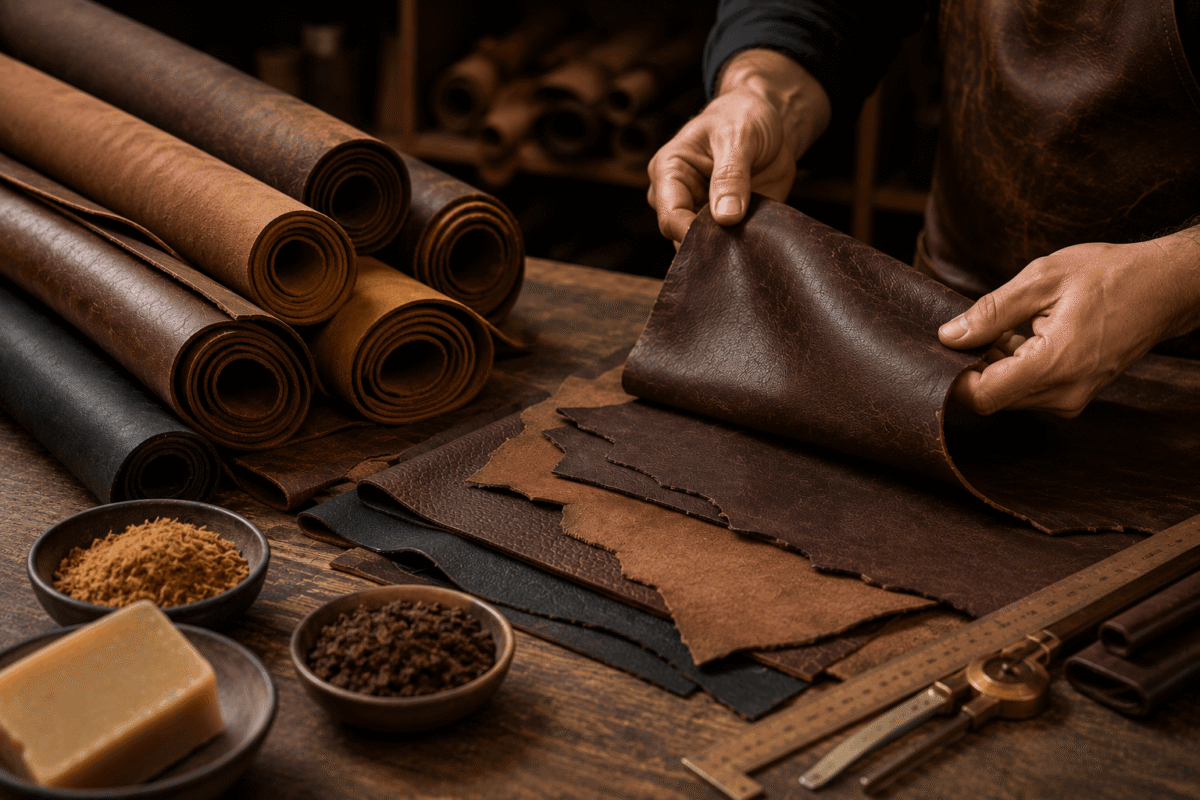
– Choosing the Right Hide: Vegetable-Tanned vs. Chrome-Tanned Leather
The first decision in crafting a premium gun case starts with selecting the tanning method. Vegetable-tanned leather is favored for its natural aging process, firm structure, and ability to develop a rich patina over time. It is more traditional and environmentally conscious, making it ideal for heirloom-quality pieces.
Chrome-tanned leather, on the other hand, offers flexibility, water resistance, and faster production results. While both have their place in leatherwork, handmade gun cases require a balance of strength and long-term durability.
– Selecting Grade-A Full-Grain Leather for Longevity
Full-grain leather represents the highest quality available because it retains the hide’s strongest layer. Unlike corrected or split leather, it preserves natural markings, which makes each piece unique.
This layer is dense and wear-resistant, which is essential for protective gun cases that must withstand pressure and movement. Grade-A selection ensures minimal imperfections while maintaining natural strength.
Over time, full-grain leather becomes even more attractive as it develops character through use.
– Sourcing Premium Hardware: Solid Brass and Heavy-Duty Zippers
Hardware plays a critical role in both function and durability. Solid brass is preferred for buckles, rivets, and locks due to its resistance to rust and its ability to age gracefully alongside leather.
Unlike cheaper metals, brass does not weaken under pressure or environmental exposure. Heavy-duty zippers are selected for smooth operation and long-term reliability, especially in field conditions where quick access matters.
Every component must match the leather’s strength. At Frontier Leather Co, hardware is sourced with strict quality checks to ensure it complements the craftsmanship rather than compromises it.
Phase 2: Design, Patterning, and Cutting
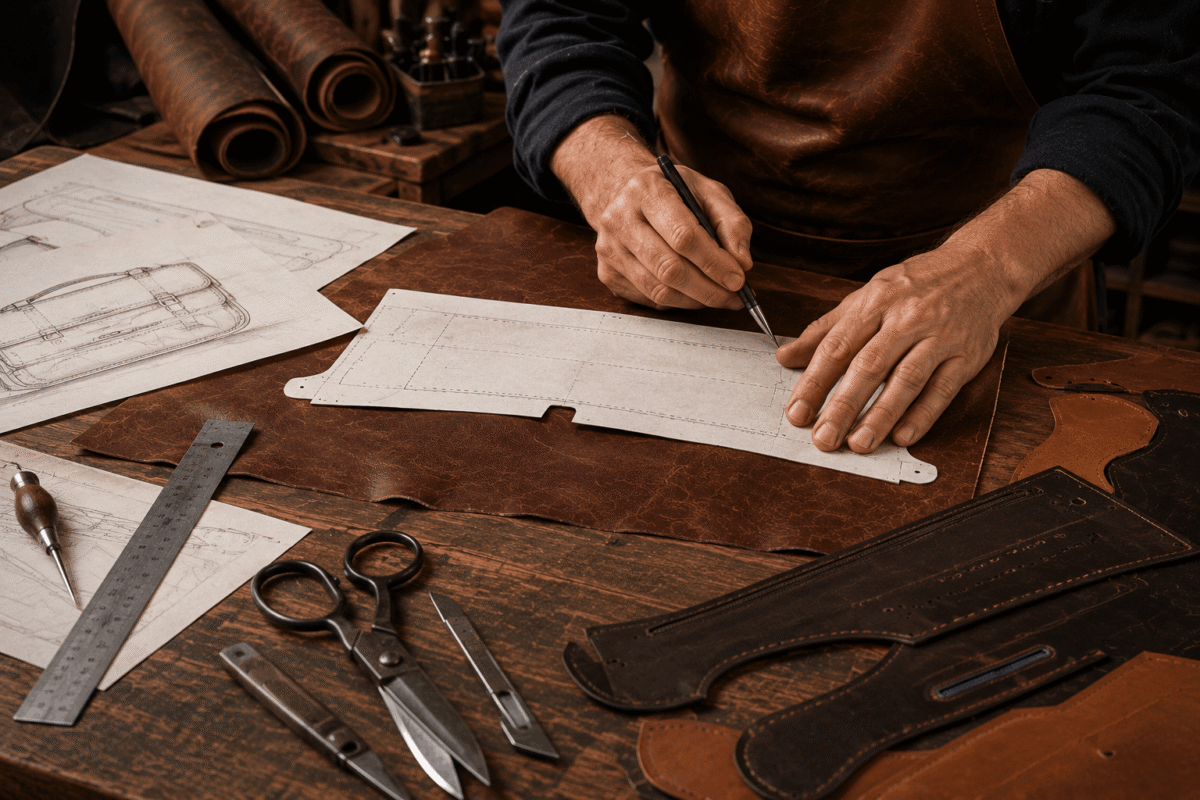
– Creating the Custom Blueprint for Specific Firearm Dimensions
Every handmade gun case begins with precise planning. A custom blueprint is created based on the exact dimensions of the firearm it will carry. This ensures a snug, secure fit that prevents unnecessary movement during transport.
Unlike mass-produced cases, this step allows full customization for length, barrel shape, and accessory space. Measurements are carefully recorded and translated into scaled design patterns.
– Mapping the Hide to Avoid Natural Flaws and Weak Spots
Leather is a natural material, which means every hide carries unique marks, scars, and variations. Our skilled craftsmen carefully study each piece before cutting begins.
The goal is to map out the strongest and most visually consistent sections while avoiding weak spots that could affect durability. This process ensures that stress points are minimized in the final structure.
At Frontier Leather Co, this selection is done with patience and experience, ensuring no usable strength is wasted.
– The Precision Hand-Cutting Process Using Traditional Knives
Once the blueprint and mapping are complete, the leather is cut by hand using traditional cutting tools. This method allows greater control and precision compared to automated systems.
Every curve, edge, and seam is carefully followed to ensure accuracy. Hand-cutting also preserves the integrity of the leather fibers, reducing unnecessary stress on the material.
At Frontier Leather Co, craftsmen rely on sharp, well-maintained knives that glide through the hide with clean, deliberate strokes. This step requires steady hands and a deep understanding of leather behavior.
Phase 3: Shaping and Molding the Leather
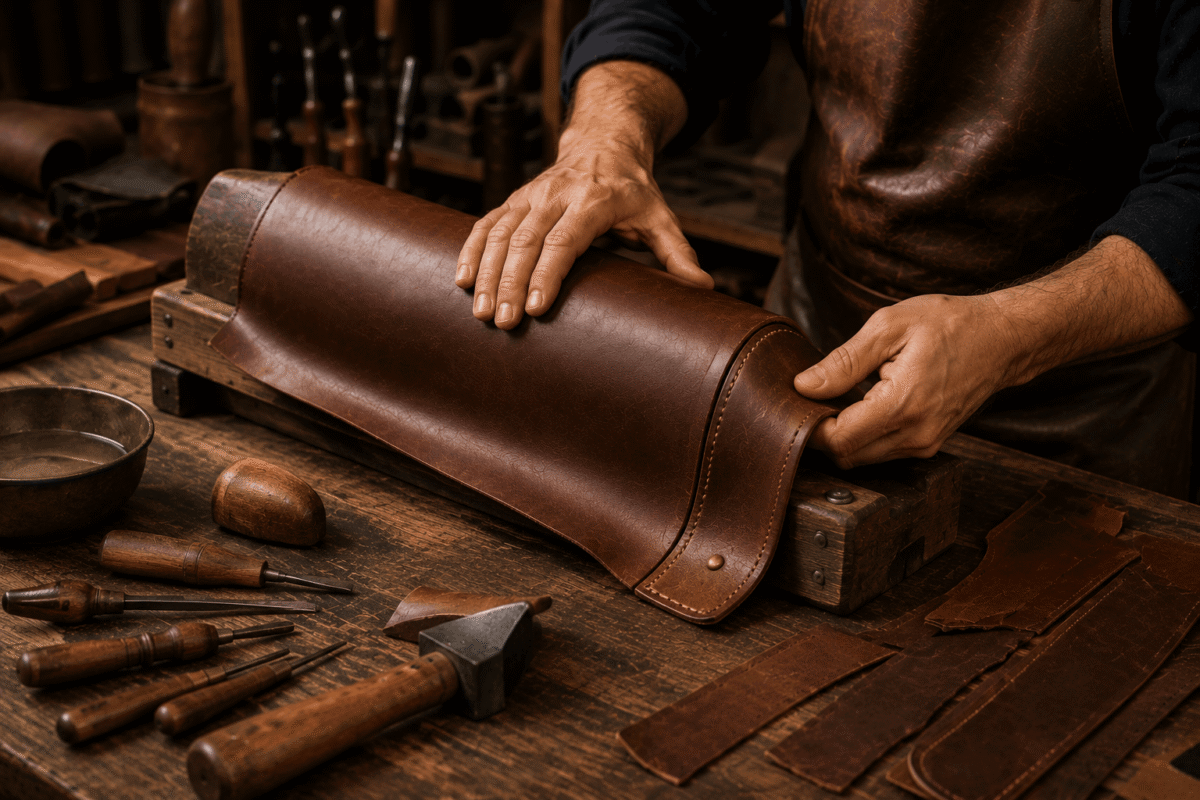
– Wet-Molding Techniques for a Perfect, Form-Fitted Hold
Wet-molding is used to shape leather into a precise, firearm-specific form. The leather is lightly dampened to increase flexibility, then carefully molded around a structured form or template.
As it dries, it retains its exact shape, creating a secure, custom fit. This technique ensures the firearm sits firmly without shifting inside the case. At Frontier Leather Co, the process is done slowly to avoid overstretching or damaging the material.
As a result, you get a structured yet natural contour that enhances both protection and appearance, giving each gun case a professional, tailored finish.
– Skiving and Beveling Edges for Seamless Transitions
Skiving involves thinning the edges of leather to reduce bulk where pieces join together. This allows for smoother overlaps and cleaner stitching lines. Beveling further refines the edges by rounding them, preventing sharpness and improving comfort during handling.
Together, these techniques create a seamless transition between the case’s sections. At Frontier Leather Co, craftsmen use precise hand tools to maintain consistency without compromising strength.
– Creating Structural Support and Reinforcement Zones
Structural reinforcement is essential for ensuring the gun case maintains its shape over time. Key stress areas, such as corners, handles, and strap points, are strengthened with additional layers of leather or hidden internal supports.
These reinforcements prevent sagging, tearing, or deformation under weight. At Frontier Leather Co, each reinforcement zone is strategically placed based on usage patterns and load expectations. This careful planning ensures the case remains functional and stable even after years of use.
Phase 4: The Art of Hand-Stitching and Assembly
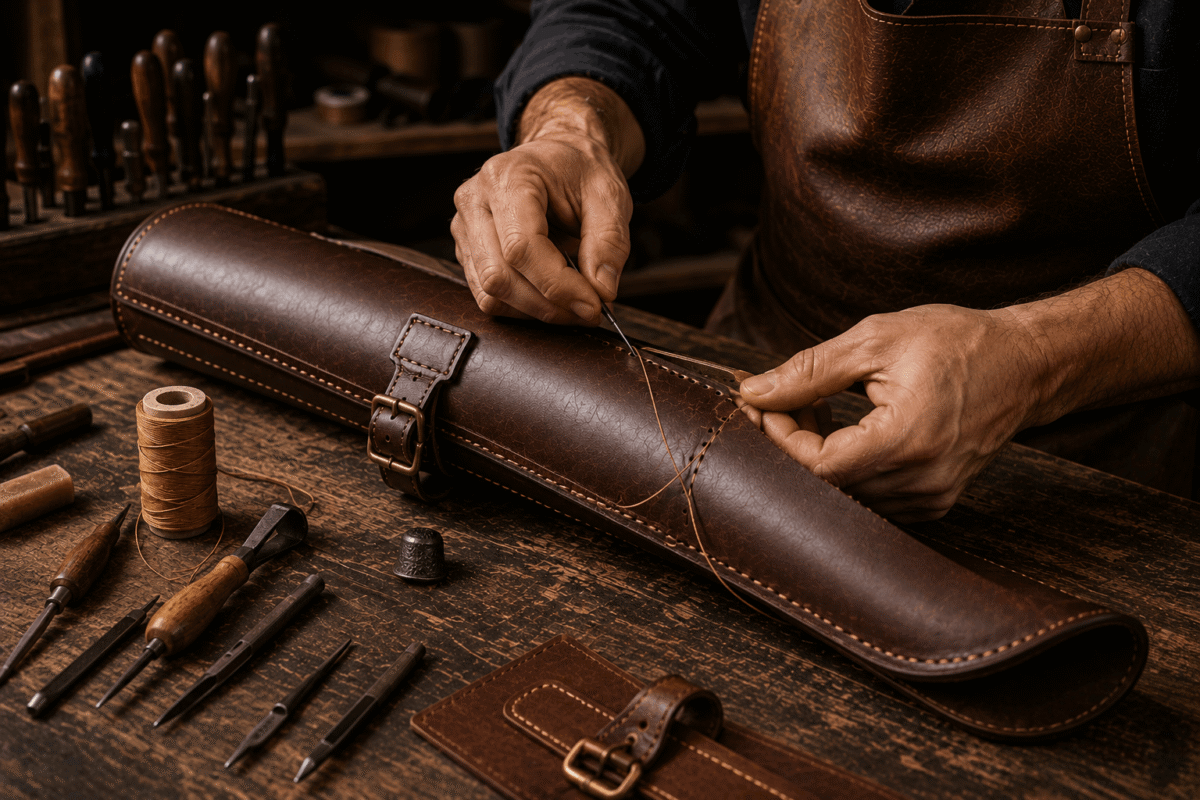
– Punching Stitch Lines Using Pricking Irons
Once the leather pieces are shaped and prepared, stitching begins with marking precise stitch lines. Pricking irons are used to create evenly spaced holes along the seams.
This step is entirely manual and requires accuracy, as the spacing directly affects both strength and appearance. At Frontier Leather Co, craftsmen take time to ensure each line is straight and consistent.
Proper alignment at this stage ensures the final product looks clean and holds structural integrity under pressure.
– The Traditional Saddle Stitch: Why Two Needles Are Better Than One
The saddle stitch is one of the strongest stitching techniques in leatherwork. It uses two needles working from opposite sides of the same thread, locking each stitch securely in place.
Unlike machine stitching, which can unravel if broken, saddle stitching remains intact even if one section wears out. At Frontier Leather Co, this method is preferred for its durability and heritage value. Every stitch is pulled tightly by hand, ensuring consistency and strength.
Phase 5: Edging, Dyeing, and Finishing Touches
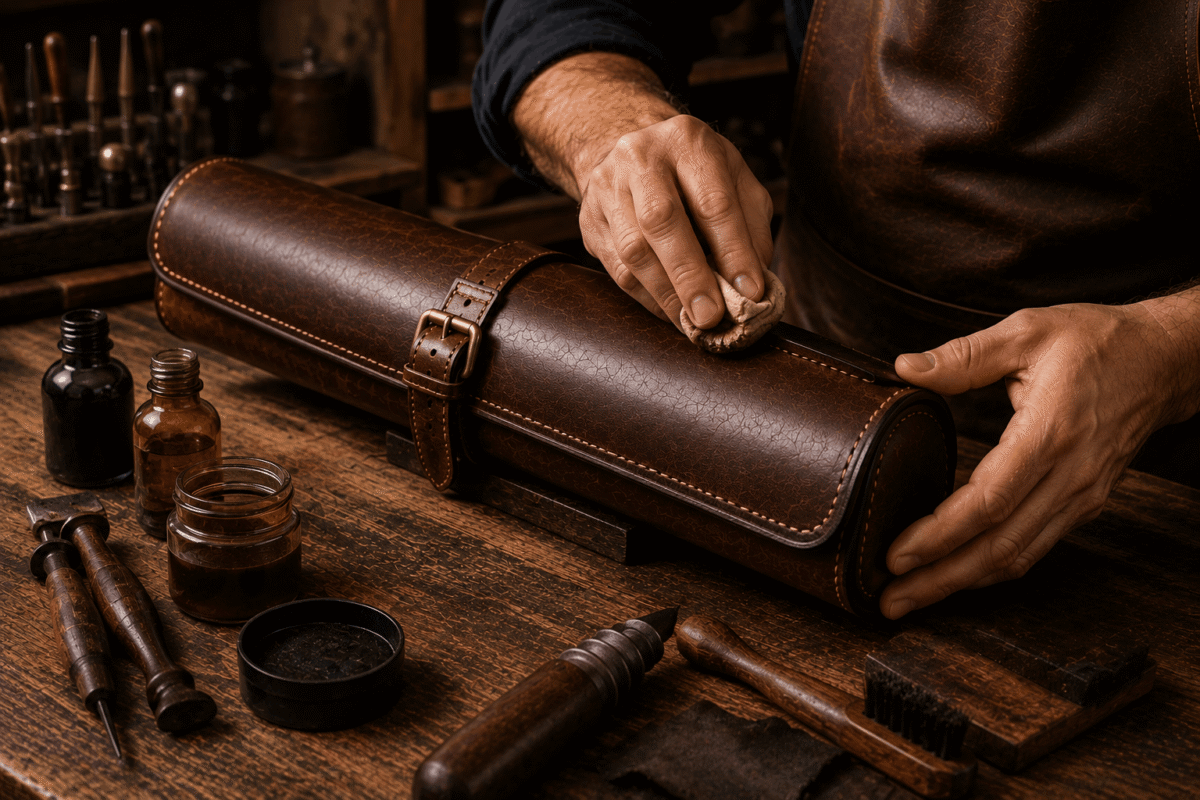
– Edge Burnishing and Painting for a Slick, Sealed Rim
Edge finishing is essential for both durability and appearance. The raw edges of leather are burnished with heat and friction to create a smooth, polished surface.
In some cases, edge paint is applied for additional sealing and a refined look. At Frontier Leather Co, this process is done carefully to prevent cracking and moisture absorption. A well-finished edge not only enhances visual appeal but also strengthens the structure by preventing fraying over time.
– Applying Hand-Rubbed Dyes and Patina Finishes
Coloring leather is about character. Hand-rubbed dyes are applied slowly to ensure deep, even penetration into the hide. This technique enhances natural grain patterns and allows the leather to age beautifully over time.
At Frontier Leather Co, patina finishes are often added to create depth and richness in tone. Each piece becomes unique as it reacts differently to dye absorption.
FAQ’s
1. Why is hand-stitching better than machine stitching in leather gun cases?
Hand-stitching, especially saddle stitching, offers stronger durability because each stitch is independently secured..
2. What makes full-grain leather ideal for gun cases?
Full-grain leather is the strongest layer of the hide. It resists wear, develops a natural patina, and lasts significantly longer than processed leather, making it ideal for gun cases.
3. How long does it take to make a handmade leather gun case?
Depending on design complexity, it can take several days to a few weeks, as every stage is done manually with careful attention to detail.
4. How do you maintain a leather gun case?
Regular conditioning with leather oils or beeswax helps keep it soft, prevents cracking, and maintains water resistance over time.
5. Can a leather gun case be customized?
Yes, leather gun cases can be customized and are very common.