


For most people, carrying firewood by hand doesn’t seem like a problem until they have to do it several times in one evening. A couple of logs tucked under your arm might get the job done, but once you’re walking back and forth between the woodpile and the fireplace, the small inconveniences start adding up.
Loose bark falls onto the floor, wood dust ends up on your clothes, and uneven logs never seem to stay where you want them. If you’ve ever reached the door only to realize one log has slipped from your grip, you already understand why firewood carriers have remained popular for generations.
As explained in the history and evolution of firewood carriers, people have been looking for better ways to move firewood long before modern carriers existed. While the materials have changed over time, the purpose has remained the same: carry more wood with less effort and less mess.
Today, whether you choose a leather firewood carrier, a canvas wood carrier, or another style, the goal isn’t simply transporting logs. It’s making an everyday task easier, cleaner, and more comfortable.
Why Carrying Logs by Hand Becomes Difficult
A single piece of firewood rarely causes trouble. The challenge starts when you need enough logs to keep a fire burning for several hours.
Unlike boxes or bags, firewood doesn’t have a predictable shape. Every piece is slightly different. Some are wider, some are longer, and freshly split logs often have sharp corners that refuse to sit comfortably against your arm.
Over time, most homeowners discover that the inconvenience isn’t the weight itself. It’s trying to manage several awkward pieces at once while keeping bark, dirt, and wood chips from ending up inside the house.
The Mess Most Homeowners Notice
Even properly seasoned firewood sheds debris.
Small flakes of bark break away during transport. Tiny wood chips fall through your fingers. Dust settles onto your sleeves, and if the logs have been sitting outdoors, leaves or bits of soil often come along for the ride.
One trip may not seem like much, but after several trips during winter, that debris quickly spreads across entryways, rugs, and hardwood floors.
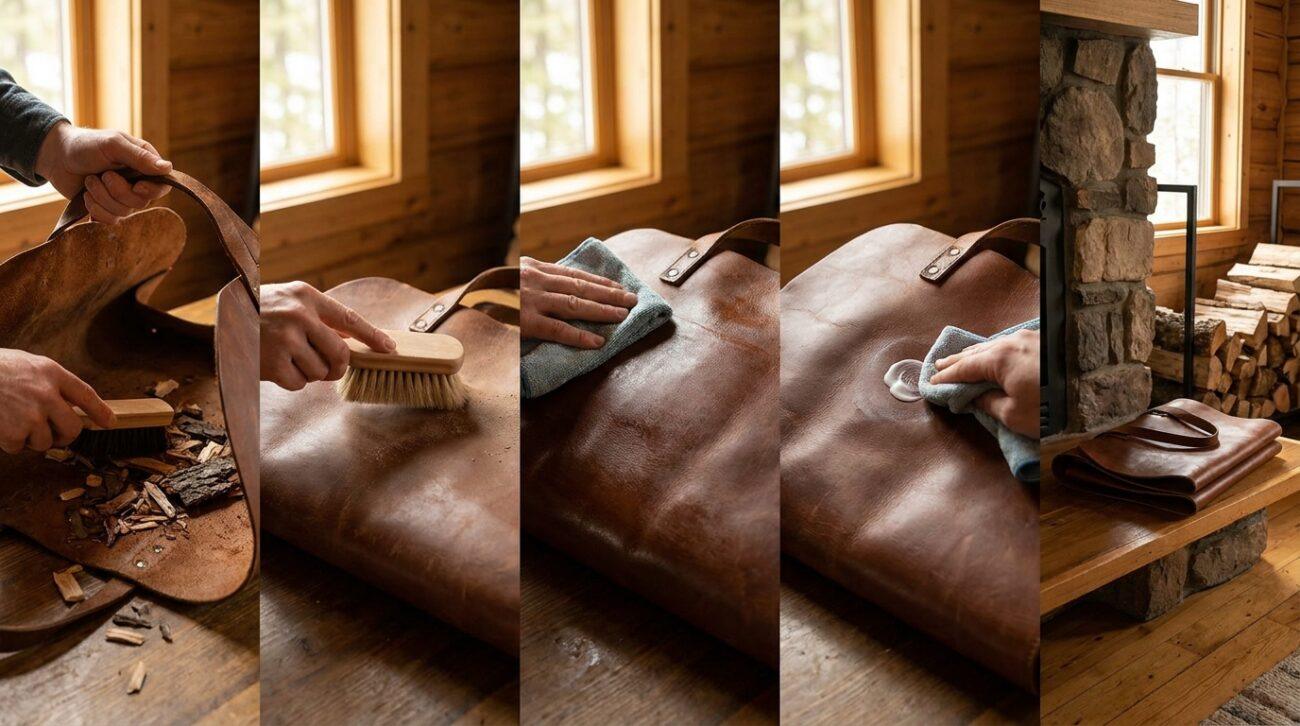
A leather fire log carrier helps contain much of that loose material in one place. Instead of carrying every log directly against your clothing, the carrier supports the load while catching much of the bark that would otherwise fall indoors.
Uneven Weight Makes Logs Harder to Carry
Most firewood isn’t cut into perfectly identical pieces. One log may be twice the thickness of another, while another may still have uneven bark attached.
That uneven weight constantly shifts while you walk. You adjust your grip, another log rolls slightly, and before long, you’re stopping just to keep everything balanced.
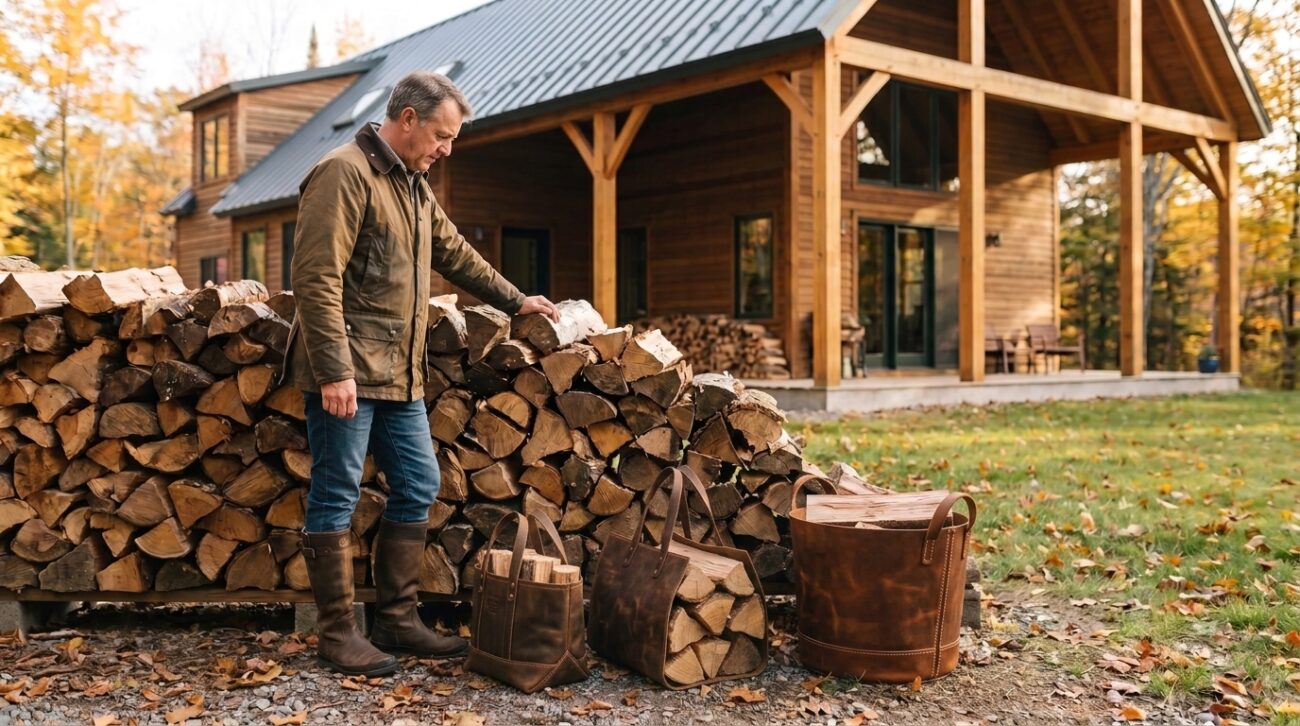
A firewood carrier changes the way the load is supported. Rather than relying on your arms to hold individual logs together, the material wraps around the wood and keeps the bundle stable throughout the walk.
For many homeowners, that simple difference makes carrying firewood feel noticeably easier, even though the total weight hasn’t changed.
Why a Firewood Carrier Makes Everyday Life Easier
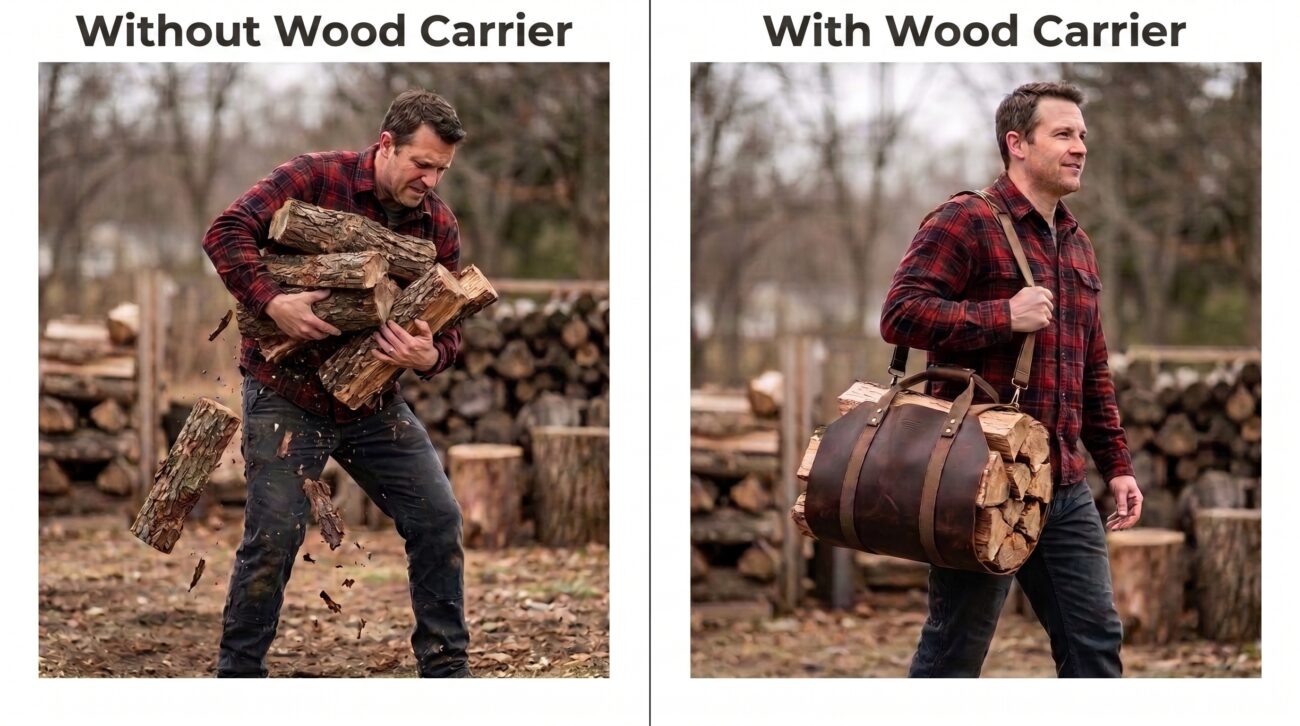
A firewood carrier isn’t designed to replace hard work. Instead, it removes many of the small frustrations that come with moving logs several times each week.
Whether you’re bringing wood inside for a family fireplace or carrying logs to an outdoor fire pit, having the right carrier often means fewer interruptions and less cleanup afterward.
Cleaner Trips From the Woodpile to the Fireplace
The most immediate benefit is cleanliness.
Instead of balancing rough logs against your jacket or sweater, the carrier keeps everything together inside a single bundle. That means fewer bark fragments falling along hallways and less sweeping after every trip.
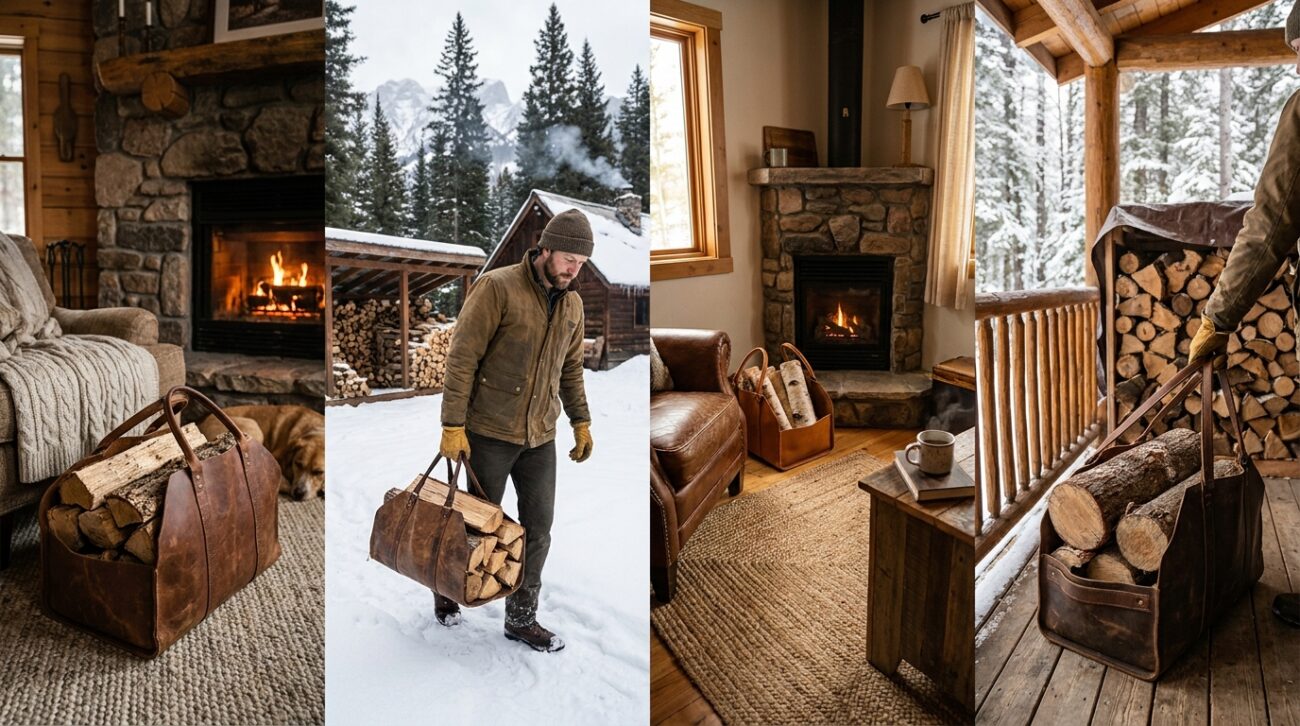
Many homeowners also find that keeping the wood contained makes the fireplace area feel more organized. Rather than placing loose logs directly on the floor, the carrier can hold them until they’re ready to be used.
If you’re still deciding which type of carrier suits your needs, The Ultimate Guide to Leather Firewood Carriers explains how different materials perform in everyday use.
Better Comfort and Control
Anyone who has carried split logs against bare forearms knows how uncomfortable rough bark can be.
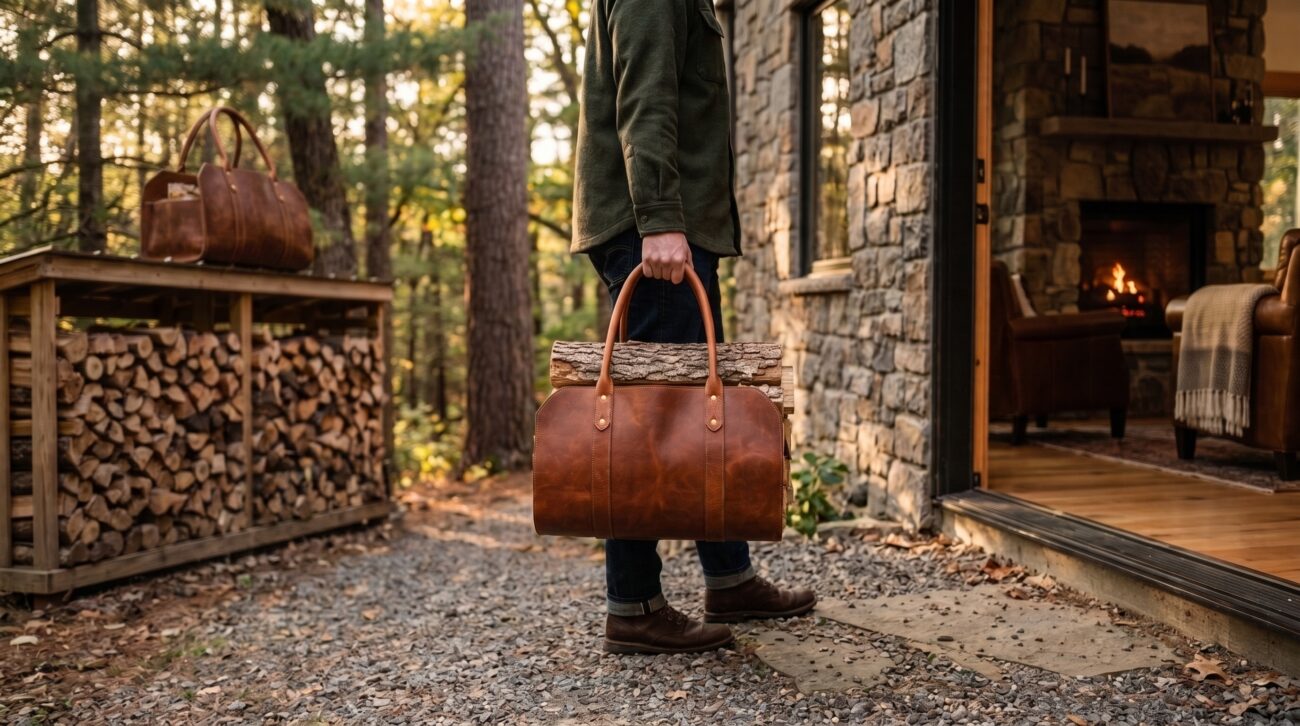
A leather wood carrier creates a barrier between you and the firewood. Instead of gripping every individual log, you’re simply lifting two handles while the carrier supports the load underneath.
The difference becomes even more noticeable when carrying wood across uneven ground, through narrow doorways, or up porch steps.
Rather than worrying about one log slipping away, you can focus on carrying the load safely.
Fewer Trips During Fireplace Season
One of the biggest advantages isn’t strength, it’s efficiency.
Because the logs stay together, most people naturally carry a more practical amount of wood in one trip without struggling to keep everything balanced.
That doesn’t mean filling the carrier to the max. A comfortable load is almost always better than the heaviest one.
Pro Tip: A well-balanced load is easier on your back than an overloaded carrier. If the handles feel strained or the logs shift while walking, it’s worth making one extra trip instead of forcing everything into a single load.
Leather vs Canvas for Everyday Firewood Carrying
Not every homeowner needs the same type of carrier.
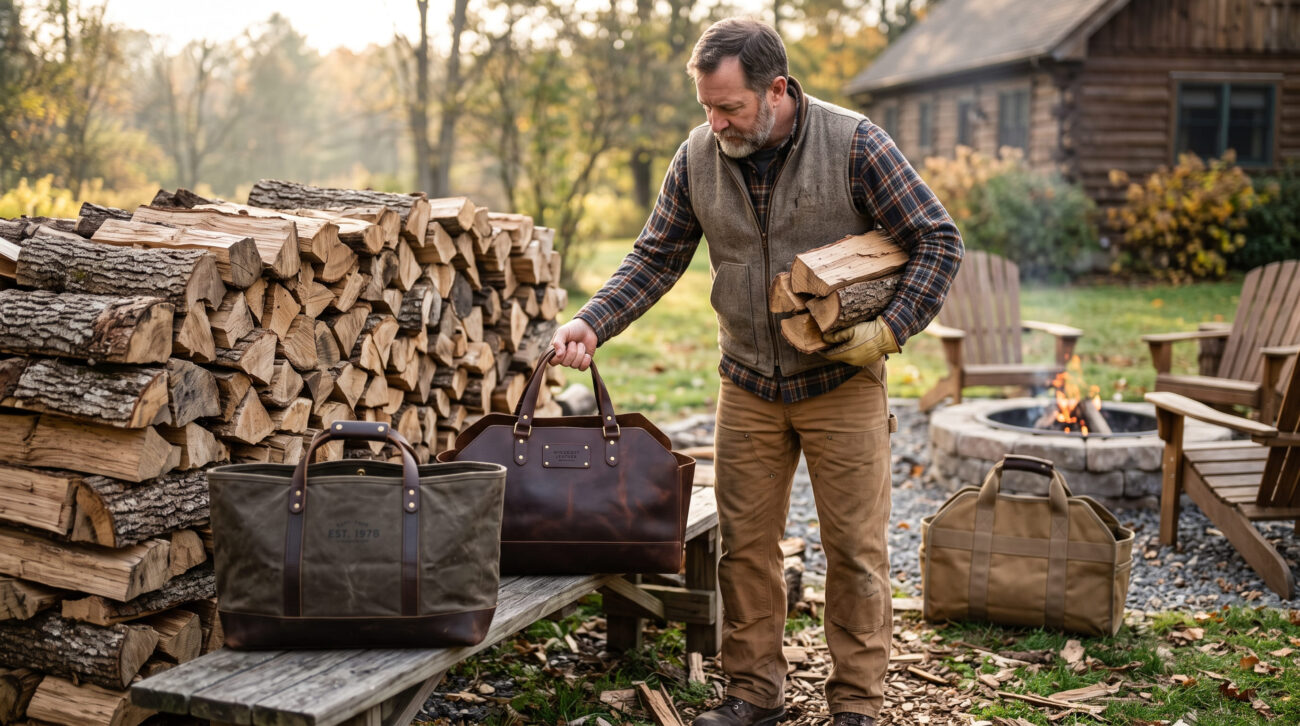
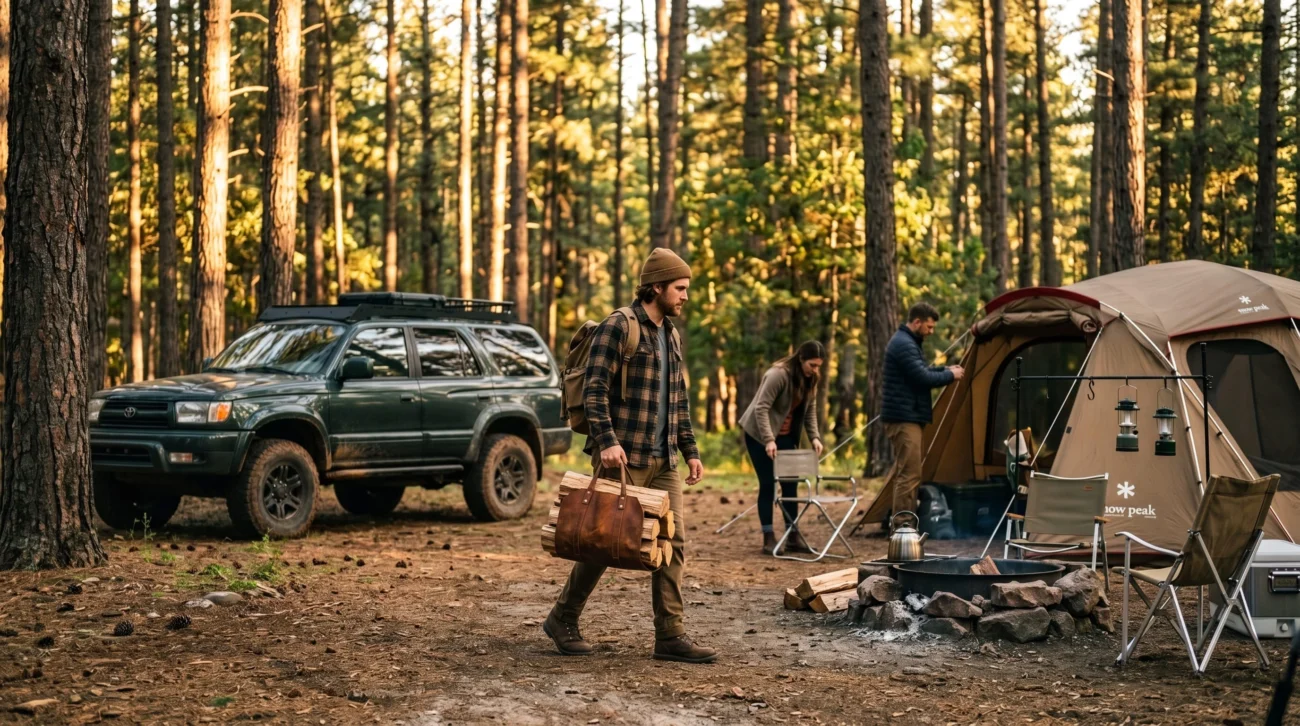
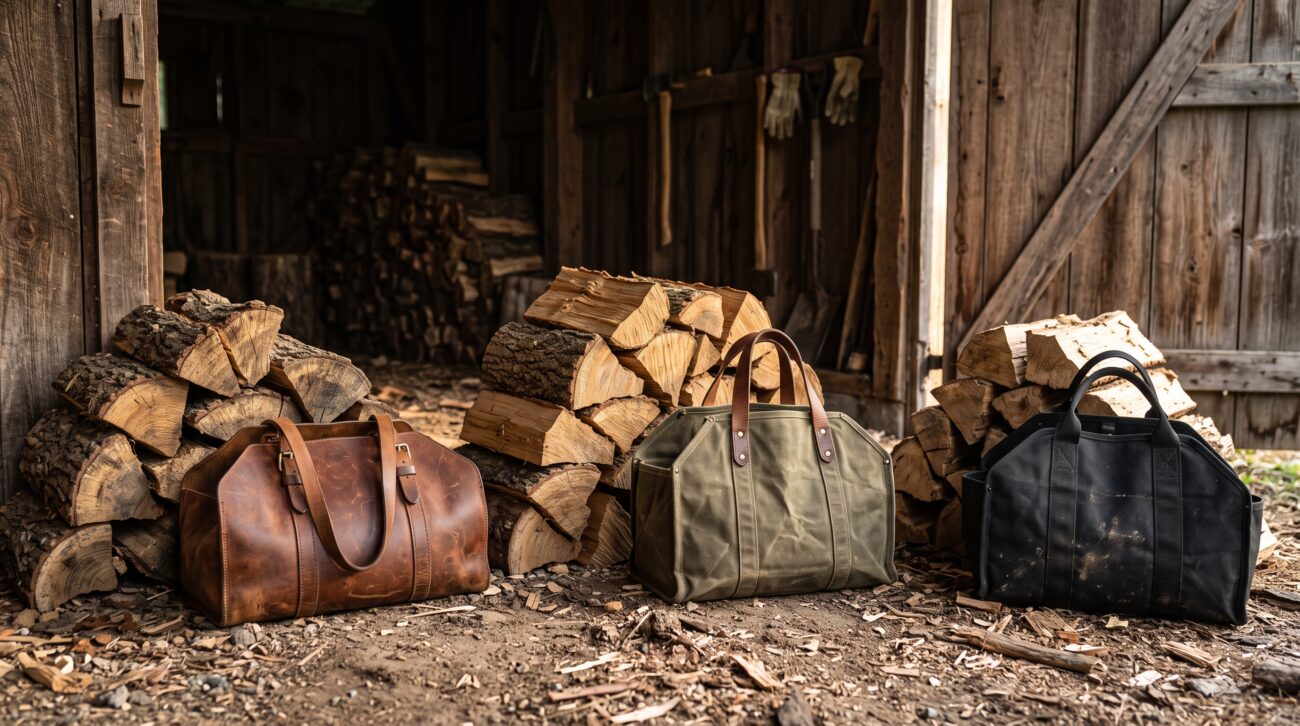
Someone bringing a few logs into a living room each evening may prioritize appearance and durability. Someone carrying wood around a campsite or outdoor fire pit may care more about flexibility and weather resistance.
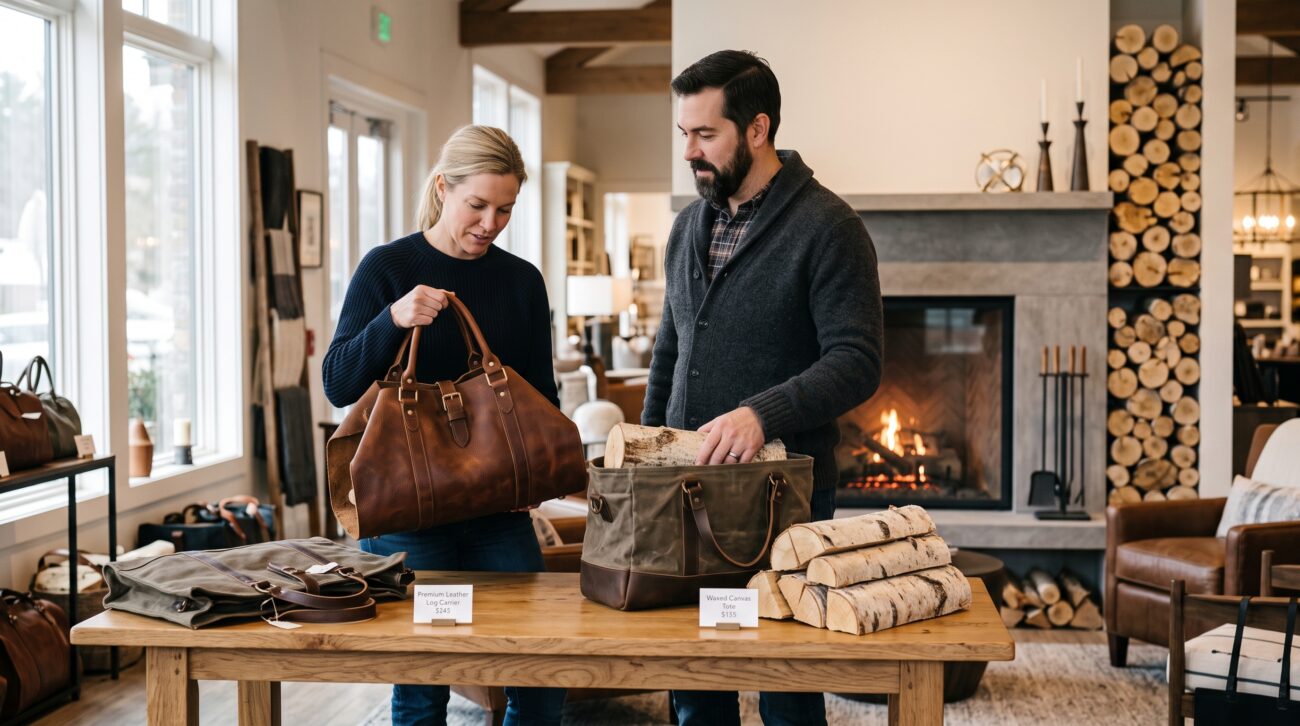
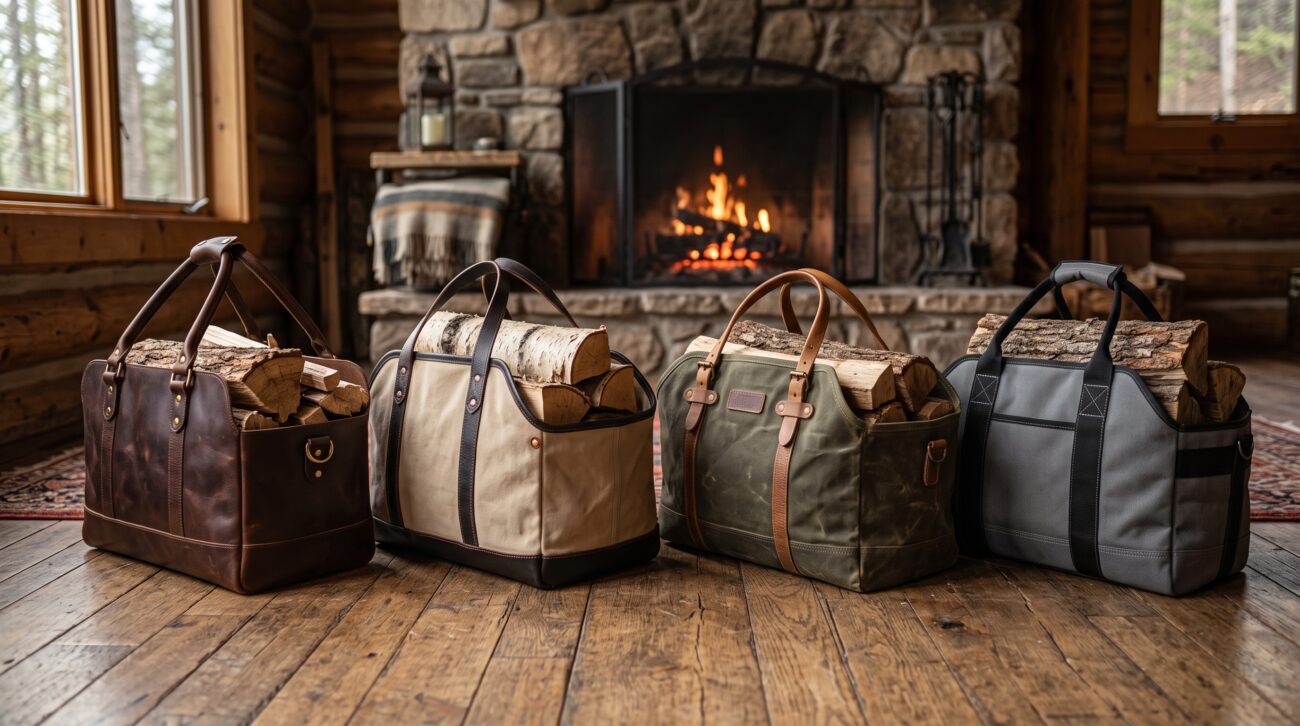
This is why leather and canvas remain the two most common materials used for firewood carriers.
Leather Firewood Carriers
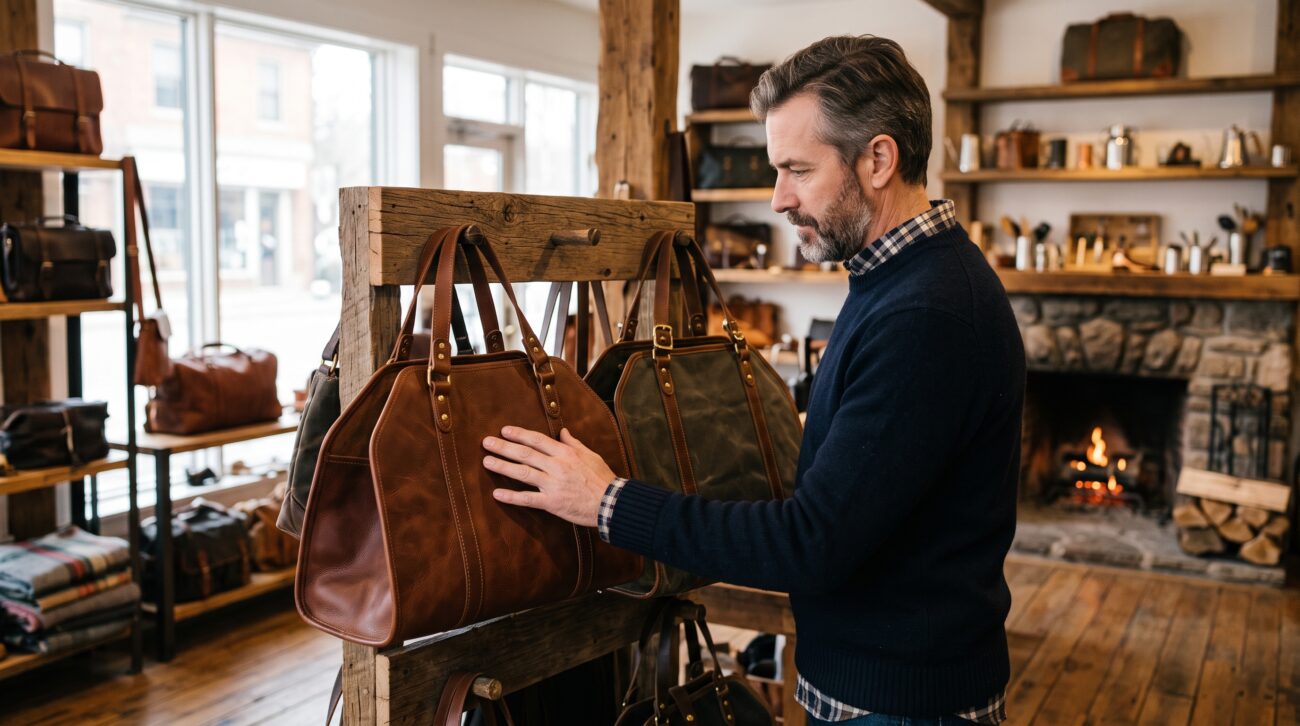
A quality leather firewood log carrier is often chosen for its combination of strength and appearance.
Leather naturally handles rough surfaces well, which makes it suitable for carrying split logs season after season. Unlike some lightweight materials that can sag under heavier loads, a well-made leather carrier tends to maintain its structure while remaining flexible enough to wrap around the wood.
Many homeowners also appreciate the way leather ages. Small marks and signs of use often become part of the character rather than making the carrier look worn out.
For people interested in long-term durability, understanding how long full-grain leather lasts can provide useful insight into why premium leather products often remain in service for years.
Canvas Wood Carriers
A canvas wood carrier offers a different set of advantages.
Canvas is typically lighter than leather and can be easier to fold or store when not in use. Many outdoor users appreciate its practicality, especially when carrying firewood between sheds, campsites, porches, and backyard fire pits.
Waxed canvas versions add another layer of functionality by providing better resistance to light moisture and outdoor conditions.
For people who prioritize utility over appearance, a canvas log carrier can be a practical choice that still handles regular use effectively.
Which Material Works Best?
The answer depends less on the material itself and more on how the carrier will be used.
| Situation | Leather Firewood Carrier | Canvas Log Carrier |
| Indoor fireplaces | Excellent | Good |
| Cabin interiors | Excellent | Good |
| Outdoor fire pits | Good | Excellent |
| Camping trips | Good | Excellent |
| Long-term durability | Excellent | Good |
| Lightweight portability | Good | Excellent |
| Decorative appearance | Excellent | Good |
Neither material is universally better. The right choice depends on whether appearance, durability, portability, or outdoor practicality matters most to you.
Situations Where a Firewood Carrier Makes the Biggest Difference
Some households use firewood occasionally. Others rely on it throughout an entire season.
The more often wood is carried, the more noticeable the benefits of a carrier become.
Indoor Fireplaces
For indoor fireplace users, cleanliness is often the biggest advantage.
Wood chips and bark tend to accumulate quickly when logs are carried by hand. A carrier helps keep much of that debris contained, reducing the amount of sweeping needed around the hearth.
Many homeowners also prefer the organized look a carrier provides beside the fireplace.
Cabins and Seasonal Homes
Cabins often require more frequent trips between outdoor wood storage and indoor heating areas.
In these settings, carrying logs by hand becomes repetitive very quickly. A firewood carrier simplifies the routine and helps move enough wood indoors for several hours of use.
This is one reason leather carriers have remained popular in rustic and cabin-style environments for generations.
Wood Stoves
Wood stove users typically add fuel more frequently than those using decorative fireplaces.
Because the stove may be used daily during colder months, even small improvements in convenience become valuable over time.
A carrier helps streamline the process and keeps extra firewood organized near the stove without creating unnecessary clutter.
Outdoor Fire Pits
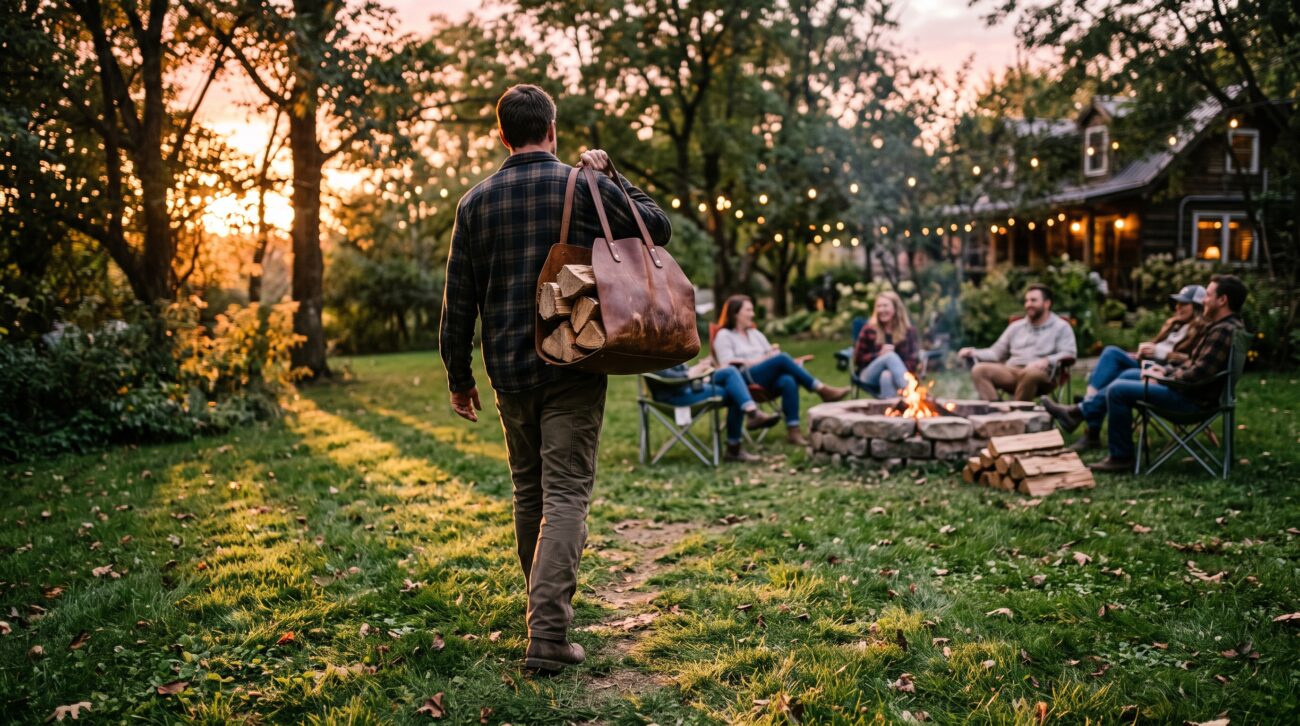
Outdoor gatherings often involve repeated trips back to the woodpile.
Rather than carrying loose logs across the yard throughout the evening, a carrier allows several pieces to be transported at once and kept nearby until needed.
For outdoor use, both leather and canvas carriers can work well, depending on the environment and personal preference.
When Carrying Logs by Hand Still Makes Sense
Despite the advantages of firewood carriers, there are situations where carrying wood by hand remains perfectly reasonable.
If you’re moving a single log from a nearby rack to the fire, a carrier probably isn’t necessary.
Likewise, if your wood storage area sits only a few steps from the fireplace, grabbing one or two pieces at a time may be more convenient than reaching for a carrier.
The value of a carrier increases as the distance, frequency, and amount of wood increase.
In other words, firewood carriers aren’t about replacing common sense. They’re about making repetitive tasks easier.
Common Mistakes People Make When Carrying Firewood
Even with a carrier, a few simple mistakes can make the job harder than it needs to be:
- Overloading the carrier with more wood than can be carried comfortably
- Carrying freshly split wood covered in loose bark and debris
- Ignoring loose stitching or worn handles
- Dragging the carrier across rough concrete or gravel surfaces
- Storing a leather carrier while it is still damp
- Choosing a carrier that is too small for the size of the logs being used
Most of these issues are easy to avoid, but addressing them early can help extend the life of the carrier and make each trip safer.
Final Thoughts
People don’t usually buy a firewood carrier because carrying logs is impossible without one. They buy one because carrying firewood becomes easier, cleaner, and more comfortable when the wood is properly contained.
The difference may seem small at first. But after a season of hauling wood from a shed, porch, or woodpile, many homeowners realize how much time is spent dealing with shifting logs, falling bark, and repeated trips.
Whether it’s a leather firewood carrier beside a living room fireplace or a canvas wood carrier used around a backyard fire pit, the purpose remains the same: making a necessary task feel a little less like work.
FAQs
Is a firewood carrier really necessary?
Not necessarily. If you only carry one or two logs occasionally, carrying them by hand may be perfectly fine. A carrier becomes more useful when you regularly move larger amounts of firewood.
What are the benefits of a leather firewood carrier?
A leather firewood carrier offers durability, structure, comfort, and a classic appearance. Many homeowners also appreciate how leather develops character over time instead of looking worn out.
Is a canvas log carrier strong enough for heavy firewood?
A quality canvas log carrier can handle regular firewood loads very well. Heavy-duty or waxed canvas versions are particularly popular for outdoor and cabin use.
Does a firewood carrier reduce mess indoors?
Yes. While no carrier eliminates every wood chip or bark fragment, it helps contain much of the debris that would otherwise fall while transporting logs.
How many logs can a firewood carrier hold?
The exact number depends on the size of the logs and the carrier itself. Most carriers are designed to hold enough firewood for a practical trip without becoming excessively heavy.
Which is better: leather or canvas?
Neither is automatically better. Leather is often preferred for durability and appearance, while canvas is valued for lighter weight and outdoor practicality.
Can a leather firewood carrier be used outdoors?
Yes. Leather carriers can be used outdoors, although they should not be left exposed to rain or excessive moisture for long periods.
How long does a quality leather log carrier last?
The lifespan depends on the leather quality, construction, and maintenance. Well-made carriers crafted from premium leather can remain functional for many years with proper care.
Are firewood carriers only for fireplaces?
No. They are also commonly used for wood stoves, cabins, outdoor fire pits, camping areas, and any location where firewood is transported regularly.