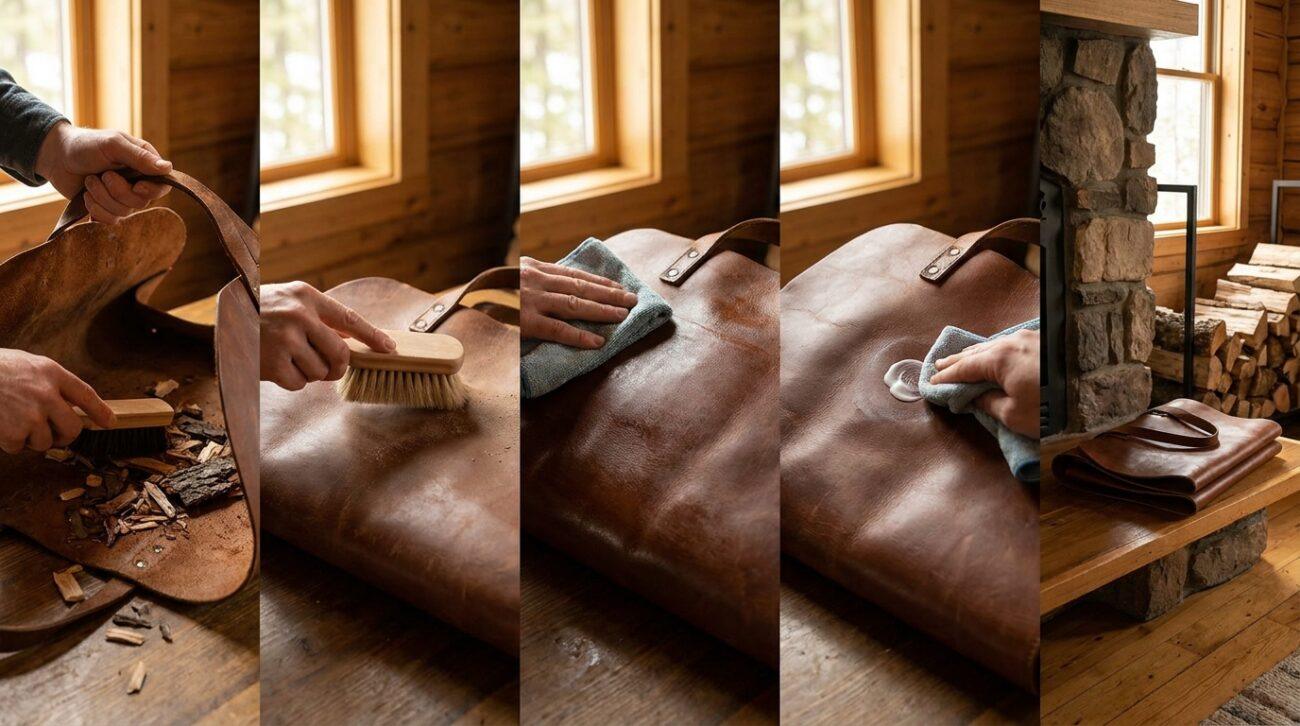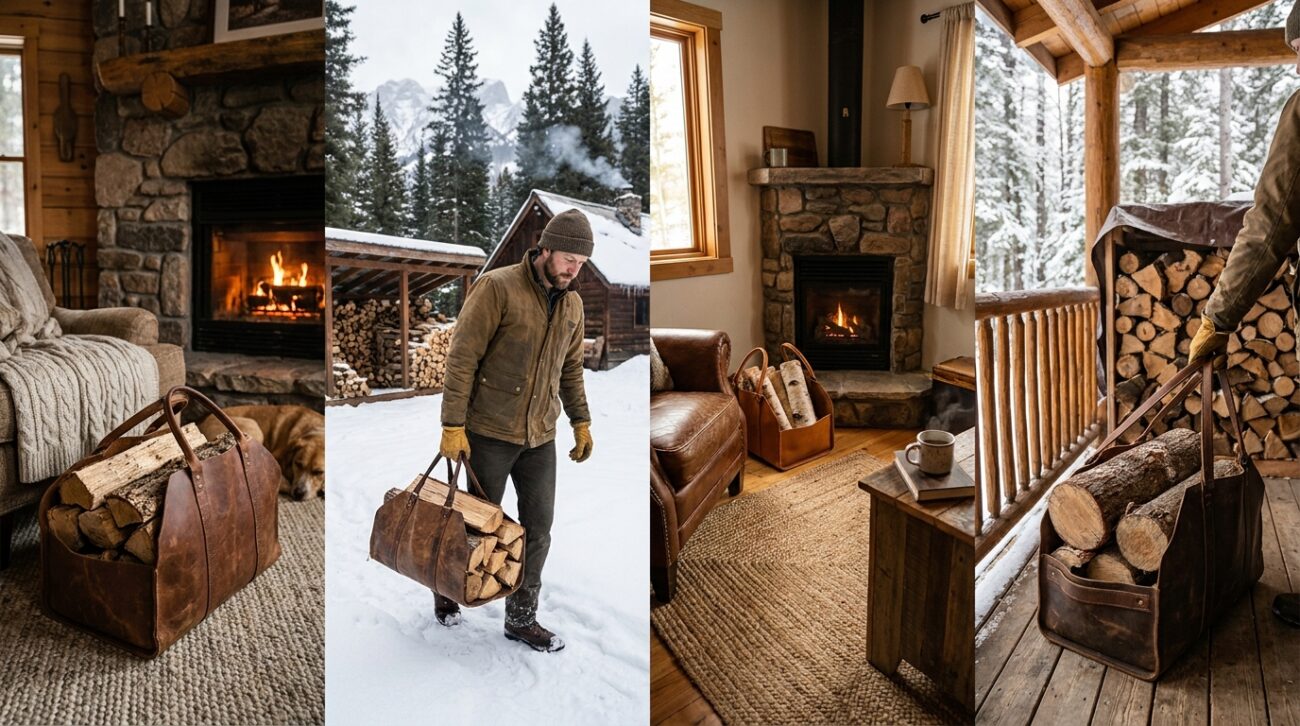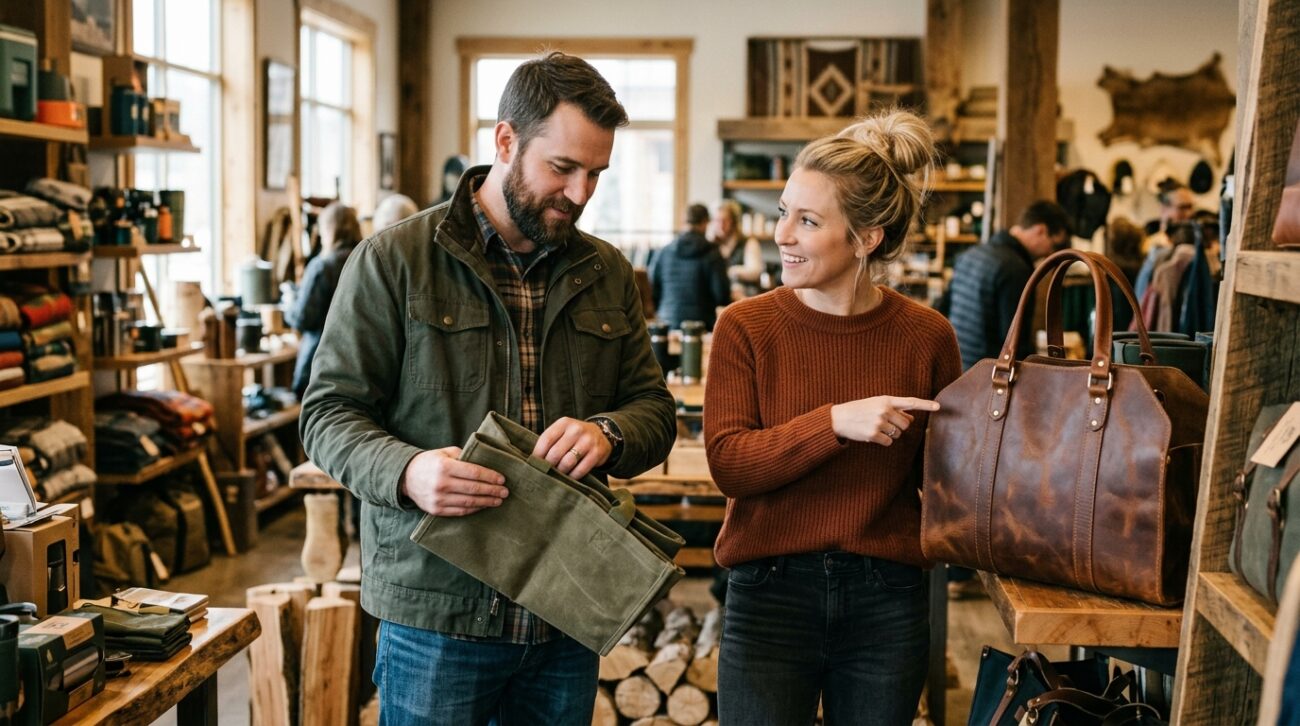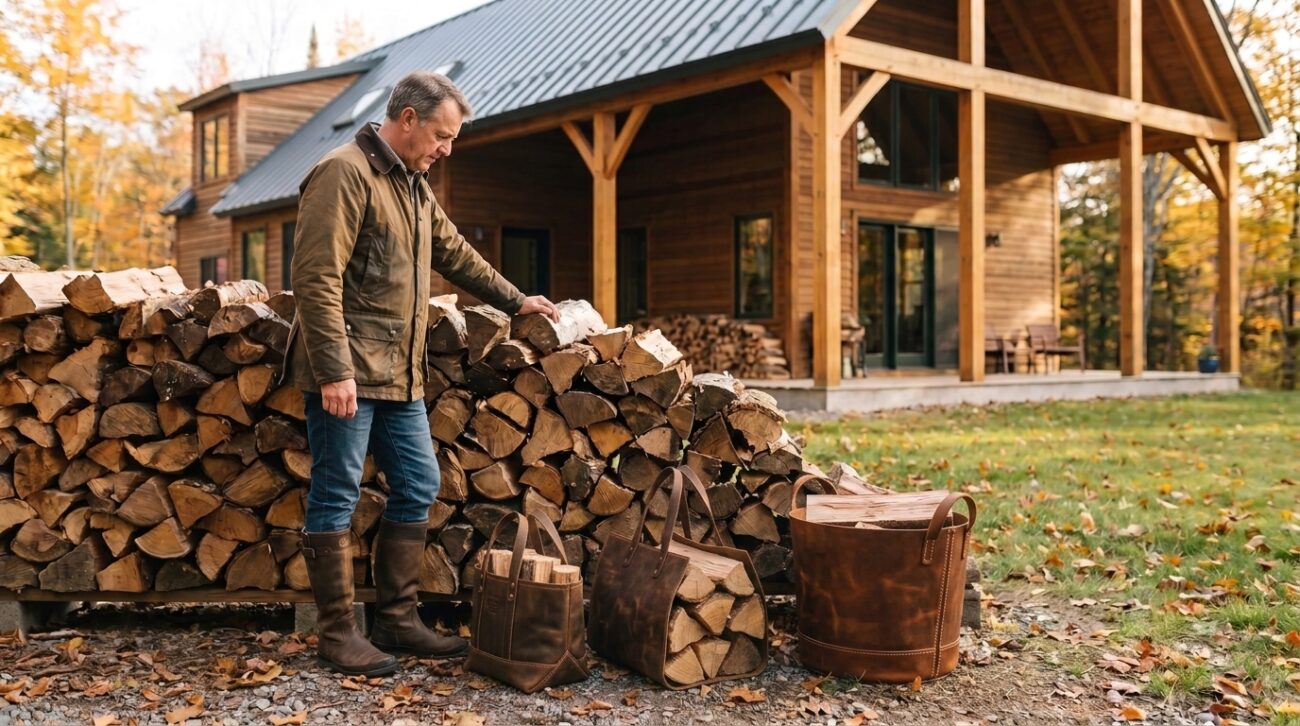

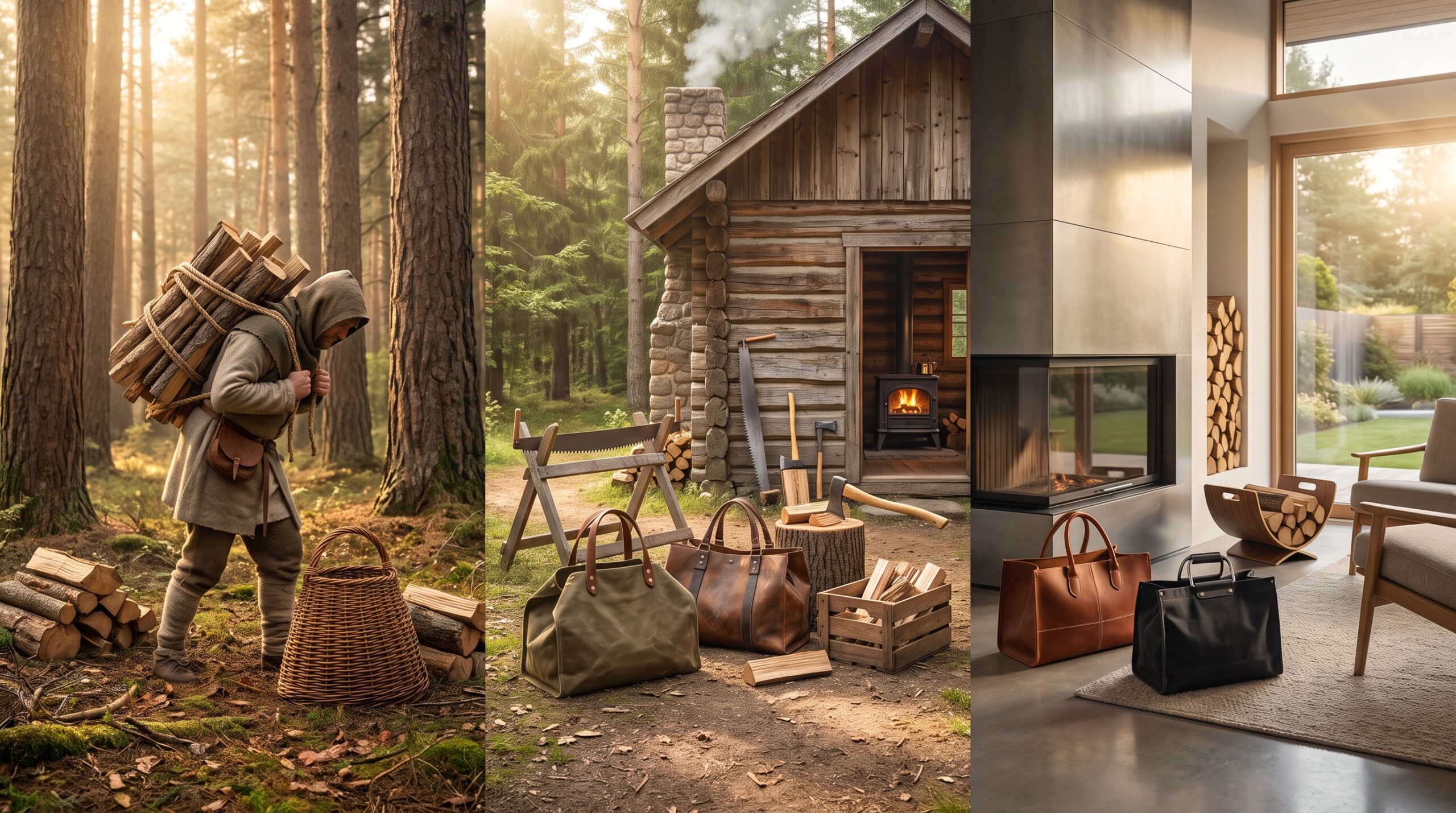

Firewood carriers typically go unnoticed. They are tucked near woodpiles, placed by back doors, kept beside fireplaces, or folded away until cold weather returns. But like many useful household tools, firewood carriers were created out of necessity. People needed a better way to transport wood than carrying loose logs by hand.
Long before firewood carriers had stitched handles, leather bodies, canvas panels, or reinforced corners, people still faced the same basic problem. Firewood was heavy, rough, and messy. Bark, dirt, and small chips were scattered wherever the logs were carried, which became even more inconvenient when fire was part of daily life.
Modern firewood carriers provide a simple solution to an old problem. They did not appear all at once as finished products. They developed gradually through hand-carrying, bundling, baskets, carts, canvas slings, and other methods commonly used to move wood around homes, farms, cabins, and fireplaces. If you’re interested in how today’s designs combine durability, practicality, and premium materials, our Ultimate Guide to Leather Firewood Carriers explores the features, benefits, and considerations that make modern leather carriers a popular choice for everyday use.
Carrying Wood Before Firewood Carriers
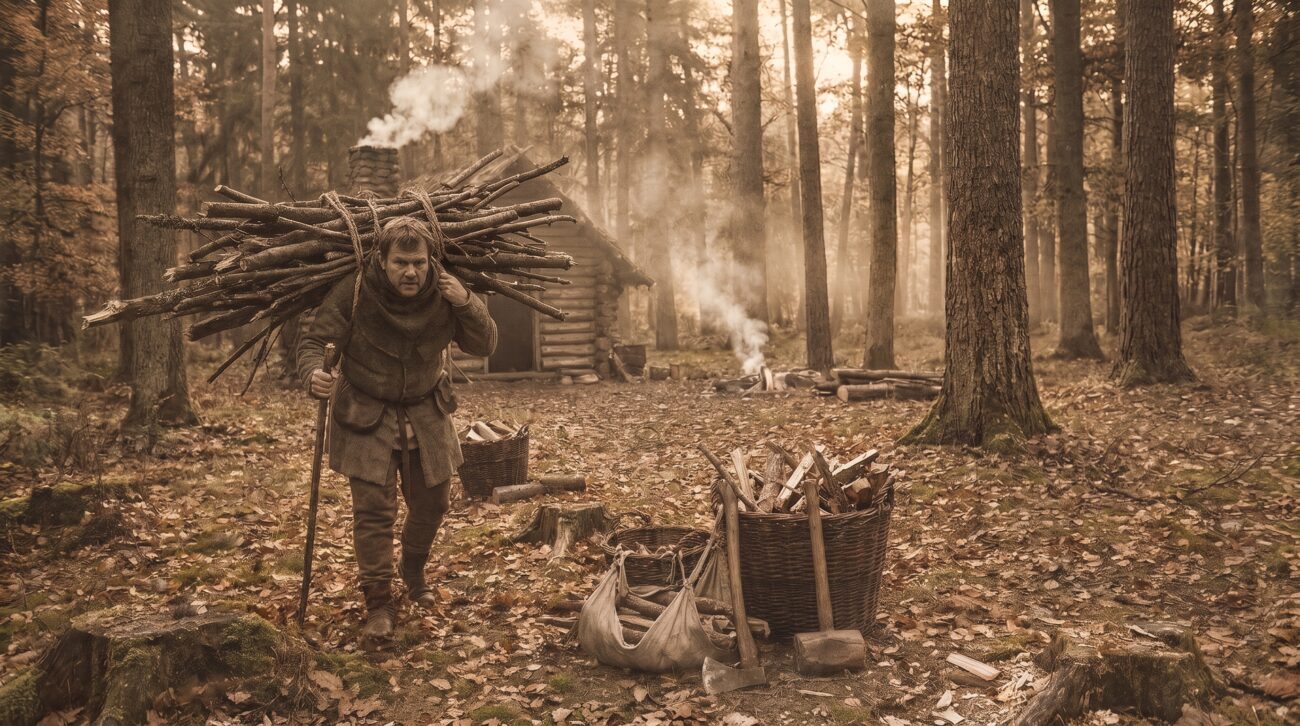
Before people had anything resembling a modern firewood carrier, they used the most direct method available. They carried wood in their arms. Small branches or split logs could be gathered against the body and moved from one place to another, and for short walks, that was often enough.
Problems began when the wood became heavy, uneven, damp, or needed in larger amounts. Logs are not easy to keep neatly under your arm while walking. They shift, bark breaks off, sharp edges press into your arm, and rough pieces can catch on clothing.
Firewood was not just an occasional burden in older homes and rural settings. It was part of everyday life, especially during colder months. A household that relied on fire for heating or cooking needed a steady supply of wood close at hand, which meant someone had to collect, stack, carry, store, and keep it ready.
Firewood and the Everyday Hearth
A hearthbase firewood carrier was once much more than a decorative feature. In many homes, it served as the center of daily activity, from food preparation and water heating to room warming and evening gatherings. Fire was part of the family rhythm, so firewood had to stay close enough to be used easily.
That created a practical routine. Wood might be stored outdoors, stacked near a wall, kept under cover, or brought in from a shed. From there, smaller amounts had to be moved indoors, and carrying tools proved especially useful during this final stage.
People did not always need wagons or carts for the last trip to the hearth. More often, they needed something small enough to carry through a doorway and practical enough to use every day. That is where bundles, baskets, and later soft-sided log carriers made sense.
Bundles Were an Early Solution
Bundling was one of the earliest improvements. Instead of carrying loose sticks individually, people tied small branches, twigs, and kindling together into compact bundles. These were easier to lift, easier to stack, and easier to keep under control.
This method was more effective for smaller wood than for heavy logs, but the idea behind it still matters. Bundling turned scattered pieces into one manageable load. The same basic thinking can still be seen in modern canvas, fabric, and leather log carriers.
A firewood carrier is a more comfortable and reusable version of that same idea. It gathers the wood together, keeps it from spreading too quickly, and gives the user handles instead of forcing them to grip each log directly.
Baskets Became Common Around the Hearth
Baskets became one of the most practical tools for transporting and storing firewood near the hearth. They could carry small logs, kindling, bark, and other loose pieces that were difficult to manage by hand. A basket also made sense indoors because it could sit near the fireplace without looking out of place.
In many homes, an old firewood basket served two purposes. It kept a ready supply of wood nearby and helped contain bark, chips, and loose debris in one area. This made the space around the hearth feel more organized.
Baskets still had limitations. Long logs could stick out awkwardly, and heavy loads could strain the handles. Carrying a rigid basket was not always comfortable if the wood pile was far from the house. Baskets worked well for storage and small loads, but they were not the perfect solution for every situation.
Larger Loads Needed Different Tools
When larger amounts of wood had to be moved, people used larger tools. Carts, sledges, wheelbarrows, and wagons were commonly used to transport heavier loads over greater distances. These were not fireplace accessories; they were outdoor work tools.
That distinction is still useful today. A cart or wheelbarrow helps transport large loads of wood from one area to another, while a firewood carrier assists with the smaller final load from a storage rack, porch, shed, or garage to the fireplace or stove.
Many homes still follow this same firewood routine. Wood is stacked on an outdoor rack, moved in larger batches closer to the house, and then carried inside a few logs at a time. Although the tools have changed over time, the routine remains familiar.
Fireplaces Became Part of the Room
As homes evolved, fireplaces changed as well. In many modern households, fireplaces are no longer the only source of heat. Central heating, stoves, and other systems have reduced the need to rely on an open hearth for daily warmth.
That did not cause fireplaces to disappear. It changed what people expected from them. A fireplace became a source of comfort, atmosphere, and seasonal warmth, as well as an important part of room design and decor.
This shift affected the tools around the fireplace, too. A firewood carrier no longer had to be purely utilitarian if it was going to sit near the hearth. It still had to do the job, but it also needed to look natural in the space.
Canvas Carriers Made Moving Firewood Easier
Canvas became an ideal material for firewood carriers because it was durable, flexible, and easier to store than rigid containers. A canvas log carrier could be opened flat, filled with wood, lifted by its handles, and folded away after use.
Canvas also solved some of the problems that baskets could not. Long logs could sit more naturally in an open-ended canvas carrier because the flexible body wrapped around the wood instead of forcing it into a fixed shape. For everyday use, this made the job simpler.
Canvas log carriers are also suited for sheds, garages, cabins, and outdoor spaces. They were not too formal, not too heavy, and not difficult to store. For many people, canvas became the practical working version of the firewood carrier.
Waxed Canvas Added Outdoor Practicality
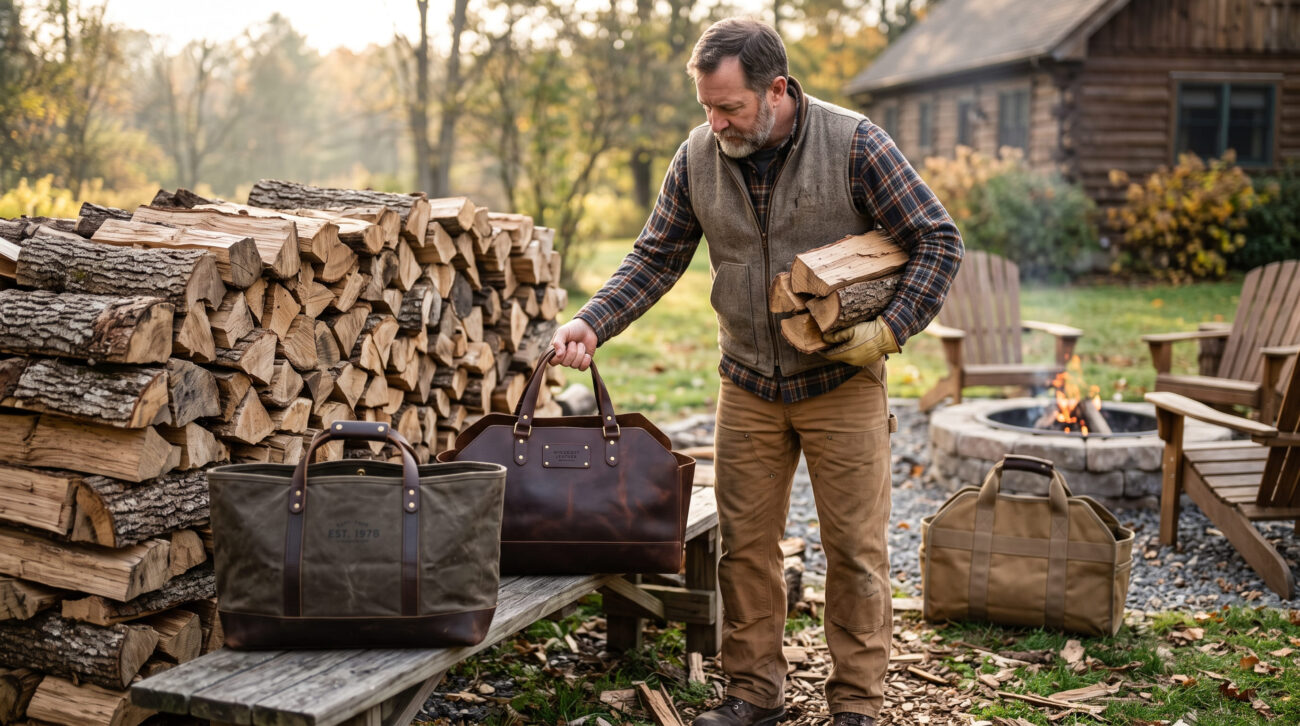
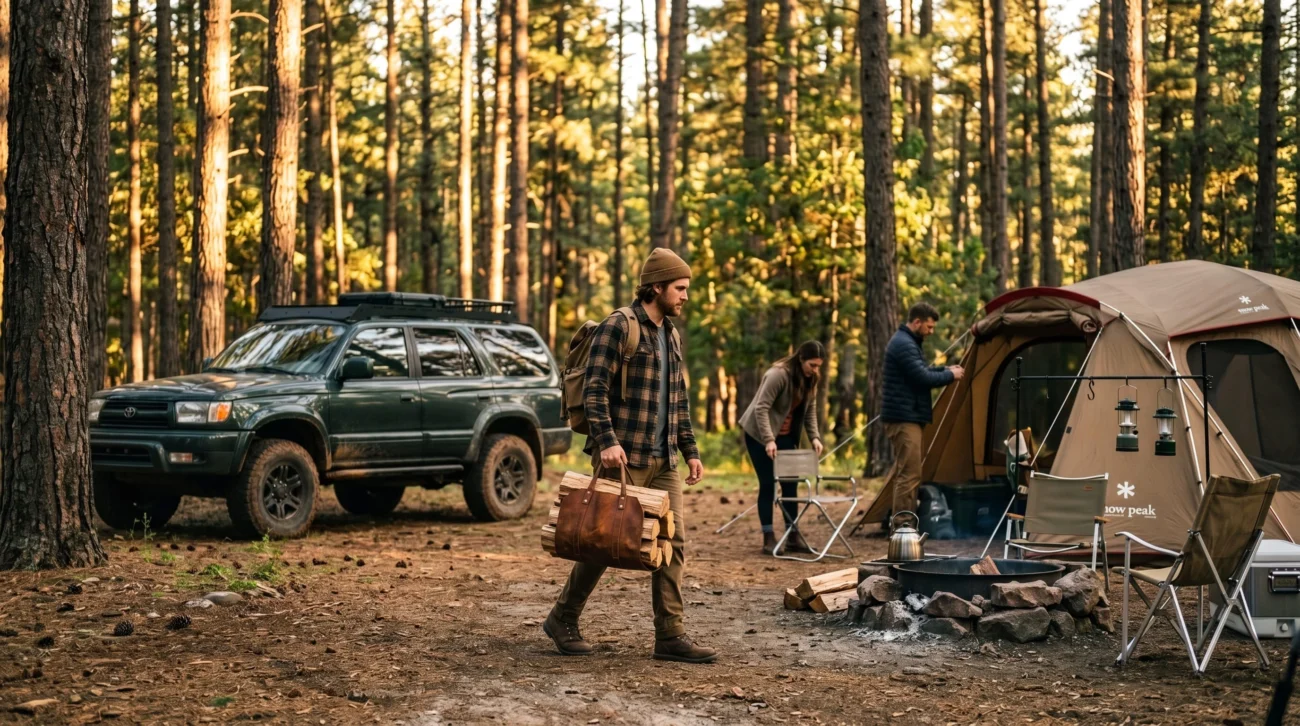
Waxed canvas appeared later as a tougher material option. By treating canvas with wax, the fabric became more resistant to light moisture and outdoor conditions. This made it useful when transporting wood from damp ground, covered porches, campsites, or backyard fire pit areas.
Waxed canvas wood carriers still require care. They should not be left wet and forgotten in a corner. However, compared with plain fabric, waxed canvas offered more protection and a sturdier feel.
This is why waxed canvas remains a practical choice in outdoor and cabin settings. It has a useful, working-tool appearance and can handle frequent use when moving logs in colder or less refined spaces.
Leather Added Strength and Character
Leather entered the world of firewood carriers naturally because it had already been used for many types of work goods. It was strong, flexible, and able to withstand rough use when made properly. Those qualities mattered when transporting logs.
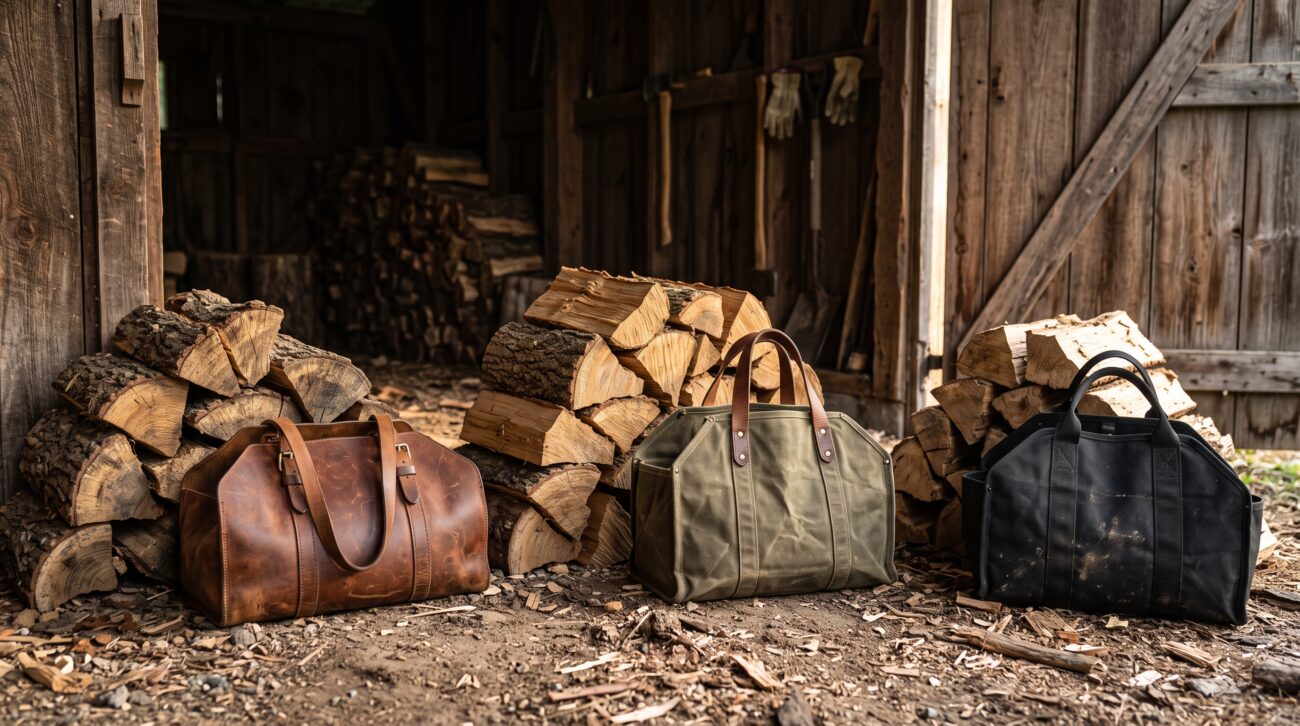
Leather firewood carriers offered something different from plain canvas or fabric. They had more structure and a stronger sense of permanence. They also looked better beside an indoor fireplace, especially where the hearth was part of the room’s character.
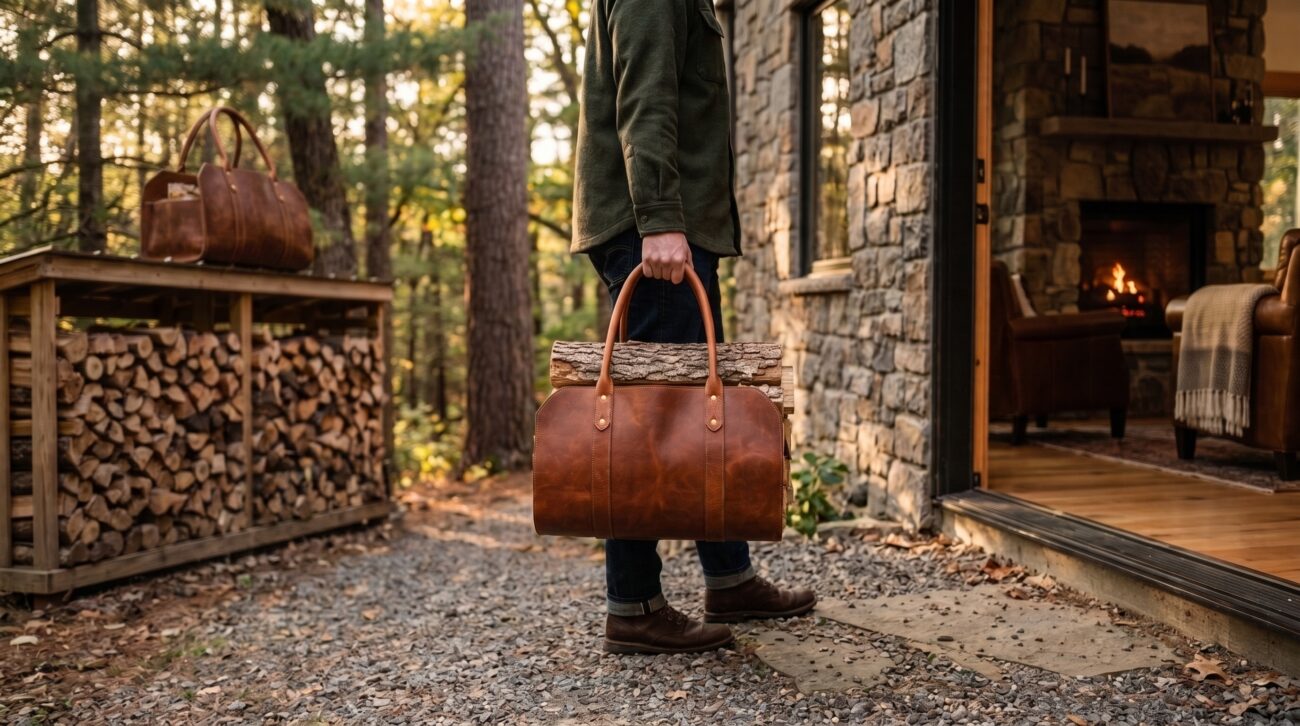
Leather did not turn log carriers into fragile items. Their purpose remained the same: carrying rough wood. What made a leather log carrier different was its ability to fit naturally into homes, cabins, and lodge-style spaces without looking like a temporary utility bag.
Firewood Carriers Became Fireplace Accessories
Over time, firewood carriers evolved beyond tools left beside the woodpile. They became part of the group of items kept around the fireplace, along with tools, screens, log racks, ash buckets, and hearth storage pieces.
That shift changed how carriers were designed. Strength still mattered, but appearance began to play a larger role. A carrier might be chosen for its handles, stitching, material, size, and how well it looked near the fire.
Leather and waxed canvas do not need to look perfect to look their best. In fact, signs of use can often add to their appeal. A scratch on leather or softened folds in waxed canvas can make the carrier feel more natural and suited to its purpose.
Design Note:“The best fireplace tools tend not to draw too much attention. They should appear natural among the other elements around the fire.”
Why Firewood Carrier Designs Remained Simple
Over time, many household tools became more complicated. Firewood carriers, however, remained fairly straightforward. Most still use a strong body material, space for logs, and handles for lifting.
Firewood does not need an elaborate carrying system to move from storage to the fireplace. It needs something strong enough to hold weight, flexible enough to wrap around uneven logs, and comfortable enough for one person to carry without hassle.
An over-engineered firewood carrier can become cumbersome. A good one should feel almost natural to use: lay it down, place the logs, lift the handles, carry the wood, empty the load, and shake out any bark or debris afterward.
Modern Firewood Carriers
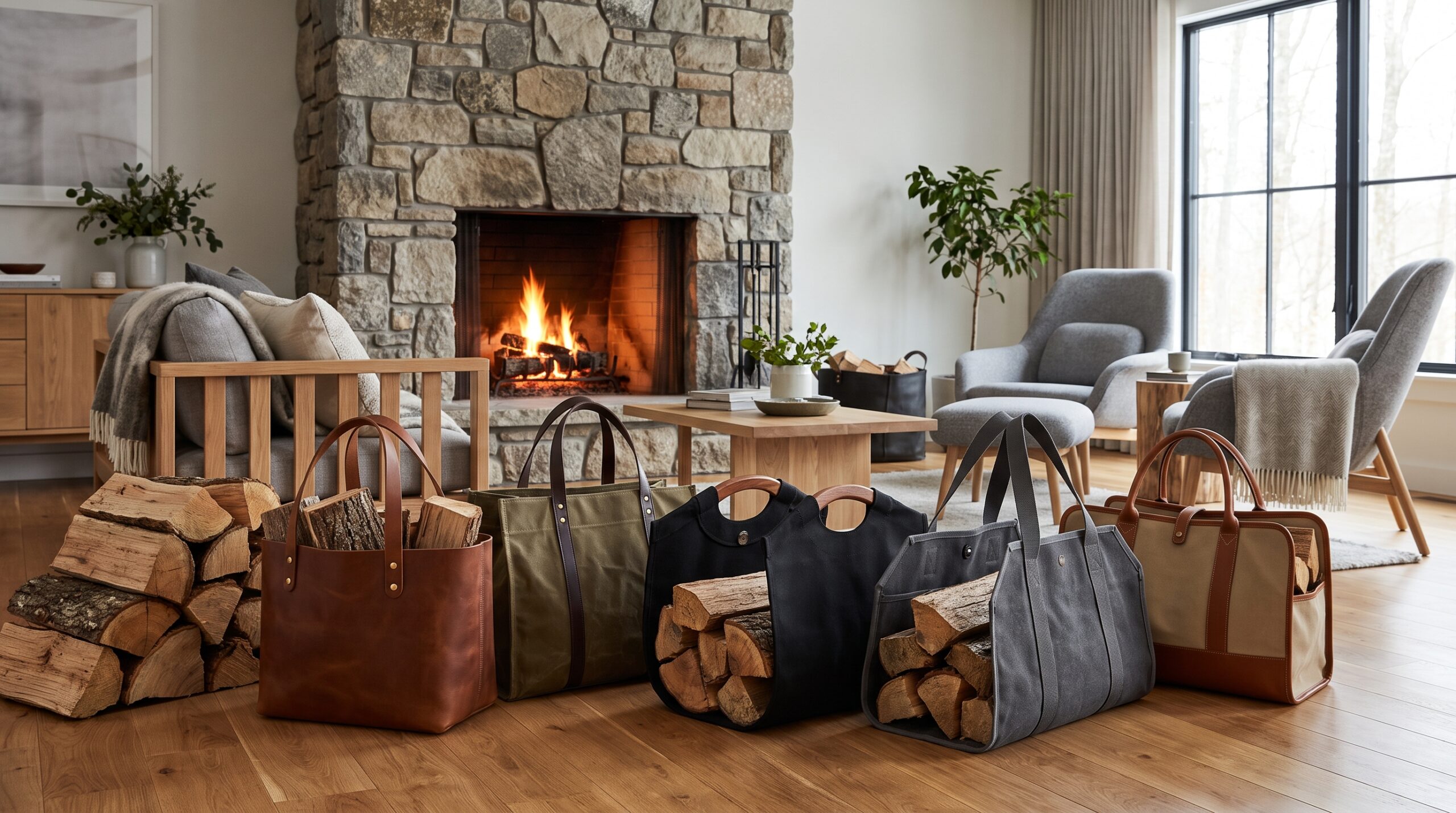
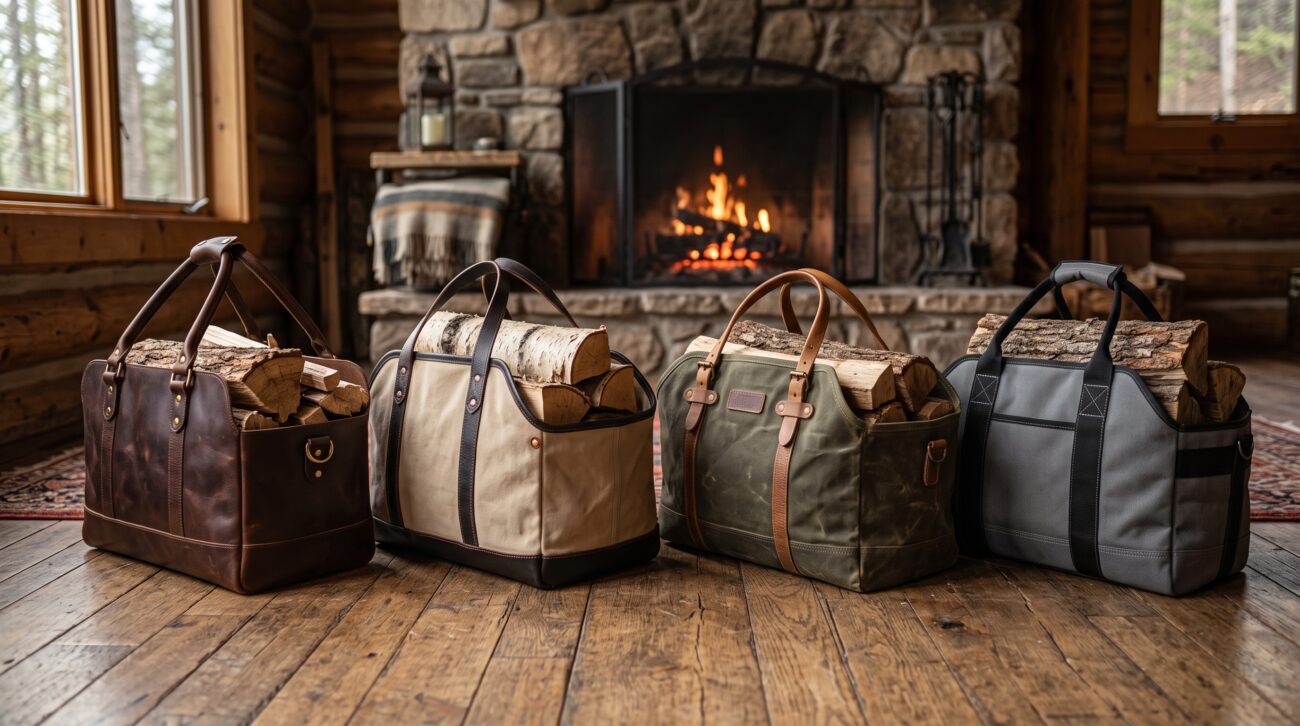
Modern firewood carriers have more variety than older carrying methods. Some are made with leather, canvas, waxed canvas, or heavy-duty fabric. Some are open at the ends to accommodate longer logs, while others have deeper sides to help contain bark and smaller pieces.
Most improvements come through details. Stronger stitching supports repeated lifting. Reinforced handles make heavier loads feel safer. Better materials improve durability, and foldable designs make storage easier when the fireplace season ends.
These changes may seem small, but they make a real difference. Anyone who regularly transports firewood knows how important small details become when the wood is heavy, cold, dirty, or awkwardly shaped.
From Utility to Everyday Style
Firewood carriers have become more than simple utility items. Their function is still the most important thing, but their presence in the home now matters too.
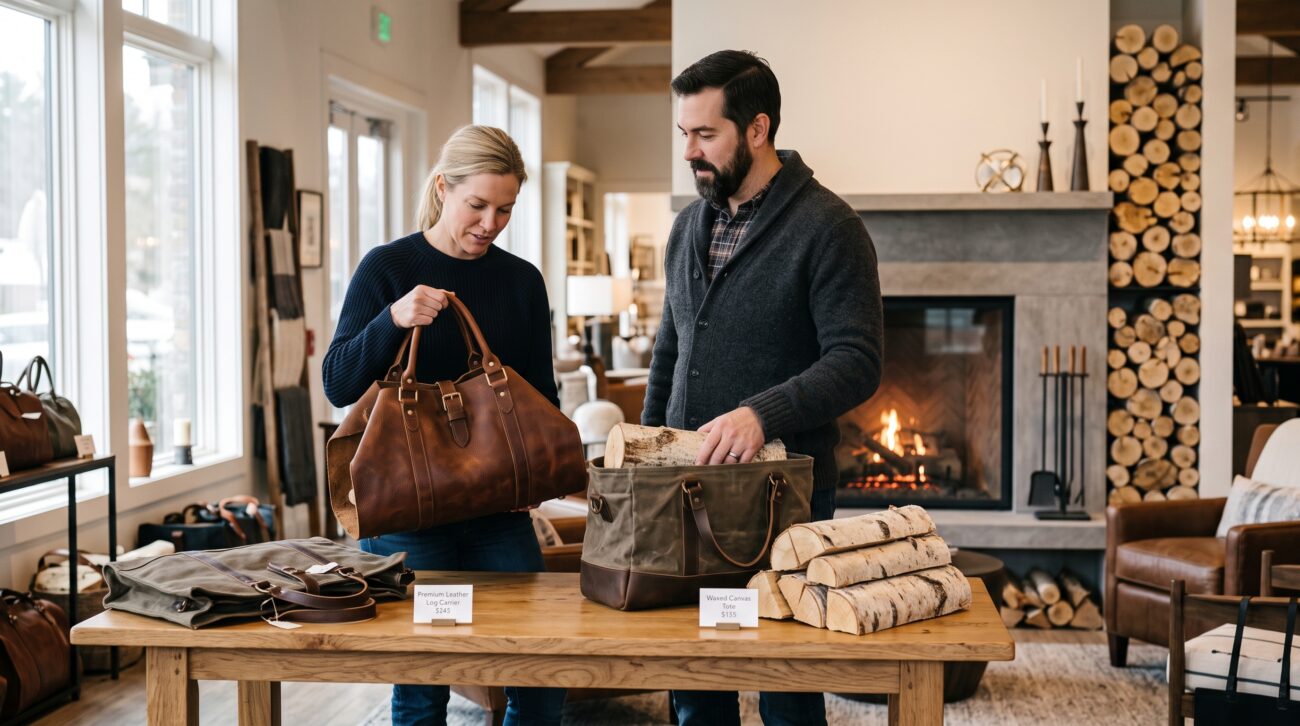
A modern carrier still has to perform its task. It has to hold logs securely, reduce mess, and stand up to regular use. Since it may also sit beside a fireplace where guests can see it, material, finish, and shape matter more than they once did.
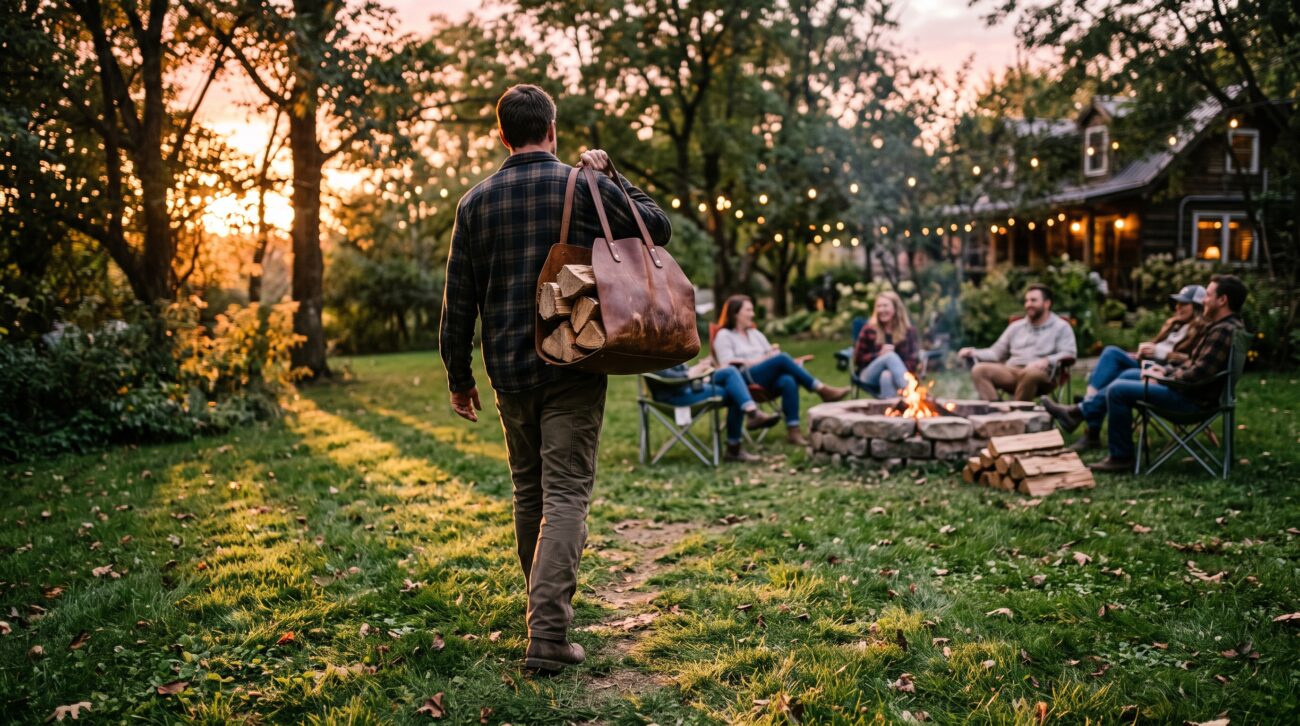
A basic fabric carrier may be enough for occasional use. A canvas carrier might make sense for a cabin, shed, or outdoor fire pit. A leather carrier is often ideal when the fireplace is part of the room, and the carrier stays visible between uses.
Pro Tip: “With firewood carriers, signs of wear are not necessarily bad. Leather and waxed canvas often look more natural after being handled, folded, and carried through several seasons of use.”
Final Thoughts
The history of firewood carriers is not the story of a single invention. It is the story of how people gradually improved a simple household task over time. From hand carrying to bundles, baskets, carts, canvas slings, waxed canvas carriers, and leather designs, each stage made moving firewood a little easier.
The reason firewood carriers still exist is clear. Logs remain heavy, rough, and cumbersome to carry. A good carrier makes that task simpler without becoming complicated.
Homes, cabins, fireplaces, wood stoves, and outdoor fire pits still benefit from a practical firewood carrier. It may not be the most noticeable fireplace accessory, but once it becomes part of the routine, its importance becomes easy to understand.
FAQs
When did people begin using firewood carriers?
There is no exact date for the first firewood carrier. People have used different methods for centuries, including hand carrying, bundles, baskets, carts, and slings. Modern firewood carriers developed gradually from these older practical methods.
What did people use before firewood carriers existed?
Before modern carriers existed, people carried wood in their arms or tied smaller branches together into bundles. Baskets were also common near the hearth, while carts and wagons were used for larger outdoor loads.
Why were baskets used for firewood storage?
Baskets were useful because they could hold small logs, kindling, and loose bark near the fireplace. They also worked as storage pieces, which made them practical in homes where the hearth was used often.
When did canvas log carriers become popular?
Canvas log carriers became popular as people sought flexible, lightweight alternatives to baskets or rigid containers. Canvas could be folded, carried easily, and used for different log sizes, making it practical for both home and outdoor use.
Why is leather used for firewood carriers?
Leather is used because it is strong, flexible, and visually suited to fireplace settings. A leather firewood carrier can handle rough logs while still looking natural beside a hearth, cabin stove, or indoor fireplace.
Are old firewood carriers different from modern ones?
Older firewood carrying methods were usually simpler and more improvised. Modern carriers often have stronger stitching, reinforced handles, better stress points, and materials such as leather, canvas, waxed canvas, or heavy-duty fabric.
Is a firewood carrier the same as a firewood basket?
No. A firewood carrier is primarily designed to move logs, while a basket is typically used to store wood near the fireplace. Some baskets can carry logs too, but they are usually less flexible than soft-sided carriers.
Why do people still use firewood carriers today?
People still use firewood carriers because they make carrying logs cleaner, easier, and more organized. Even in homes with modern heating, fireplaces and fire pits still require wood, and a carrier makes that routine more manageable.